Converting to Lines Led Aft: Part 1, The Bracket

The client wants to convert his ketch from lines left at the mast to lines led aft. His mast is keel stepped, so we couldn't attach any turning blocks to the deck. Instead, we need to build a bracket that will attach to the mast and serve as a mounting point for all the turning blocks.

The lines that will be led aft are going to be the main halyard, along with the clew and tack lines for the two reefs. Rather than bolting each of these turning blocks to the mast, I chose to make a bracket that attaches to the mast with 4 through bolts and all the related components can attach to this bracket. Each hole you make in the mast will weaken the spar. 4 through bolts will require 8 holes. If we bolted each fitting to the mast, we would be looking at 20 holes!

The mast is elliptical while the bracket is square. This is because I could not easily get a curved bracket fabricated, so instead, we had 3mm thick 316 Stainless Steel plate welded together and reinforced with 6 gussets in the corners. This makes for a pretty strong bracket, but it still doesn't attach to the mast!
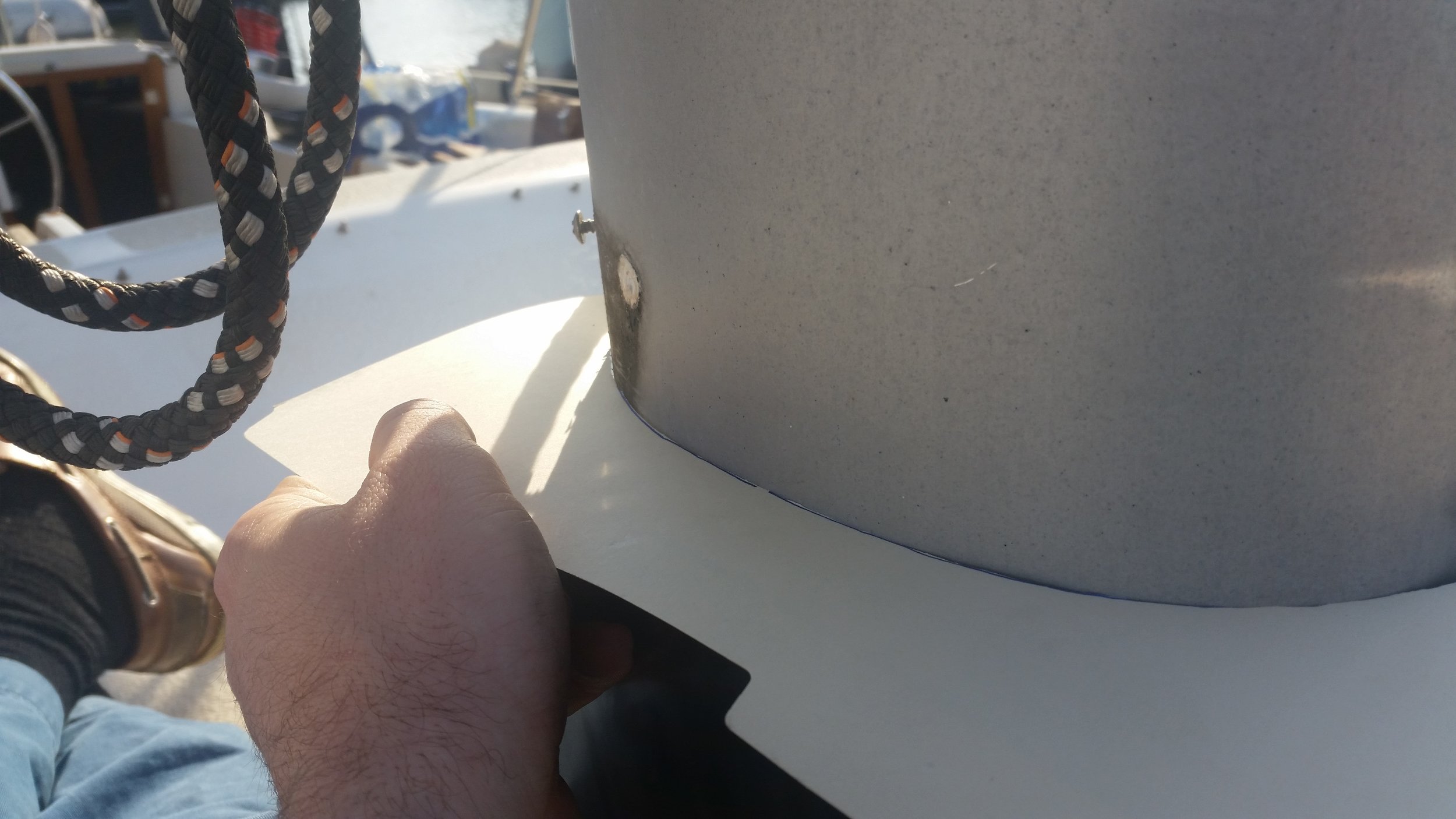
I cut a template out of a file folder to match the mast contour. This template will then be used to transfer the information over at my work bench, allowing me to see how the bracket would fit around the mast without being at the clients boat. With this template, I can properly visualize where we want to place the through bolts that will hold it all together without the spar being in my view and blocking my visualization. I will be able to carefully measure and calculate the best location for the through bolts and then transfer that information back over to his boat when the time comes.

Overfilled Diesel Heater

If your heater accidentally fills with fuel with the flame off, you can create the potential for a real problem. If you try to act smart and throw a flaming paper into the fuel to act as a wick, you will be sorely punished by an out of control blaze until the fuel burns off. Instead of dealing with such a massive fire inside the heater, the alternative is soak up the fuel with a toilet paper roll and then continue to use as normal.

In five years, this is the first time I have had an issue with accidentally opening the fuel valve without knowing. Fuel flowed into the heater for a full day before I noticed the small puddle of fuel on the floor below the heater. This situation was easily remedied though, allowing me to continue using the heater without any issue.

Runaway Diesel Heater

Diesel heaters are a great way to keep your cabin nice and toasty during the winter. They provide a reliable dry heat that will keep you comfortable. Dickinson heaters are very simple and straight forward to operate, making them a heat source you can count on. As long as fuel is getting to the unit, it will burn and it will heat your cabin!

The problem is sometimes these units get a bit too much fuel and will burn way too hot for comfort. The fuel chamber will find itself too filled with diesel, causing it to burn out of control! The fuel is already past the carburetor, so shutting off the fuel flow won't do very much good. You will just have to let it burn itself out as the fuel is consumed and the fire begins to dwindle.

While the excess fuel is burning off, the unit will glow red hot and begin to rattle. This is a bit concerning and very avoidable. By simply opening the door a smidge, fresh air will enter the unit above the fuel and cause the fire to burn much less intense. The fuel will still burn, just at a much calmer rate which will make everyone inside the cabin much more relaxed as everything returns to normal. Once the fuel level has gotten back to normal, you can close the door all the way and resume using it as normal.

Drilling Holes and Containing the Mess

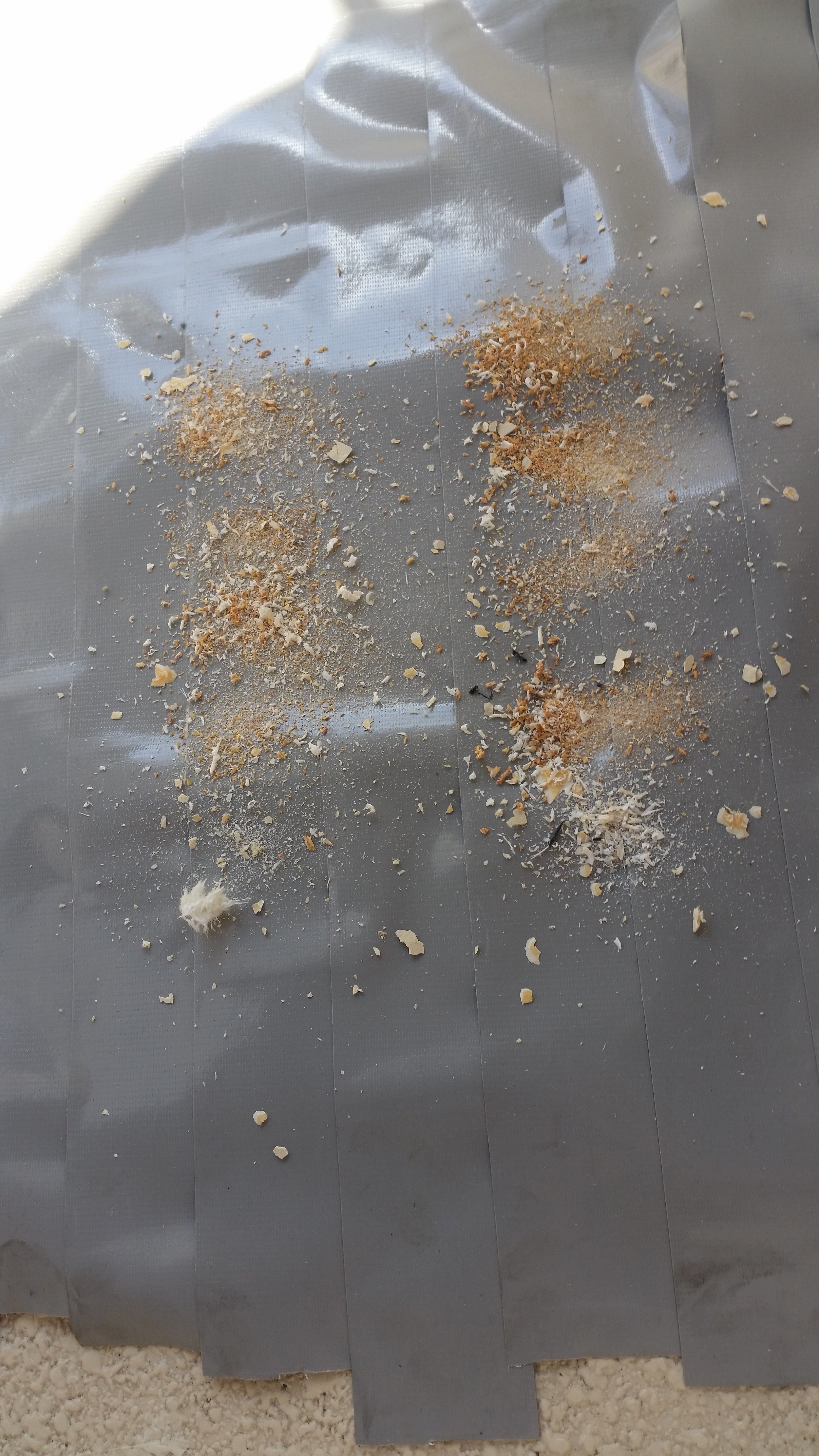
When drilling holes through the deck, it is impossible to be inside with a dust collector at the same time you are outside drilling! It is nice to have a helper that will stand around and wait for the drill to perforate the deck, spewing its dust everywhere while you push with fury on the drill. The truth is, even with help, dust will manage to get away from you and coat everything inside the cabin with itchy fiberglass debris. 


FullSizeRender.jpg

This is where a synthetic helper can make your life much easier. I love to use Gorrilla Duct Tape set up into a sheet of sticky goodness. As dust comes flying out, the adhesive will catch it and not let it go. When you are done drilling, all you need to do is fold the sheet over on itself and all the mess will remain contained. 

FullSizeRender.jpg

When you attach it to the underside of the deck, you want to leave a pocket where the drill bit can exit without damaging the sheet. All you need to do is stick the edges on and leave a bit of a belly where you expect the drill to exit. This lets you drill away without fear of tearing a hole in the sheet or of dust flying everywhere. 

FullSizeRender.jpg

Now you can drill all your holes in rapid succession without worrying about creating a disaster scene inside the cabin! 

Sealing Holes Temporarily

In an ideal world, you will have all the parts you need to complete a task on hand or at least readily accessible. In reality, you need to drill your holes and then measure the actual depth to purchase the correct length and size of fastener. When you drill your holes and then leave to go get the fasteners, what should you do with the exposed holes?

Do you just do a quick cloud check and then head to the hardware store? Or do you seal up the hole to keep any foreign bodies out of the space? The correct answer is to seal it up! 

Sealing the hole is easy, and the better the seal, the harder it is to uncover it once you have all your fasteners. This is where Gorilla duct tape comes into play. 

This duct tape will seal off the outside of the hole, even on non-skid surfaces, yet it won't leave a sticky residue when the tape is removed. I have left this tape in place on surfaces exposed to the sun for a full week and when I removed the tape, no residue remained. Best of all, the tape was still good to reuse! I don't normally care for brand name products as I feel they are overpriced versions of the generic, but Gorilla tape will keep out moisture and not leave behind a sticky mess. 

FullSizeRender.jpg

In this situation, I had drilled the holes for a clutch bank and winch base. The holes were large and encompassed by non-skid. Worse yet, this is a cored deck and rain was on its way! I safely taped up the holes and the wood was dry the next day, even though we had an overnight downpour.