Worm, Parcel, and Serve

Over the past seven months of cruising, our anchor snubber was starting to show some significant wear. The options were simple, either replace the snubber, or fix and protect it from further damage.

Being how we are cruising on a limited budget and marine supplies are not as easy to find in remote locations, such as uninhabited islands in the Bahamas, we decided to repair and protect our snubber with materials that we had on hand. 

Since the chafing that had occurred was still very superficial, there was no structural damage to the line and no need to perform a mending splice before the protective layers were added. The first step in the process is to worm the rope. This is where you lay a smaller line into the valleys of the lay of the rope. Three-lay requires three strands be wormed into the lay. The strands run in the direction of the lay and will nestle in nicely. The idea of worming is to make the outer edge of the rope more uniform and round. 

IMG_2444.JPG

The next step is to parcel the rope. In historical times, this was done using tarred cloth. The tar helped seal water out from the line and protected the hemp from moisture and rot. In modern times, when the rope is made out of nylon, the purpose of parceling is to hold the worming in place. Hockey stick tape or friction tape works great for this application. The tape is to be wrapped in the direction of the lay. If on running rigging, the direction of wrap doesn't matter as the rope will move around. If on standing rigging, the wrapping is to go from bottom to top. This will create a shingle effect to help keep water out of the core. 

IMG_2433.JPG

With the section wormed and parceled, the last step is to service the line. Service is the process by which a sacrificial line is wrapped around the line very tightly. Any chafe will occur on the sacrificial part that can be easily replaced at less expense than replacing the actual line itself.  

Service is always wrapped opposite the direction of the lay, so that as the rope is tensioned and pulled, the service will wrap tighter.  

IMG_2455.JPG

In the end, the snubber is protected against future chafe and will continue to hold our ground tackle as we cruise new and distant waters.

Blue Hole at Hoffman's Cay

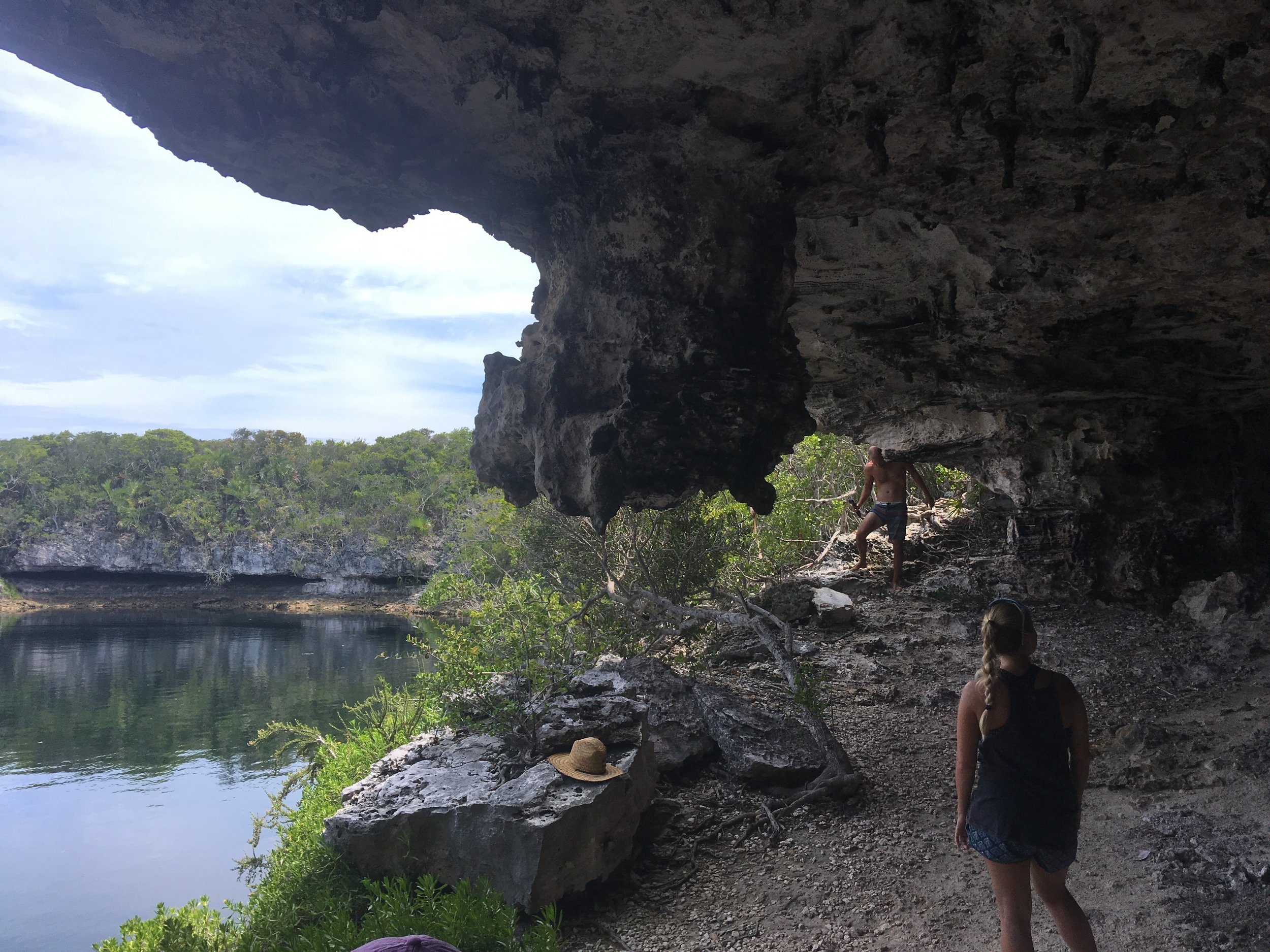
Hoffman's Cay is a small island in the Berry Islands, Bahamas. In this small island is a magical experience, a blue hole! 

To get to the blue hole, you first land your dinghy on the beach and then follow the trail through the jungle. The vegetation here is very dense, so you will need to follow the cleared trail. 

IMG_2451.JPG

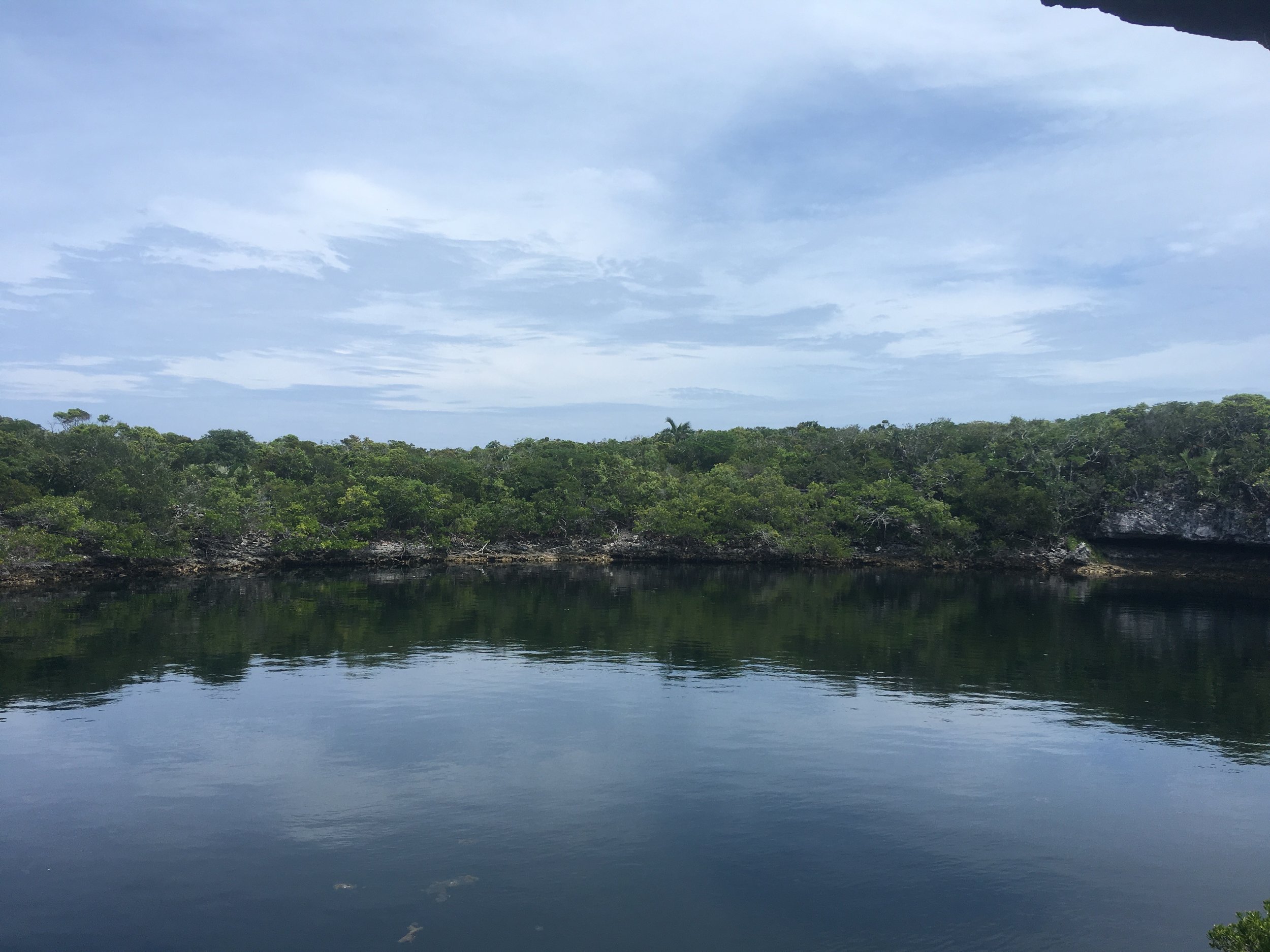
Suddenly, you will made a turn and arrive at the splendor of the blue hole! Blue holes are nothing more than sink holes that are filled with water. They can be hundreds of feet deep, and the intensity of their color is astounding. It was very epic to encounter this after having walked through the jungle of vegetation on this island. 

IMG_2440.JPG

As you approach the cliffs edge, the blue hole becomes even more breath taking! There must be some form of communication to the ocean because we saw a few sea turtles swimming around in the water!

IMG_2447.JPG

The Bahamas are actually just limestone flats that have been pushed up from the ocean floor. Limestone is what caves are made out of, as it can easily be dissolved and washed away. The sides of this sink hole are lined with caves, stalagmites, stalagtites, and columns.  

IMG_2441.JPG
IMG_2439.JPG
IMG_2434.JPG
IMG_2450.JPG

This splendid vista was just a short dinghy ride away from where Maddie and I experienced our lovely sunset picnic the night before!

Paradise

Our next anchorage after Johnny jumped ship was pure and perfect paradise. Once again, it was just Maddie and I. We could walk along the beach holding hands as we listened to the waves as all of our cares and worries washed away with the outgoing tide.

IMG_2446.JPG
IMG_2437.JPG
IMG_2438.JPG

Maddie and I explored the tiny island and watched the waves crash in from the Atlantic side onto the steep cliff faces where powerful waves turned into mighty spray. We then returned to the calm beach overlooking our boat Wisdom.  

We had a nice picnic dinner on the beach as we watched the sunset. Everything was perfect! 

Tourist Tree

The tourist tree gets its name from the fact that it looks like it's sunburned and peeling, like a tourist. 

IMG_2462.JPG

The red bark naturally peels off this tree, resembling a nasty sun burn. These trees are found in the tropics, so when you are cruising and come across one of these trees, you know you have made it to a nice tropical destination!

Finding Land

With modern navigation software, GPS, and chart plotters, finding land may seem really simple. While all of these electronic devices are convenient, there is still a very easy way to spot land in the Bahamas from far away without the aid of technology. All you need to do is look up at the clouds in the sky!

Clouds over deep water will look darker because they are reflecting the deep blue of the water beneath them. Clouds over shallow waters will look turquoise as they are reflecting the light colored water beneath them. 

IMG_2432.JPG

The coulda over the deep water on the left look like regular clouds, but the clouds in the middle have a turquoise hue to them, and these are over the shallow waters where land can be found.

The Bahamas are truely amazing because the flats will be 20 feet deep or less, and then you will sail off a cliff and be in water that is 8,000+ feet deep. Yes, water that is over a mile deep, right off the islands! Thanks to the clouds, you will be able to find your next island chain to explore long before you see the flat islands on the horizon.