Current Projects

As you may know, I have a few projects running at the moment. Some are minor projects around the boat, others are major undertakings that consume all my spare time! 

The major projects are building the dinghy and building the tiny house. The minor projects are all the other boat preparations that need to be finished before we cast off the dock lines and head offshore. 

I know that some of you guys are more interested in certain aspects of the blog. Some readers are more focused on rigging and knots, others like the woodworking projects, and then others are in love with tiny houses. 

In an attempt to not bore any of you guys, I will be posting about the different topics alternating one each day. This way, if there is a topic that you are not particularly fond of, something more interesting to you will be posted tomorrow. 

As you may have noticed, I have trouble with "middle ground", and I work at the extremes. In my mind, the options are to segment the topics or power through each topic to completion. If we power through each topic, this blog would turn into a "boat building" blog for a while, then turn over to a "tiny house" blog for a while, followed by a "boat outfitting" blog. 

I feel that staggering the topics will keep everyone entertained as we work our way through the different projects. 

One thing is for certain though, next year we are casting off and the blog will be focusing more on the places we visit under sail and tips & tricks to make sailing easier. I really think that people motor their sailboats everywhere because they think that sailing is a lot of work. Hopefully, these tips and tricks will make sailing be less work and allow you to outfit and tweak your yacht yourself, saving you time and making sailing much easier for you.

For now, the topics will be staggered through the winter until these projects are finished up and ready for use. If you have any suggestions for how to order the post, let me know in the comments section down below!

Prop Walk Test

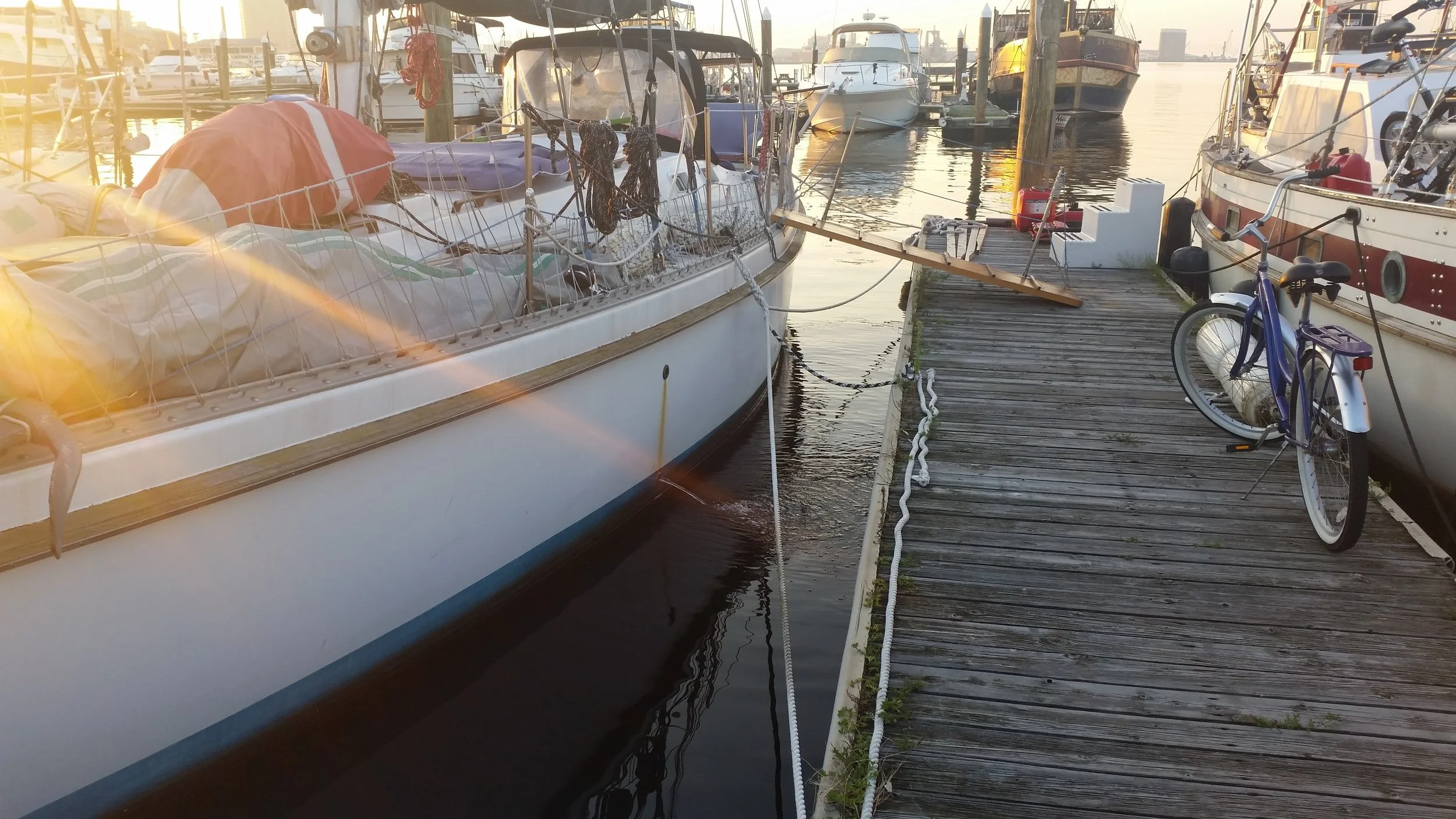
Your yacht is floating in her slip, securely tied to the pier and ready to go sailing. You need to reverse you yacht out of the slip, but which way will she walk?

A very simple test to see which way and how severely your yacht will walk is to put the boat in reverse under full throttle and evaluate the prop wash. 

The side with more prop wash will be the side you walk away from. If you see prop wash on your port side, you will walk to starboard. If you see prop wash on your starboard side, you will walk to port.

While most of the factors that compound to create prop walk are beyond your control right before you go sailing, one key factor is: engine speed.

Hello, World!

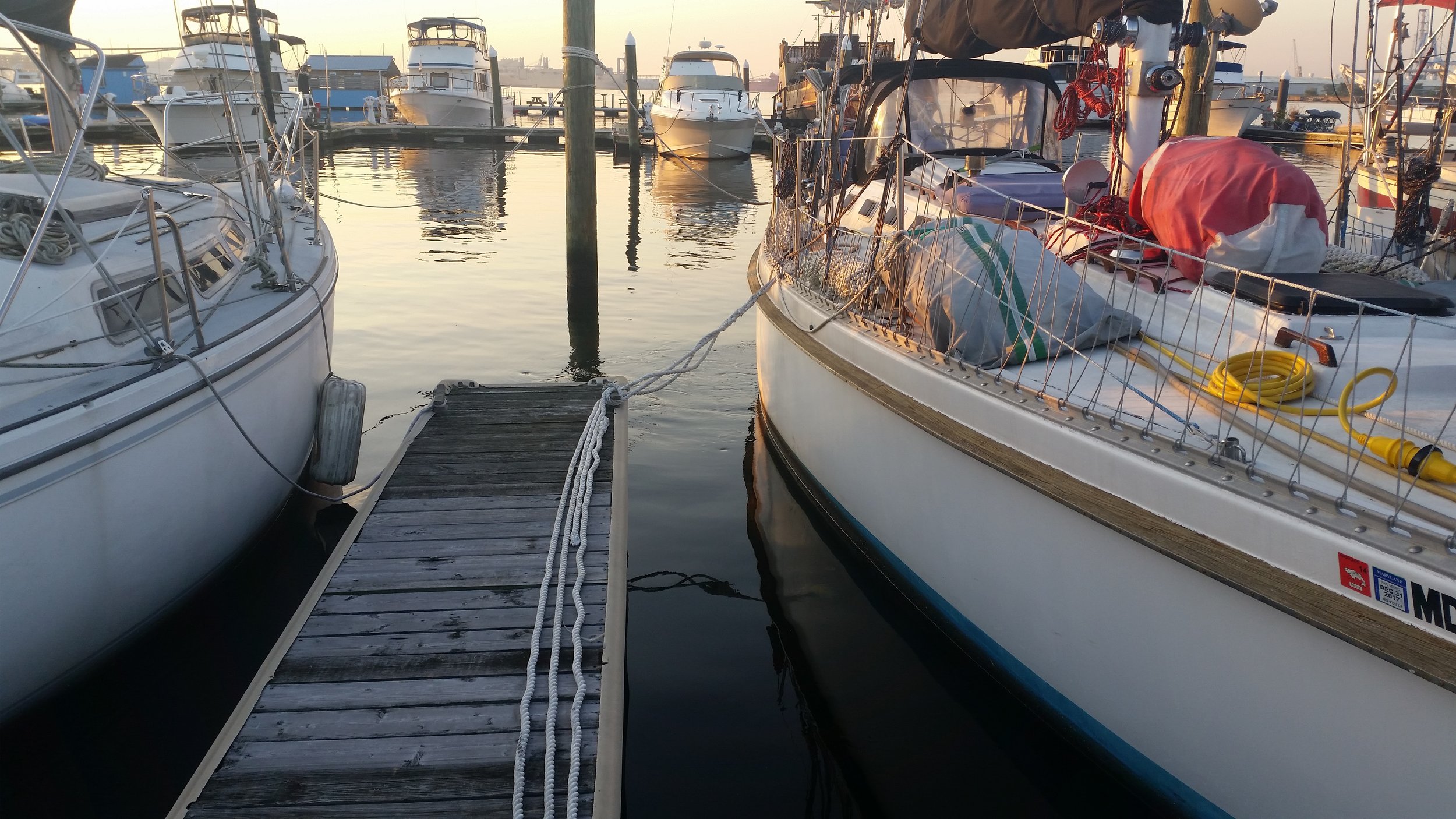
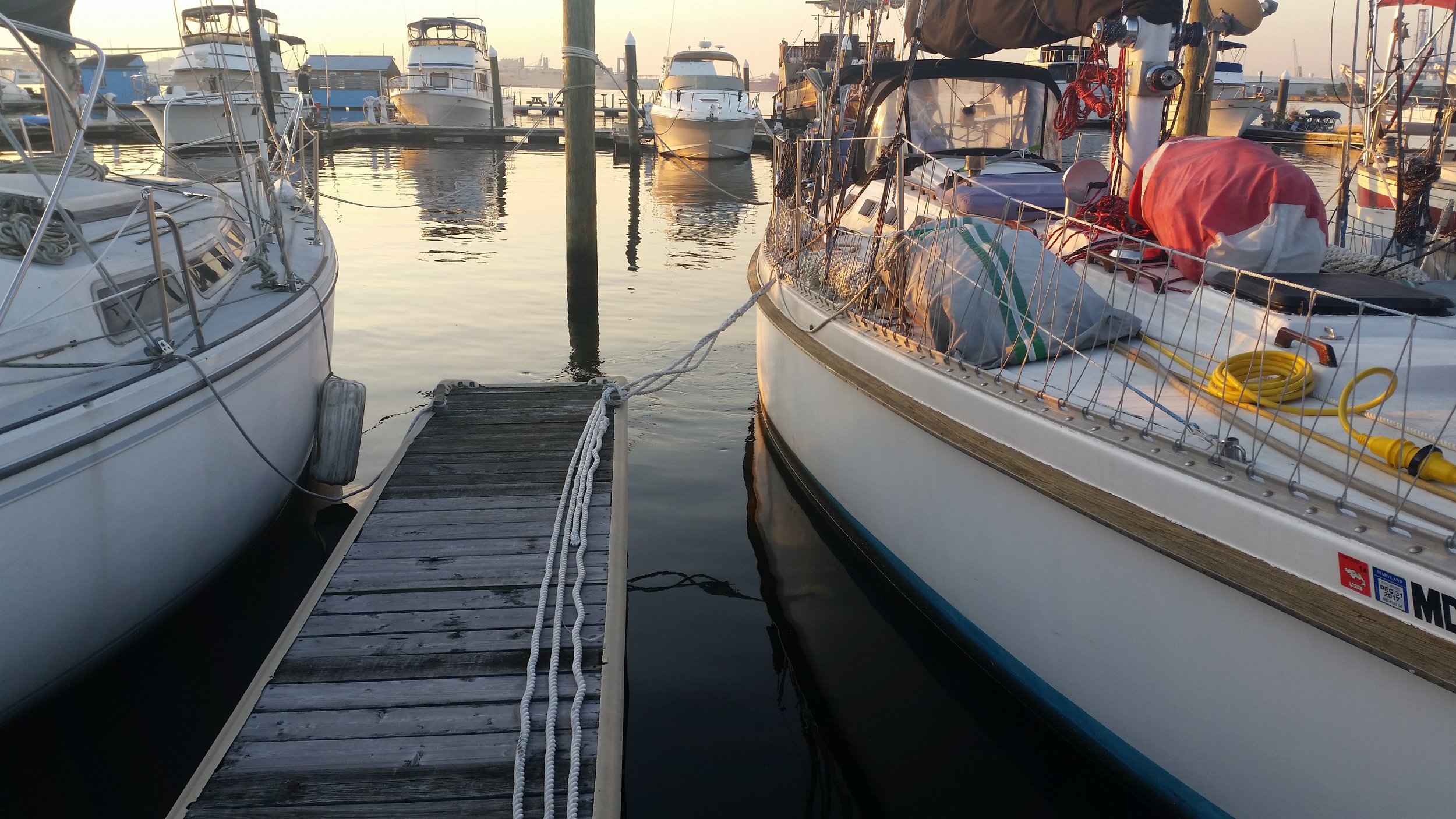
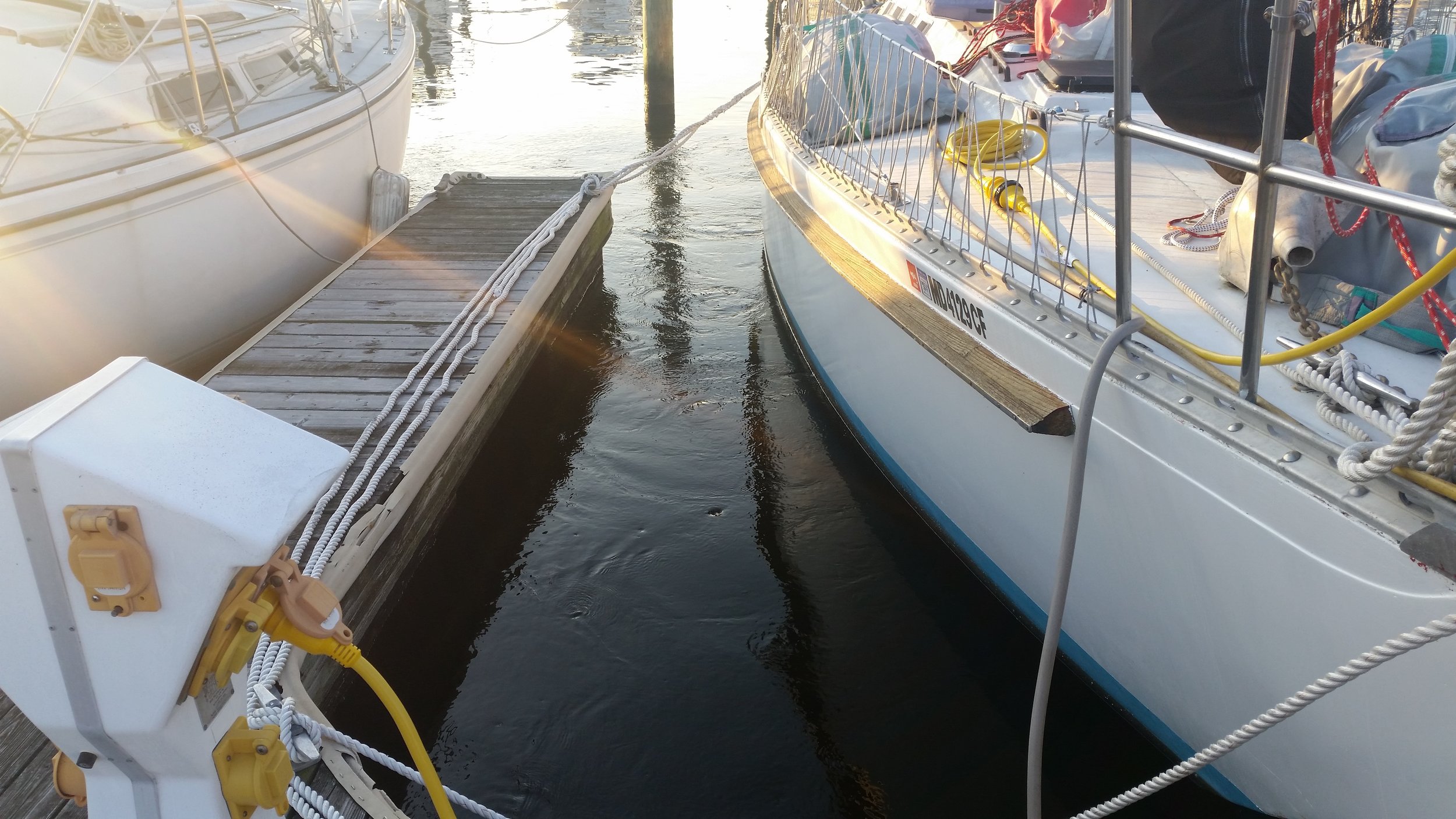
With the engine off, there is no prop wash and the water around the boat will be still.

With a little bit of throttle, the engine is consuming 32.1 amps and the propeller is spinning at 697 RPM. There is very little prop wash on either side, as there is little thrust being produced. 

Hello, World!

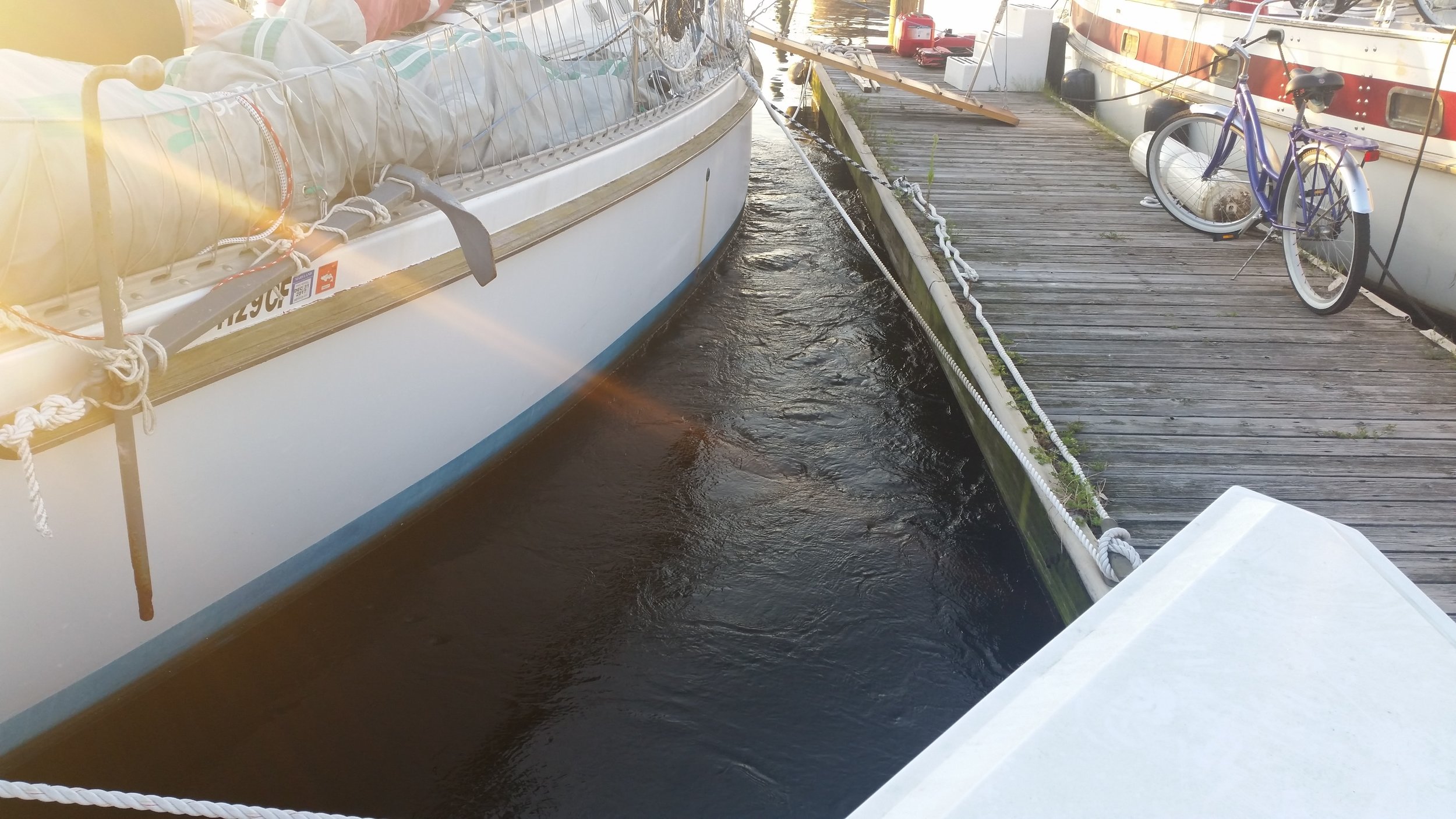
With the engine drawing 61.2 amps, and the propeller spinning at 889 RPM, there is considerably more prop wash and prop walk. You can see from this picture looking at the bow how the docklines are holding the boat steady as well as the difference in the amounts of prop wash on each side of the boat. The port side is very disturbed, while the starboard side is very calm. This illustrates why the boat will walk to starboard.

With the engine drawing 89.4 amps, and the propeller spinning at 1012 RPM, the prop wash is considerably strong on the port side and only beginning to disturb the water on the starboard side.

Hello, World!

With the engine drawing 178 amps, and the propeller spinning at 1255 RPM, we are creating considerable trust and prop wash on the port side.There is a very slight amount of prop wash showing up on the starboard side.

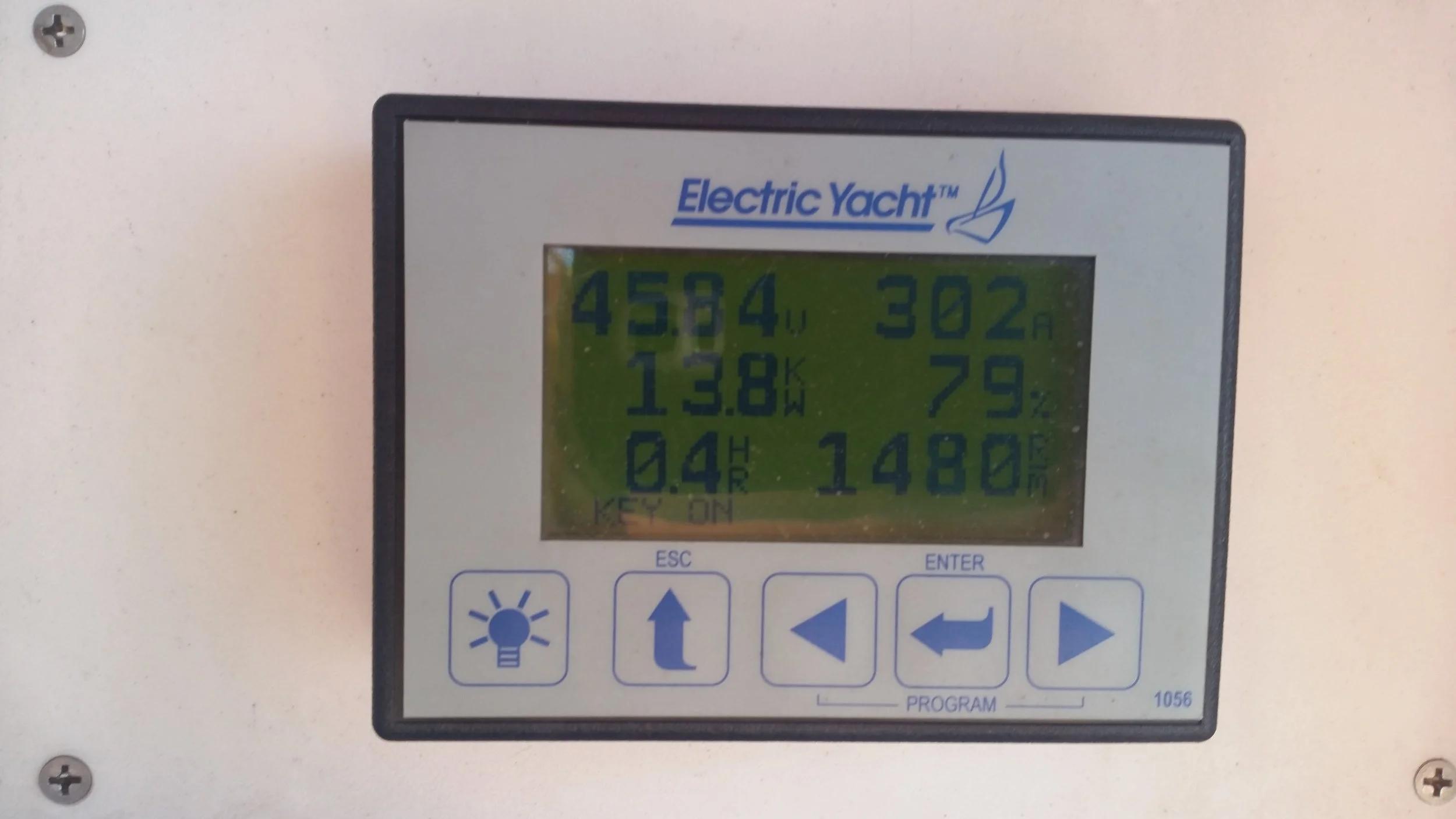
The final test was performed at full throttle, with the electric motor drawing 302 amps, and spinning the propeller 1480 RPM. At this pace, our very small battery bank will only last for 0.4 hours, or 24 minutes, which illustrates why we sail everywhere instead of motoring everywhere. With a larger battery bank and a generator, we could have a significantly longer range under power, but we chose a simpler and less costly installation and opted for a small battery bank with a full suit of sails.

Hello, World!

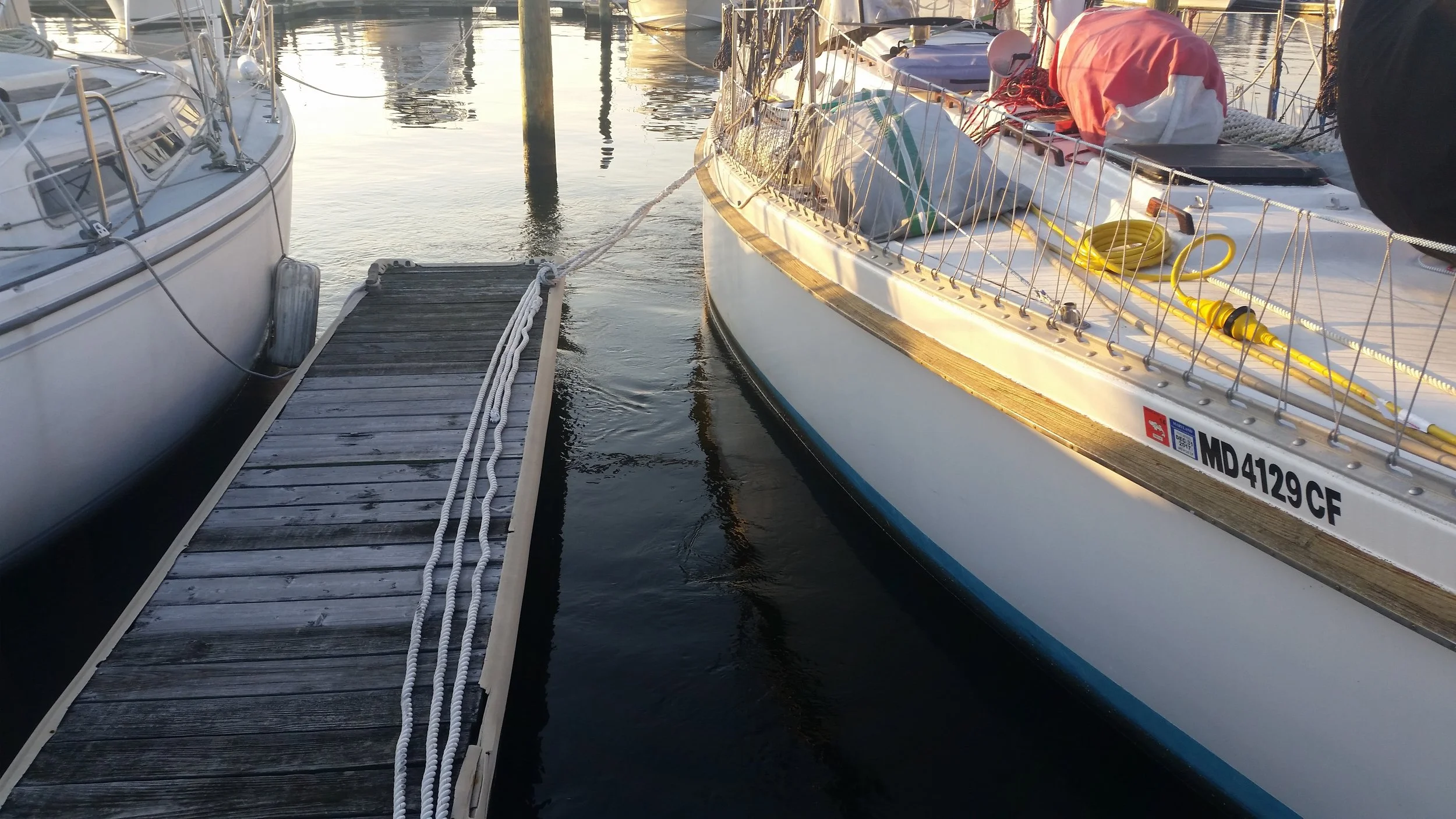
At full throttle astern, the prop wash on the starboard side is starting to be more evident, but nowhere near the level of disturbed water on the port side. Under full throttle, the boat will walk to starboard as all of the thrust is being directed towards the port side of the hull.

As the RPMs increase so does the bias in the in thrust, leading to an increase in prop walk to one side while moving astern.

Light Throttle

Light Throttle

Full Throttle

Full Throttle

The prop wash on the side the boat walks towards in reverse is about the same under light and full throttle.

Light Throttle

Light Throttle

Full Throttle

Full Throttle

On the contrary, the prop wash on the side the boat walks away from in reverse is vastly different. Under light throttle, the prop wash is very light and can be somewhat combated by the opposing sides prop wash. Under full throttle, the prop is very powerful and will push the boat over, causing the phenomenon known as prop walk.

Next time you need to reverse into a slip, try using a light amount of throttle. If you are reversing out of the slip and have significant prop walk, maybe you should consider walking the boat out of the slip by hand and then motoring away once clear of the slip.

Ditch Bag

A ditch bag is a bag that you grab as you ditch your ship. This bag is supposed to contain important items that are crucial to your survival and recovery. The time to collect all of these important items is not when your boat is sinking and panic is setting in. The idea of a ditch bag is it offers you a place to store all of your important items in an easy to grab bag that can be set aside and ready to be taken with you in the event of an emergency.

A ditch bag is a great place to store your coast guard required equipment for two reasons. 

  1. If you get boarded by the Coast Guard or Marine Police and they ask for you to present your flares, horn, whistle, etc., that is not the time to begin searching your boat for the place you stored them.
  2. If you need to jump ship, having everything in one bag makes it easy to grab and go, without the risk of forgetting something important.

If you have to look around for a while to find your flares, the boarding party sometimes will give you a citation because "taking too long to find it means you couldn't find it in an emergency". Secondly, if you are jumping ship, you don't want to be searching around the boat to find everything you need as the yacht is sinking.

Having everything in one bag stowed in a safe and secure location will make it easy to retrieve all of your needed items in the event of an emergency and also make you look prepared in the event of a boarding. If you look prepared, the boarding officials tend to be less particular when going through your vessel. Why search the heck out of an orderly and organized boat? They can see that everything is as it should be. The sailboat that looks like a disaster needs a more investigative eye to make sure that the captain can manage the chaos in a safe manner.

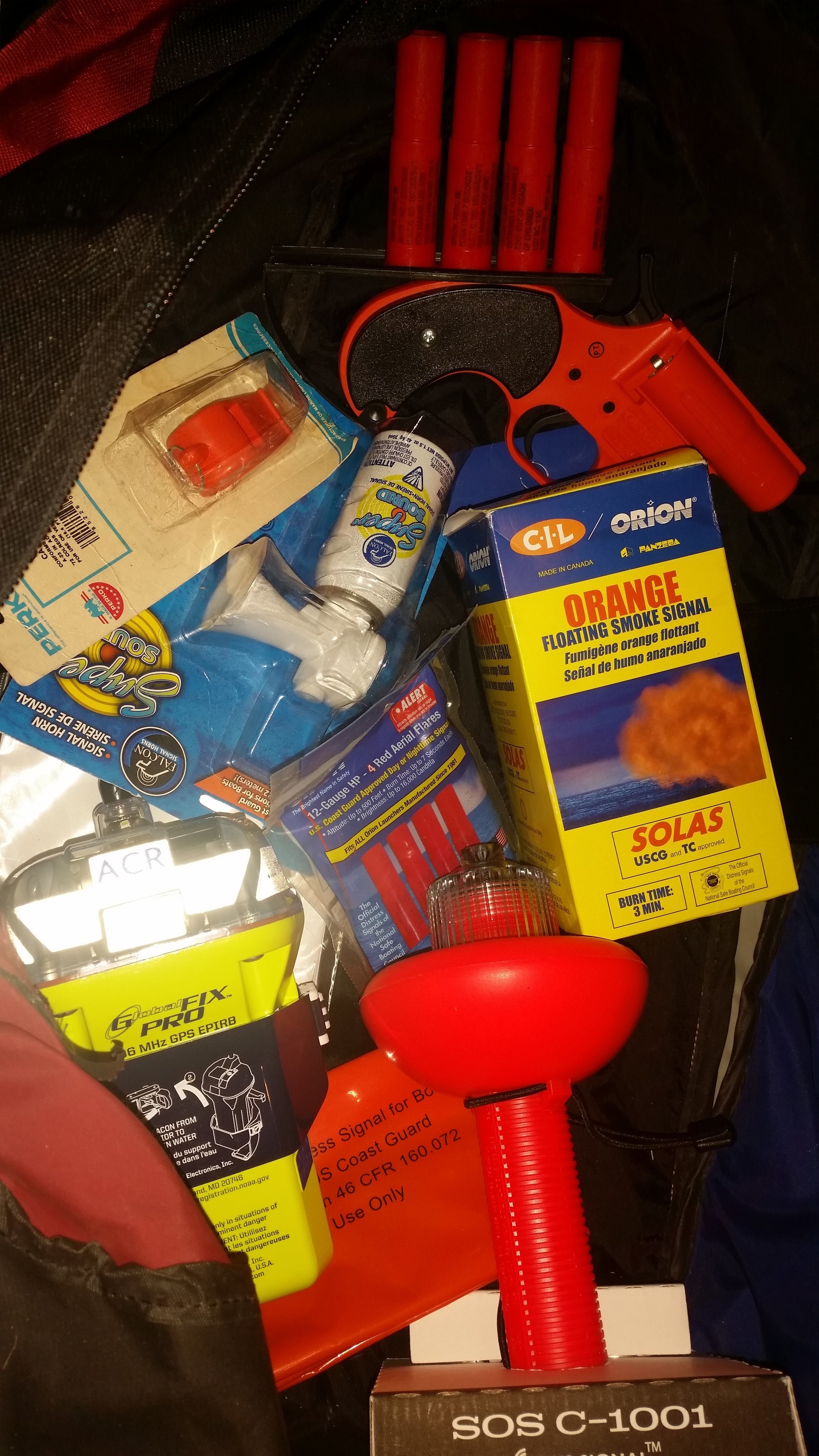
On Wisdom, we keep our ditch bag stocked with the basics while in port. 

  • Flare gun
  • Un-expired flares
  • EPIRB
  • Electronic flare (flare substitute)
  • Batteries
  • Daytime distress signal (distress flag)
  • Noise device (whistle and air horn)
  • Floating smoke

When we are leaving port, we always add 2 liters of water in plastic bottles to the bag. Instead of carrying a water maker, we simply carry 1L of water per person on board. This will provide us enough water for 1 day in the life raft which is in accordance with the average recovery time of near shore rescues.

If we were sailing further offshore, we would stock the ditch bag with more water bottles since the recovery times are a bit longer when we are farther from land. 

The ditch bag is stored with the life raft in Wisdom, being how if you need one, you also need the other. It is stowed safely and hopefully will only be used to organize our emergency supplies.

Morty is Happy

It's funny which toys a pet will fall in love with. Maddie once bought Morty a fancy chew bone that cost almost $20 and he never cared for it. We gave it to him the same way we give him all of his toys and he simply set it down and never played with it. That fancy toy sat on the cabin sole, collecting stray dog hairs until we gave up on him ever wanting to play with it.

On the contrary, Maddie's parents picked up this rubber squirrel as a gag gift at a dollar store and we decided to give it to Morty. He absolutely loved the squirrel and will not leave it alone! It is easy to see that he is happiest when he has his squirrel with him.

Pilot Charts

When you think of a chart, you probably imagine a piece of paper with tons of numbers on it that tells you how deep the water is and where rocks are. This type of chart is known as a Nautical Chart, and these charts are very useful for navigating in a specific area. While Nautical Charts offer a very narrow view of the world, focusing on a small area of coastline and water, Pilot Charts offer a much broader view of an entire body of water.

Pilot Charts do not give information about depth and obstructions, instead they offer information about weather. Pilot Charts denote wind directions and strength, likelihood of encountering a gale, ice, or fog, as well as the typical direction and intensity of currents. Pilot Charts are about the weather what Nautical Charts are about the water.

Pilot Charts are organized by region and by month. Each month has its own weather patterns and needs to be represented on its own chart. When you look at a pilot chart, one of the first things that will jump out at you are these little wind roses placed all over the page.

Wind roses are set every 5 degrees and represent the average wind for that area via their arrows and feathers. The wind strength is denoted at the end of the arrow with the feathers according to the Beaufort scale. Each feather represents 1 force.

The arrow points into the wind, telling you the prevailing wind directions that month. The more often the wind blows from that cardinal direction, the longer the arrow will be. If the wind is particularly prevalent from one direction, it will be written on the arrow. In our example, Force 4 winds will blow from the NE 67% of the time. If it is not blowing from the NE, it will be blowing from the E. Looking at the rose, you can see that the winds tend to be Force 3 or 4 for the month of January. 

The number in the middle of the rose represents the number of days that month with absolutely no wind. 

If you are planning a cruise, choosing a route where the prevailing wind will be a broad reach with no becalmed days would prove ideal. 

If your planned route follows along wind roses that look like this, you may want to look for another route. This wind rose denotes that 1 day out of the month may be becalmed, but otherwise the wind blows from any direction and very strongly. The average winds in this area are Force 5 and Force 6!

Aside from prevailing wind information, Pilot Charts denote average currents and their strengths using green arrows. 

When choosing a route, try to find a course where you are not only on a broad reach, but also sailing with the current. The current can either be your friend or make the entire experience much less enjoyable. If the wind and current oppose each other, you can expect to encounter much larger seas! 

Picking a route where you sail downwind and down current will make passage making much easier as well as much faster than if you choose a different route where you are fighting the elements as you voyage.


Below are links to PDF copies of pilot charts for the entire world. They are organized by ocean, and sub-organized by month. Clicking on the desired month will open the link to that pilot chart in a new window. Using these pilot charts, you can plan the best time and route for any ocean passage.

North Atlantic Ocean, Caribbean Sea, Mediterranean Sea

South Atlantic Ocean

North Pacific Ocean

South Pacific Ocean

Indian Ocean