Life Aboard

Handy Tiny Circular Saw

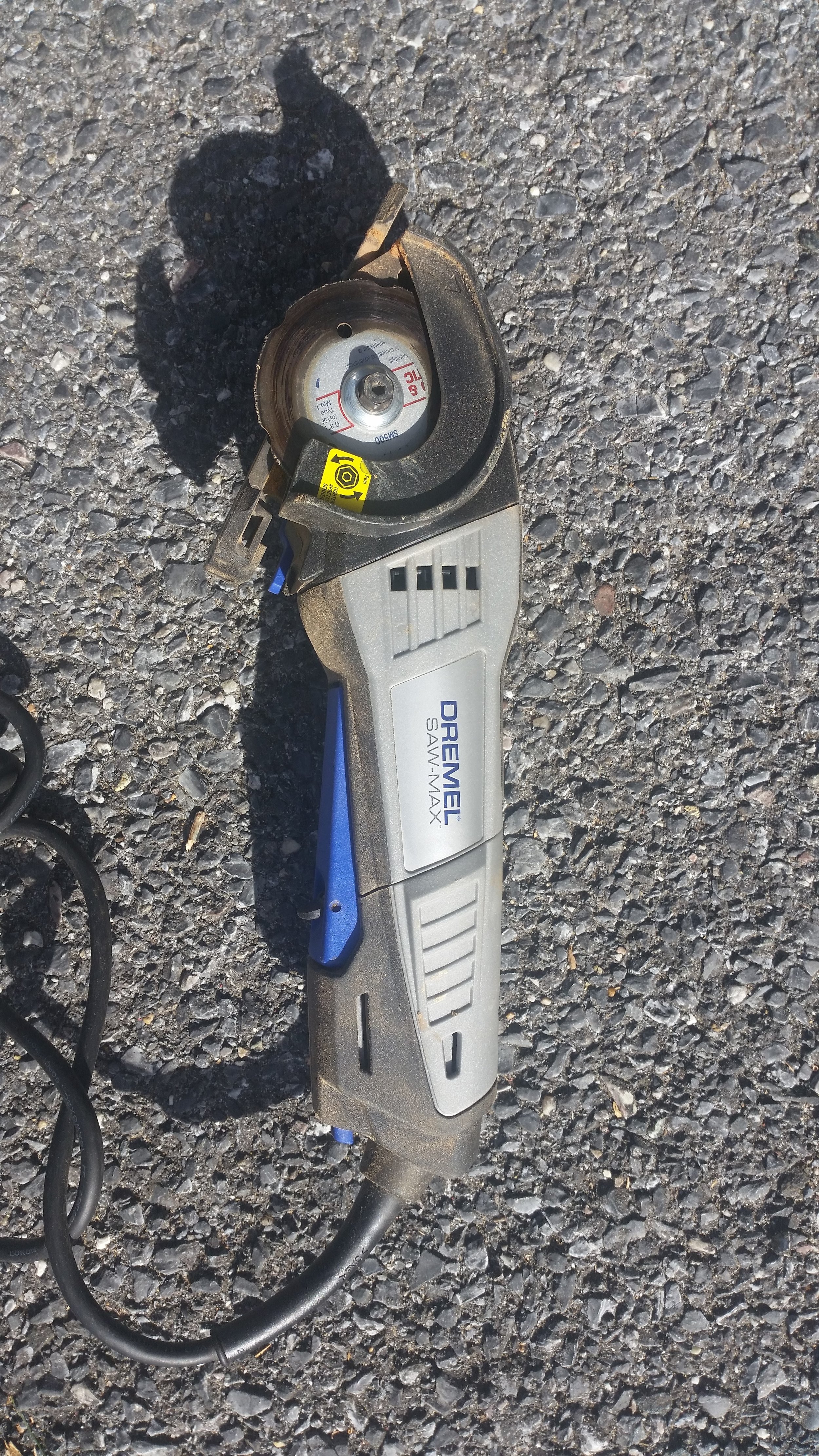
When you need to trim through a lot of wood in a very tight or small area, a handsaw simply wont fit and a circular would be too dangerous for such delicate work. This is when the handy Saw-Max by Dremel comes into play.

Instead of a standard toothed blade, the saw max uses an abrasive blade the grinds away at the wood like a tiny file. There is virtually no kerf, so very little wood is lost in the process. Since the entire unit is very small and light weight, it can easily be placed right into tight spots and allows you to cut right on the mark!

Using the Saw-Max, I am able to achieve finishing cuts without fear of grain tear out or accidentally damaging another part of the hull. I can also keep a close eye on what I am cutting as there is very little particulate matter that is ejected from the cutting process. A smaller kerf (width of the blade) means that less wood is turned to dust which means less dust being thrown all over the place.
Walking to the Car

A common question I get asked when I someone finds out I live aboard, especially in the winter, is how do I get to my car. I think they imagine me anchored miles from shore in the middle of the ocean. 

The truth is, walking to the car is just part of the routine. While people who keep their vehicles in attached garages might think this is an extremely uncomfortable way to live, it's really not that different from people who live in row houses in cities. With a row home or town home, you need to find street parking. Sometimes the street parking is blocks away from your house, and you will need to walk a bit of a distance to get from home to your car. 

The biggest difference between a town home and a boat home is the walk from a town home is down city side walks while the walk from a boat home is down a pier. In the winter, when the wind is blowing harder and the frigid wind cuts through your coat, it may seem a bit extreme! Moments like this simply teach you to dress properly so that you can stay warm on your walk down the pier. Once you have the basics covered, walking to your car to go to work in the morning becomes part of the awesome routine that is living aboard!

Petting a corgi makes you happy, Morty just wants you to be happy

Weight Distribution in Light Displacement Yachts

Light displacement yachts are much more sensitive to weight distribution, as any portion of weight in the hull represents a greater percent of the total displacement of the hull. This means that a light displacement yacht will alter its trim in the water faster than a heavy displacement hull because the same mass represents a greater amount of the total displacement.

Boats in their most basic sense are fancy buckets. As you fill the bucket, the bucket becomes heavier and displaces more water to remain floating. A lighter bucket would be analogous to a light displacement yacht, while a heavier bucket would be analogous to a heavy displacement yacht. If you have 90 pounds in the bucket and you add 10 pounds more, the bucket now weights 100 pounds and that last weight accounts for 10% of the total displacement of the yacht. If you too that same 10 pound weight and added it to a 990 pound bucket, the heavy bucket would now weight 1,000 pounds and the last weight would only account for 1% of the total displacement of the yacht.

The positioning of this weight is much more critical in the light bucket, as the weight accounts for 10% of the total displacement. If it were set far to one side of the bucket, the whole thing would tip in the water! In the case of the heavy bucket, where the weight only accounts for 1% of the total displacement, the positioning of the weight is much less critical. The weight can be located pretty much anywhere in the bucket and it won't shift the bucket very much in the water because it is such an insignificant part of the entire mass.

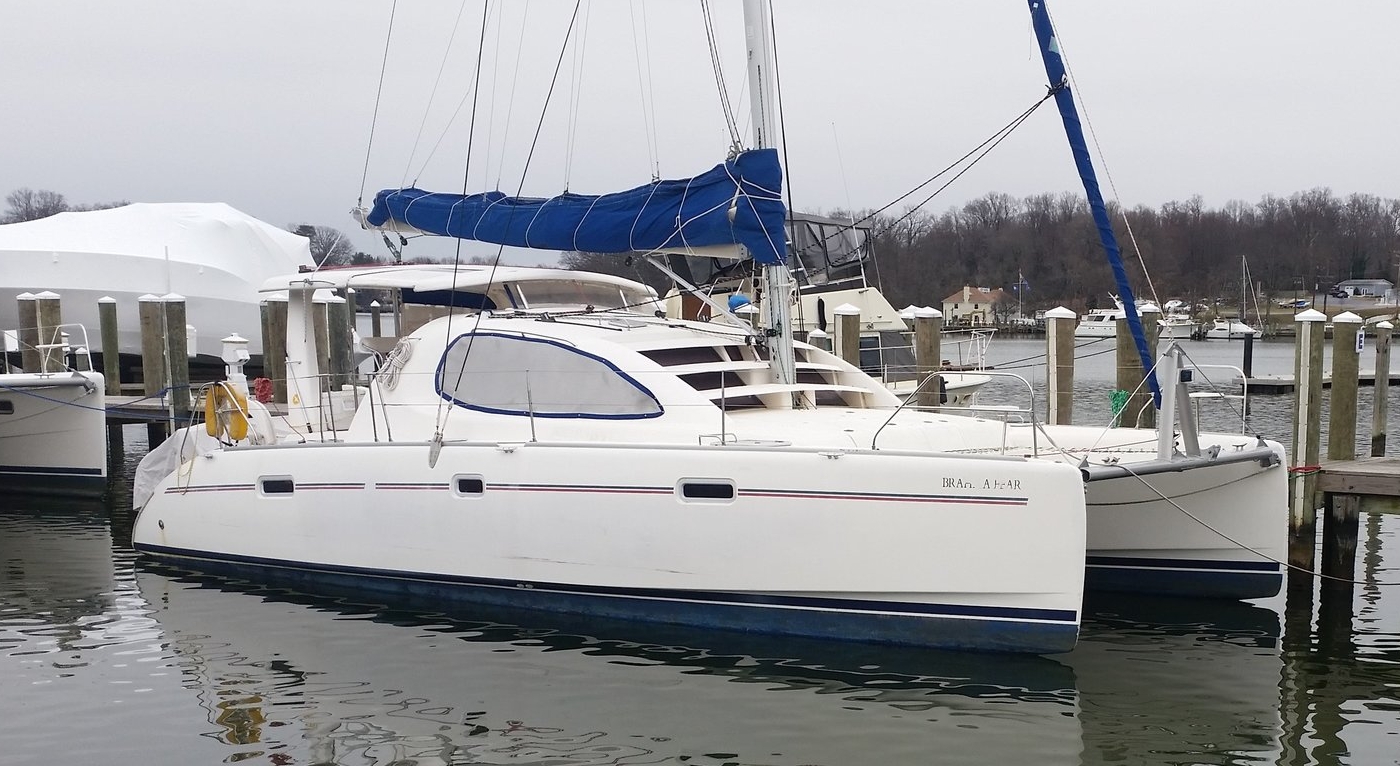
This catamaran has too much weight aft, which has resulted in the entire yacht being tipped back! The sterns are squatted into the water while the bows are completely clear of the water, you can even see light between the bow and the water.

This may seem harmless, but it could have drastic effects on the safety and performance of the yacht. As the sterns squat, any through hulls that are supposed to be high above the waterline are now closer to the waters surface. Many yachts sink in the winter when snow accumulates on the deck and pushes the boat a few inches into the water. Through hulls that are leaking and located above the waterline are now submerged and water begins to flow into the hull, sinking the boat in the slip.

The other issue is the rudders are now located deeper than you thought, and if you are passing through some shallow water, they may hit bottom and be damaged. 

Lastly, squatting the stern will tip the mast aft and increase the effects of weather helm. This will significantly degrade performance as the boat fights to turn into the wind instead of gliding along the pressure difference between the air and water.

It is very important to maintain proper weight distribution and trim of your yacht, especially if you have a light displacement boat.

Galley Net

When I bought Wisdom, she had a pressurized alcohol stove and oven in the galley. This is the equivalent to having a time bomb with no visible countdown. At some point, you know the thing will blow up in flames but you don't know when.

To alleviate my concern about burning Wisdom to the waterline, I quickly removed the stove and oven and replaced it with a simple alcohol and electric stove top. The space underneath the stove, where the oven used to be, is now available to be used as storage! More storage is always welcome, but there is one caveat: no fiddle.

When the boat heels over while sailing, anything in this space is liable to slide out of the storage area and onto the cabin sole. The space is lined with stainless steel, so the surface is pretty slick! I found myself using non-skid pads under particular items that lived in this space, such as the toaster, while other items were simply relocated to a safer place before sailing.

This quickly grew old until I found that the woven basket from IKEA didn't seem to slide too easily on the stainless steel. This opened up a whole new world of storage, as I could put galley and grilling items in this basket; this kept them close to where they were needed without the risk of them flying across the cabin when I heeled over.

For four years, life was simple. The toaster and the basket lived under the stove where the oven used to be. The basket was not the most efficient use of space for this area, and it also limited the size of what could be kept under there. Maddie got tired of us storing the pots and pans in the salon, when we had all that space available under the stove. She asked me to make a way to store these items below the stove where they are needed and to free up storage space in the salon. Her wish is my command!

I screwed small padeyes to the sides of the box, through the stainless steel plate (drilling through stainless steel is a real pain) and then attached an upper and lower section of rope. One end of the rope was spliced into an eye splice while the other end had a simple back splice. The line is tied to a bronze pelican hook, affording us the ability to open the netting in a hurry without much fuss yet still being able to adjust the tension of the net to fit the contents that we cram into it.

With the upper and lower lines set in place, it was time to begin making the net. I tied long lengths of line to the upper line with double constrictor knots. These knots will hold the lines in place without slipping while allowing me to ability to easily position them wherever I desire.

The lines were then hanging from the upper line, looking like a giant mess! I took the lines and tied zeppelin bend knots in them, forming the netting. Zeppelin bend knots are wonderful bend knots because the tails will exit the knot 90 degrees from where they entered. This means that when you tie the knot, the result will be an X. Having many X's set close together will form the net that will keep all our stored items in this area and not flying around the cabin.

A net is technically formed, though it looks like a real mess with all the tails hanging around. Maddie poked her head in to see how it was coming along at this point and she asked: "Can you make it look nice?" It did look like a mess at this point. Making quick work with a rigging knife, it quickly transformed into this:

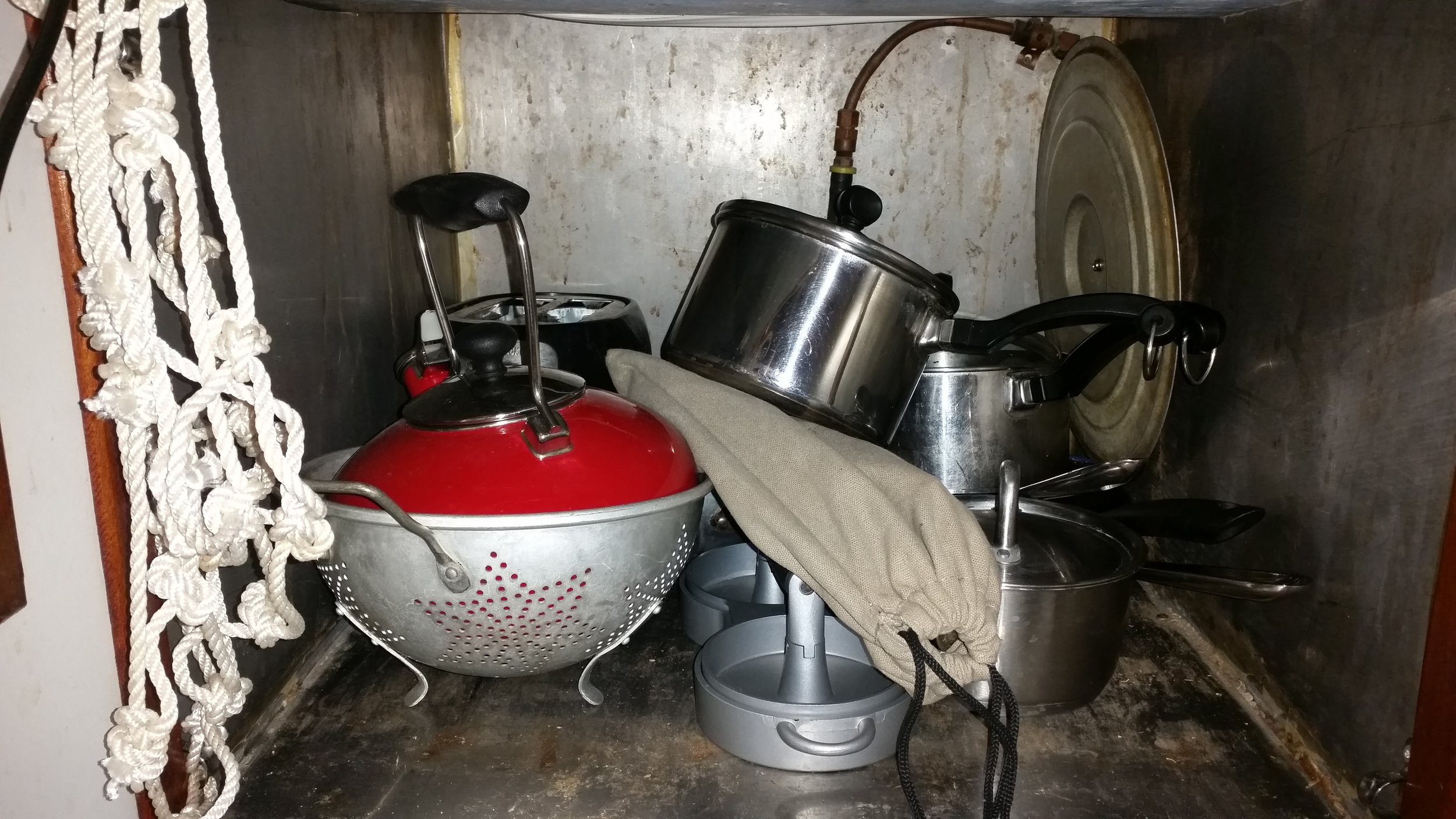
Now that the net was in place and installed, it was time to get rid of that basket and stuff all our pots and pans into this space.

When we want to pull out a pot, all we need to do is unclip the net and retrieve what we need. Since it is all open and stainless steel, we also have to ability to store pots and pans after washing them before they dry completely without fear of wood rotting inside the cabinetry.

Like anything on a boat, it is all a work in progress. It will be interesting how this space beneath the stove evolves in its use as we sail and cruise.

Cutting Planks Around a Knot

When resawing lumber to make planking stock, you have a few goals in mind:

  • You want to create clear planks with no flaws or knots
  • You want to convert as much wood into planks
  • You want to minimize waste

When you buy a massive 2x12, there will be flaws scattered throughout the piece. This is the price you pay when the price you are paying is low. If you opt to splurg, you can easily purchase perfect clear grain wood for an astronomical fee. If you are budget conscious, you will find yourself picking up your Douglass Fir at Home Depot or Lowes, where a 16 foot board only costs $25!

This flatsawn board has a few checks and a few knots, but the majority of the board is clear with very tight rings. Ripping the board into three will yeild one flatsawn section and two quarter sawn sections with tight and close annual rings.

After the board was ripped and cut, it was time to resaw the smaller boards to create the 1/4 inch thick planking stock for the dinghy. It is easy to discard boards that have major flaws such as knots or checks, but this would be wasteful. Yes, a flaw will always be a flaw, but it can be worked around!

Remember, when planking the hull, there is always a section of the plank that overhangs and will be cut off. If the flaw is towards an end, placing it in the cutoff section will make the flaw disappear while making that plank usable!

What if the flaw is smack in the center of the board? Is that whole piece lost? Nonsense! We just need to work around that problem to extract as much usable wood as we can.

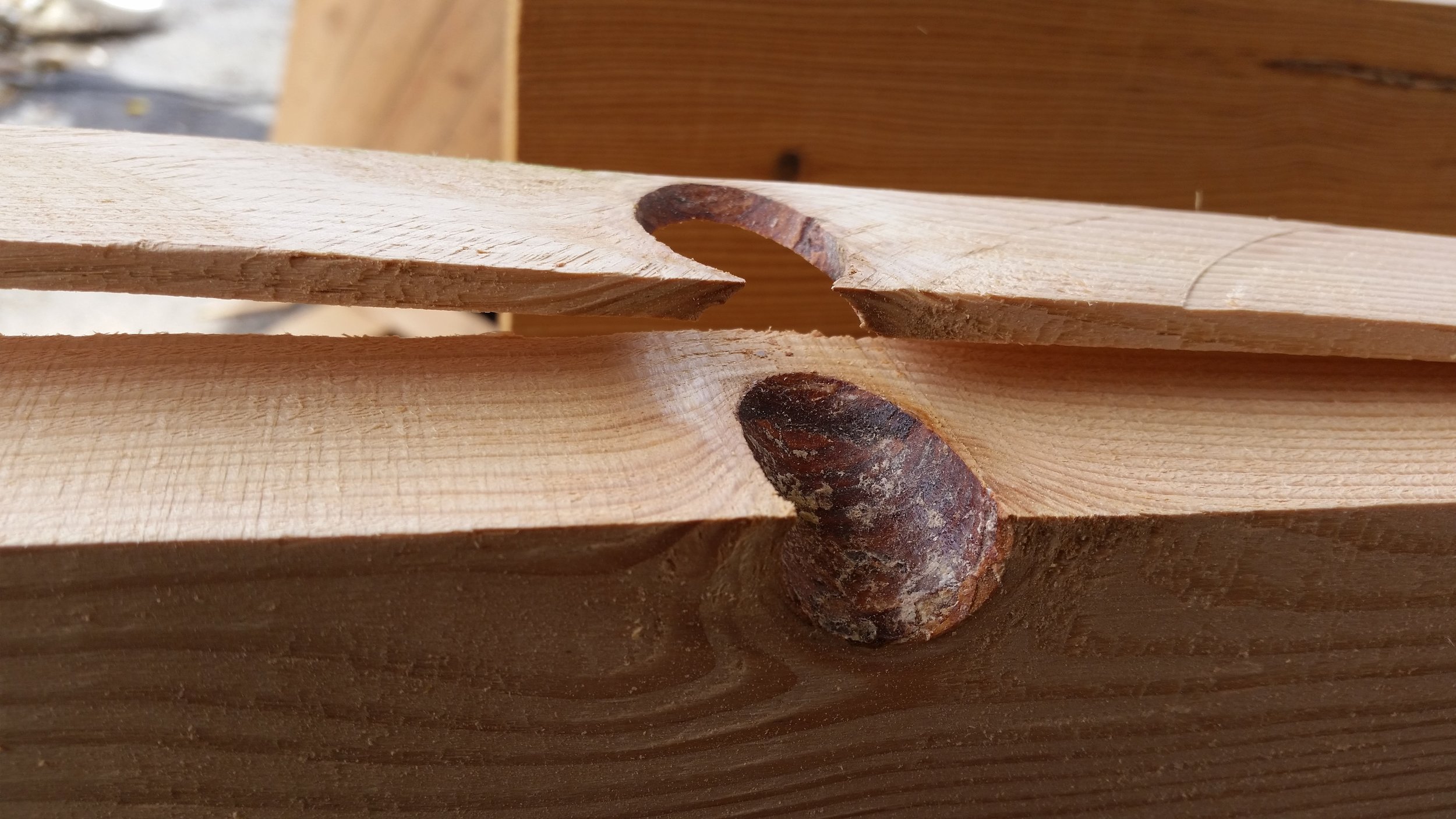
This gorgeous quarter sawn board had a big old knot right in the middle! To get as much clear stock out of this board as I could, I selectively resawed this board, carefully taking planks out of the board without involving the knot.

The top cut moves the knot over a bit, allowing the bandsaw blade to glide by in clear wood. This means that the first plank will be full height while no involving the only flaw in the board.

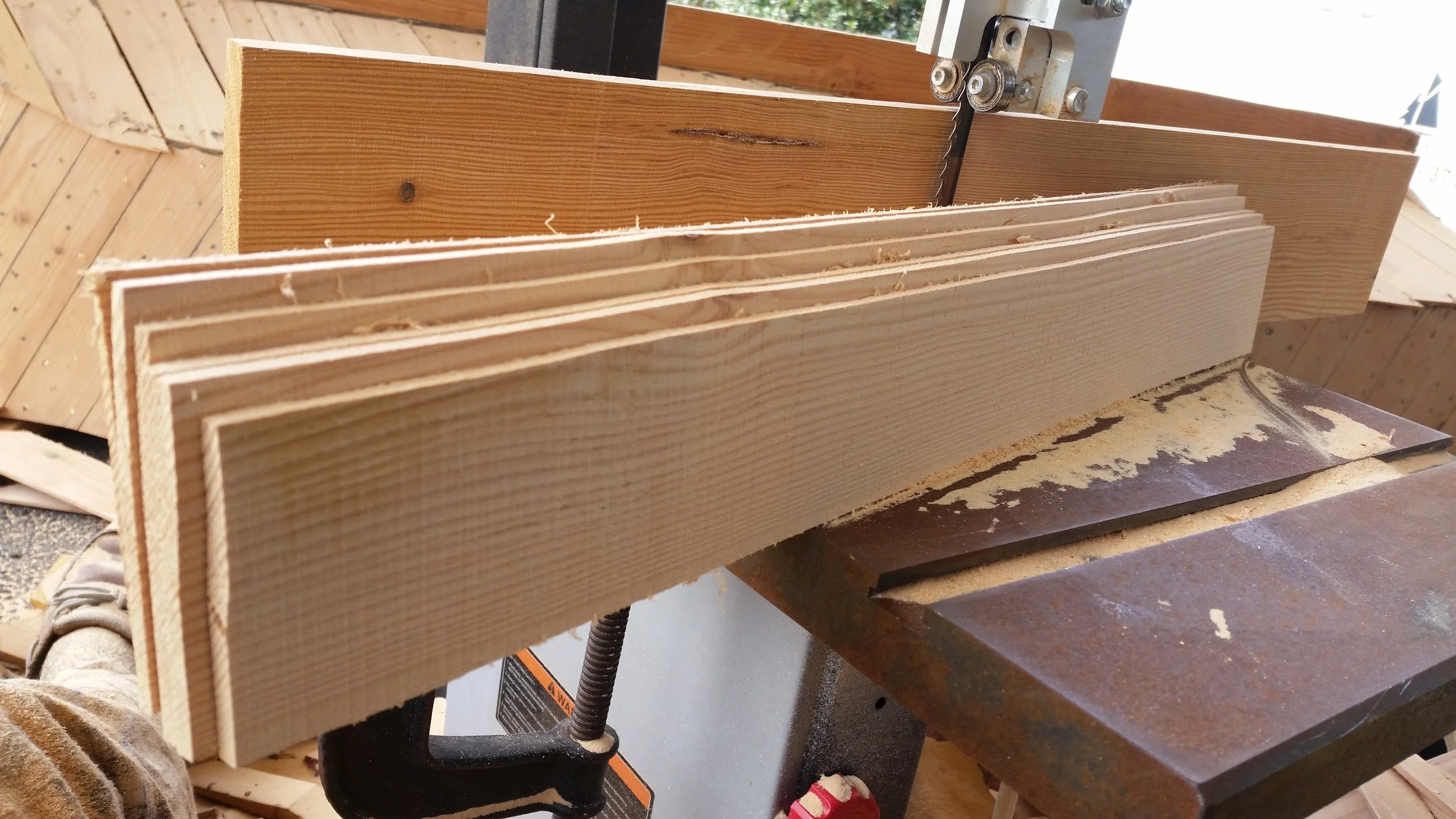
The process of cutting the top off to expose more clear wood on the side continues as you move across the board. The result is similar to the cut pattern when a log is quartersawn, where you form an alternating step pattern in the boards. The planks aligned vertically are all the planks that I was able to extract from this board without any sign of the flaw while the planks aligned horizontally are the scrap pieces that include the flaw.

Here, the board is reassembled, showing all the cut wood that came from it. You can see the off cuts that are flawed or not fair as they rest on top or on the side of the stack.

The good planking material extracted from this board will serve us very well as it is without flaws. If this board had been discarded, all of this material would have been lost! If the knotted section were to have been cut off, all the wood higher than the front plank would also have been lost. It is a bit more time consuming to orient the board in such a way as to extract as much clear wood as possible, but the cost savings are substantial and should not be overlooked.