Banyan Tree

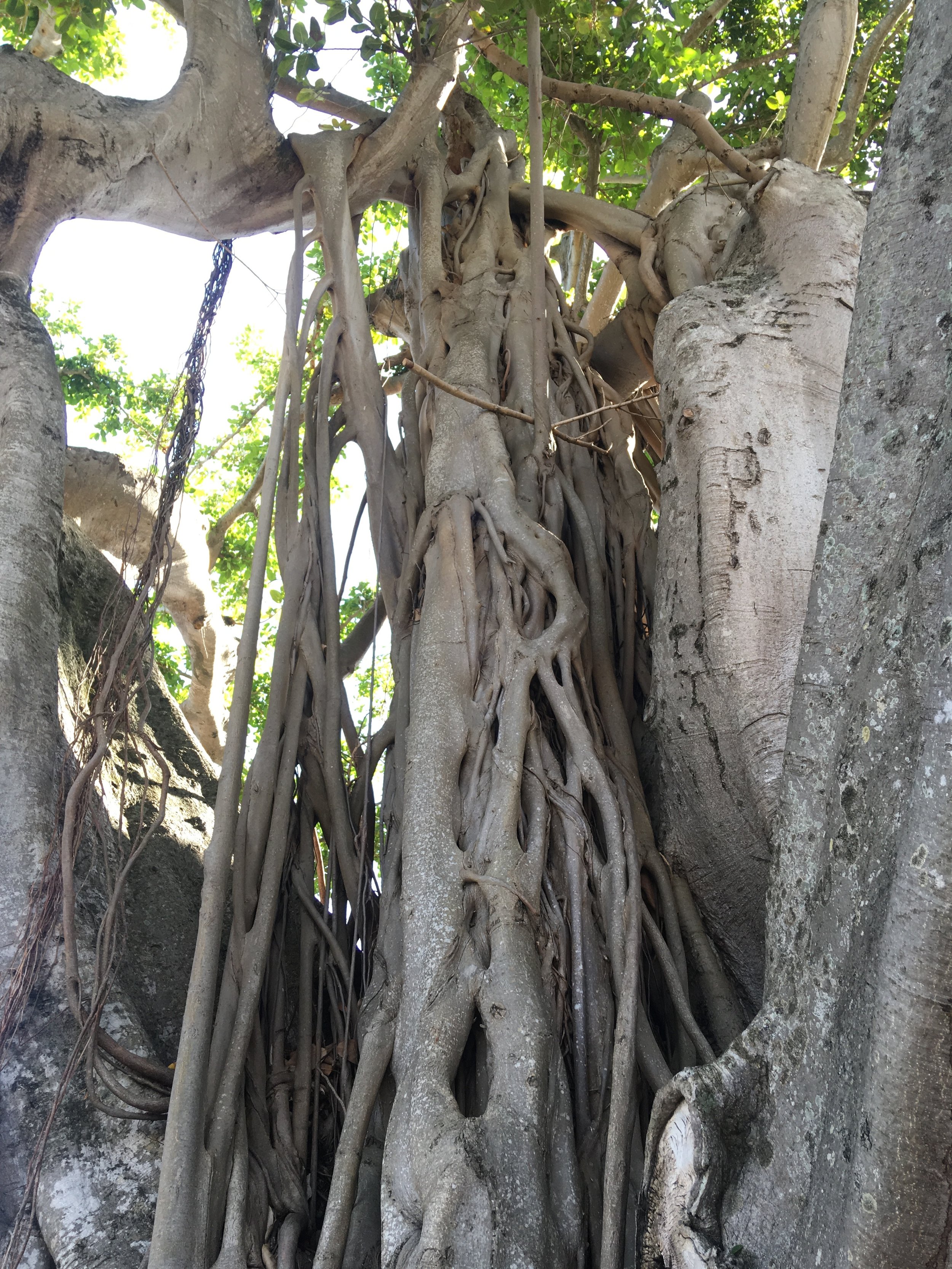
The coolest tree we have encountered is by far, the Banyan Tree. 

IMG_1969.JPG

As a member of the Ficus family, it will produce aerial roots from its branches. The roots grow down like small hairs until they reach soil. Then the root begins to grow into what looks like a trunk. 

The cool part is that as the limbs grow, they will meld together with other parts of itself to form a trunk structure that looks like a melted candle. 

Honestly, the tree looks like it was designed by Gaudi! The many trunks will pour down like a waterfall as they journey their way to the ground. 

Container Art

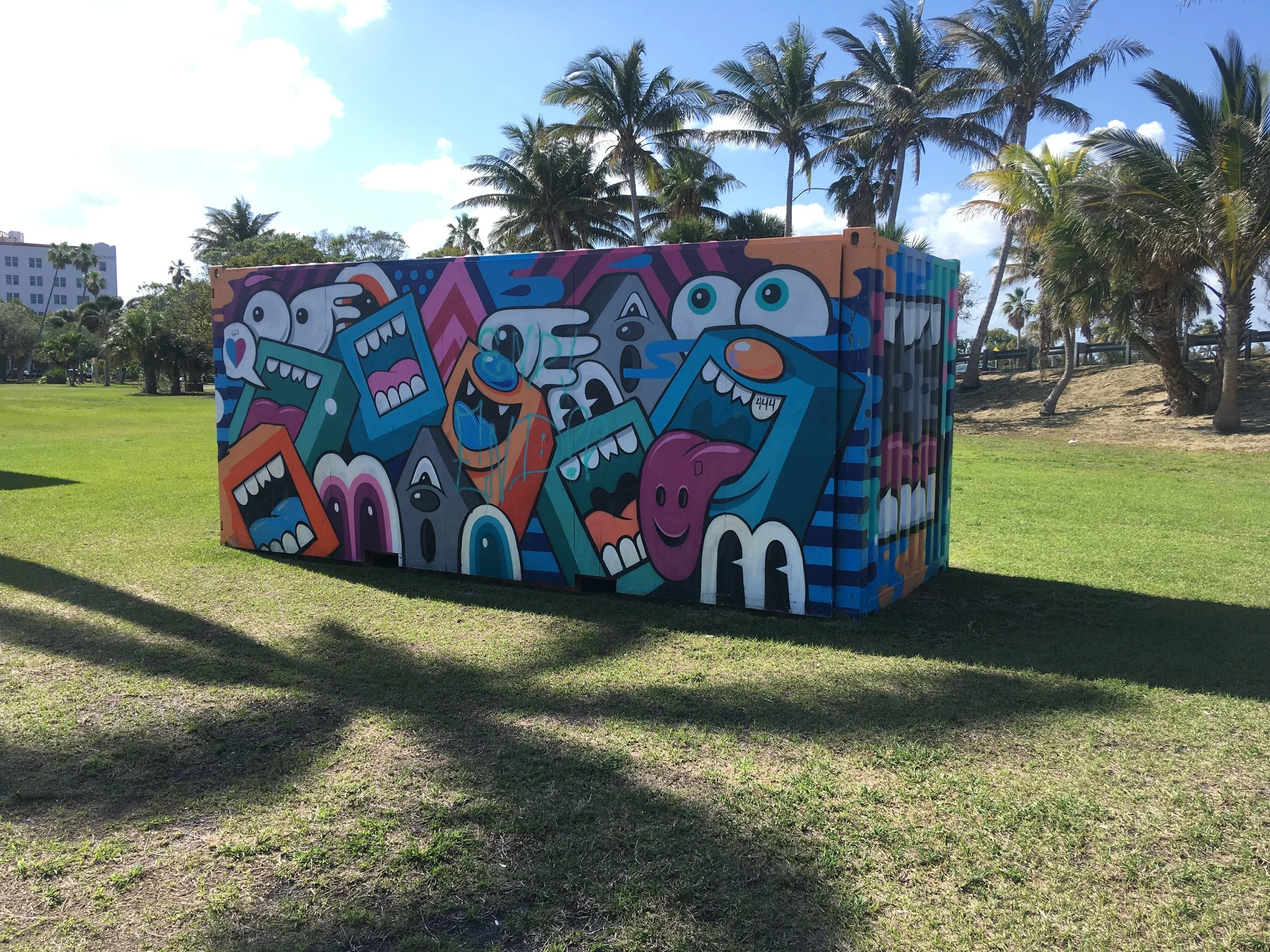
After passing under the bridge with the mural, we came out and encountered this installation. 

IMG_1965.JPG

Being a dentist, I was amused by the amount of teeth in this installation!  

Once again, if you are in a rush and don't stop to enjoy the towns you pass through, you would then miss out on these unique sights! 

Bridge Art

While anchored near Lake Worth, we came ashore and found this gem painted on the side of the bridge abutment! 

IMG_1961.JPG

This painting goes unnoticed, as everyone passing through the bridge passes on the other side of the abutment, and cars can't see this area of the bridge. The only ones who get to enjoy this spectacle are those who are walking through this park and chose to take the walkway under the bridge. 

While cruising, you will find art in different places in different towns, but it all serves as a representation of the local flavor in that town. 

Keel Art

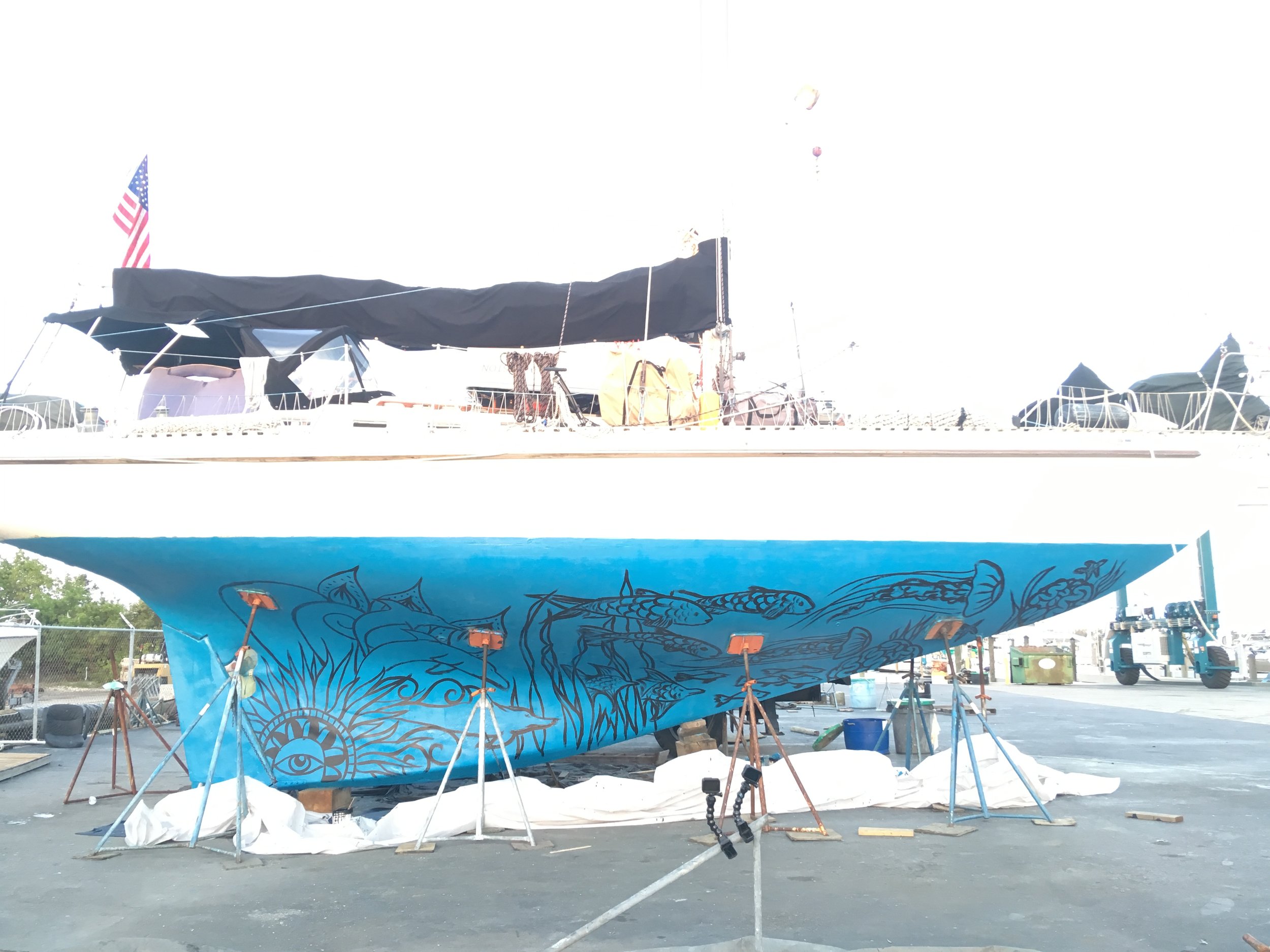
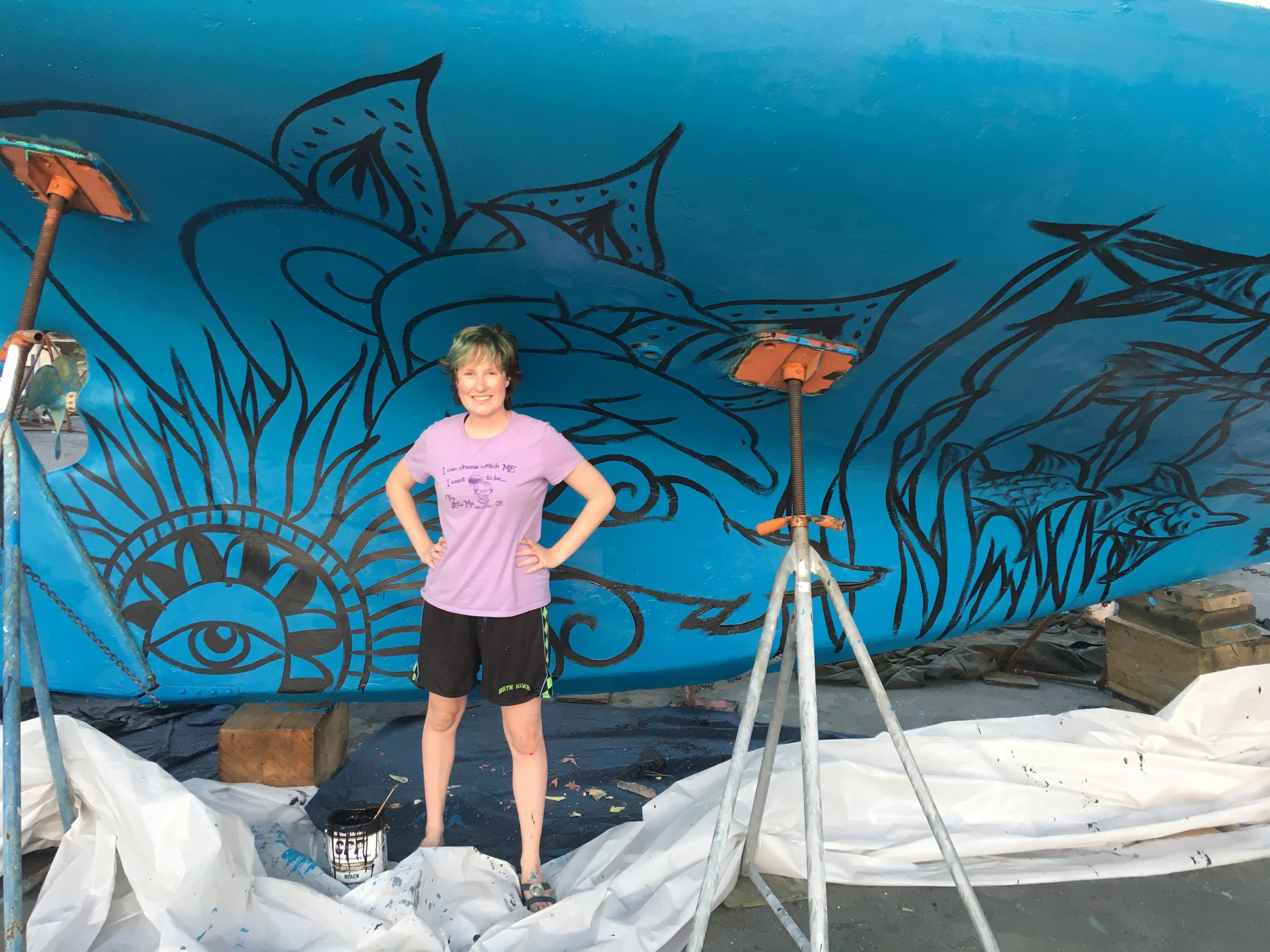
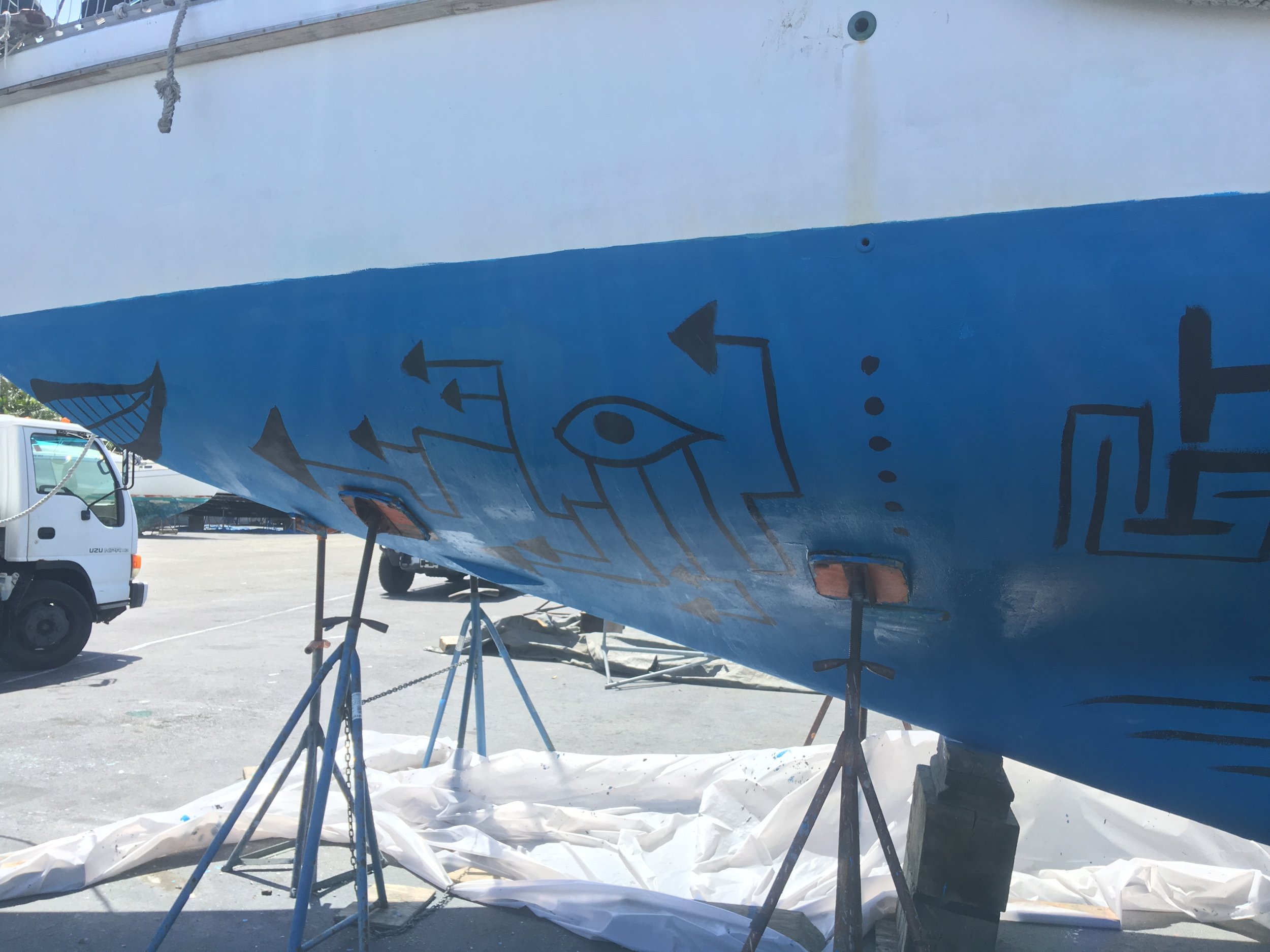
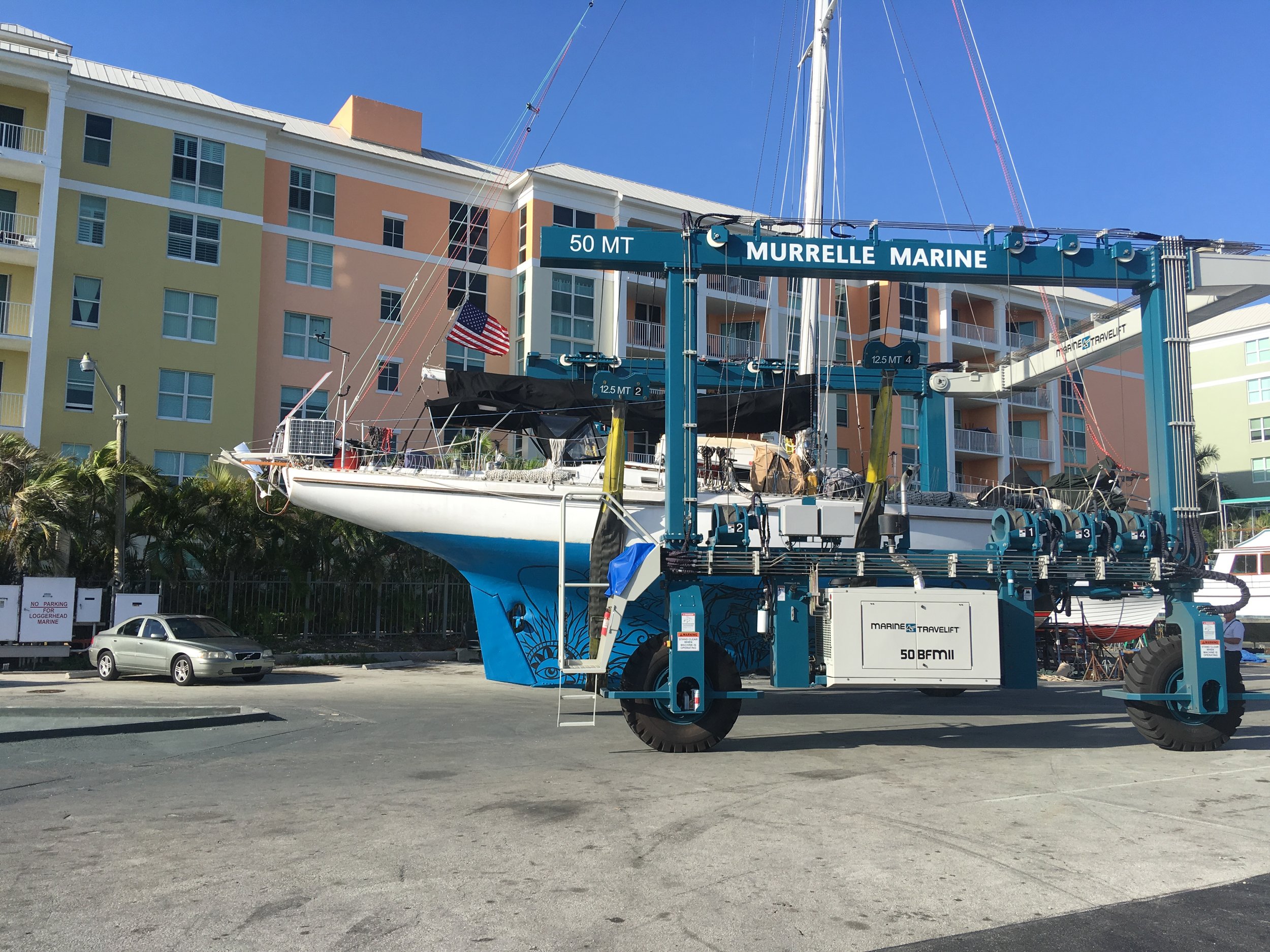
Bottom painting usually implies smearing a slow release poison onto the bottom of your boat, but for Maddie, it is a moving canvas! 

IMG_1873.JPG

Last time Maddie painted the mural in topside paint over the bottom paint. It held on well, but so did everything that grows under the sea! In a week, the mural was very fuzzy and required constant scrubbing to keep the hull clean. 

This time, we were planning on doing a new mural, so we picked up some back antifouling paint while we were at the chandilery.  

IMG_1888.JPG

I tried my luck on the port side, and we quickly learned why Maddie does art and I do teeth and rigging!

IMG_1904.JPG

At the end of it all, we splashed Wisdom and the mural is now in a place where only the fish can enjoy it (at least until we get to clearer waters)! 

IMG_1948.JPG

Once we get to the Bahamas, the bottom will be much easier to see! 

IMG_1957.JPG

Spare Rudder Quadrant

Steering is a very important part of a yacht. Without it, your boat becomes a shelter! In the spirit of having spares aboard, the question comes up about keeping our old quadrant as a spare? 

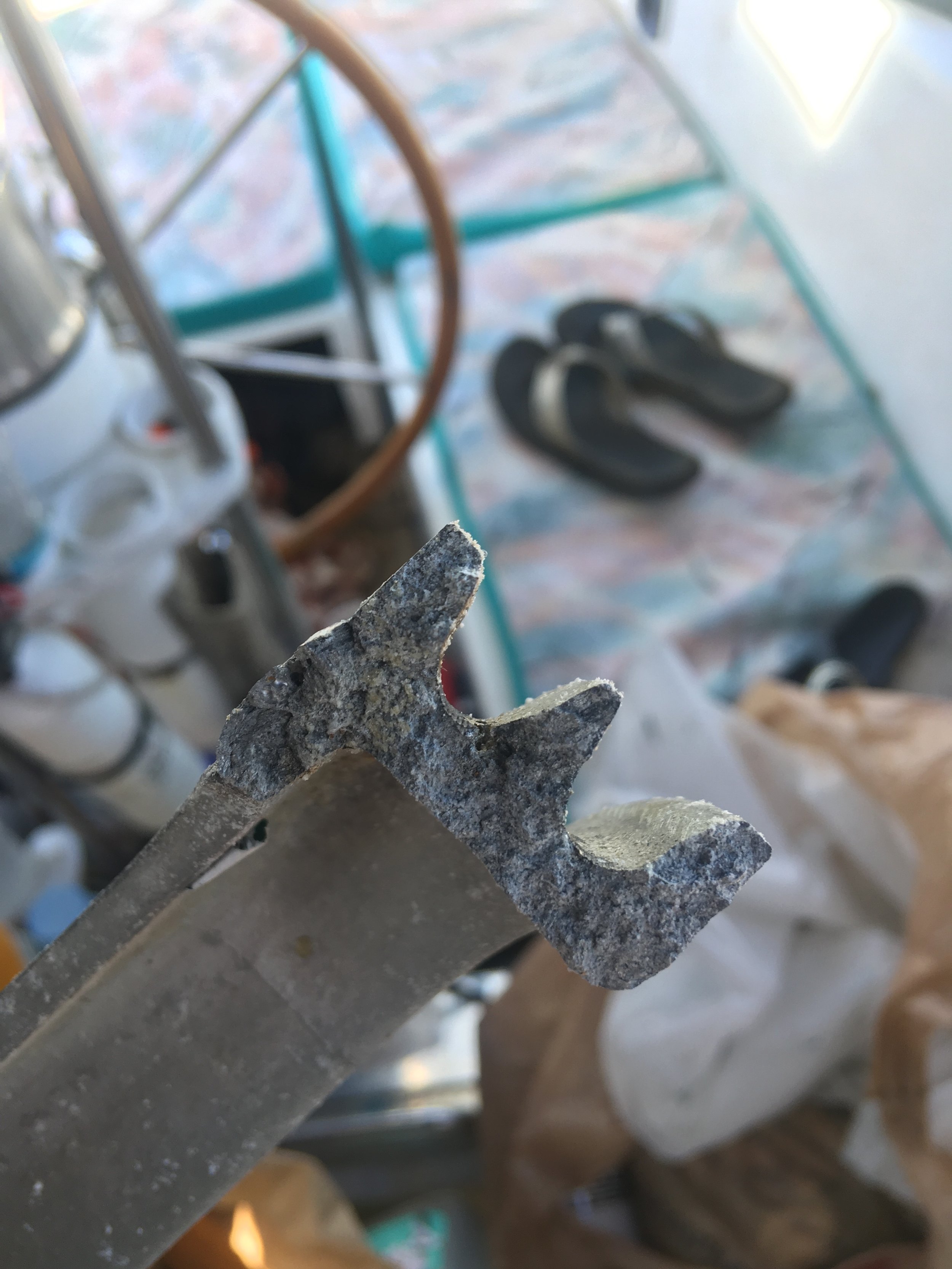
We had it welded once, and it shattered, so now we are replacing it with a bronze unit from Edson. Should we have it repaired again and keep it as a spare should anything happen to the bronze quadrant? 

IMG_1860.JPG
IMG_1942.JPG

The reason we switched materials to bronze is because bronze will bend before it will shatter, so the hit that craked our old quadrant would probably only severely bend the new one. 

The aluminum of the old quadrant is also made of large crystaline structures, which are weaker than a metal made of smaller crystals. So far, the aluminum quadrant has two strikes against it! 

IMG_1927.JPG

Upon repairing the quadrant, we would have a weak spare, as a backup to our strong primary system. This is fine as its purpose would be to get us to shore to carry out repairs. But carrying this spare becomes an issue! Rudder quadrants are rather large in our situation, and our space is very limited. Having a spare means storing and carrying a spare!

So we could pay money to fix a weakened and corroded unit that will then be a burden to store, to act as a spare for our new and very strong primary system. The logic should be pouring in at this point. 

If we lose our quadrant, we do have an alternative option, which is to install our emergency tiller! This means that if we have a steering issue, we can simply pop the pipe onto the rudder post and steer away! Installing a tiller is much easier than swapping a quadrant, and it is much easier to store as well! 

We decided to save the money for the repair and instead throw out the broken quadrant. The boat has sailed many a mile with no spare rudder quadrant, and the only times the quadrant has ever broken have been while under tow! 

If you have a broken part that you replace with an upgraded version, consider leaving the old one behind instead of carrying it along with you as you cruise.