The Importance of a Dry Run

It may seem boring for us to spend the first three months of our journey in the Chesapeake bay, but there's a very important reason that we are doing so.  We needed a dry run.  It's helping us figure out the important things before we cross an ocean, so that we know that when we do set out, we are as prepared as we can possibly be.  I have only gone on one sailing journey in which I actually helped sail and it was two years ago.  It was extremely important for me to have this time in the Chesapeake to relearn all the skills that have been laying dormant for the past two years.  I am also gaining practice with things that I didn't even learn the first time around such as attaching hank on sails and putting in a triple reef.  As I do these things for the first time, I'm not only learning how to do them, but I'm also gaining a better idea of how the boat works as a whole.  This knowledge then helps me control it more effectively when we are at sea.

Besides the technical knowledge, however, this trial run has also given us important practice with things like rowing to shore and provisioning. We have learned how much fruit we consume in a week versus how long it will remain edible and we have also learned that we suck at keeping our garden alive while detached from shore hoses. Along those lines, we have also gained an understanding of how much water we tend to use in a given week, allowing us to ration appropriately when showering and doing dishes. 

That brings us to our rain water collected. We have had plenty of weather while away so far, which has shown us that we can collect more than 60 gallons of rain water in a single down poor. We learned the hard way that we can't sit on our flexible solar panels, but we were able to replace them with new ones within a couple of days since we were still in Easton, Maryland. It is far better that we figure these things out while still in familiar territory rather than discovering that something isn't working the way we had planned in the middle of our trek to Bermuda. Though it might not be as fun to follow along with or watch on YouTube, this trial run was completely necessary for us to prepare for the year of travel ahead.

Spotting a Cruiser: Laundry Day

The main difference between cruisers and weekenders is laundry. Those who go sailing for a weekend, week, or month, will typically carry all the clothes they need for the trip. As the clothes get dirty, they will simply be stowed away in a hamper or bag until they get home and can do all the laundry once they return. This means that these people will have clean laundry for the duration of their voyage and never need to do any laundry as they go! 

Cruisers differ from these people in that they will not be returning anytime soon to do laundry, and it is physically impossible to carry enough clothes onboard for the entire journey. This means that cruisers will need to set out and find places to do their laundry. Typical favorites are laundromats, where all the clothes can be washed in a few hours out of the day. When a laundromat is not to be found, other methods of doing laundry will be sought out.  

On Wisdom, we use a small and compact machine called the "Wonder Wash" which allows us to do our laundry independent of electrical access. It has a small hand crank on the side that you use to operate the machine as it spins to wash your clothes. While washing and rinsing are done in the compact confines of the machine, drying the laundry is a whole different ball game. 

IMG_1677.JPG

The laundry needs to be hung out to dry, and on a sailboat, open space is limited. A typical favorite is to hang the clothes up on the lifelines. Our concern was that the blue from the dyneema lifelines would leak into the clothing and give us a lovely blue strip through all our shirts and shorts. Instead, I hung up three whilte nylon cords running rom the head stay to the mast, and from the head stay to the shrouds. 

These cords allowed us to hang two loads of laundry from the machine over the foredeck where it could drip dry in the afternoon sun. 

Where you do your laundry and when is important. While your clothes drying may add some nice color to your yacht, do remember that you are anchored in front of expensive waterfront property. It is best to do laundry in a quiet area where you see few houses, and to do it on a weekday. Most waterfront homes that look like small hotels are actually weekend homes for the wealthy. If you do laundry on a weekday, they won't notice your presence and won't complain to the marine police about "that eyesore over there." 

Being discreet is important when passing through new waters. It is important to remember that you are the visitor and you should try to minimize your appearance as to attract less attention from the authorities. If you become an eyesore, some locations will actually ask you to leave and anchor elsewhere. What if they tell you to move as a storm approaches? By staying below the radar, you can enjoy the protected waters of an anchorage, keep your clothes smelling fresh, and cruise without causing a ruckus. 

Noisy Neighbors

Cruising means anchoring in new areas as you explore the waters around you. Along the way, you will find quiet and peaceful anchroages that you will never want to leave. If you hang out in one of these places long enough, the weekend will come and other boaters will descend on these gems, Turing them into bustiling bee hives with boats combing and going constantly. People will swim in the waters amongst the passing boats and the whole area will come alive with commotion.  

By sheer probability, one of these boaters will be equipped with a very loud stereo system and will be on a mission to go deaf as soon as humanly possible. These boats will blare and blast their music all day long as they party and drink until you can no longer stand the noise.  

There is a simply tendency that all of these noisy boaters have in common, they will be a powerboat. More so, they will be a new power boat that is very flashing with all the latest gadgets. 

While it may feel like the noise will never end, there is hope! The owner of this powerboat obviously has a job and needs to return to work on Monday morning. Otherwise, how could he ever afford a boat like that?! 

As the sun sets on Sunday, these floating speakers will raise their anchor and head back to where they came from as the owner needs to continue his routine of work hard, party hard. You, on the other hand, will enjoy the peace as it returns to that quiet anchorage for you are cruising and don't need to pack up and return to port for you are always at home in your floating paradise!

Timeless Sunsets

IMG_1664.JPG

I was recently asked: "You must get to see a lot of sunsets" 

Up until that point, I have taken for granted the fact that I get to see every sunset. I see the ones that light up the sky with a red glow and the ones that fade out into blue obscurity as the night encroaches. Seeing the sun set simply becomes a daily occurrence becuase I pretty much live outside and connected with nature. As the sun begins to go down,I notice it because the sun comes in at a harsh angle, this alerts me to look in its direction and enjoy the splendid display in the sky above me.

Sunsets will never loose their majesticness, but they will lose their count. I honestly have lost count of what day we are, and how many days we have been cruising, as such the number of sunsets I have seen is also lost to me, but the wonder always remains the same. 

This timelessness of the setting sun brings peace to each day as night comes over us and we relax our way to sleep. 

Navigating Without Charts

Current charts are a vital navigational tool. It is far from wise to venture into new waters blindly without a good set of charts, but in the realm of the reckless, it can be done! 

You may find yourself entering a new port where you were not able to get charts for before you left, for one reason or another. The important thing is that you have now found yourself in the predicament where you lack information about the waters you will travel through to get to shore so that you can find charts of these waters. Fear not, as there are ways to navigate without the use of nautical charts! 

Charts will have navigational aids displayed on them, showing you where everything is and helping you find your location and your way. Without the chart, you will need to rely on only these navigational aids. 

The most common and useful aids will be markers (buoys and day markers) and range lights. Buoys mark the channel, which is deep water, deep enough for commercial vessels to pass through. These channels can be wide, and ideally wide enough for you to tack within. Markers are also numerically and color coordinated, allowing you to stay on course and find your way into the heart of the town with ease. Green buoys are numbered with odd numbers, while red buoys are numbered with even numbers. The numbers are set ascending as you enter a channel and lead up to the main harbor. 

If you are out at sea and trying to find your way in, you need to find buoy #1, which would be green. From this buoy, you would then need to spot buoy #2, which would be red, and then search for buoy #3 which would be green. As you make your way up the channel, the numbers will continue to ascend. This lets you know that you are on track and staying in the safer water depths. As you enter a channel, you need to remember the 3Rs: Red Right Returinging. This means that as you return to port, the red buoys pass your right side. 

Buoys are a handy navigational aid, but they pale in comparison to range lights. Buoys require you to constantly search for the next marker as you search for your way up the channel. Range lights serve as a giant beacon that will guide you in with no other aids needed. 

Range lights are two lights setup on shore, the front light is set low, the rear light is set high. When you are in the middle of the channel, the two lights will appear stacked. When you see this, you know you are ready to enter the harbor on a straight shot with no fear of underwater surprises. Range lights are set far apart from each other, so if you are to the left of the center, the lower light will be off to the right side. If you are to the right of the center, the lower light will be to the left.  

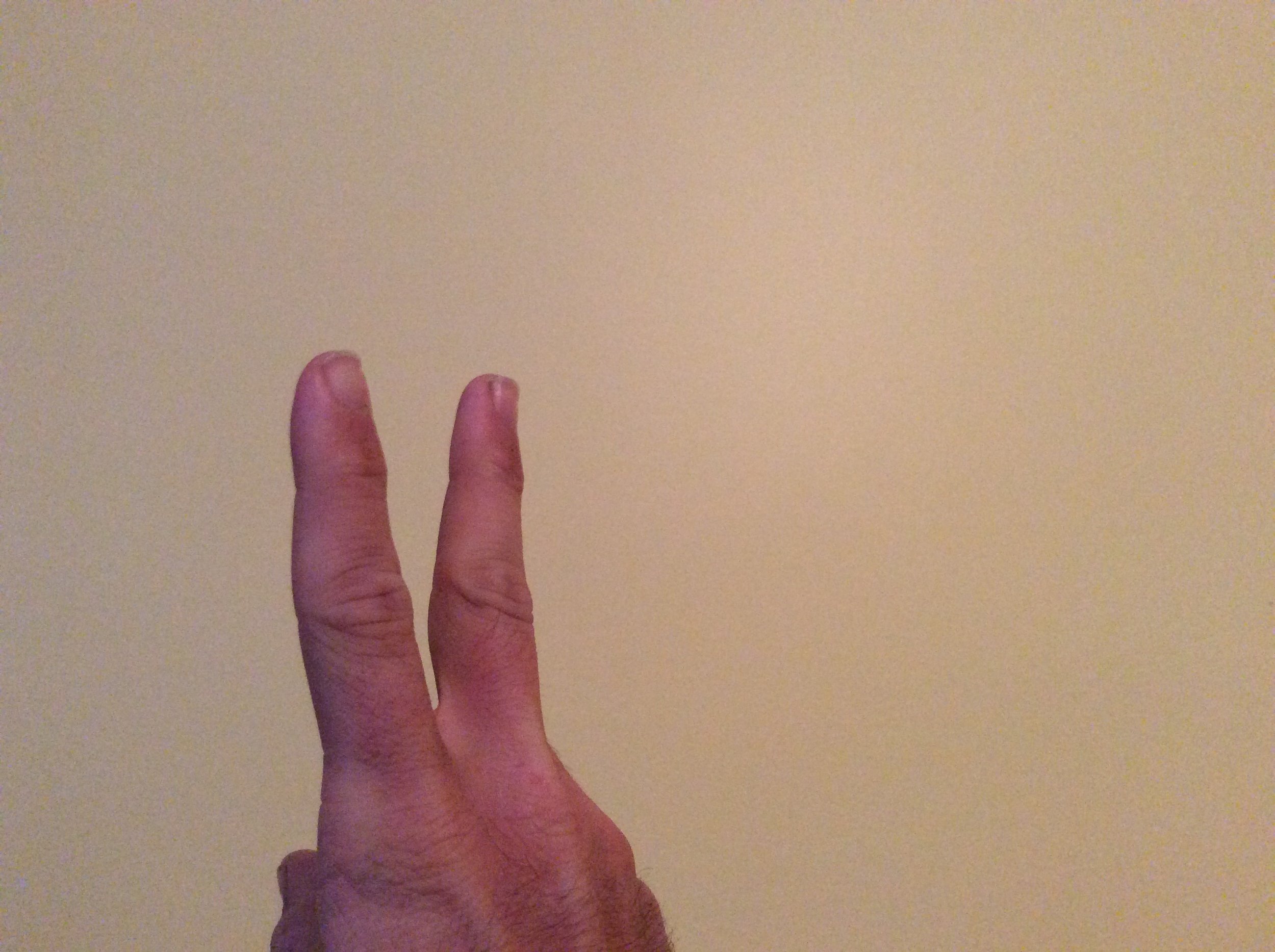
An easy way to figure out the light orientation is to hold two fingers out in front of your face, one set behind the other.  

image.jpg

When you are lined up with the fingers, they appear in a row and the rear finger is behind the front finger. The range lights are set the same way, stacked in appearance from the water. 

image.jpg

If you are to the left of the center, the front and lower light will appear to be to the right of the rear and taller light. 

image.jpg

If you are to the right of the channel, the front and lower light will appear to be to the left of the rear and upper light. 

Finding the range lights and keeping them stacked will keep you in the center of the channel and safe as you make your way into the harbor with no charts, simply relying on the navigational aids setup by those with a profound knowledge of the sea floor below the waves.