Life Aboard

Planking the Stem

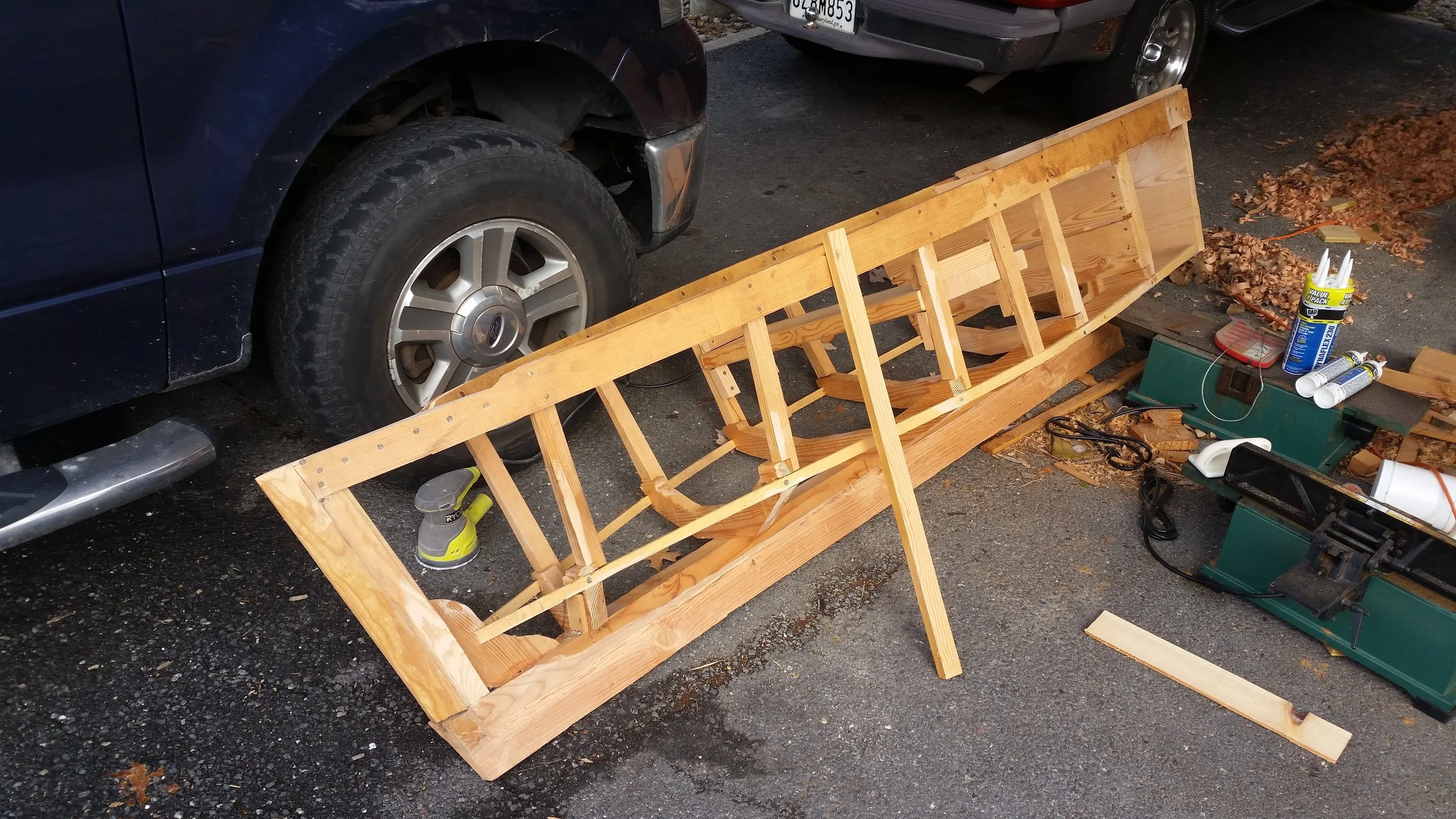
The stem is a very important part of the dinghy, this area will get a beating as it cuts through waves, bangs into piers, and is dragged up beaches. To make everything strong and watertight, the strakes need to tuck into a rabbet joint on the stem that is filled completely with bedding compound. 

Bedding compound is messy as it is goopy and sticks to everything! To avoid these messes, dry fitting the planks is crucial. Once all the planks are cut and fitted, then the bedding will be applied as the boards are nailed on.

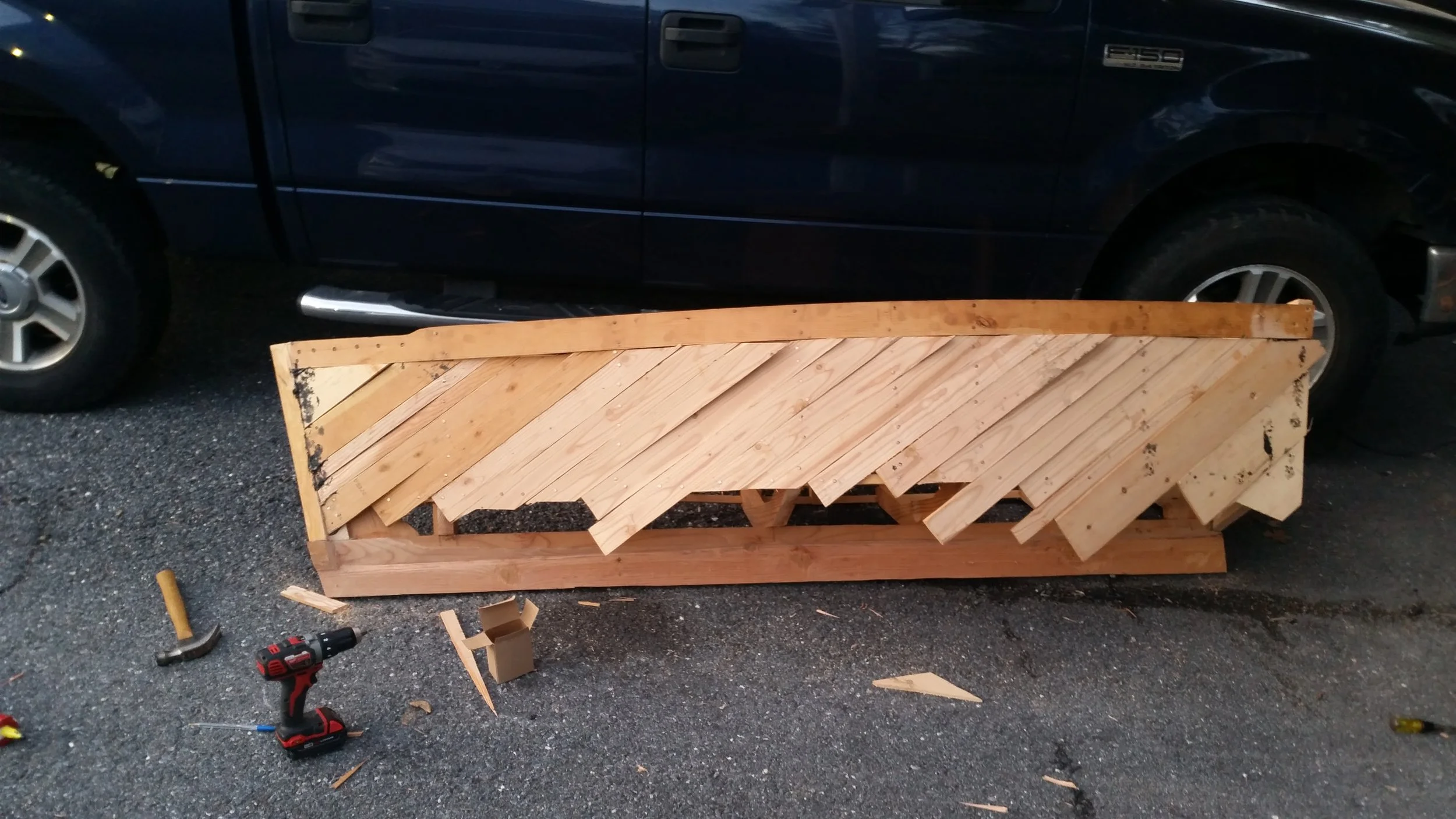
The bow on our dinghy is going to have a very narrow angle of entry to facilitate its ability to cut into a wave and decrease the slapping and banging that occurs in a slight chop. The topsides are going to extend down to the forefoot, and the bottom planking will fit around this area.

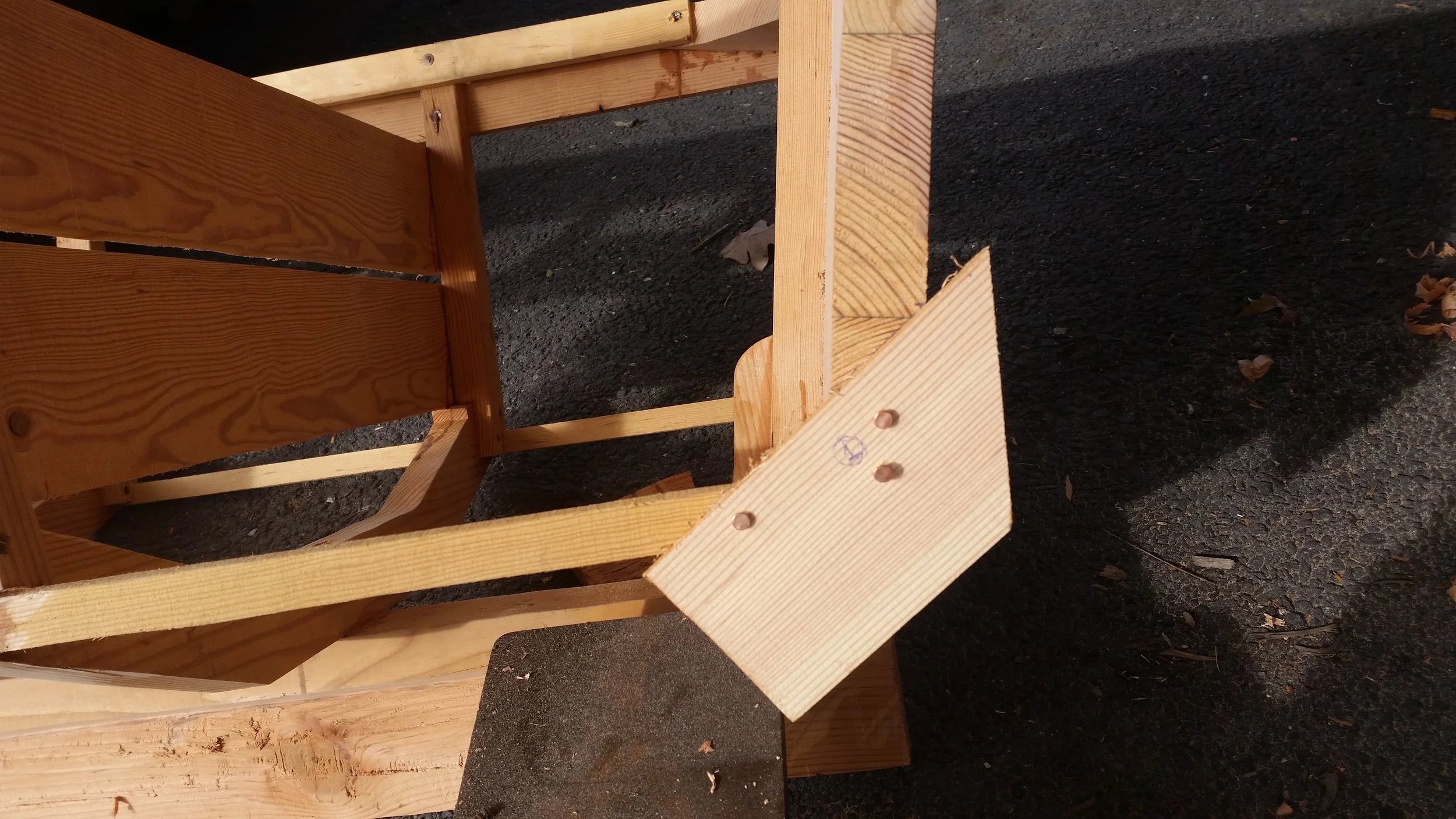
To get this effect, long strakes were cut that could reach from the sheer to the forefoot, and then the rest of the planks were cut and fitted to match. Cutting the planks is simple, the first cut is marked with a pen at the sheer, then it is cut. Once that part is test fitted, another line is made where the plank reaches the stem. Marks are made where the rabbet line is, and the board is cut with a miter handsaw along that line. This produces a very tight fit that will keep out any water that might try to works its way through.

Up to the first frame, all the planks ended at the chine log. For the very short span between the first frame and the stem, the planks skipped the chine log and continued on to meet up with the stem. This produced the very fine entry angle I was looking for when I designed the hull without the issues of fitting tiny bottom planks that will practically need to be scarphed to the join them securely.

Once everything was test fitted dry, it was time to remove all the boards and install them again using copper nails and bedding compound.  With everything attached, it is now time to wait for the bedding compound to cure so that the hull can be faired and prepared for the second skin going in the opposing direction.

Morty is Out!

Morty went with us to visit Maddie's cousins that were in town. Maddie's cousins are really young so they played with Morty and Morty played with them all day long! 

The kids would run and Morty would chase them, then they would throw his toys for him to fetch. After the kids got tired, they moved inside to play ping pong, and Morty designated himself as the designated ball boy. Any ping pong ball that fell off the table was appropriately and promptly tracked down and captured. Morty would then march back over to the kids with an air of greatness and a ping pong ball in his mouth. 

This continued late into the night, and when we loaded Morty into the car, he checked out! The little corgi that was running all around, all day long, was now sleeping with his head on the arm rest. 

When we arrive at the marina, Morty usually perks up. When I unbuckle my seat belt, Morty jumps around his seat and is ready to run around the parking lot as I make my way to the pier, only to join me as I begin my march down the dock. This time, Morty slept as we entered the parking lot, and flinched his ear when I unbuckled my seat belt. There was no excitement, no jumping, no energy at all. Morty was tuckered out and ready to continue sleeping as soon as we got into the boat. 

As I got out of the car, Morty looked at me with eyes that urged me to carry him to the boat. I denied his offer and he walked slowly and directly to the pier. There was no energy wasted on smelling tires or blocks of wood where all the dogs leave their mark. Morty was on a mission to reach the boat as soon as possible to continue his much needed slumber.

Starting Double Diagonal Planking

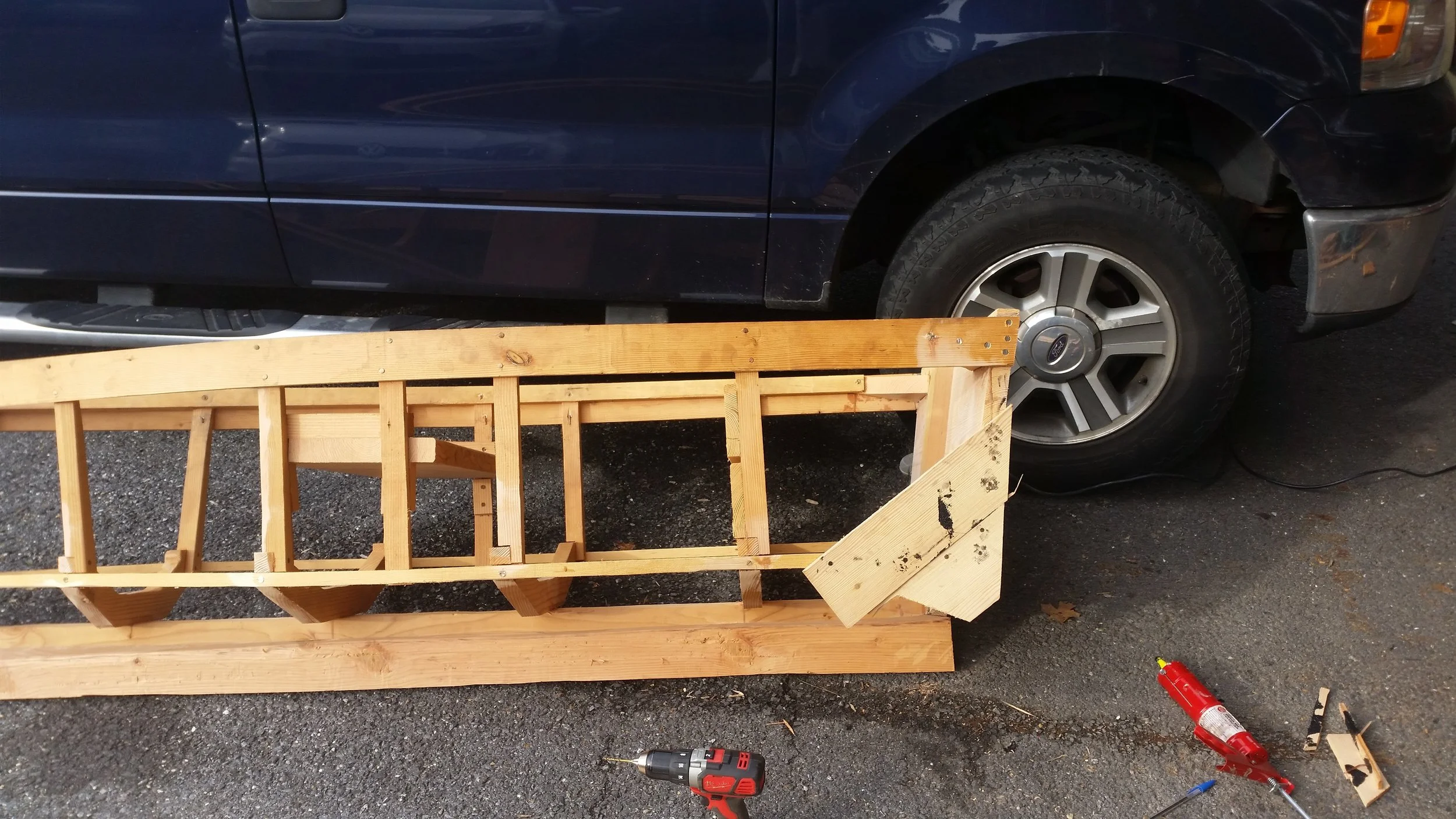
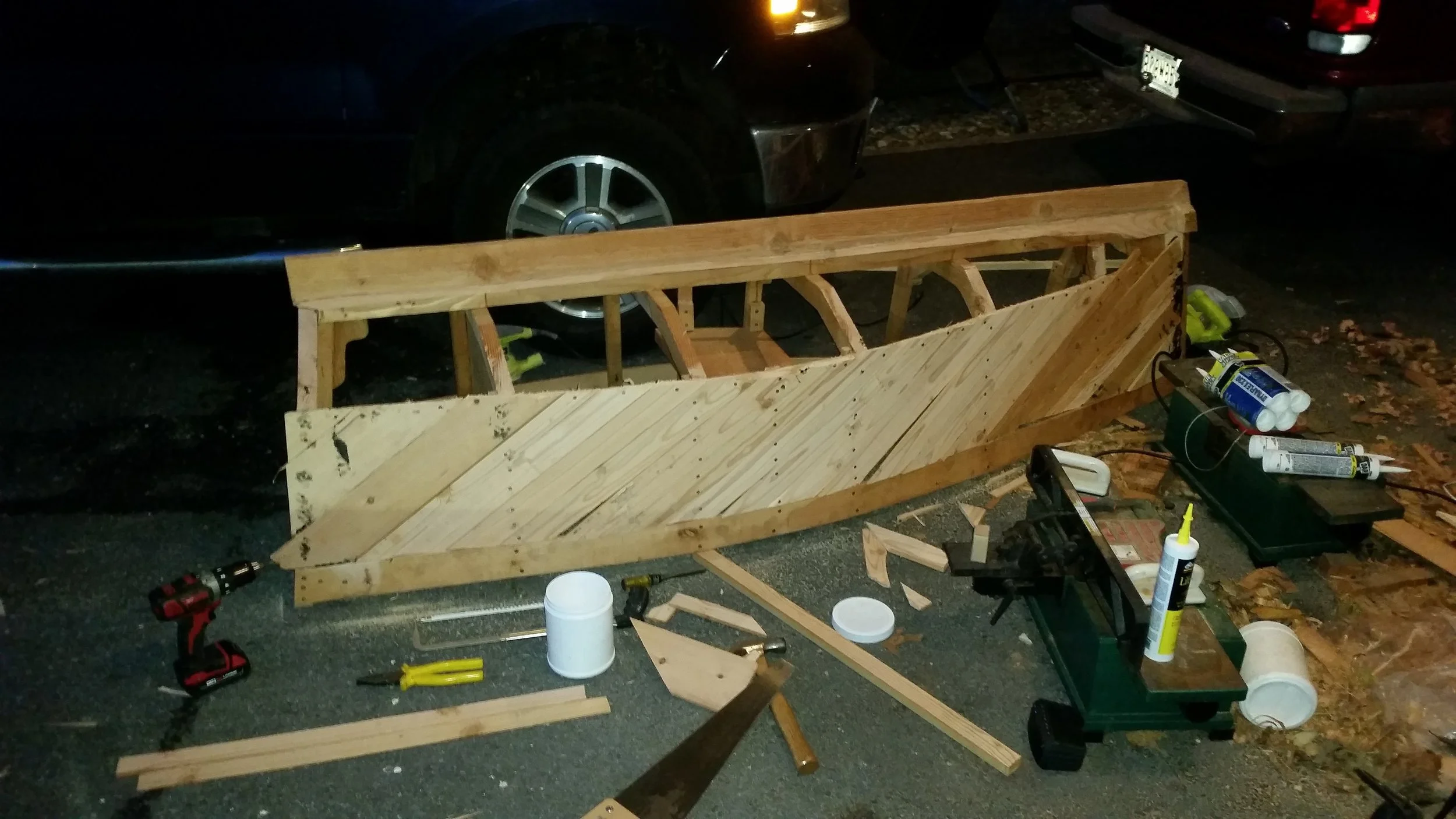
The hull is now ready for planking, all the structural members have been built and finished! Unlike carvel planking where the first strake placed on the hull is the garboard, on double diagonal planking, the first strake placed is the topside transom piece. 

The first piece was dry fitted and held in place by copper nails that were not driven in all the way, facilitating its removal and keeping the holes fresh. This was also done on a very dry and cold day when the wood is as shrunken as possible. As the wood warms and humidity increases, the wood will swell onto the nails and lock them in place!

With the fit verified, bedding compound was placed on the transom edge because this seam will be external and making it water tight is crucial.

The second piece was also test fitted and then bedded and nailed into place using copper nails. Steel, galvanized or stainless should be avoided on a wooden boat. The wood will hold moisture and cause the galvanized steel to rust forming red rust streaks that will bleed from the holes, while stainless will suffer crevice corrosion and will part internally. Copper and bronze are the preferred material for boat fasteners, though they are overkill for a dinghy.

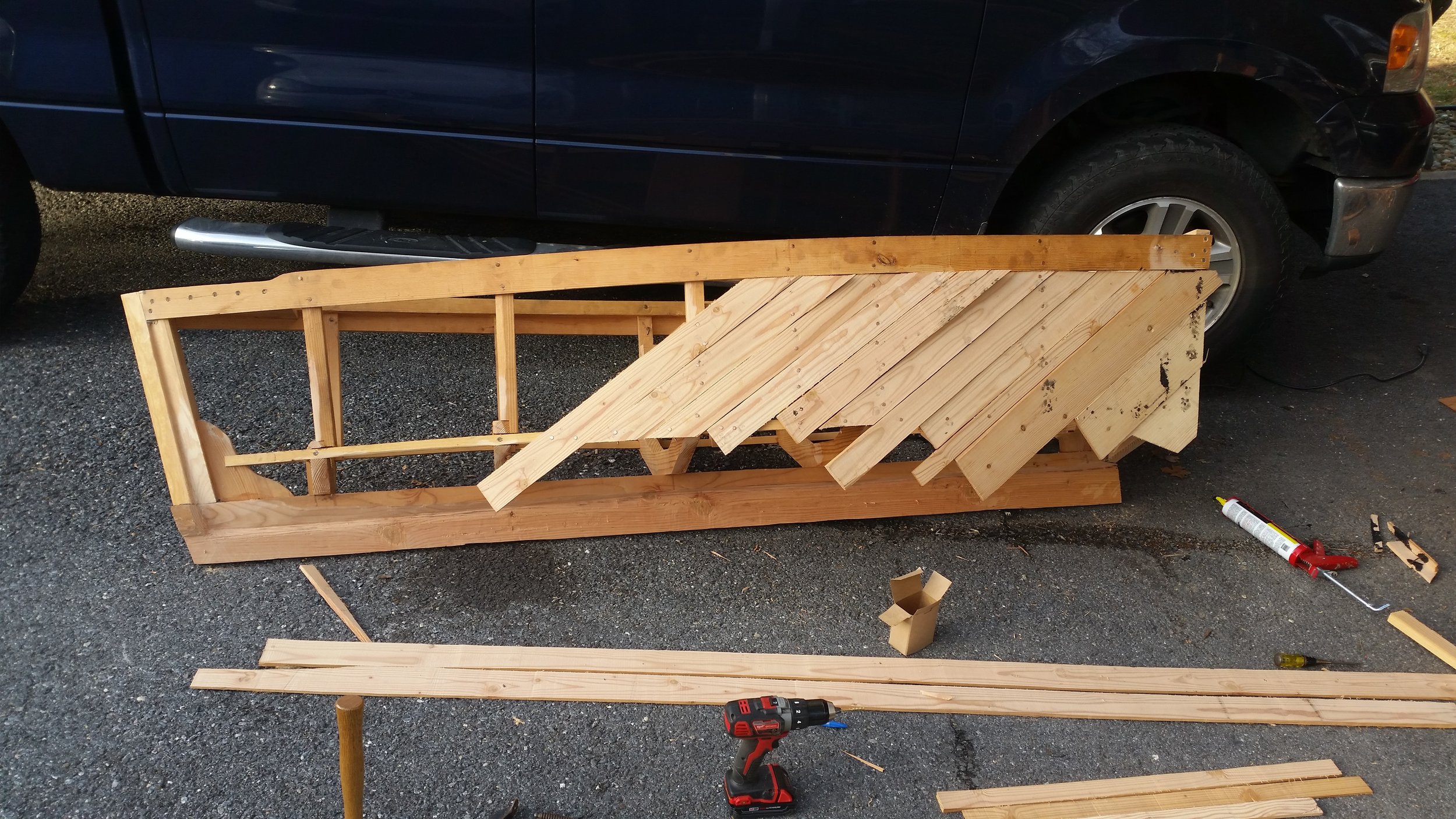
Once the first strake was nailed on and bedded, the rest of the process proceeded very quickly. The strakes that do not contact the transom did not need bedding compound, as they will eventually be completely covered by the second skin.

As the strakes came in contact with the stem, the same method of dry fitting and then bedding the strakes was used. The stem and stern are the only two areas where we are concerned about water intrusion at this point. All the other parts will eventually be covered by other strakes that will shield them from water.

The planks needed to be trimmed to fit under the sheer, but were left overhanging the chine log. This lackadaisical approach made the planking process proceed much faster. Once the entire side was planked, I then went back through and trimmed up the area around the chine.  

The strakes were all cleaned up and the side looks a lot more neatly planked. The strakes that do not start or end on a frame look out of place, as they are not lined up with the rest of the hull, but this is not a problem. When the second layer is fastened, these planks will be drawn up to the outer skin, thus smoothing out the inner skin planks.

The two layers of topside planks will be finished before the bottom planking is done, offering a large faying surface for the bottom and topside planks to meet. The small gaps between the planks are also not a concern, as the bedding compound of the second skin will fill these voids and make the hull skin water tight.

Dyneema Lifelines

Back in February 2015, I installed dyneema lifelines. It has been two years with them in place, and it is time to see how they have been holding up.

The lengths of the lifelines are subject to chafe from sheets rubbing on them while sailing, but with proper block placement, chafe can be reduced if not removed all together. This gives us great peace of mind since we don't have to worry about corrosion nor chafe. But how have the splices been holding up?

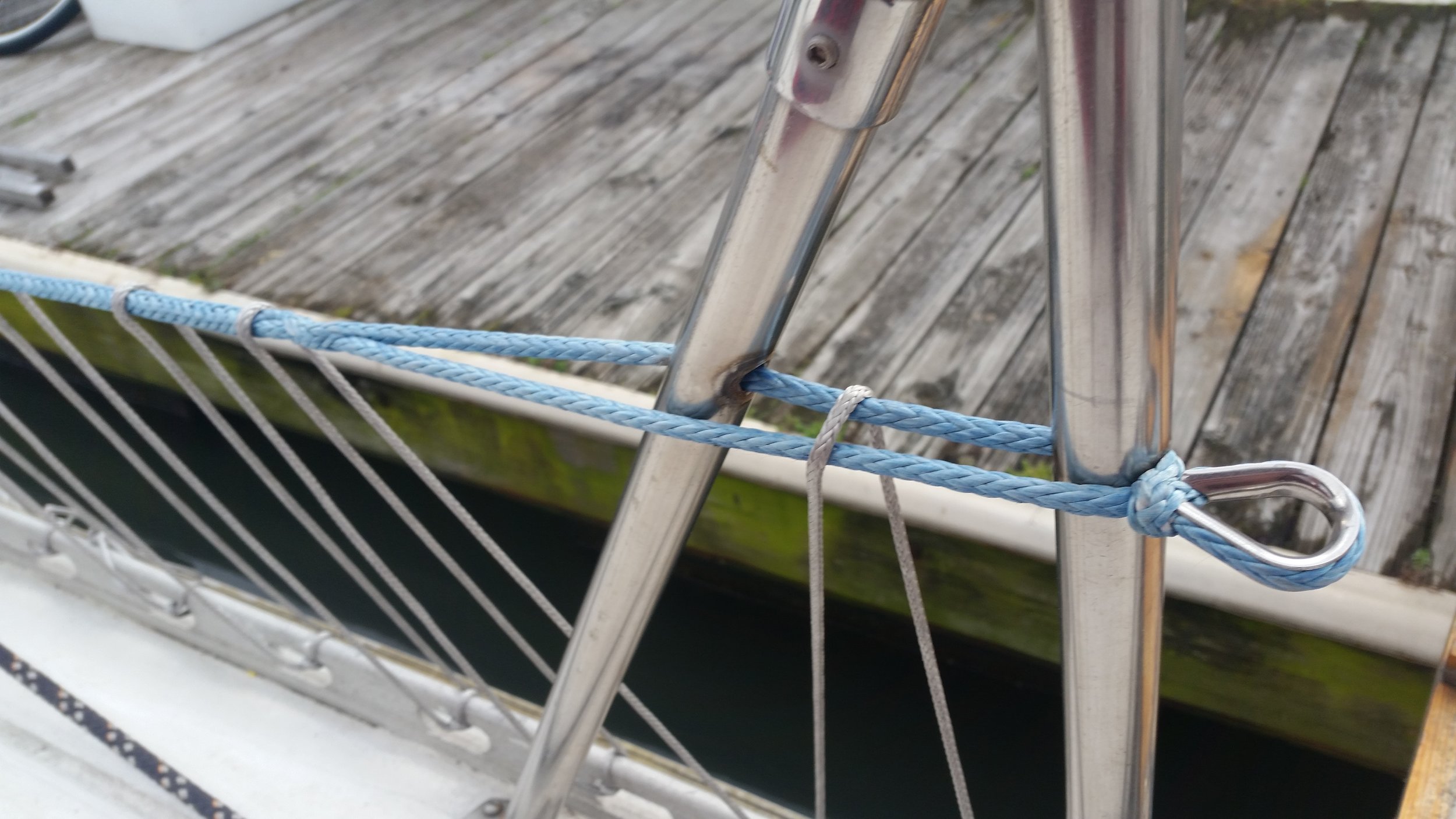
Very well! The ends of the lifelines are finished with a mobius brummel splice, forming a nice locking eye splice that will hold true and strong! This section of the lifeline looks great and the netting wrapped over the lifelines has shown no signs of chafe.

The gate stanchions were spliced rather differently. The spliced lifeline was too large to fit through hole in the stanchion, so the splice was routed along the outside of the stanchion. To allow inspection, the long bury splice was performed a considerable distance from the stanchion. This allows me to loosen the end lashings and pull the lifeline out of the stanchion to inspect. The extra distance is to allow me space to service the lifeline should the need arise. 

By polishing the stanchion's holes previously, there were no sharp points or burs to chafe on the lifelines. This has granted us the joy of no serious chafe after all these years!

With the gate closed, the tension on the lifelines pulls the thimble off the stanchion and straightens everything out. 

The lifelines have served their purpose very well for the past two years. There has been negligible chafe, and no corrosion. The only issue they have demonstrated is more of cosmetic concern: fading. When the lifelines were new, they had a strong electric blue color to them. Over the years, the color has slowly faded to a much more muted blue. 

2015

2015

2017

2017

While the vividness of the blue has subsided through the years, the strength and peace of mind have not. Careful planning to reduce chafe on the lifelines will make strong, durable, and worry free lifelines possible that will last you many years.

Double Diagonal Planking

After some thought, I decided to build the dinghy with double diagonal planking instead of standard carvel planking. The reason is simple, the dinghy will live upside down on the deck where the sun will beat down on it and cause the wood to dry out and shrink. When we decide to go to shore, we would put the dinghy into the water and the seams would leak until the wood swells. Swelling is not a quick process, usually taking several hours to several days to occur. Since the dinghy would never be properly swollen, we would be plagued by a leaking dinghy every time we wanted to use it. This would mean that our feet would get wet when we go to shore for dinner!

The alternative is to plank the hull in plywood, or in double diagonal planking. I am morally opposed to the use of plywood, since you will never find a tree that grows as a 4x8 sheet! The only option left is to plank the hull with double diagonal. 

Double diagonal planking offers the same advantages of plywood, but with better quality wood. Plywood is made by skimming off layers of a spinning tree that are then glued together. As the tree is spun, voids in the tree will become voids in the wood. Plywood allows for large holes to exist in the plys, since the glue that holds them all together will fill in the voids and offer some added strength. The reason I don't like plywood is because of the glues that are used. 

Marine plywood is made with better glues than regular plywood, allowing it to survive in an immersed environment. To pass the quality control test for marine plywood, a sample is repeatedly boiled and then subjected to shear forces. If the glue is weak, the plies will separate as the wood comes unglued. 

My big gripe with plywood came when I used a scrap piece of marine plywood as a cleat in our shower on Wisdom to hold the box I built around the mast (which runs right through our shower). After six months of being in the shower, the plywood started to delaminate! The shower is a wet environment, but the wood is never subjected to "boiling" temperatures or much stress at all. The plywood is screwed to the wall, further supporting the plies. Seeing a piece of marine plywood delaminate in rather mundane circumstances made me have very little faith in plywood as a whole. While this is a personal opinion and an isolated event, it has left a lasting impression on me. With these preconceived notions in mind, I did not want a scrap of plywood in the dinghy! Everything had to be made out of real wood, wood glue (no epoxy), and fasteners. 

Double diagonal planking results in the creation of plywood. The first set of planks are laid down in one direction, while the next set of planks are laid down 90* to the first set. The planks are fastened together and a bedding compound between them fills in any potential voids that may exist. As with plywood, the wood used doesn't need to be perfect, nor very strong. The combination of the planks running in opposite directions will combine to produce a very strong skin made out of better quality wood. 

More so, double diagonal planking can be repaired much more easily than plywood. If a plywood hull rots, that entire sheet of plywood would need to be replaced. With double diagonal, only the rotten plank needs to be replaced. 

Since the planks are laminated in opposing angles with bedding compound between them, there is little chance that water will work its way through the hull as the large bedded faying surfaces will provide a good seal. Polysulfide bedding compound used between the laminates will remain elastic, allowing it to move with boards as they shrink and swell. This will let us place the dinghy in the water and hop into a dry dinghy as we make our way to shore.

The other advantage of double diagonal planking is the planks run in different directions with strength along the direction of their grain. Since the planks are running in different directions, the strength also runs in different directions. Carvel planked hulls will have diagonal strapping cut into the frames to offer a similar benefit because the horizontal planks do not provide this support. The diagonal planks in double diagonal planking do, allowing you to actually use thinner planks to create a thinner skin than with carvel planking.

The biggest downside to double diagonal planking is that it is more time consuming to install. The hull needs to be planked twice, and a lot more bedding compound is needed as well. Bedding compound is rather expensive, but it's hard to put a price on comfort! 

The second biggest downside is when repairs are needed. A rotten strake on a carvel planked hull is simple to repair, simply remove the plank and replace it with a new one. On double diagonal, if a plank on the inside begins to rot, all the outer planks that cover that board need to be removed just to gain access to that board. This adds considerable labor to the process, and the costs go up as well as new bedding compound will be needed to re-bed the entire area that had to be opened up.

In the long run, there is no simple option and no magic bullet. Every choice has its benefits and drawbacks, its just a matter of choosing which option works well for you and your needs. For us, with a dinghy that will live on a deck most of its life drying out and only going in the water for short periods at a time, double diagonal planking fits our needs and we are willing to work with its drawbacks.