Life Aboard

Medullary Checking

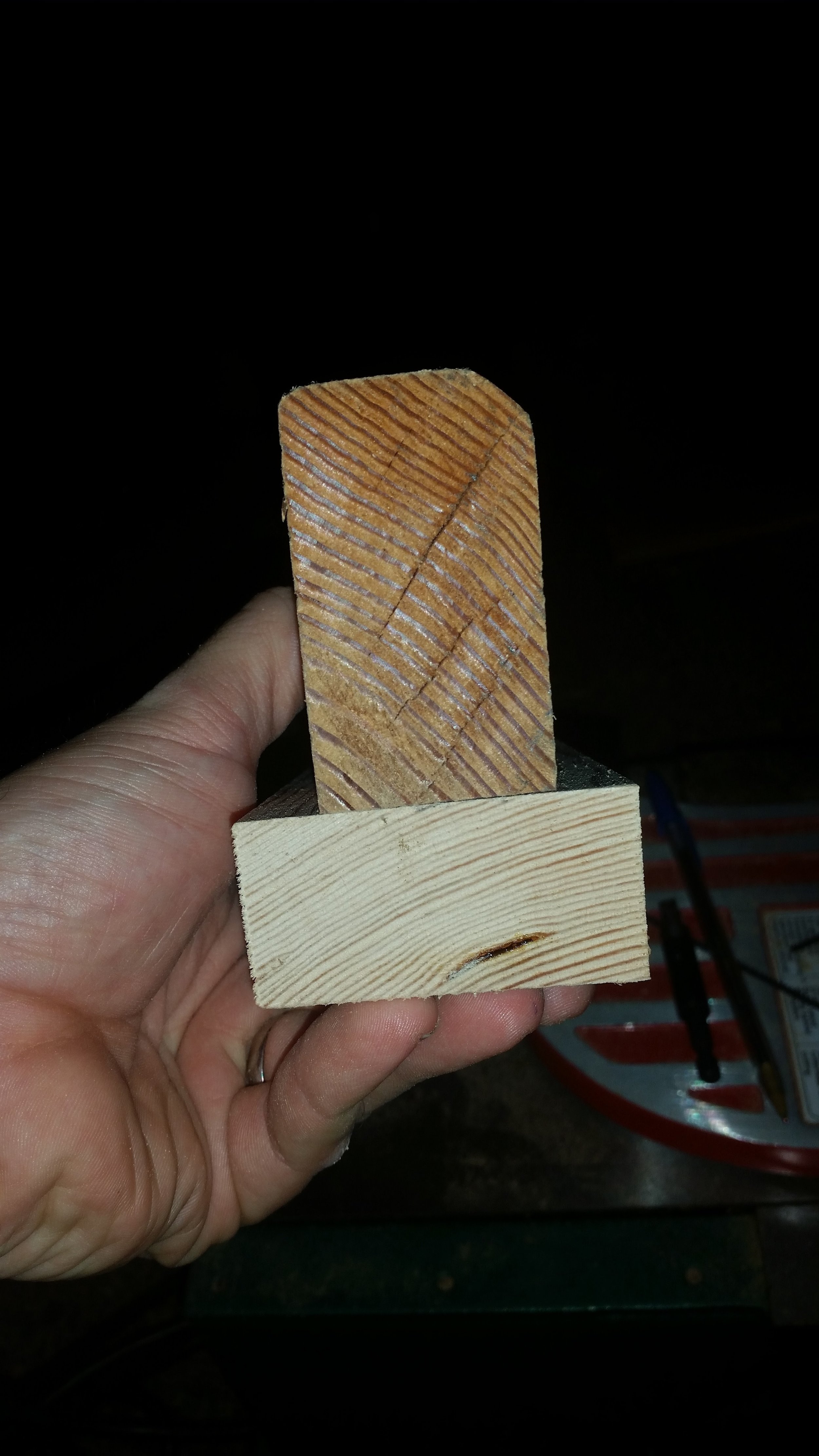
Medullary checking occurs perpendicular to the direction of the annular rings in the wood. As wood dries out and seasons, it will shrink. If the wood shrinks too quickly or too drastically, it will split and open up into what are called "checks". They are very visible on large timber and posts, as these timbers will shrink considerably and quickly, resulting in the development of checks.

While checks can be unsightly on fence posts, they present more of a hazard on boats. First, these checks will allow water to pass through the wood and cause leaks to form. Second, any fasteners that are in the check will become loose!

To reduce the risk of checking, some easy steps can be followed:

  • Don't use boxed in heart wood.
  • Don't use green wood.

The heart of a tree will almost always check in a characteristic plus sign. The checking will usually run all the way out to the sides of the timber, resulting in a piece of wood that wants to be quartered. If you select a timber that does not have the heart boxed in the center, the risk of checking is greatly reduced. If the timber has a heart, try to orient your cuts so that the heart will be cut out of the finished product. This will remove the heart and the risk of severe checking as the wood dries out.

The other method to avoid checking is to properly season your wood. If you use wet, green wood, it will dry out too fast and shrink. As it shrinks rapidly, it will check and ruin your finished product. To reduce this issue, you want to season the wood slowly. Seasoning is simply the act of drying the wood in a controlled manner. The rule of thumb is one inch per year. If your lumber is 1 inch think, it will take a year to dry out properly. If your lumber is 2 inches thick, it will take 2 years to dry out properly.

This is a rule of thumb. The truth is the wood is dried by the relative moisture content of the room it is stored in. Letting the wood dry slowly will prevent checking by controlling the rate at which it shrinks. If your storage area is rather humid, the wood will dry slower. Likewise, if the room is bone dry, the wood will dry out very quickly.

You may be wondering what difference does it make if the wood seasons in a room or on a boat? It dries just the same, right? Wrong. The reason seasoning reduces checking is the wood dries evenly. If you take a green piece of wood and install it on the boat as a frame, the three sides that face the inside of the hull will dry out as they are exposed to a lot of air, but the side facing the planking will not dry. Three of the four sides will dry out quickly and shrink while the fourth side will remain wet and not shrink as much. The irregular shrinkage will lead to the development of checks. If the wood were allowed to dry out entirely in a room where all four sides are exposed to the air and can shrink together in a controlled manner, the incidence of checking is greatly reduced.

If you do all of this perfectly, and use wood with no heart that has been well seasoned, the risk of developing checks in the future is greatly reduced but not eliminated. 

To mitigate the risks of fasteners coming loose because the wood they are in checks, make sure that the screws are oriented properly to the grain. If you insert the screw with the grain, so that the screw runs parallel to the rings, the screw will have very little holding power and runs the risk of causing the wood to split along the grain. If you insert the screw perpendicular to the rings, it will have the most holding power, but will also be set in line with the medullary rays. Medullary rays run perpendicular to the rings as do the medullary checks. While the screw may hold well at first, it may lose holding as checks develop in the future.

The alternative is to set the screws at forty five degrees to the annual rings of the wood. This will place the screws through the rings, giving you the holding power of driving the screw through the rings while not lining up perfectly with the medullary checks that may develop. Now the screws are oriented at an angle to any checks that may develop while still offering an acceptable amount of holding power.

As you may have imagined, this is why quarter sawn lumber is so popular. You can place the screws into any of the faces and the screws will always be oriented diagonally to the annual rings of the wood. This is why quarter sawn lumber is preferred when being used on a boat.

Stern Knee

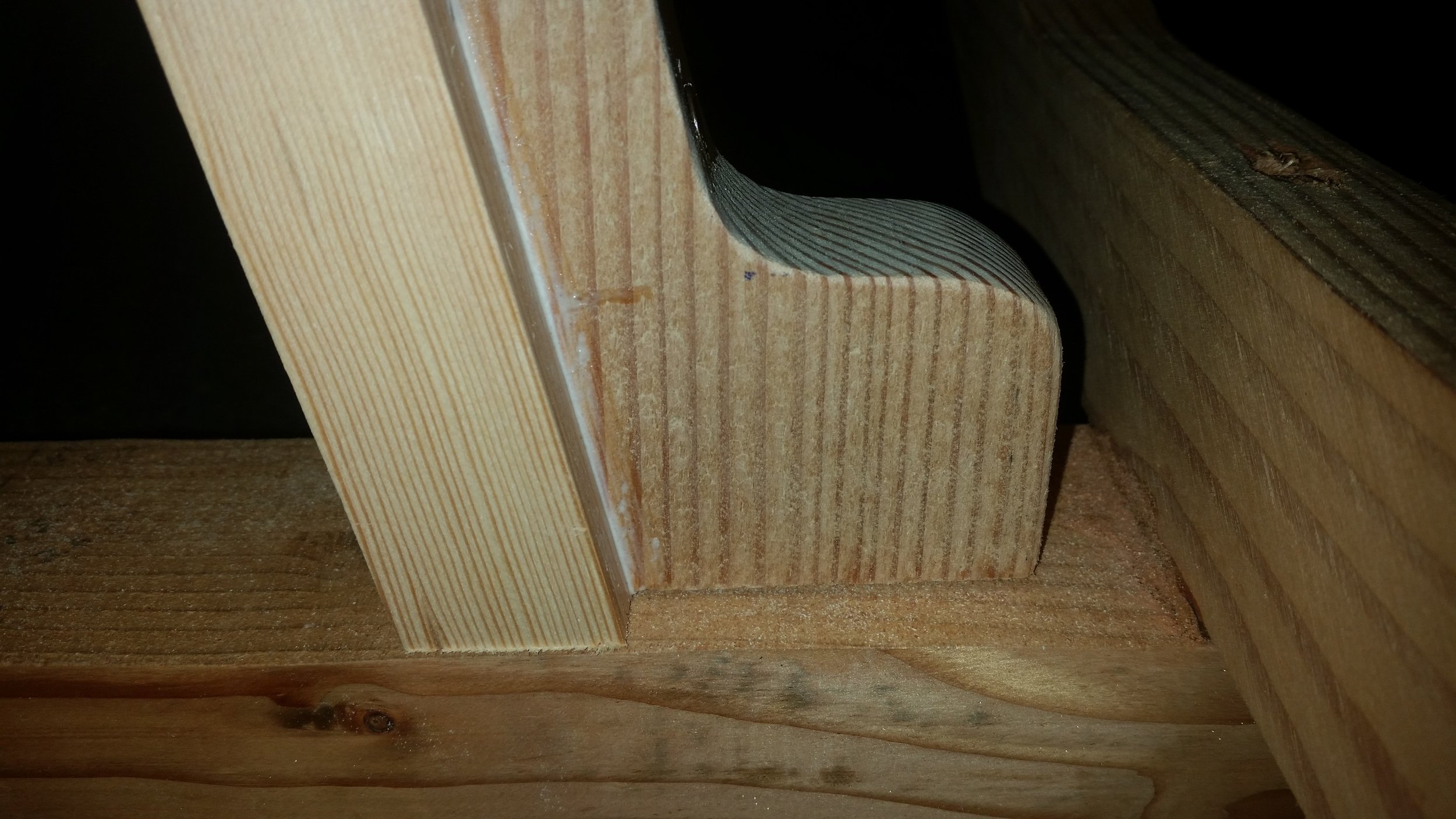
The stern knee is the structural support that helps transfer stress and loads from the stern post to the keel. It is made out of a single piece of wood that has vertical grain with a slight angle to it. The slight angle ensures that the medullary checking that will occur will form diagonally across the knee and not in the same direction as the fasteners.

The stern knee attaches to the end of the keel via a large and strong bronze lag bolt and to the stern post via four stout bronze screws. The transom planking will be attached to the stern post, transmitting it's loads to the keel via the stern knee. As you can see, this is a rather important structural member in the dinghy.

To add complexity to the fabrication process, the transom is going to be raked aft with a slop of five inches every twenty four inches. This angle will produce a gentle and pleasing to look to the slope of the transom. This angle is also ideal for. The mounting of an outboard motor, which we will do in emergency situations.

The stern knee and stern post need to mate perfectly flush with the flat keel. To get the angle of the sloping transom to mate perfectly with the flat keel, I used a variety of squares and calculations. I know that the freeboard is going to be eighteen inches high, so the sternpost was set in a square where the top of it passes over the eighteen inch mark. The bottom of the sternpost was scooted over to the three and three quarters mark, as this distance follows the same slope of five in twenty four. I pinched the stern post to the square and raised it off the surface just a bit so I could mark it from the underside with a pencil.

The line drawn on the side of the stern post now represents the correct angular orientation for the bottom of the sternpost to mate perfectly flat with the keel.

This line was cut on the bandsaw and then test fit to the keel. The top of the stern post was left much longer than needed as it is always easier to shorten a board than it is to make it longer. With the angled cut verified, I know that the stern post is long enough and angled properly.

The knee was cut out following the same slope line. The knee is six inches tall, so a slope of five in twenty four would mean that our six inch knee needs to slope over one and one quarter inch.

The block of wood was marked at the top at the six inch point and on the bottom at the on and one quarter inch mark. A straight edge connected the marks giving me the line to cut along to match the stern post's aft rake to the stern knee.

After cutting the knee along the line with the bandsaw, we the two pieces were test fitted. To properly test fit the stern post and stern knee, a square was used, as the top of the stern post should intersect the 18 inch mark and the bottom of the stern post lay flat on the bottom of the square. During the test, the stern post met the mark and the faying surface to the keel laid flat!

The two pieces were test fitted on the keel to verify that they are true and mate up to the faying surface of the keel properly.

Since they mated well, it was time to connect the stern knee to the stern post. I drilled pilot holes through the knee which will accept the bronze fasteners. The holes are set staggered to avoid causing a crack in the knee. If you set all four screws in a vertical line, the knee can split along the grain and fail its purpose. By staggering the screws placement, the rest of splitting the knee is greatly reduced.

With the holes drilled and any splinters sanded off, it is time to drill the pilot holes in the stern post. The top pilot hole was drilled by first marking the sternpost with the drill running in reverse. Running the drill in reverse minimizes the risk of the drill bit walking aroud, ruining your alignment. Running the drill in reverse will produce a very notable mare on the stern post. Once the stern knee is removed, you can mark your pilot hole without any risk of misalignment.

With the first hole ready, the stern knee was set back onto the post and the bronze screw was inserted most of the way. This will keep the entire unit aligned and in place while the other three holes are made.

With the top of the knee supported by the screw and the bottom of the knee supported by a clamp, the second pilot hole could be created in the lowest screw hole and its screw inserted. Now the knee is securely held in place and the last two pilot holes can be drilled at the same time to speed up fabrication time.

Now that the four holes have been drilled with accuracy, it is time to join the two pieces of wood.. The faying surfaces were coated with a liberal amount of Titebond III waterproof wood glue and some extra wood glue was set into the screw holes. The glue in the screw holes will coat the bronze fasteners as they are driven in and lock them into place as they coat the threads.

With all the surfaces ready for mating, the knee was aligned to the stern post and the four screws were driven home. The four screws will provide enough clamping force, negating the need to use external C-clamps. The excess wood glue squeezed out, ensuring that all the surfaces were sufficiently covered with glue and the excess was wiped off with a dry towel. The glue was then allowed to cure for the next two days without being disturbed.

Dinghy Construction

The port sheer and shelf clamp were a bit resistant to being installed, or I was very tired since it was 5AM. Either way, these two strakes refused to take the shape the frames had dictated for them!

The dinghy now has all three stringers installed, giving the hull its intended shape and stiffening up the frames tremendously. The stringers do extend farther than needed as the stem and transom are yet to be installed. When I go the ends of the dinghy get installed, I will cut the stringers to fit; until then, they can overhand the dinghy just like the keel does.

The reason I say the sheer and shelf clamp resisted being bent to the frames is because they literally snapped the first floor! The floor split along its grain just below where the frame attaches. This floor is rather small and yet I have had remake it already. The first floor got over trimmed on the jointer and needed to be remade, so I made this current floor. 

With a split floor, my options are simple, either remake it again or fix it. Remaking it would be the ideal, especially since the boat will be finished bright and varnish will not hide flaws like paint will. Remaking the floor would require that I also remake the frames that are glued to them and attach the stringers on both sides to the new floor and frames. The alternative is to liberally apply Titebond III wood glue and clamp the hell out of it!

One clamp pulls the chines together to pull in the bottom of the station. The vertical clamp pulls the split section down to the floor, while the third clamp approximates the broken pieces. The split sections were able to be properly approximated and allowed to sit in the pressure of the clamps for the next few days. Once the clamps are removed, strips of wood will be glued to the front of the floor to help resist the sheer forces on this station.

Right now, the floor is under a lot of strain, especially while I was bending 1/2 inch planks to the hull. The tremendous twisting force split the floor right along its grain. Once the stem is installed, these forces will be transmitted to the stem and not falling entirely on the first stations floor. The chine logs will be cut into the stem and set in place along with the sheer, passing these loads from the first stations floor to the much more robust and bookmatched stem.

Sleepy Dog

We are often asked what Morty does while we are away from the boat. The truth is, we don't actually know, but we assume it is something along the lines of what he does when we are there: Relax.

Morty is a connoisseur of the comfiest and coziest places on the boat, as he can typically be found curled up or stretched out in the greatest of comfort. 

He sleeps in the bed while we are away, and he sleeps in the bed while we are still there. In the morning, he will typically curl up next to you and rest his head on a pillow and smile as he basks in the comforts of boat life!

While he may seem like a lazy dog (which is true), he does enjoy his runs in the local parks where he can stretch his legs and scoot around for a bit.

He runs around for a while, and then gets tuckered out. We know he is ready to go back to the boat when he walks up to us and looks us in the eye. When we tell him "Ok, let's go home" he then resumes walking.

Once we get back to the boat, he resumes his regular relaxation in comfort.

Beveling the Frames

The frames were cut out of a board with no discretion for the bevels in the hull planking. Knowing this, the frames were cut on the larger side, affording me wood to scrub off to straighten out the contours of the planking. 

To pickup the bevels, used a batten which I lay along the frames and notate the amount of bevel needed.  I then proceed to scrub the corner of the frame with a Number 4 planer. This will scrub off the excess wood needed to add the proper bevel to the frames.

After an initial bevel is scrubbed, it would behove you to recheck the bevel with the batten. As you scrub the adjacent frames, you will alter the required bevel very slightly. For this reason, I recommend that you only scrub a little each time, checking as you go.

image.jpg

The top of the insides was scrubbed for the shelf clamp, and the entire outside was scrubbed for the sheer and the subsequent planking that would be placed on the frames. 

image.jpg

After all the frames were scrubbed and verified with the batten, the shelf and sheer would fit well to the frames. I didn't bevel the entire surface as this would make the frames significantly thinner, and this is just a dinghy. These scrubbed frames will offer enough faying surface and strength to the planks that will rest on them.