Life Aboard

Tools to Build a Wooden Dinghy

Construction of a wooden dinghy only requires a few tools, some are rather specialized but the rest are general tools that any competent craftsman would have.

In the most basic sense, the tools needed are a drill, saw, wood planer, screw driver, hammer, and clamps.

These very basic tools will let you build a boat with a very basic layout and design. Any intricate cuts or features would be rather difficult to carry out. If you want to build a more sophisticated design, you will need some more sophisticated tools.

The tools I am using to build the dinghy are rather limited, as space and funds are equally limited. I am using:

  • Drill Press
  • Cordless Drill
  • Handsaw
  • Circular Saw
  • Bandsaw
  • Jointer
  • Sledge Hammer
  • Claw Hammer
  • Ball Peen Hammer
  • C Clamps
  • Screw Driver
  • No 4 Plane
  • Rabbet Plane
  • Jack Plane
  • Low Angle Block Plane
  • Block Plane
  • Wood Chisels
  • Rasp File
  • Coarse File
  • Bastard File
  • Fine File
  • Squares

This might seem like a rather long list, but with these tools you will be able to build a wooden dinghy with relative ease. The list provided is by no means a complete list, as there are tools I wish I had but am working without. 

A table saw would be a wonderful addition which would make partial thickness cuts easy to complete. A thickness planer would also help make the boards uniform in thickness across their length. A router would also be very useful for removing wood and reducing weight of the components in the dinghy. Lastly a bevel gauge would make it much easier to transfer angles from one area to another.

While these tools would make construction easier, they are by no means mandatory. Knowing how to use the tools you have well is more valuable than having many tools. A lot of the work can be carried out and completed with a limited armamentarium if proper experience is available to fill in the voids in missing tools.

I have seen carpenters resaw planks perfectly with a handsaw and no guides! I need a bandsaw to complete the same cut. It all depends on your skill and comfort level while working with the materials at hand.

Current Projects

As you may know, I have a few projects running at the moment. Some are minor projects around the boat, others are major undertakings that consume all my spare time! 

The major projects are building the dinghy and building the tiny house. The minor projects are all the other boat preparations that need to be finished before we cast off the dock lines and head offshore. 

I know that some of you guys are more interested in certain aspects of the blog. Some readers are more focused on rigging and knots, others like the woodworking projects, and then others are in love with tiny houses. 

In an attempt to not bore any of you guys, I will be posting about the different topics alternating one each day. This way, if there is a topic that you are not particularly fond of, something more interesting to you will be posted tomorrow. 

As you may have noticed, I have trouble with "middle ground", and I work at the extremes. In my mind, the options are to segment the topics or power through each topic to completion. If we power through each topic, this blog would turn into a "boat building" blog for a while, then turn over to a "tiny house" blog for a while, followed by a "boat outfitting" blog. 

I feel that staggering the topics will keep everyone entertained as we work our way through the different projects. 

One thing is for certain though, next year we are casting off and the blog will be focusing more on the places we visit under sail and tips & tricks to make sailing easier. I really think that people motor their sailboats everywhere because they think that sailing is a lot of work. Hopefully, these tips and tricks will make sailing be less work and allow you to outfit and tweak your yacht yourself, saving you time and making sailing much easier for you.

For now, the topics will be staggered through the winter until these projects are finished up and ready for use. If you have any suggestions for how to order the post, let me know in the comments section down below!

Prop Walk Test

Your yacht is floating in her slip, securely tied to the pier and ready to go sailing. You need to reverse you yacht out of the slip, but which way will she walk?

A very simple test to see which way and how severely your yacht will walk is to put the boat in reverse under full throttle and evaluate the prop wash. 

The side with more prop wash will be the side you walk away from. If you see prop wash on your port side, you will walk to starboard. If you see prop wash on your starboard side, you will walk to port.

While most of the factors that compound to create prop walk are beyond your control right before you go sailing, one key factor is: engine speed.

Hello, World!

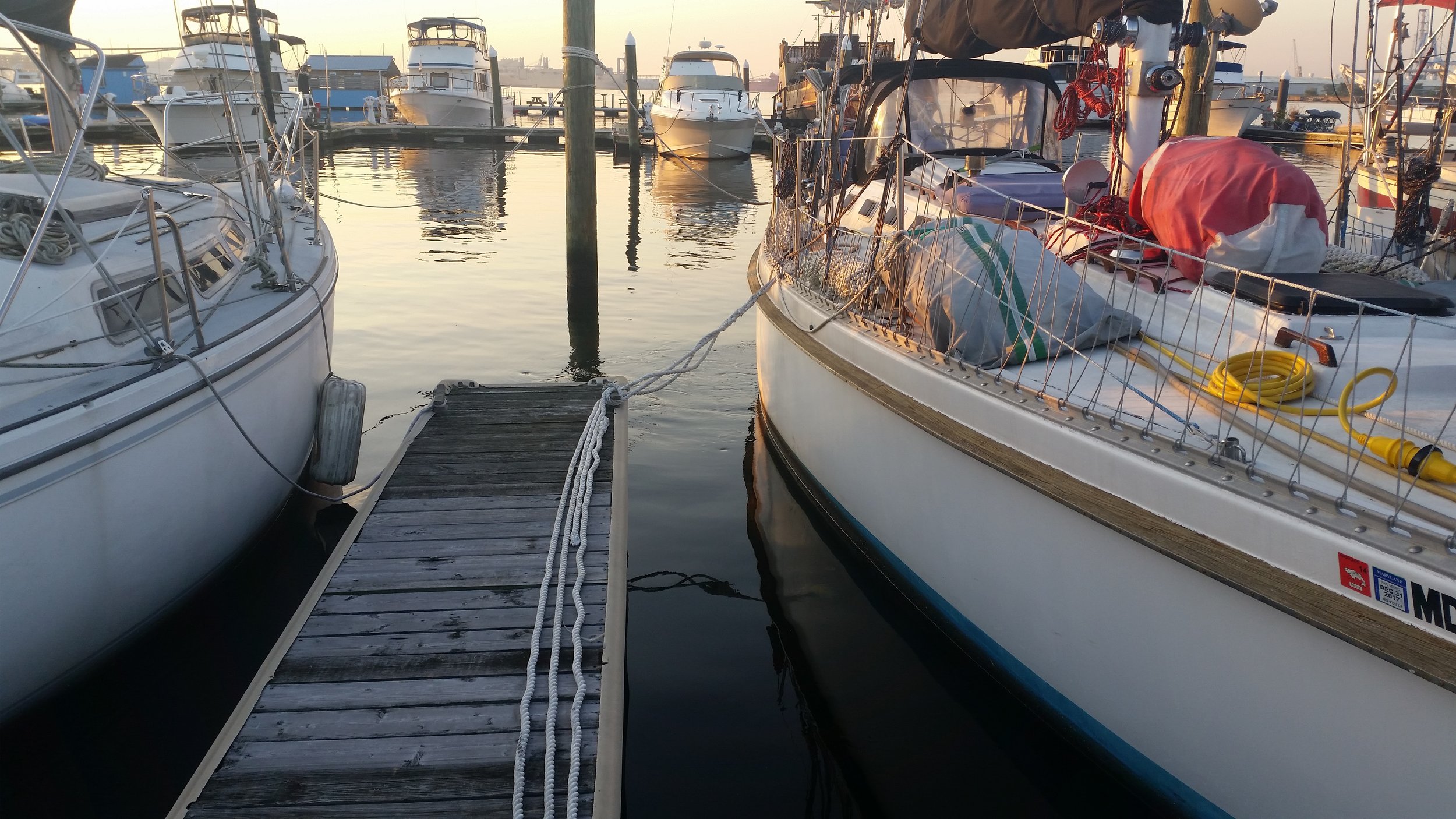
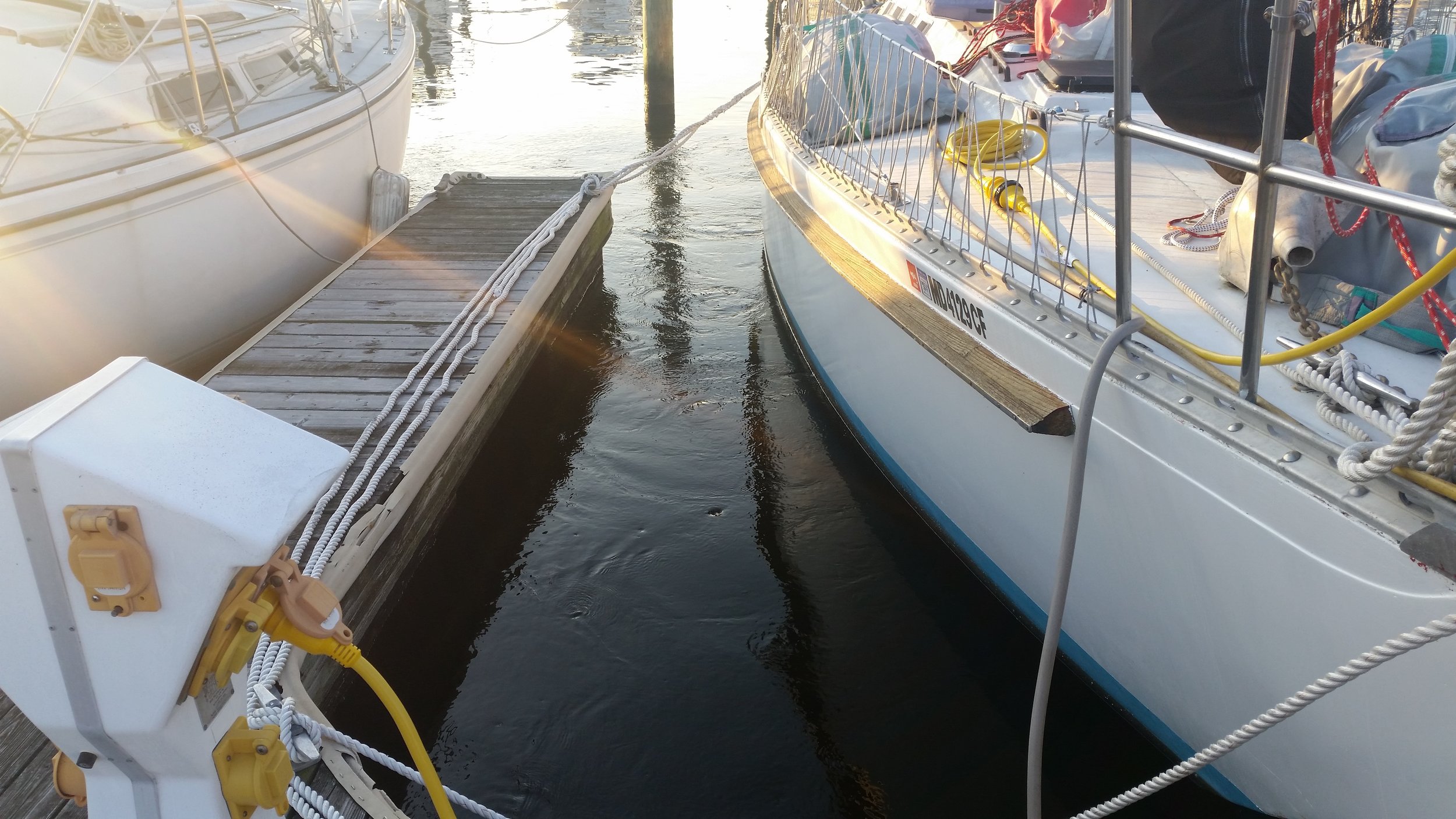
With the engine off, there is no prop wash and the water around the boat will be still.

With a little bit of throttle, the engine is consuming 32.1 amps and the propeller is spinning at 697 RPM. There is very little prop wash on either side, as there is little thrust being produced. 

Hello, World!

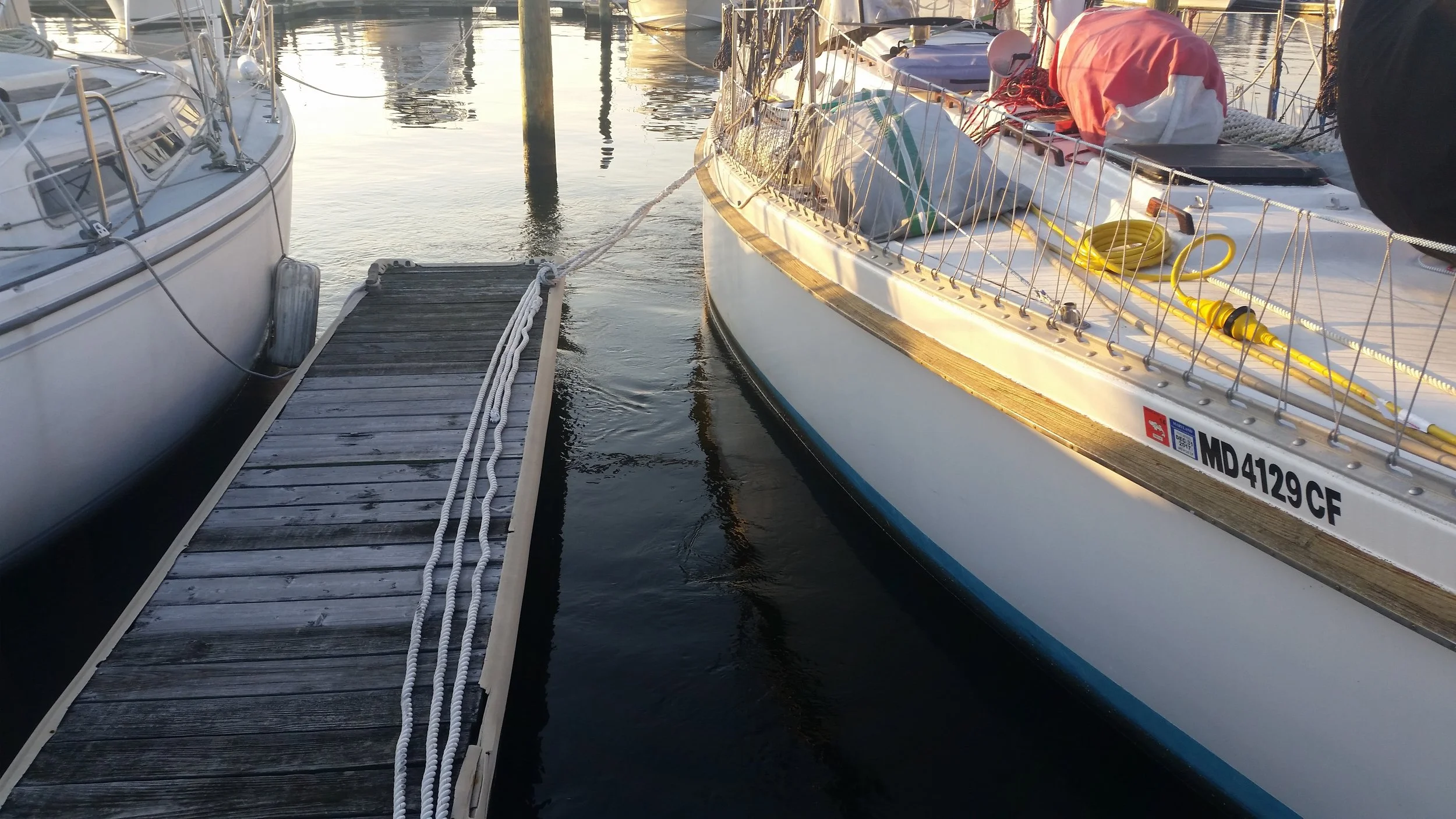
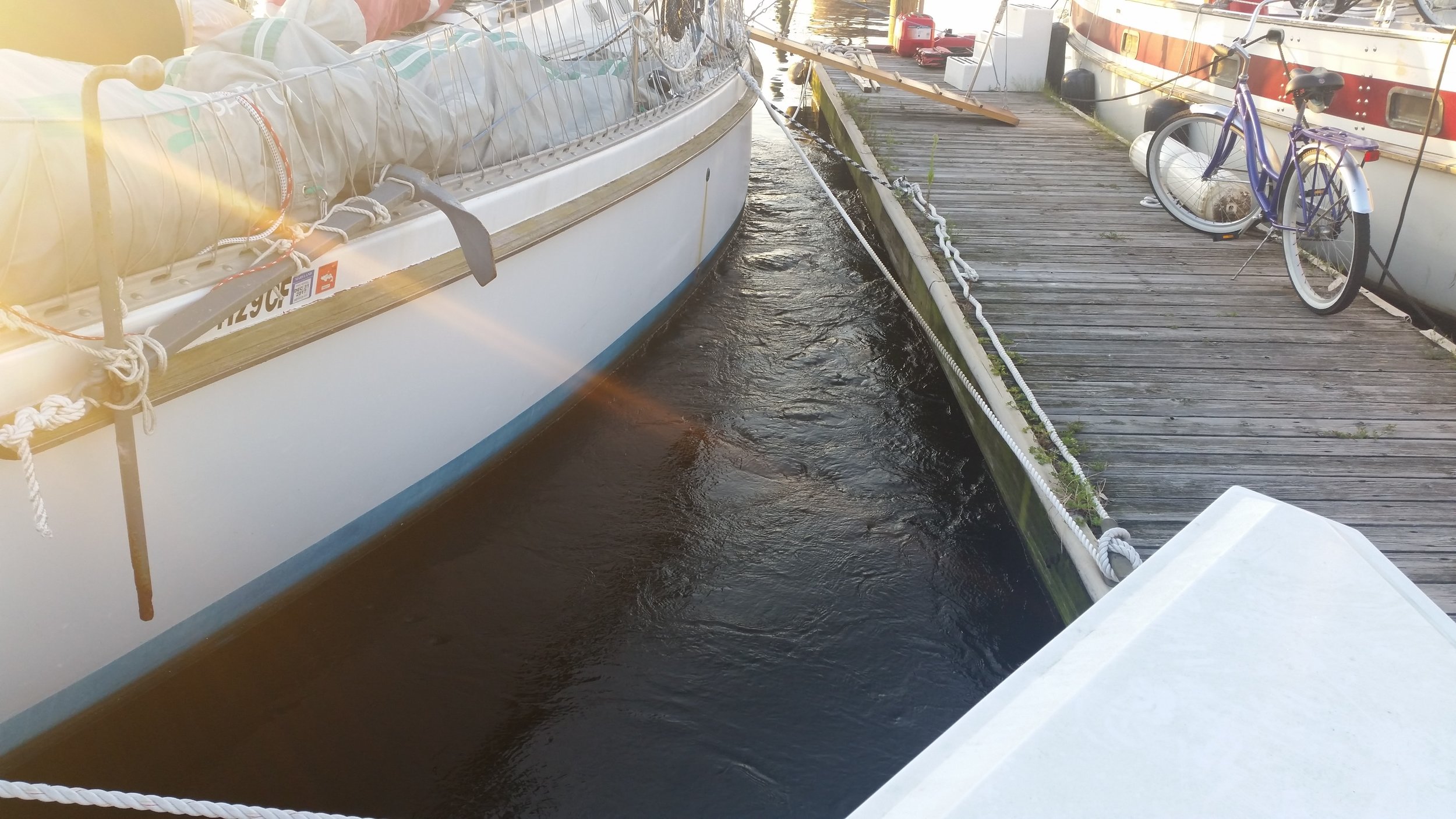
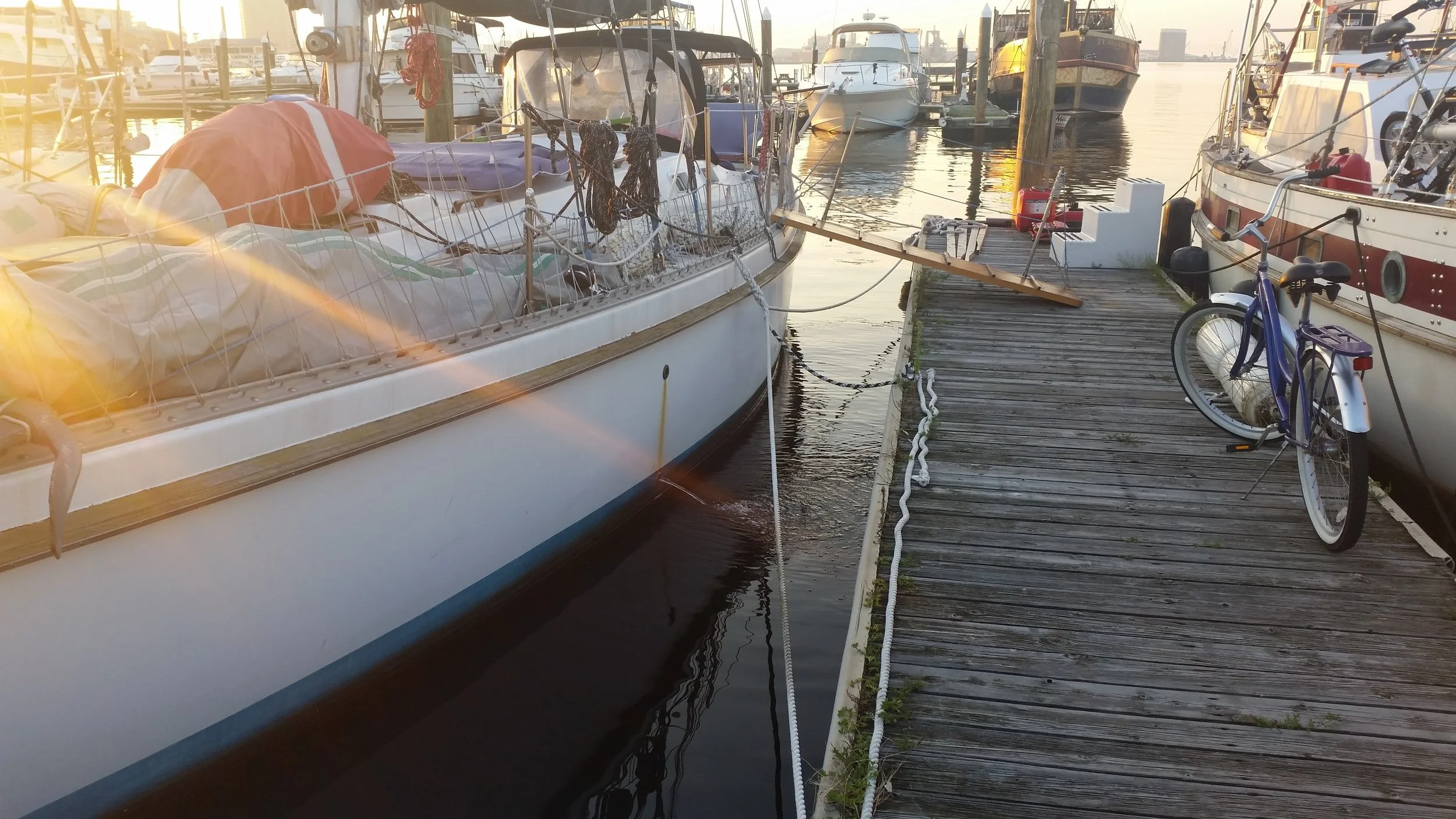
With the engine drawing 61.2 amps, and the propeller spinning at 889 RPM, there is considerably more prop wash and prop walk. You can see from this picture looking at the bow how the docklines are holding the boat steady as well as the difference in the amounts of prop wash on each side of the boat. The port side is very disturbed, while the starboard side is very calm. This illustrates why the boat will walk to starboard.

With the engine drawing 89.4 amps, and the propeller spinning at 1012 RPM, the prop wash is considerably strong on the port side and only beginning to disturb the water on the starboard side.

Hello, World!

With the engine drawing 178 amps, and the propeller spinning at 1255 RPM, we are creating considerable trust and prop wash on the port side.There is a very slight amount of prop wash showing up on the starboard side.

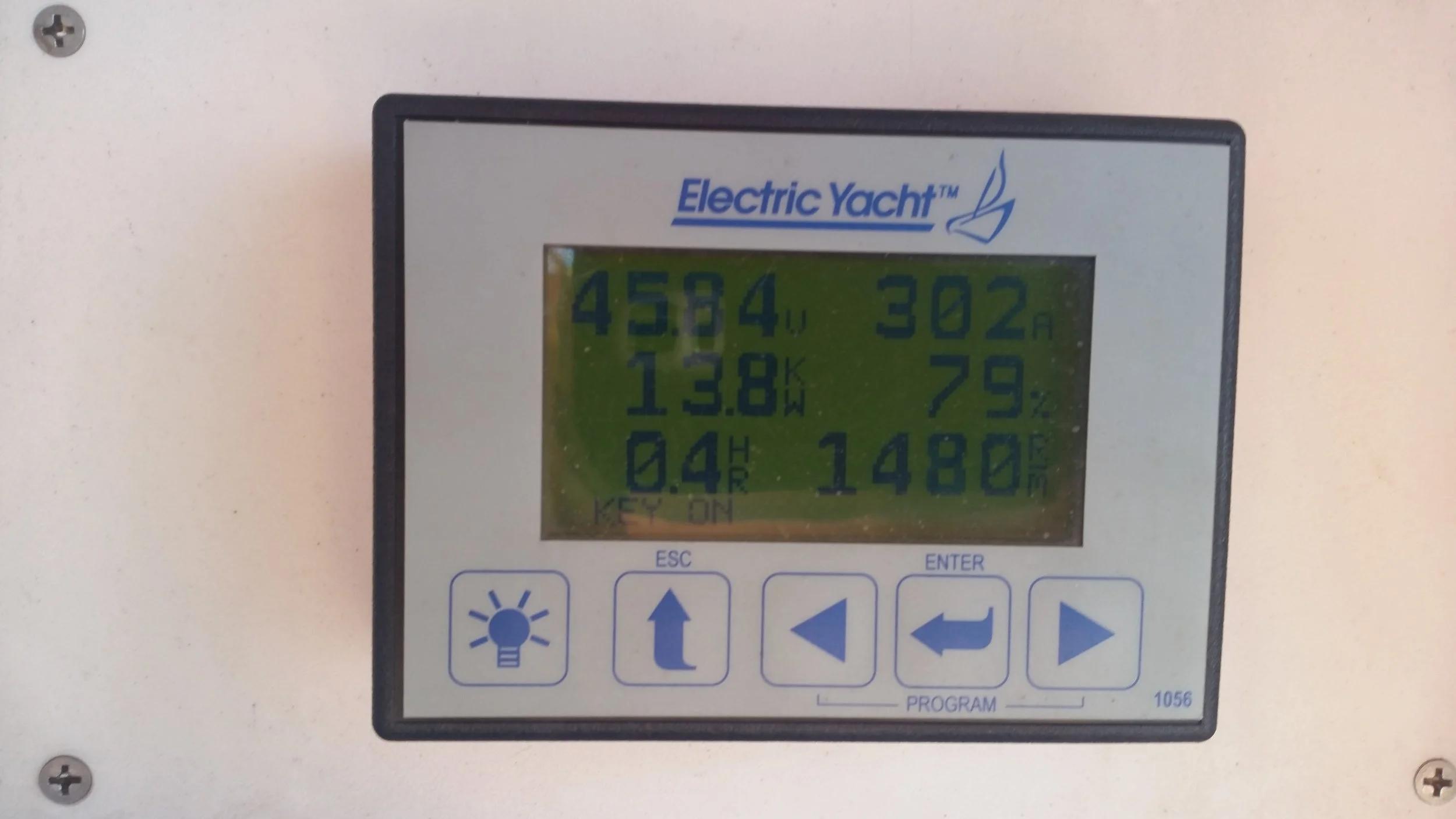
The final test was performed at full throttle, with the electric motor drawing 302 amps, and spinning the propeller 1480 RPM. At this pace, our very small battery bank will only last for 0.4 hours, or 24 minutes, which illustrates why we sail everywhere instead of motoring everywhere. With a larger battery bank and a generator, we could have a significantly longer range under power, but we chose a simpler and less costly installation and opted for a small battery bank with a full suit of sails.

Hello, World!

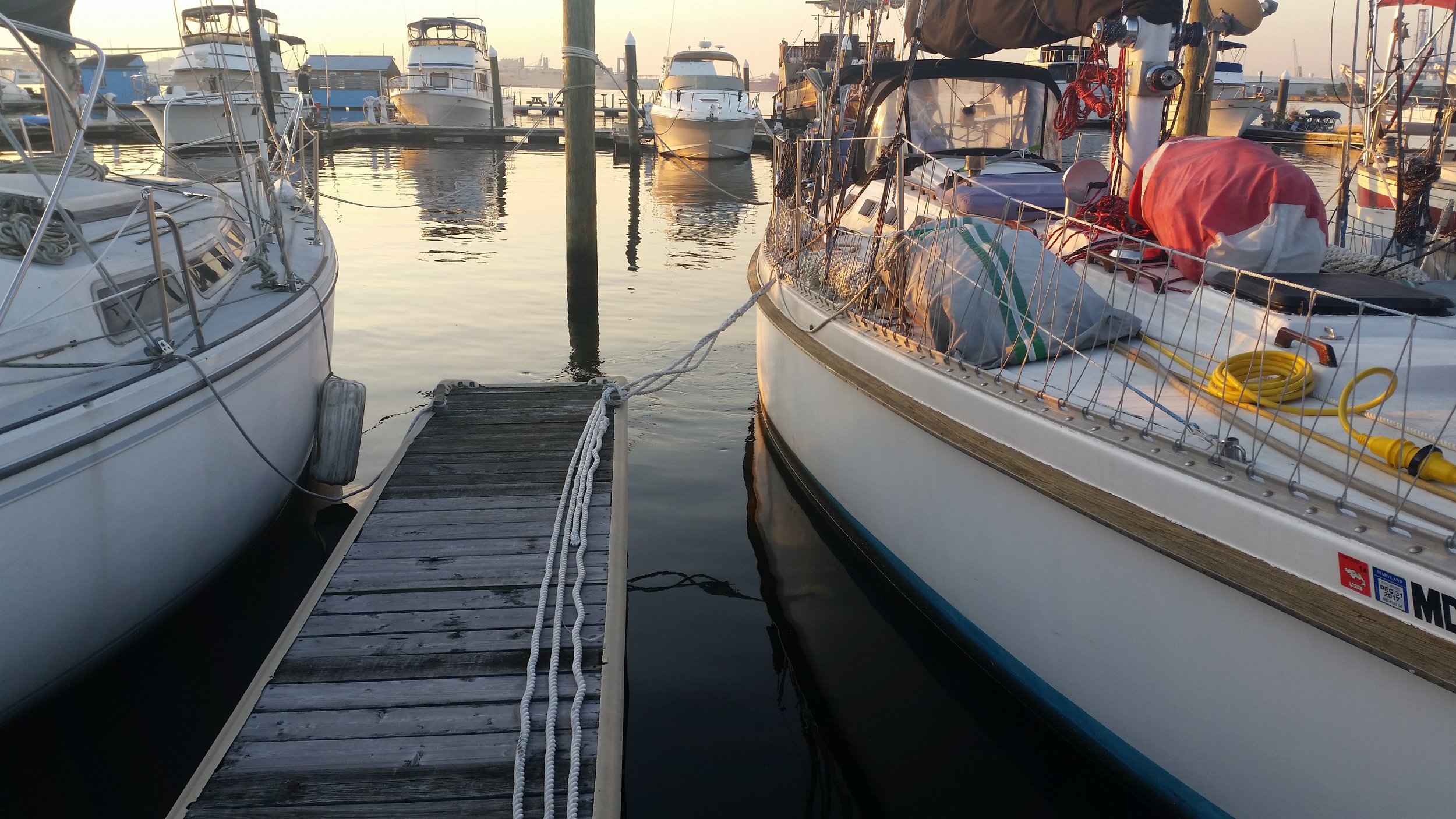
At full throttle astern, the prop wash on the starboard side is starting to be more evident, but nowhere near the level of disturbed water on the port side. Under full throttle, the boat will walk to starboard as all of the thrust is being directed towards the port side of the hull.

As the RPMs increase so does the bias in the in thrust, leading to an increase in prop walk to one side while moving astern.

Light Throttle

Light Throttle

Full Throttle

Full Throttle

The prop wash on the side the boat walks towards in reverse is about the same under light and full throttle.

Light Throttle

Light Throttle

Full Throttle

Full Throttle

On the contrary, the prop wash on the side the boat walks away from in reverse is vastly different. Under light throttle, the prop wash is very light and can be somewhat combated by the opposing sides prop wash. Under full throttle, the prop is very powerful and will push the boat over, causing the phenomenon known as prop walk.

Next time you need to reverse into a slip, try using a light amount of throttle. If you are reversing out of the slip and have significant prop walk, maybe you should consider walking the boat out of the slip by hand and then motoring away once clear of the slip.

Morty is Happy

It's funny which toys a pet will fall in love with. Maddie once bought Morty a fancy chew bone that cost almost $20 and he never cared for it. We gave it to him the same way we give him all of his toys and he simply set it down and never played with it. That fancy toy sat on the cabin sole, collecting stray dog hairs until we gave up on him ever wanting to play with it.

On the contrary, Maddie's parents picked up this rubber squirrel as a gag gift at a dollar store and we decided to give it to Morty. He absolutely loved the squirrel and will not leave it alone! It is easy to see that he is happiest when he has his squirrel with him.

Living Aboard: Windy Days

While most days on the water involve benign and clear weather, there are those days when the winds kick up the seas. Yes, this is far from the norm, and when it happens it doesn't last very long. Most of our days are spent on water so still you could forget you were floating! Then there are days like today.

Winter is approaching and a cold front has been barreling down on us for the past two days. The winds have been in the mid thirties and blowing 25 to 35 knots all the time! The windchill makes these conditions feel like 31F as it cuts through your coat.

Morty and I took a little walk to the outer piers of the marina and found that the white capped seas in the harbor were crashing into the pier and splashing up onto the boards. The floating pier looked like an amusement park ride where the walkway moves up and down under your feet. The seas made the pier look like an undulating path over the water. Despite the wondering footing, Morty had a great time running around the pier.

On board was another story, we actually were living in what people imagine life on a sailboat must be like. The boat was heeling over in the slip from the strong winds and we were rocking up and down as the waves rolled through. 

The dock lines were creaking as the boat bounced around in the slip. This noise will either drive you insane or put you right to sleep! The creaking mooring lines happened in a rather methodical fashion as they perfectly matched the period of the waves. Since the winds were constant, so were the waves, and so were the sounds. 

Maddie and I were rocked to sleep that night as the winds continued to blow on our boat without letting up. For us, these sounds and motions lull us off to our dreams. Others might find these conditions a recipe for nausea. If you are considering living aboard and fear sea sickness, just remember that you can always spend the night on shore in a hotel room. These nights are far from common and way beyond the norm. 

For us though, these are the nights when we get the best sleep!