Life Aboard

Hydronic Heat

Baseboards heaters that run on hot water are very quiet and efficient at giving off heat. There is little risk of fire from these units, and are safe to touch (but I wouldn't hug one of these units, it will get hot after a while).

Hydronic Heat works by flowing hot water through metal that will transfer the heat to the surrounding air. This is a passive method of heating, as there are no fans or noise. As the air heats up, it rises and leaves the unit, drawing in cold air to the bottom of the unit. 

They work very well and can heat up a small space effectively as long as they have appropriate air flow. If they are tucked away behind something or if clutter blocks air from entering the bottom, they will not provide as much heat as they could otherwise.

The heat source in this case is hot water. Most people connect these systems up to a boiler, which produces a lot of heat! I used a water heater that is already in the boat as my heat source for the hot water. The hot water is pumped through the system using a constant duty 110V AC circulator pump. This keeps the water flowing through the system, constantly flowing heat into the cabin.

I have found that the two base boards are able to keep the boat 19F warmer than outside air temperatures. This is fine in the spring and fall, when it only goes down to the 60s, but is only part of the heating equation in the depths of winter when the temperatures are bitter cold.

An added bonus to the hydronic heat system is the hot water lines that run to and from the base boards provide heat to their surroundings. This translates into warm socks or PJ pants when these hot water lines run through the lockers where your clothes are kept. 

Installation was more involved than I expected, mounting the baseboards was straight forward but running the hot water hoses and soldering all the copper fittings was very time consuming. Once it was all connected, they instantly provided a comfortable heat source that is safe to leave unattended.

Dock Cart Dog!

Morty grew up on the boat, so walking down the pier is an everyday thing for him. Walking down the pier next to a dock cart is not such a common occurrence. Morty would usually try to herd the cart by barking at it and jumping all around. 

All of this jumping around and not paying attention makes me concerned that he is going to fall off the pier and into the harbor (it has happened before). My solution to this problem is: Morty rides in the dock cart! 

Hes been doing this since he was a puppy, so every time I get a dock cart, he gets ready to hop in. He rides along looking forward, enjoying the scenery from his higher vantage point.

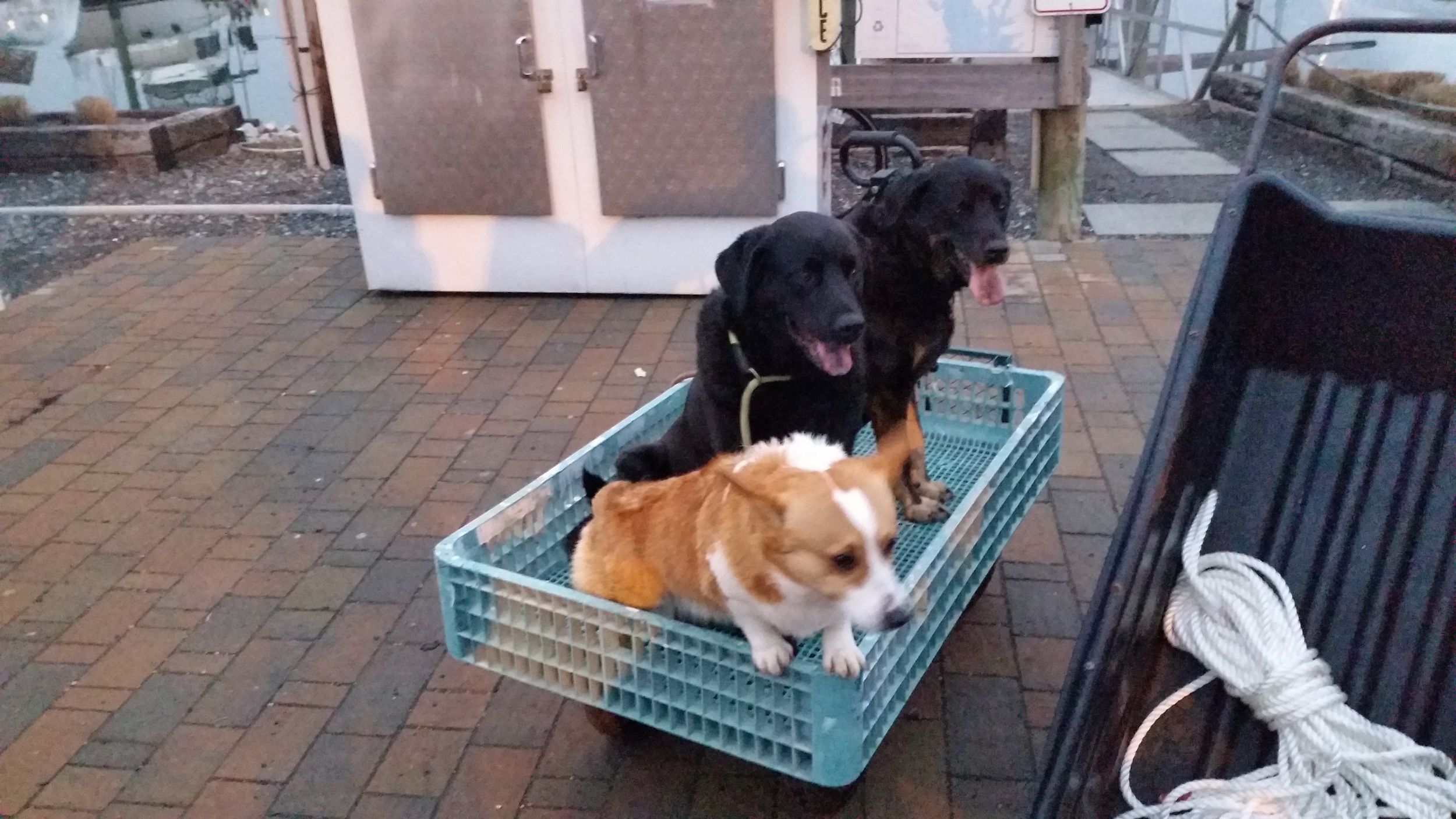
When Morty hopped in the cart, Dutch and Kani wanted to get into the other empty cart. Then Morty wanted to get in their cart (because they are friends). The problem with Morty's plan is he was the counterweight to the battery in the cart. When Morty shifted his weight, the cart became unbalanced and the battery weight turned the cart into a catapult!

Morty landed and quickly ran over to the cart with Dutch and Kani to join them. The three of them sat in the cart as they posed for pictures. 

The pictures were kind of blurry, the lighting was bad and my battery was too low to use the flash, but they were still adorable.

Storing Rice

Rice is a wonderful food to carry aboard. It is filling, easy to cook, and adds substance to any meal. In Puerto Rico, where I grew up, rice was a staple food at meals. Everything seemed to be based around rice and beans (beans are also easy to store). 

Rice is works very well on a sailboat because it stores well and is compact. A few handfuls can make a meal once cooked. It can be bought in large bags which can be tucked away in cabinets for a long time and it doesn't go bad. This means that rice can be used as an emergency food supply. You can plan the provisions needed for the whole trip, and then throw in a 10 pounds bag of rice for insurance against starvation. 

These large bags of rice can be difficult to dispense small amounts of rice from and they are difficult to reseal. This does lead to the problem of rice spilling from the bag and getting all over the locker. To avoid this, when I open a bag of rice, I will dispense it into separate resealable storage containers. 

I like to use the small cereal containers from IKEA. They are small, easy to store in the galley cabinets, and easy to dispense and seal the rice. Being made of plastic, they are also less likely to break while in storage. A 5 pound bag of rice can be evenly distributed between 3 small IKEA containers. 

To dispense the rice, simply flip up the lid and pour out what you need. When you are finished, the lid snaps back into place, avoiding accidental openings in the cabinet. The silicone seal will also help prevent pest infestations in the container. If something did find its way inside, it will only affect one of the multiple containers, rather than affecting the whole store of rice (the same principle of not keeping "all your eggs in one basket").

Give rice a try, it makes great meals and is easy to keep aboard for extended periods of time!

Winter blues

It's the dead of Winter and the winter blues seem to have set in. I want to go sailing, but my sails are at the sail loft in Annapolis for their winter repairs. Meanwhile I have been busy trying to finish my time consuming project of making rope fenders. 

It feels like my whole week is consumed with commuting to work, keeping the boat warm, and making fenders. Last winter I was very busy making the new synthetic stays for Wisdom! This year I'm making giant knots in the shape of fenders. The stays were made with the dreams of sailing to far away places whereas the fenders are going to sit on the deck for most of their life.. 

It is kind of hard to think that the very tedious process of making fenders is going to help me sail further, which makes it hard to justify staying in to work on them instead of going out with Maddie and friends. When I was making the rigging, it was acceptable to say that I wanted to stay in tonight and work since it needed to be completed by Spring. The fenders don't have the same ring to them and I have needed to make other justifications to finish them. 

I finished the sculling oars and gangplank, which were my other projects towards the end of the year. My next set of projects are:

Wedging the mast partners
Make a sail bag for the jib (Josh)
New check stays with baggy wrinkles to avoid chafing the main again
Install solar panels on the transom
New house battery bank (our batteries are close to 10 years old and very dead)
Build a wooden tender to Wisdom that fits on the deck
Install a Monitor windvane on the transom

As you can see, the next set of projects appeals to me and I really want to get them accomplished! I know that if I start working on them, the rope fenders will fall by the wayside and never be finished. I will have a large spool of rope sitting in the cockpit waiting for all eternity to be turned into a rope fender!

This is my motivation to finish the fenders. Not because I feel interested in making large unbreakable rope fenders (though I am a little bit), but because I won't start my next project until they are finished!

We are going on a short trip this summer, and then on a much longer trip to Maine in 2017, followed by a year in the Caribbean come 2018. I need to get everything ready and prepared for the coming cruises!

The Furminator!

Morty sheds a ton! This creates problems that range from inconvenience to dangerous while on a sailboat. It is inconvenient that everything is covered with dog hair, but we love him so we accept it. The danger is comes in with his hair clogging the bilge pumps that would need to pump water out of the boat in an emergency.

Chrissy mentioned that we should give "The Furminator" a try to help reduce the amount of dog hair Morty sheds. We decided to give it a try because and picked one up.

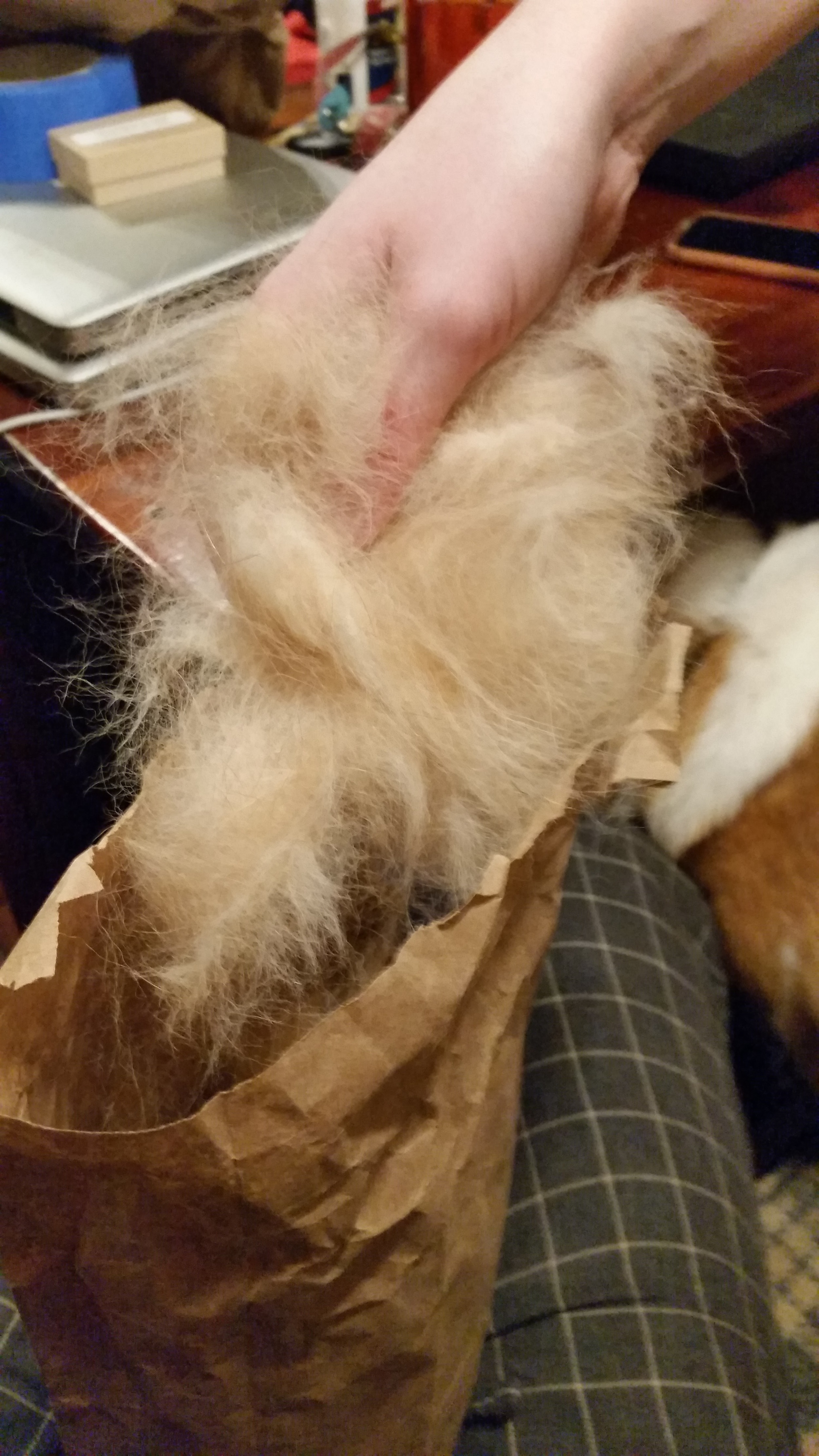
The general theory behind the Furminator's claim of 90% reduction in shedding comes from the fact that any and all loose hair will come off the dog and into a trash bag at one time, rather than being dispersed throughout the boat all the time. I was concerned that pulling any and every loose hair out of him might be uncomfortable, but all doubt was put to rest on the first brush stroke: He liked it!

The Furminator removed massive amounts of hair on each stroke. Our plan was to brush him until no more hair came off, but that never happened. We brushed the same left hip for 10 minutes and kept pulling out equal amounts of hair. It was late so we decided to brush the rest of him and moved on from the hip.

He really enjoyed each brush stroke, I guess it feels like an epic back scratch! 

At the end of our incomplete brushing session we had removed a bag full of hair! We even used the brush on the settee cushions and were amazed at the amount of hair it removed there! 

Thanks Chrissy for the recommendation! I hope it will greatly reduce the amount of "Mini Mortys" we find inside the boat.