Alternative to a Circular Saw

Circular saws are awesome! When you need to chop something into smaller pieces, these machines will slice and dice until the wood is smaller and more manageable to carry out. The only problem with circular saws is they tend to run on electricity, and what if you can’t connect to the local power grid? Now what? 

FullSizeRender.jpg

While dissassembling our plywood cabinets in the head, I ran into just this very issue. The solution was to get an axe and chop it up into smaller pieces! This may sound ridiculous and barbaric, but it did work very well. I managed to chop my way through a sheet of 3/4 inch plywood! Now, in a boat is not the place to begin swinging an axe around! No, no. The trick to using an axe safely inside a boat is to set the axe where you want to chop and then strike it with a heavy hammer! 

FullSizeRender.jpg

This will ensure that the axe doesn’t smash into something else and cause damage, or miss the mark and begin chopping out small pieces of wood. By placing the axe and then striking it, the blade will simply work its way through the wood in a very controlled manner. There is no wondering swings of an axe in the boat, and no dangers of putting a sharp blade into your interior joinery either! Just a lumbering old sledge hammer to power the axe, and it can be controlled with small and short (but powerful) strokes.

An axe may seem out of place in a yacht refit, but if you need a specific tool and don’t have access to it, then it may be time to get creative with different tools that might meet your needs as well. 

The Power of Nature

The Azores were formed when massive volcanoes rose up from the abysmal plain and pierced the surface of the ocean. They were born out of fire in the middle of the ocean, but now they are lush and covered with fresh water. 

IMG_3196.JPG

All the vegetation and animals that were here when the first explorers stepped foot on these rocky cliffs in the ocean had arrived either by air or by sea. Sea birds would stop here to nest as the islands were devoid of predators, and any animals that were present had arrived by raft at some point since the creation of these islands. The vegetation also arrived on these islands by ways of sheer improbability, but yet they were green and lush when the first explorers arrived.

What I find most incredible is the collection of fresh water that is present on these islands. The ocean is a world of salt, and these tiny islands are oasis of fresh water in abundance! These waterfalls flow from never ending lakes and rivers, and just pour their fresh contents right out into the salty sea beyond the beaches. 

Life on this planet is very resilient, and it will find its way to every last point of habitable land possible!  

A Simpler Time, Now

We often feel like the olden days were a simpler time. The world seems more complicated as the features that were supposed to make our lives easier seem to have made our lives a chaotic cacophony! Technology that was supposed to make life flow more seamlessly always needs attention and allows us to pack so much into our day that we can’t seem to spare any time. When these “conveniences” fail us, we then are inundated with stress as we try to sort out the technical issue while still maintaining our insane self-imposed schedule. Why isn’t the simpler time now? 

IMG_3191.JPG

We don’t have radar, we don’t have electronic autopilots, or watermakers, or bow thrusters, or most any gadget that they try to shove down your throat at a boat show. Instead, we have a simple setup of sails and a hull. We carry a lot of water and collect the rain that falls from the sky. We eat foods that are easy to keep, and we eat them before they go bad. We plan our day based on what feels right and what seems easy enough, instead of following a set schedule that we created long before we knew what we were getting ourselves into. We went back to that simpler time of sailing, and found ourselves in this simpler time of land. 

Here, a farmer sits on a seat as he milks his cow by hand. Behind him is a splendid waterfall and lush foliage over the foreboding cliff. No milking machine, no hormones, no complicated setups. He has a cow, the cow eats the grass in the field, and he milks the cow.  

Life doesn’t have to be complicated, and the simpler time can be now. Uncomplicate your life so that you can begin living it! 

Hiking in Flores

Flores, in the Azores, has gorgeous sceneries and a vast network of trails that you can venture around. The landscape reminds me of a mix between Jurassic Park and Lord of the Rings. Everything is lush and green, but the ferns make it feel a little Cretaceous. The islands range in age from 8,120,000 years old (Santa Maria) to 270,000 years old (Pico) , but the landscape could easily make you feel as if you were 100,000,000 years ago, when flowering plants were really beginning to diversify!

The landscape seems like a goats playground, everything is vertical and rocky with very little mud around, as all the dirt is carefully held in roots, while the red mud-looking surface is actually red volcanic rock! Hiking here is fun for a while, but then you get tired! Up and down, then through a stream and up again! If only there was an easier way to see these natural splendors without all that walking? 

IMG_3190.JPG

There is! Most of the long trails flank the roads of the island. You can easily drive to the gorgeous landmark, see its beauty and then hike a little on the trail that would have gotten you there. 

Maddie and I did this a lot! Some of the trails are rediculously long and would take up your whole day, just to see one magnificent waterfall. For example, one trail is 7km long, one way! It usually takes people 3.5 hours going (it’s uphill) and 2.5 hours to return (it’s downhill). This means that 6 hours of your day have been consumed to see this one trail which, honestly doesn’t take you to that beautiful of a place! If you had hiked that trail, you would not have had time to see the other waterfalls on the island that day.

If hiking is your thing, you will probably be able to hike all the trails on the island in a week. If hiking is not your thing, or you are not in the greatest of shape, then it will take much longer than a week to hike all of it! This is where driving to the end comes into play, you hop out of the car and hike the last bit to the beautiful waterfall, then off you go to the next spot! This might feel like cheating, but most of the waterfalls are about 500 meters away from the end of the road, so you will still hike about a kilometer for each feature.  

Take your time and explore the Azores at your own pace. If you want to hike, you certainly will find yourself in a playground. If you don’t fancy yourself a hiker, you can still see the wonderful views with the aid of your vehicle (and a little walking). 

The Power of Earth

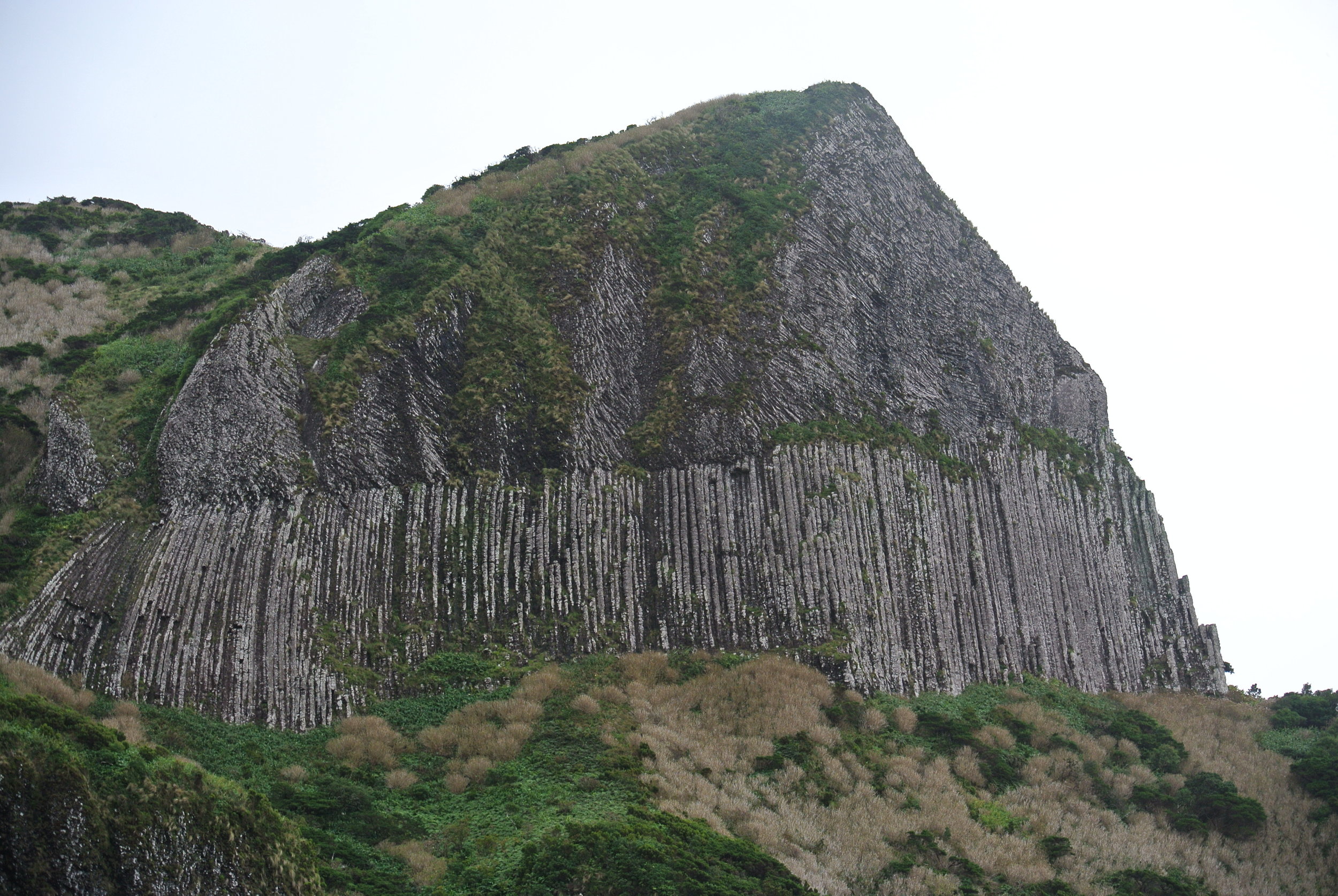
This massive rock formation shows how two different tectonic plates interacted with each other. 

IMG_3194.JPG

The vertical striatiions are caused by one plate, while the top portion of rock is caused by a different plate. Looking at these rocks is a great way to see how the earth beneath your feet came to be, and it tells you how they interacted with each other.

Sedimentary rock forms by many layers of deposition occurring over a long period of time. The end result is a rock that will have striations that correspond to the different layers that were laid down over the eons. The thing with sedimentary rock is it is always laid down horizontally. To generate these vertical lines, the entire rock formation had to be turned on its side! 

Rock may seem rather hard and unwieldy, but it is rather flexible, you just have to zoom out quite a bit. Instead of focusing on a single stone, it is best to focus on the entire plate itself. Just how a block of wood is rather hard to bend, if that same type of wood were on a long board, you could cause it to bend! As two tectonic plates are pushed together, the forces on them will cause the edges of the plates to flex in various ways. Either both edges will go up and form mountains, or one edge will go up while the other edge is forced under the top plate. The top plate will then flex upwards, and in extreme circumstances, will flex all the way until the striations in the rock are vertical! 

That explains the bottom portion, but what about the top piece? If the top plate got pushed upwards to create the vertical lines, how did the other rock get ontop of it? 

The Earth’s history is written in the rocks you see right before your eyes like a book; all you need to do is sit down and read it. The vertically striated rock did climb up and over another plate to cause the sedimentary lines to become vertical, but no one said anything about what happened before that time. The other rock on top is telling us that long before the vertical edge turned up, it was previously under another piece of rock. As it rotated and turned upwards, it pushed the rock that was on top of it already upwards and high into the sky, creating this massive mountain structure where you have vertical lines with garbled stone above it.