
Cruising Mindset

Cruising is not just the act of taking long trips on your yacht, it is an entire mindset that becomes you as you cruise. 

Maddie and I have cut the dock lines to society and set off as full time cruisers. We have no schedule, no itinerary, no nothing! We simply pick a place and start heading there. We get there when we get there is a good way to sum it all up. 

When we had taken "extended vacations" before that we called cruising, we had a set amount of time available to us. We had a destination in mind and a return date already set. Everyday that we weren't heading towards our destination was a day lost, because we did have to turn around at some point to return to work. 

While the trips were relaxing, they were still speckled with stress. If the winds were not right, or we didn't get far enough on a day, we felt like we might not actually get to our destination and we would be forced to turn around by our jobs. 

Now, we don't worry about these sorts of things. We wake up when we wake up, raise anchor when we feel like it, and sail until we decide to stop for the day! 

We were anchored in Harness Creek in South River when we decided to visit a little town called Easton. This town is located far up a river and was rather far for us by sail. We didn't care and we set off towards this new destination.  

After three days of sailing, we were nearing this town on the river and were only 0.3 nautical miles from the place we want to anchor for a while when we ran aground. 

Running aground is never a fun time, but the truth is it isn't that bad for us.  Wisdom, our sailboat, has a full keel. Running aground simply means that we are sitting on the bottom of the river with no worry about damage to our undersides. 

We checked the tide table and found that it was nearly low tide, and the tide was going out. We tried to heel over with the sails, kedge off, even be pulled off by the assistance of a passing powerboat. Alas, the tide had gone out too fast and our waterline was about 6 inches higher than normal. Our keel was stuck in the mud and our only hope was to wait for high tide to lift us off. 

The tide would take a few hours to come back up, and instead of stressing our situation, we simply got out some cheese and a game to eat and play in the cockpit while we waited. 

That is the true sense of cruising. Time no longer matters, as you simply take each day as it comes and each moment as it presents itself. There is no worry about deadlines nor schedules, as we are merely sailing along as best we can in the direction of our next destination. 
Blister Repair

Osmotic blisters may be the bane of a fiberglass hull, but it is a small problem that has been blown way out of proportion. The truth is, all hulls suffer form some form of degradation: wood hulls rot and get worms, fiberglass hulls get blisters, steel hulls rust, and aluminum hulls disappear by galvanic corrosion. You simply need to choose a hull material that you feel comfortable repairing yourself.

Blisters are caused by the osmotic pressure of water that passes through the layers of fiberglass and exposes areas of delamination. When the hull is lifted from the water, these areas will bulge out like lumps. When you crack them open, water will pour out with intense pressure. 

Fixing blisters can be a very costly endevour if you pay to have someone else do it, but they are actually very easy to fix yourself. You only need a grinder and an sander. 

Using a grinder, you can rip through the blister, tearing out all the delaminates fiberglass that is overtop. Then you can begin to tear out laterally, as you follow the damage from the blister. As you work, the affected area will be wet and have a slight brown color to it. You simply want to grind away until you no longer see any brown or wet, and you can't even see where the different layers are of the hull. 

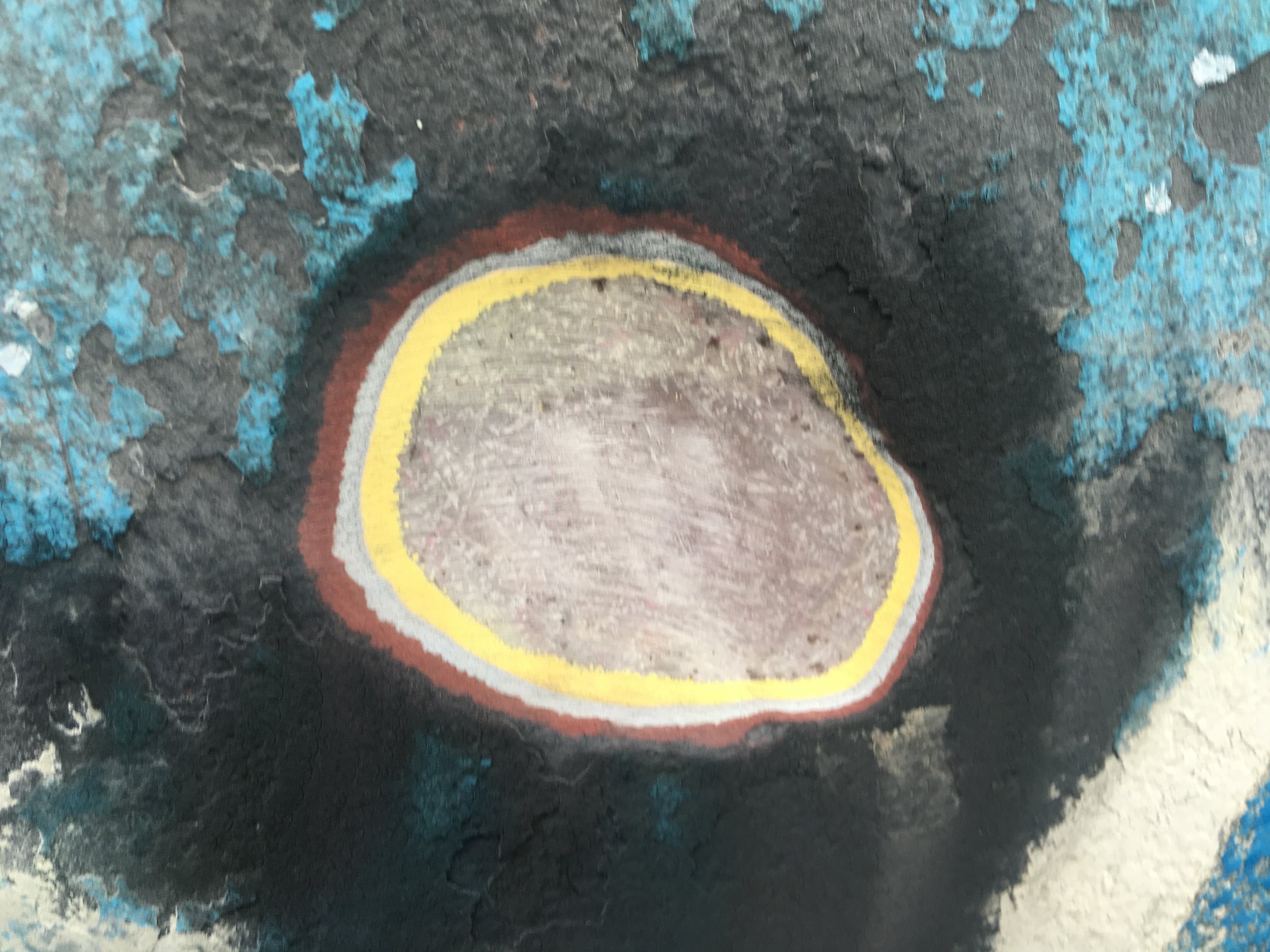
At this point you will have a gaping hole in the side of your boat. This may seem like a major problem, but it is easy to fix. 

IMG_0296.JPG

If the blister is not too deep, the repair is very straight forward. If the blister is rather deep, then you simply need to take a few extra steps to fix it. Neither of these two methods are difficult, and both can be done in a few minutes. 

If the blister is shallow, and not passing through many layers of the hull, you can simply fill the hole with thickened epoxy. How deep is too deep for just epoxy is dependent on the hull itself. If you have a 1/4 inch deep hole on a 1/2 inch thick hull, you have just compromised 50% of the hull in a blister! Yet, if the hull is inches thick, this is a small surface scratch that is inconsequential to the total structural integrity of the hull. 

In my case, the hull in this area is 1.5 inches thick, and the blister was 1.4 inch deep. This comes out to be 1/6th the hull thickness, so I simply repaired it with thickened epoxy. 

Regular West System Epoxy can be mixed well, then 406 thickening agent can be added until the entire mixture looks like thick peanut butter. This thick mass can then be stuffed into the hole and wiped over with a plastic spatula. The spatula will contour the blisters surface to be flush with the hull, taking all the work out of fairing the repair job! It is just that easy, simply smear it in and smooth it off! 

If th blister is deep, you can wet the area with untickened West System Epoxy, and then add some chop strand mat to the hole. This will provide new fibers that will add in the structural integrity of the entire repair. Over this layer, you can then add more unthickened epoxy to fully wet the strands of fiberglass. When they are all wet, you then proceed with the thickens epoxy just like before. Simply smear it in and scrape it smooth! 

Blisters may be an eyesore, but they are more an annoyance than anything else. Small blisters will not sink your boat, only it's resale value! Keeping your boat out of the water through winter allows the hull to dry out well and reduce the incidence of blisters as well. If you live aboard though, your boat will always be int eh water and blisters will become a fact of life when you haul out. 

You can choose to ignore them until they get big, or you can choose to repair each and every one of them as they occur. Which ever way you choose to go with, just keep in mind that blisters are not a death sentence to a fiberglass hull, simply an annoyance you get in response to your relaxed maintenance schedule of haul outs. 

Lost Wax Technique

In the world of casting, there are two main ways of making a mold. The simplest is to take an object, shove it into something which leaves an impression, then pour the metal into the impression that was left behind.

This method is often called sand casting, since sand is used as the something that the object is shoved into. Sand is a wonderful casting medium because it is reusable! After you finish your casting, you can pack the same sand around something else to create an entirely new object.

The problem with sand casting is your object needs to have "path of draw" which simply means that there can be no undercuts in your object to allow the object to be drawn out of the the sand without disturbing your mold.

Imagine you wanted to cast a cone. If you hold the base and shove the tip into the sand, you will be able to pull the cone out of the sand and leave a perfect impression of the cone in the sand. This impression will hold molten metal perfectly!

If you held the tip and buried the base, you would not be able to pull the cone out without disturbing the sand and destroying your impression.

Ensuring that you always have a path of draw is important, as it allows the object to be reused should the casting fail and need to be repeated. This lets you make one blank that can be used to create an infinite amount of molds over and over again!

The truth about the sand though, the object is not pressed into the sand, but instead the sand is poured and packed around the object. Then the entire sand box is flipped and the object is removed. It is just easier to visualize shoving a cone into sand then to try to describe packing sand around the cone and pulling the cone from the sand.

The other method for making molds is the lost wax technique. Lost wax is very forgiving when it comes to shape. There can be undercuts, as well as intricate passages between the metal, as the entire item is created in wax! Anything wax can do, the mold can also do, and hopefully, so will the metal!

When you see a bronze statue, where the intricate body could not have been pulled from a sandbox to leave behind an impression, this is the technique that they used. The entire statue is first made in wax and then covered in plaster. The plaster will adapt perfectly to the wax and take on the shape down to the last detail. Once the wax is entirely covered with stone, it is ready for the second step: the loss of the wax!

The mold is heated, causing all the wax to melt out and be lost; hence the name of the technique. Now you have a stone cast of the item you wish to make in metal with a void where the wax used to be. The metal is then poured into the hollow space and allowed to fill all the voids.

Unlike the sand casting technique, where the blank is saved and reusable if you mess up the casting, with a lost wax technique, you only get one try. If you fail during the casting phase, you need to start from scratch and do it all again!

Naturally, you want to make sure everything is working perfectly before you risk destroying a masterpiece of a wax form that may never be fully realized in its metal form! Here is where practice and experience come into play.

If the wax is fully covered in stone, how will the wax escape and the metal enter? Experience will help the craftsman place the sprue in the right places to allow the wax to exit, the metal to enter, and the air to exit the mold. If any of these steps are not successful, the entire casting may be ruined!

Sprue placement is important, and intricate pieces will require intricate sprue designs. In general, larger items will need multiple sprues to allow the metal to enter and flow through the mold. Sprues also need to be placed at the top of the mold, that way they don't spill out metal as the mold is filled.

If you have a long flat item to cast, placing two sprues, one at each end will be a good idea. When you pour the molten metal into one sprue, you will know that it has passed to the other side of the mold if you see it exit the other sprue. This will remove doubt about whether or not the metal made it all the way down the passages.

The lost wax technique can be rewarding as well as painful. If everything comes out well, your casting will be as intricate as your wax model. If anything goes wrong, you will be left with nothing more than a disfigured dream of a casting. Your wax is gone, your mold broken, as your heart saddened as you begin the entire process over again.

Needs and Wants

Living aboard makes you grossly aware of the difference between needs and wants.

A need is something that you must have to survive. A want is everything else that you would like to have but can survive without.

While we all learned about needs and wants growing up, we were never truly penalized for surrounding ourselves with wants disguised as needs.

When living aboard, this lesson is brought back to you with an iron fist. Boats are smaller than houses, and thus you will not have all the space you would typically have available for collecting false needs.

Yes, you could always put up an extra shelf in a boat to display your favorite nick knacks, but this fine display will only last until the next yahoo comes barreling through the harbor and creating a huge wake. Your boat will pitch and roll, causing all your delicate trinkets to fall over and break.

If you bring all of your false needs onto the boat when you first move aboard because you couldn't bring yourself to part with them; the boat will help motivate you to get rid of them. Either the boat will break them, or you will get frustrated with the lack of space and willfully choose to discard them.

The true need for space will soon overpower the false need for stuff. You will quickly learn what you really need and what has been shoved down your throat by the corporations as something you need. This distinction may take some time, but eventually, we all get there.

Once we reach this point, we begin to see what is truly important in our lives, such as personal enrichment, well being, and happiness; all of which do not require the purchase of the latest "As Seen on TV" item.

The smaller your first boat is, the quicker this lesson becomes apparent. I started out alone on a 45 foot sailboat, and it took me a few months to realize that some of the essential items I brought into the boat were not as necessary as I had first thought. Once this enlightenment had been reached, these items were quickly carted off the boat and sold at a local swap meet. On the other hand, one of our neighbors started off on a 27 foot sailboat as a couple with a dog. They reached these understandings in a matter of weeks, as space for them was a significant premium. They have since moved up onto a 34 foot sailboat where their enlightened views have carried over, making them feel spoiled by all the space they have around them.

Living in a marina will buffer you a little bit as extra space can be had quickly. Many liveaboards have a large dock box located at the foot of their slip where they fill it to the lid with junk that they hardly ever use. Once the dock box is filled, they then begin to open up storage units which further allow them to accumulate clutter. While they do live in a tiny space, their storage capabilities are still vast. They will sometimes continue to hoard items that they can't bear to part with until they realize how infrequently they visit their storage bin on shore and how much it is costing them a month to keep their junk.

I was also guilty of this practice. I had a shed in my parents yard filled with junk from my apartment that didn't fit in the boat when I moved off of land. This shed was full of junk that I never touched in 5 years! Then a tornado came through my parents yard and wrecked the shed. I had the choice to either rebuild the shed or discard the shed and all of its contents. My first thought was "I need this stuff" and then I realized that had I truly needed any of this stuff, I would have brought it to the boat by now!

And so, the shed has been dismantled and the contents discarded. I have not missed a single item that was in there.

To further make it apparent what we really need vs what we want, you need to cut your ties with land all together. This will make it impossible to have a secret stash somewhere outside of your boat as you will be forced to become fully self sufficient. Every need must be within your hull, and every want will be stealing space from a need.

Maddie and I have decided to cast off the docklines and go cruising. In doing this, we have further downsized our belongings. There is a major trend in the items that have been removed, they are all appliances! We have taken off hair dryers, toasters, blenders, and the like because we will not have the electrical means to power them. Instead we will use towels, pans, and knives to do the same work. We were concerned that not having these appliances present would make our lives harder, but the truth is we haven't noticed a difference. Maddie has cut her hair shorter to make washing and air drying easier, we use the same pan that we cook our eggs in to make toast, and we don't fret the need to finely chop vegetables on a cutting board while cooking. All of these appliances took up a lot of space and caused us headaches as they would draw immense amounts of power, sometimes causing the breakers in the boat to trip! Instead, we have traded all that noise and stress for peace and tranquility where we achieve the same end result without the clutter, cost to purchase and operate, or fear that the item will breakdown from exposure to the marine environment. Instead, we are able to lead our lives happily and carefree, without all that stuff in tow.

Saying "See You Later"

The hardest thing about going cruising is not finding the right boat or making it fit your needs, no the hardest part is saying goodbye.

When you find your dreamboat and move aboard, you will be surrounded by other liveaboards in the marina. Liveaboards can be rather "interesting" people, but you will be too.

Getting a boat prepared will take time, and all the while you will be making friends with your fellow boating neighbors. It took me 5 years to transform an old blue water capable boat into a blue water cruiser. Over these 5 years I have made some very good friends. I would easily say that these friends are the best friends I have ever had, and that makes this the hardest part of all.

When you untie the lines, you will set off on your journey over the horizon. This also means that you will not see your friends anymore because you will be away.

We haven't untied the lines yet and we have already made plans to meet up with our friends in different places as we sail along, but visiting with them is very different from living near them.

Ben and Kate, one of our closest friends, live a few piers away from us. We will regularly just go knock on their hull unannounced, as do they, to go grab some food. Maddie works odd hours as a painting instructor, and Kate also works odd hours as a flight nurse. If either Ben or I are alone, we will go see what the other couple is up to and just hang out.

Once we are cruising though, we will give up this luxury. The only way we can meet up with them will be to schedule and plan ahead. This transforms the dynamic from spontaneous to planned.

This, in my opinion is the hardest thing about casting off to go cruising. While we are aware that we won't see them as regularly or as often, we are aware that we will come across many new people as we cruise, offering a glimmer of light in the darkness of the unknown that lays before us.