Name Brand vs Econo Brand

When you look at the prices for ropes, you may be shocked at how much some brands want for their line. Why pay several dollars per foot when you can buy the same size line from another brand for pennies?

There is actually a difference! I'm in the process of making rope fenders and I need a lot of line that will wrap the whole fender up in a nice package. This line will be under no tension and is purely decorative. I was paying $1.25 per foot for 1/2" Three Strand from New England Ropes and thought this was going to be too expensive to wrap the fenders. I decided to go with an Econo Brand of line where each foot only cost me $0.50 per foot. When you are talking 600 foot spools, that's a difference of $450 per spool!

The differences are greatly apparent! The more costly New England Ropes has tighter wrapped yarns, stronger lays, and resists unraveling. The Econo Brand has much larger yarns which are hardly wrapped and will unlay if the ends are not taped tightly. 

The tighter yarns also translate into better chafe resistance which directly affects the longevity of a line on board your yacht. The simple act of tying many half hitches has led the Econo Brand rope to pull apart. The line is riddled with little blebs where the yarns are pulling out of the lays from tying so many knots. If this were a working line on the boat, those blebs would be quickly chafed open, leading to premature chafe failure. 

Imagine your docklines, chafing on the chocks as the boat bobs around the slip, or the anchor rode dragging on the bottom of the sea floor. These actions would wreak havoc on a cheap rope, causing yarns to pull out and break. In these working situations, the consequences are much greater. Your boat could break free of the pier and begin to drift, causing damage to your vessel and those around it. If the anchor rode were to chafe through and snap, you will begin to drift through the water with the added cost of buying a new anchor!

If you are buying rope for your boat, don't let price dictate your decision. Do buy quality ropes that will protect your vessel as they provide a long and reliable service life!

Buying New vs Buying Old

When looking to buy a boat, you have three choices

Brand New
Used in wonderful condition
Used in poor condition

At face value, Brand New is the most expensive, Used in wonderful condition is pricey but great value, and Used in poor condition is the cheapest upfront. But what does it mean for you?

Buying Brand New has the advantage of knowing that everything on the boat is fresh from the factory and should work flawlessly. This also means that if there are design flaws, you will be the one to find them. Most reputable boat companies will pay to correct design flaws in your vessel, so you do have some insurance there. The downside comes in the way of drastic depreciation. A $250,000 yacht will not be worth that in a few years, and if you ever go to sell it, you will realize that depreciation took most of the boats value.

Buying in wonderful condition is where you buy a boat that was bought Brand New and meticulously maintained for years. All the while, problems have been discovered and then fixed along the way; delivering to you a like new yacht with all the kinks worked out! This can be the best way to buy a boat if you can find the exact boat you are looking for.

Buying in poor condition is a bit of a risk. You are essentially buying a deck and hull, and outfitting the rest from there. Cost wise, this tends to be the cheapest upfront, but the costs of outfitting a boat can add up considerably. The advantage is this can be done in stages allowing you to save up between stages. This way, you are able to have a place to live in (or camp in) while you work your way towards perfection.

They say boats cost! They cost money and time, if you save on money, you will pay more in time! 

From the choices above, it may seem that buying "Used in wonderful condition" is the best choice, as the price is greatly reduced over new, and it won't cost you any time to get the yacht ready to sail. This is true, but it is also very hard to find the boat that is exactly how you want it.

If you look at any sailboat, you will see "Owner Customizations". Some people want radar, chart plotter, auto pilot, and a wine cooler; while others want laminated sails and light weight synthetic rigging. What you want on a boat is not always what others want on their boat. This means that no matter what boat you buy, you are going to sink more money into it to make it "Your Boat"

This is where buying "Used in poor condition" shines. The boat doesn't cost much and is a blank canvas! When you buy a quality boat that is in need of a rebuild, you are buying a sturdy platform to build your dream boat on. You are in control of deciding what goes where and you are able to spend your money on the items that you value as necessary on board your boat. 

This method will cost you a lot of time if you do the work yourself, but I think it's worth it in the end. How much of a project you want is completely up to you. You can get a wooden boat from "Boneyard Boats" for free, or a sunken boat that has been resurfaced for nearly free. These are the cheapest initially, but the total cost of these projects will quickly overshadow the supposed deal. 

The next option is to buy an old boat that has a good interior, deck, hull, rudder, and spars; and take it from there. These tend to be boats that were loved and used for many years, and are in need of a re-fit. They tend to have a bad engine, blown out sails, aged rigging, and minimal electronics. These are where the true bargains are hiding! You don't have to pay the previous owner for "his favorite" chart plotter and then replacing it with "your favorite" chart plotter. Instead, you can pick and choose what and where you want to mount your electronic accessories. 

The other advantage with boats that are structurally sound is you get to pick and choose what sails and rigging you desire. If you prefer tri radial sails over crosscut sails, or full battens over partial battens, you don't have to live with the previous owners decision! You can choose exactly what sails you want and what size for them to be! Some people prefer to have a smaller high aspect jib while others prefer a monstrous 180% genoa, the choice is yours!

As far as rigging goes, you are free to select the color scheme that makes sense for you! If you want all the downhauls to be the same color, or if you want each line to be a different color, this is your chance to decide on color and feel in your hands. Boats like these take some time to complete, but the owners tend to be very pleased with the end result.

It can be hard to find your perfect yacht when shopping around. The eyes will love a brand new boat much more than your wallet will. The used market might seem daunting to sift through. Keep searching with an open mind, and consider looking at the ones the eyes might not fall in love with right away, but have the potential to make your dreams come true! 

 

Windpuff's First Daysail

I got home from choir this morning in a wonderful mood and found Herby on Windpuff having just tested out his completed sculling oar.  It was an uncharacteristically warm day with a few wispy white streaks across the sky, allowing the sun to finally melt the mountains of snow on land.  We just had to go out for a sail. 

Windpuff’s original name was “Dove.”  We bought her to be a day sailor for when we wanted to go out spur of the moment.  Since Wisdom is our home, she is never ready to go at a moment’s notice.  She’s big and has our various belongings strewn about so that heeling over would create a catastrophe, not to mention the fact that we just took off all her sails for winter maintenance.  Now, Windpuff doesn’t have a working motor, so we were never able to get her out of the slip safely and confidently until today.  Thus, it was today that we became truly grateful that we had her.  Within ten minutes of making the decision to go out, we were sculling away from the slip and hoisting the sails. 

It was a much needed break from any obligations that we left on land.  We were only out for about two hours, but as we glided through the water with just enough wind to fill the sails, the sun warmed our faces and everything felt right.  Even Morty enjoyed himself thoroughly. 

The sculling oar has finally made it possible to enjoy our second boat, and I’m so excited to finally be able to benefit from having it.  I love Wisdom, but I feel a special connection to Windpuff because I was involved in the process of choosing her.  We looked at her together on the hard and I even got to choose the new name.  Windpuff also taught me to sail.  It made more sense for me to learn on her because she only has two sails, she’s 30 feet long, and she’s very responsive to movements of the tiller.  I helped sail her to her new home almost a year ago and we haven’t been able to sail her since until today!  I’m excited for our future adventures with our little day sailor.         

Hanging Artwork in a Sailboat

Homes need pictures hanging from the walls, but sailboats lean over frequently! How do you keep pictures and paintings from falling off the walls or always looking crooked? The answer is simple, poster putty.

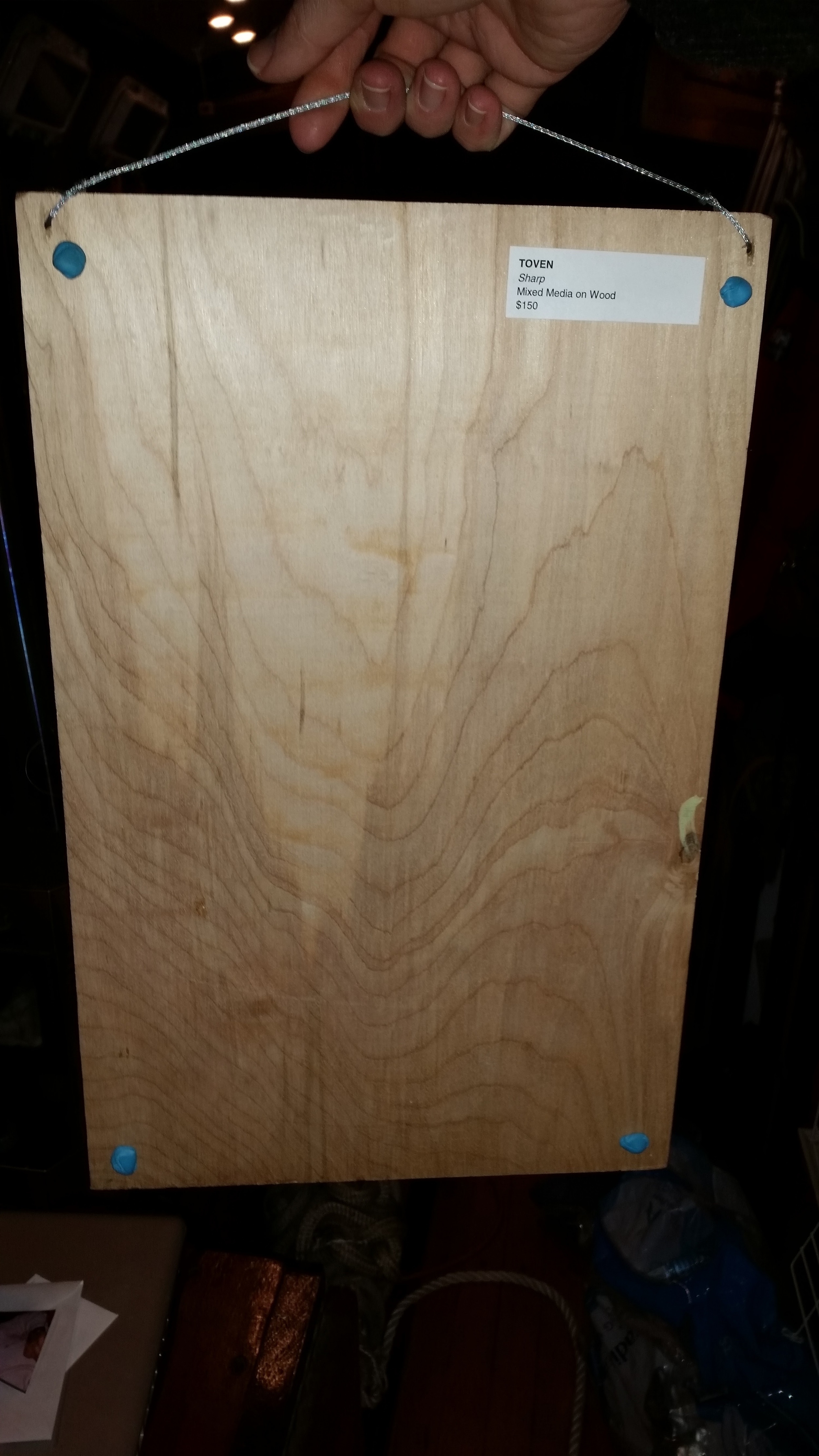
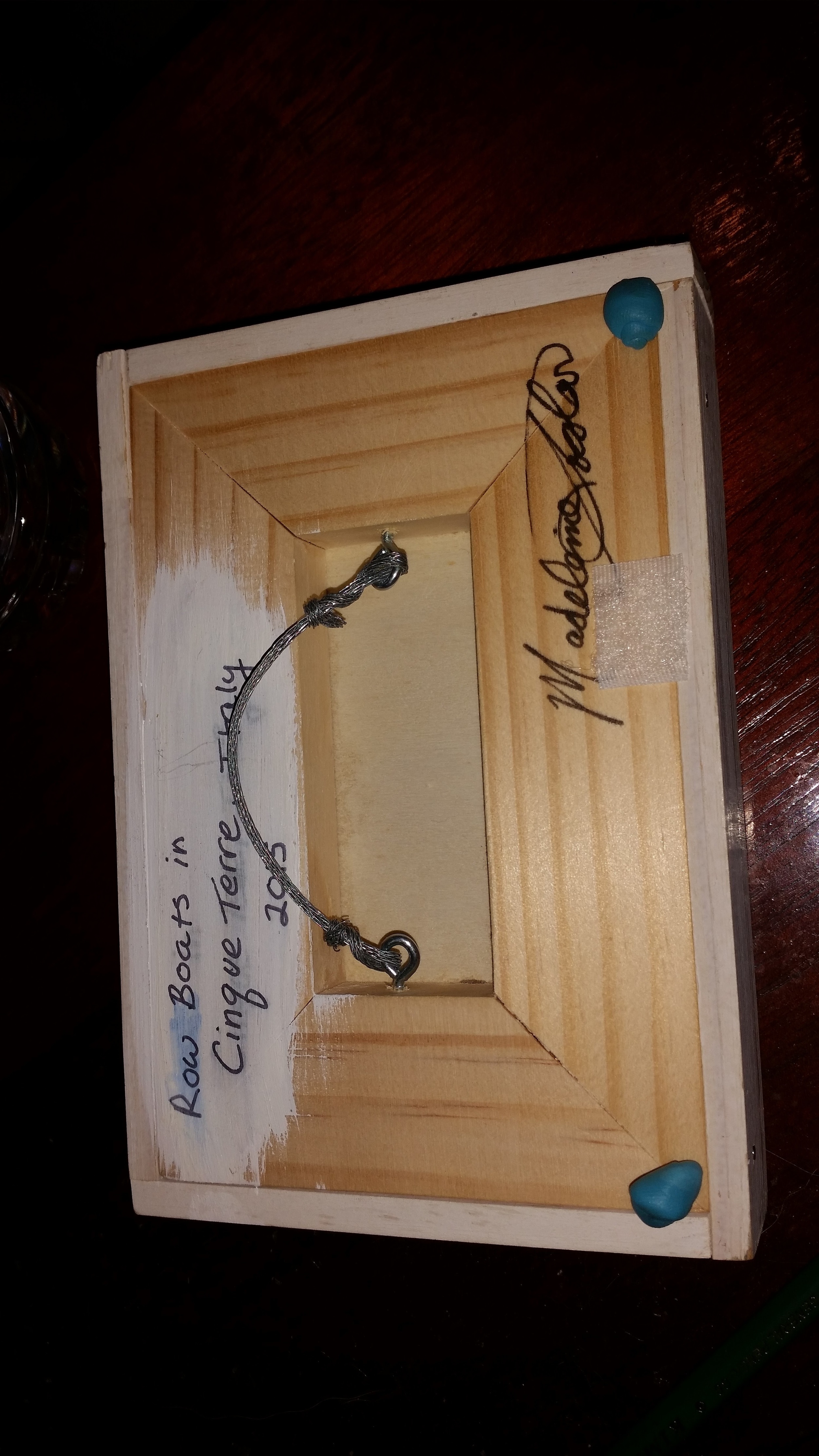
I use a nail and hook to hang the picture or painting like any regular piece of art, but then I place a 1cm (1/2 inch) sized piece of poster putty on each lower corner. I hang the picture by the nail and center it so it looks straight, then firmly press it to the bulkhead. The poster putty will glue the picture to the wall, but allow intentional removal from the wall without leaving any marks. 

All of the artwork we hang on board Wisdom is done this way and we have sailed many miles heeled over without a single piece of art swinging free or falling off a wall.

Mildew

Condensation is a serious problem for liveaboards. It will form in places you would never think of and in a short period of time, puddles will form causing water damage to everything it touches. One of the common places this issue develops is under a mattress. 

When you lay in bed, your warmth comes through the mattress until it reaches the cold sides of the bed sole. At this junction of warm and cold, condensation will form; soaking the mattress and growing mildew everywhere!

To prevent mildew, you need to prevent moisture. To prevent moisture, you need to prevent condensation. To prevent condensation, you need airflow. How can you get airflow under a mattress? You need something to form an air space where it can freely ventilate the space under the mattress.

There are very expensive systems for sale that look like wafer tiles. These hollow tiles will lift the mattress up allowing airflow and provide enough strength to support the weight of people sleeping in the bed. This seems like a wonderful option until you calculate the cost. Dri-dek tiles from West Marine cost $6.29 per square foot. If your berth is 4 feet wide and 7 feet long, you have 28 square feet to cover, costing $176.12. This seems feasible, but it is still a significant cost compared to the alternative. 

They are staggered to not block the access holes to my water tanks under the V Berth.

They are staggered to not block the access holes to my water tanks under the V Berth.

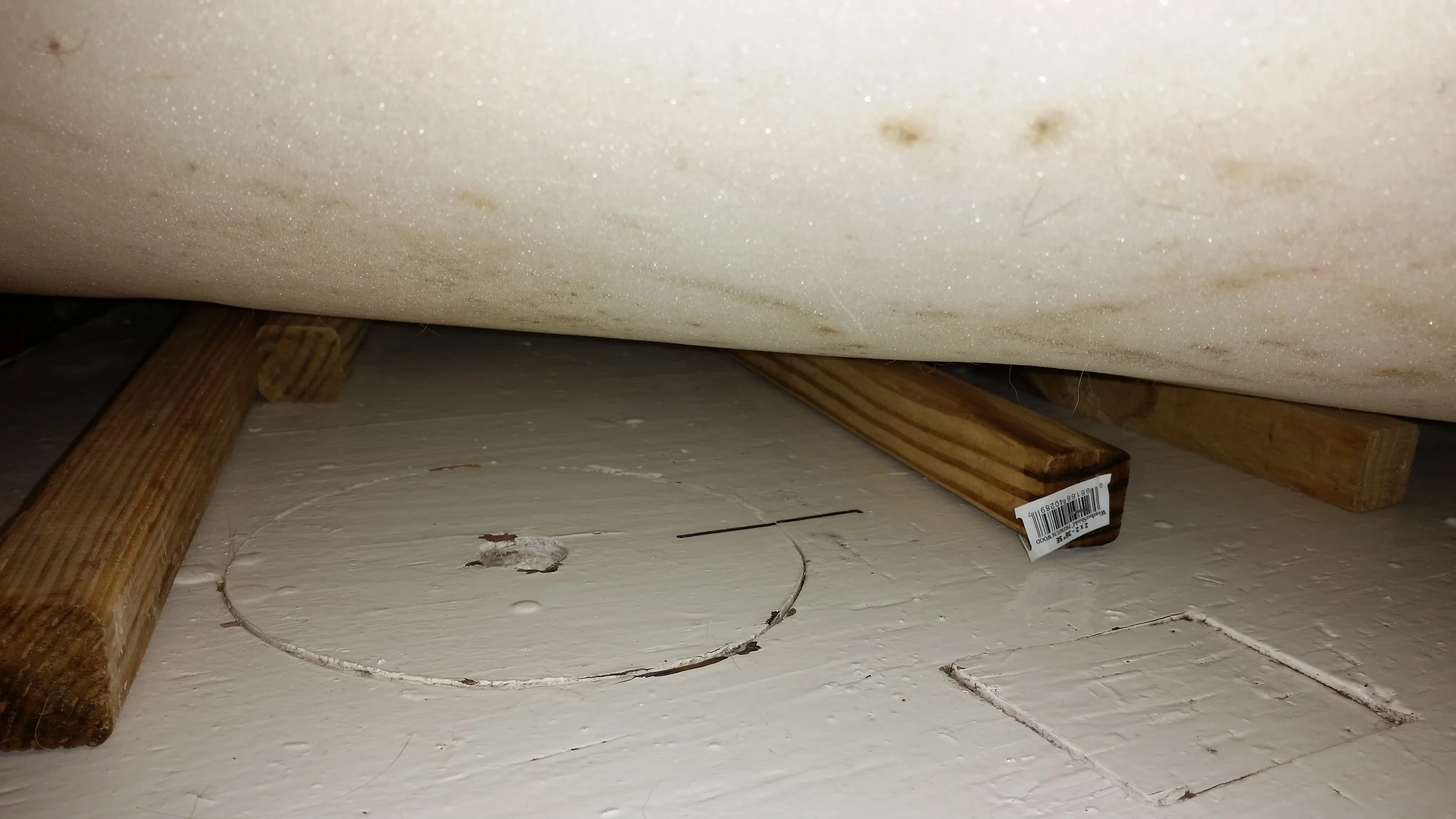
I went to Home Depot and purchased a few wooden battens for $0.50 a batten. These battens lift the whole mattress up to provide airflow while also providing support for two adults to sleep on this berth all night, every night, without any problems. For the forward V berth, we used 9 battens arranged in rows promote the flow of air through and under the mattress, keeping it dry and mildew free for only $4.50

Our mattress is very thick, so we don't feel the battens through the mattress, but if you find it uncomfortable to sleep on the battens under the mattress, you can always lay some wooden or PVC trellis on top of the battens to further support the mattress while keeping the airspace open.

The results were dramatic and instant. We went from a full puddle under the mattress that would drip off the foam when the mattress was lifted to bone dry in one day! If you want to spend a lot of money on this project, Dri-dek tiles will work wonderfully, but for a minimal amount of funds, the same results can be achieved using the wooden battens.