Battens

I have a love hate relationship with my battens. When I bought Wisdom, she came with 20 year old sails. They were stretched and baggy, and in need of being replaced.

The Mainsail was a batten-less sail that had a hollow leech. This sail was roughly 400 square feet. I decided that I should increase the amount of sail area since I was planning on not being able to motor any significant distances. This prompted my decision to switch to a full batten main (522 square feet) with a as large of a roach as possible.

The sail works fine, and the battens help hold the sail out in light airs, giving as much push as we can get out of the sail. In heavy airs, the battens help control sail shape and aid in trimming the sail. They do their job wonderfully!

Everything I love and hate about the new main involves the battens. 

I love:

The added sail area
The way it holds its shape in light airs
The way it holds the sail while reefing

I hate:

When the battens get hooked on the lazy jacks
When the battens get hooked on the shrouds
When the battens get hooked on the flag halyards
When the battens get hooked on the topping lift
When the battens get hooked on the clew reefing lines
When the battens fall before the luff and prop the sail up rather than letting it all fall on the boom
When the battens rub on the shrouds

The old sail was 20+ years old and never had a hole chafed into it. The new sail is only 2 years old and has chafed in 4 areas, all along the batten pockets!

I never worried about the lazy jacks with the old sail either, it went up and it came down; never hooking on anything in the rigging. Now, I have to make sure everything is clear of the sail before raising it because the battens will hook on everything! 

As much as I dislike the headache that the battens bring to sailing, they are certainly a necessary evil. You have to be much more aware of what is around them to avoid getting them hooked on something or chafing in areas. 

I do not regret battens because I knew from the beginning that they would be the cause of all my problems, and I was willing to make that sacrifice for the extra sail area.

How do you guys feel about battens? Do you have them? Would you get them again? Let me know in the comments down below.

Comfort Aboard

I moved onto Wisdom in September of 2012. My plan was to live on the hook and cruise while working as a dentist part time when I was back in Maryland. I spent a number of years while in school looking at different sailboats trying to find the best cruiser/liveaboard. 

When I finally found my boat, she was in pretty bad shape cosmetically but wonderful shape structurally. She had been on the hard for the past three years, shut up and neglected. All the lines were covered in algae, the topsides horribly oxidized, and all the systems inside deteriorated. 

When I bought her, she had 2 working light bulbs and a mostly working diesel engine. This was fine for me as I wanted to be engine-less and not rely on electricity. I had converted my electric water pump to a manual foot pump, I had no refrigeration, and I had no air conditioning. 

If it was hot, I slept outside in a hammock. If it was cold, I would fire up the diesel heater and sleep in the sea berth close to the fire. It was a simple life with little to worry about. I had been 2 years in the marina and was waiting for my slip lease to run out to then cast off and live on the hook. Then I met Maddie!

When I asked Maddie to move in with me, she said she would under a few conditions:

Refrigeration
Air Conditioning
Electric Water Pressure
Hot Water
Memory Foam Mattress
Exclusive use of the big closet

And so the plan went from minimalism to complexity. I installed the fridge, installed a reverse cycle heating/air conditioning, installed an electric water pump, reconnected the water heater, made a memory foam mattress, and relinquished use of the big closet.

We are now celebrating our third year in the marina! While I can't wait to cast off and go cruising, the comforts that a woman brings to a boat sure do make it nice! On hot days, the boat is nice and cool inside, the bed is very comfy and I can enjoy ice cream without stepping foot outside the boat! 

It is important to remember that all of these comfort items are not necessary to keep moving. When we did our summer trip, we were able to relax and enjoy the sailing because we were not focused on the details. When the batteries ran low, we turned off the fridge. We made a solar water heater to give us a hot shower at the end of the day and had a comfy place to sleep at night!

As I look back on my time aboard, I see my first two years as getting the boat ready to go, and the past year as comfortable living. As much as I don't like the added complexity that these extra systems bring, I do appreciate having them available to use. We also kept the mindset that if any of them stop working, we won't let it stop us from having a good time!

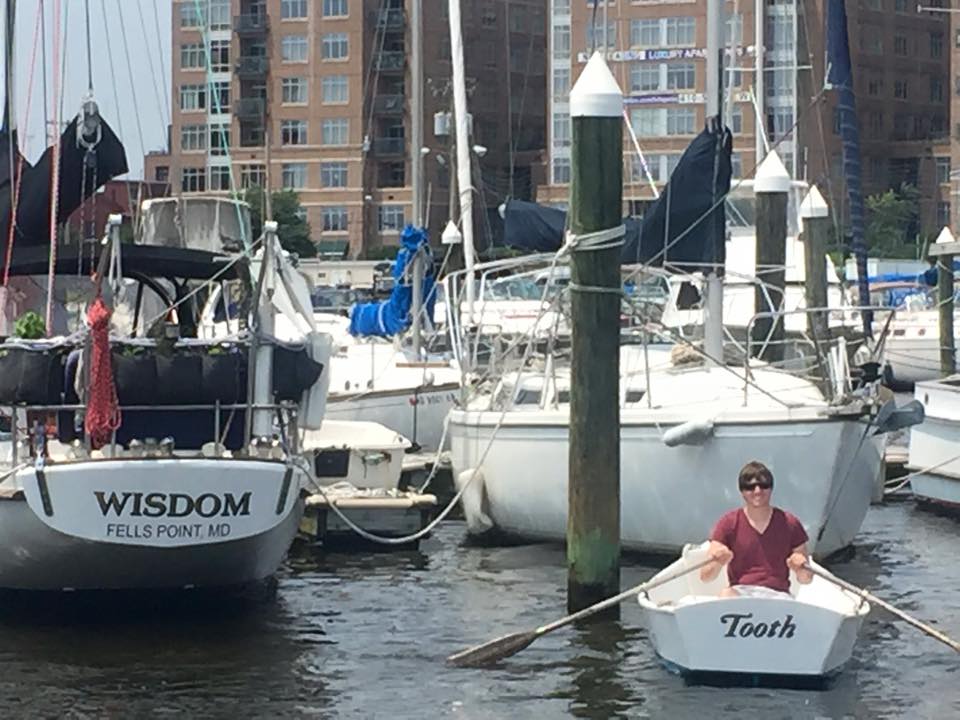
Our Dinghy Tooth

There are many options when it comes to a dinghy, you can have an inflatable, an inflatable with a rigid bottom, or a hard dinghy. I chose to go the route of a hard dinghy, allowing me to row it along without the need to rely on an outboard motor to propel us.

Tooth is a kit boat from Chesapeake Light Craft (clcboats.com) and has served his purpose well. Tooth has a flat bottom, allowing him to plane behind us while under tow, and a skeg to keep him tracking straight while being rowed. 

While Tooth is comfortable to be in and a good row boat, he is too large to store on deck. This presents problems when going long distances as we are forced to tow him, no matter what the conditions are.

Tooth has been a sturdy dinghy who has stood up to a year of use and abuse so far and is still floating and comfortable to use.

Pilot Holes for Cut Thread Screws

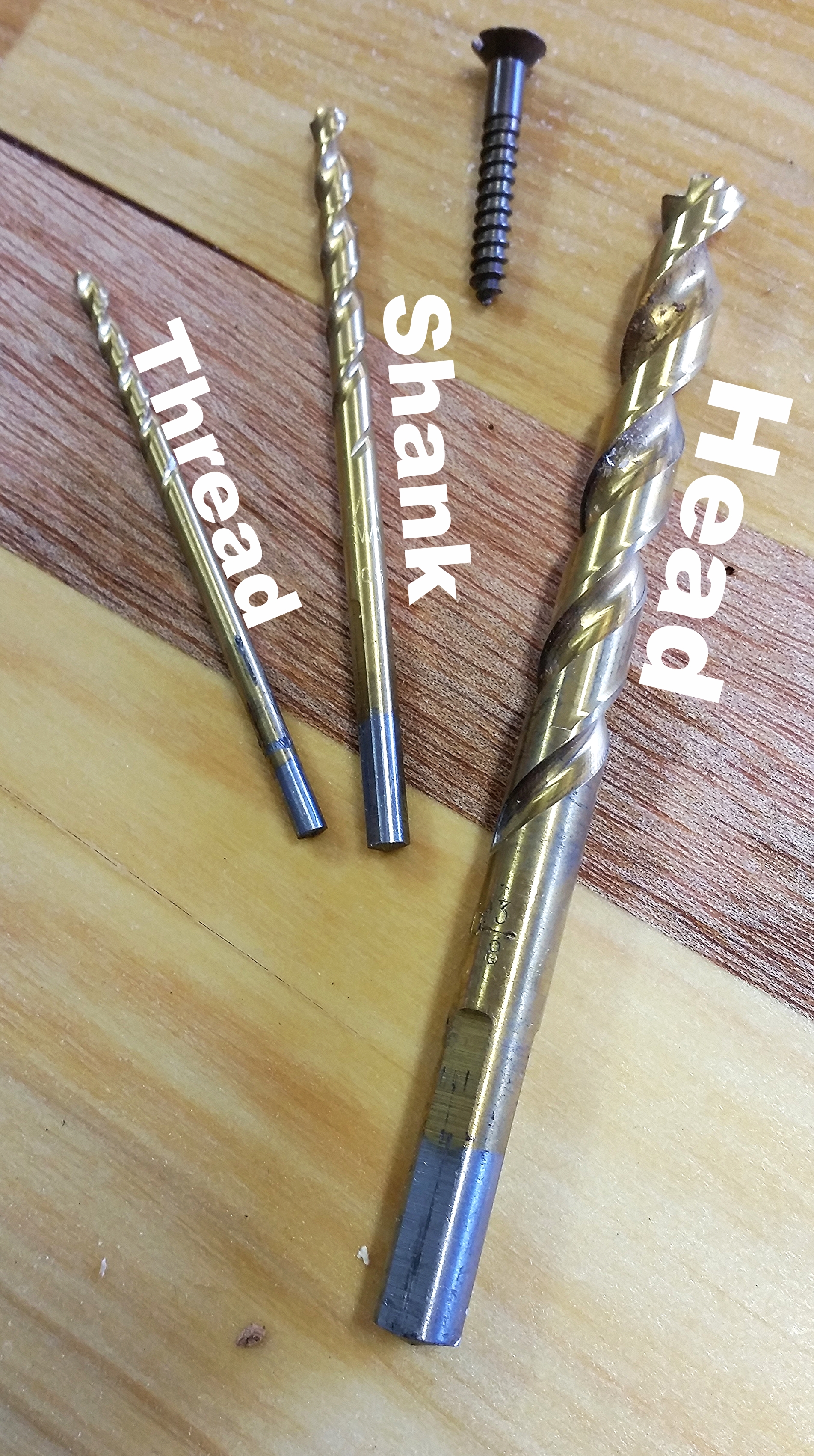
When drilling pilot holes in wood for wood screws with cut threads, it is important to take your time. Each hole will need to be drilled three times!

The first hole will be for the threaded portion of the screw. Since the threads are cut into the nail, the hole must be smaller than the size of the screw. Templates exist that offer guidance for selecting pilot hole sizes.

https://www.boltdepot.com/fastener-information/Wood-Screws/Wood-Screw-Pilot-Hole-Size.aspx

https://www.boltdepot.com/fastener-information/Wood-Screws/Wood-Screw-Pilot-Hole-Size.aspx

After you drill the pilot hole for the threaded portion, you will need to drill another hole for the shank. 

Lastly, you will need to drill the third and last hole to countersink the head. It is a good idea to countersink the head at least to make it flush. As the wood wears away over the years, this will keep the screw head just below the surface. If you are going to walk over this fastener, it won't dig into your foot, and if you are going to stand next to this fastener, it won't cut your leg or rip your clothing. 

The important thing to remember is that you should drill the hole three times, once for the threads, again for the shank, and lastly for the head. Then the fastener will be able to hold everything together as best as it can while being out of the way.

Stainless Steel vs Silicon Bronze

It seems that more and more items for boats are being offered in stainless steel and bronze items are becoming increasingly hard to find. 

The current aesthetic trend seems to favor the shiny mirror known as stainless steel over the brown patina that will turn green if neglected. While stainless is prettier to look at with its mirrored finish, bronze has many good qualities going for it.

Stainless Steel is an alloy which contains at least 10.5% chromium, this leads to better corrosion resistance for most applications; except in environments that are low in oxygen, high salinity and low air circulation. Sure sounds like the environment below the waterline or encapsulated inside of epoxy! When Stainless Steel is in a low oxygen environment, it begins to suffer what is known as crevice corrosion which is hard to see and detrimental to the metals strength.

Bronze is an older alloy primarily composed of copper, tin, and other corrosion resistant metals. The Bronze Age began around 3000 BCE, and many of the original artifacts are still in relatively good condition. The addition of non-metals, such as silicone, greatly increased the strength, while still retaining the workability and ductility of the alloy. 

Stainless Steel will retain its shape while cyclically loaded, showing little sign of distortion or elongation when being pushed near its breaking strength. This cyclic loading in the corrosive marine environment can lead to stress fractures in the metal which will cause catastrophic failure.

Bronze on the other hand is a bit softer and will show signs of elongation and distortion as its limits are reached. This makes it easy to notice during inspection and allows for prompt replacement. Bronze also does not suffer from crevice corrosion, instead it simply forms a light green patina on its surface. This coloring forms a protective barrier called verdigris, which protects the deeper layers from further oxidation. 

While most fasteners available in local chandleries tend to all be stainless steel, it is a good idea to know where to get si-bronze fasteners and keep an assortment on board for repairs while underway.