Northern Lights

Maddie and I are planning a future sailing trip up to Maine during the summer of 2017. I proposed the idea of then continuing further North, into the Labrador Sea to see the Northern Lights. I got this idea because we flew to Iceland during November to see the famed Aurora Borealis. 

We were there for three nights, the first two nights were cloudy and with little solar activity reported, so we were unable to see past the low lying cloud cover. Our third night was clear and we did finally see them!

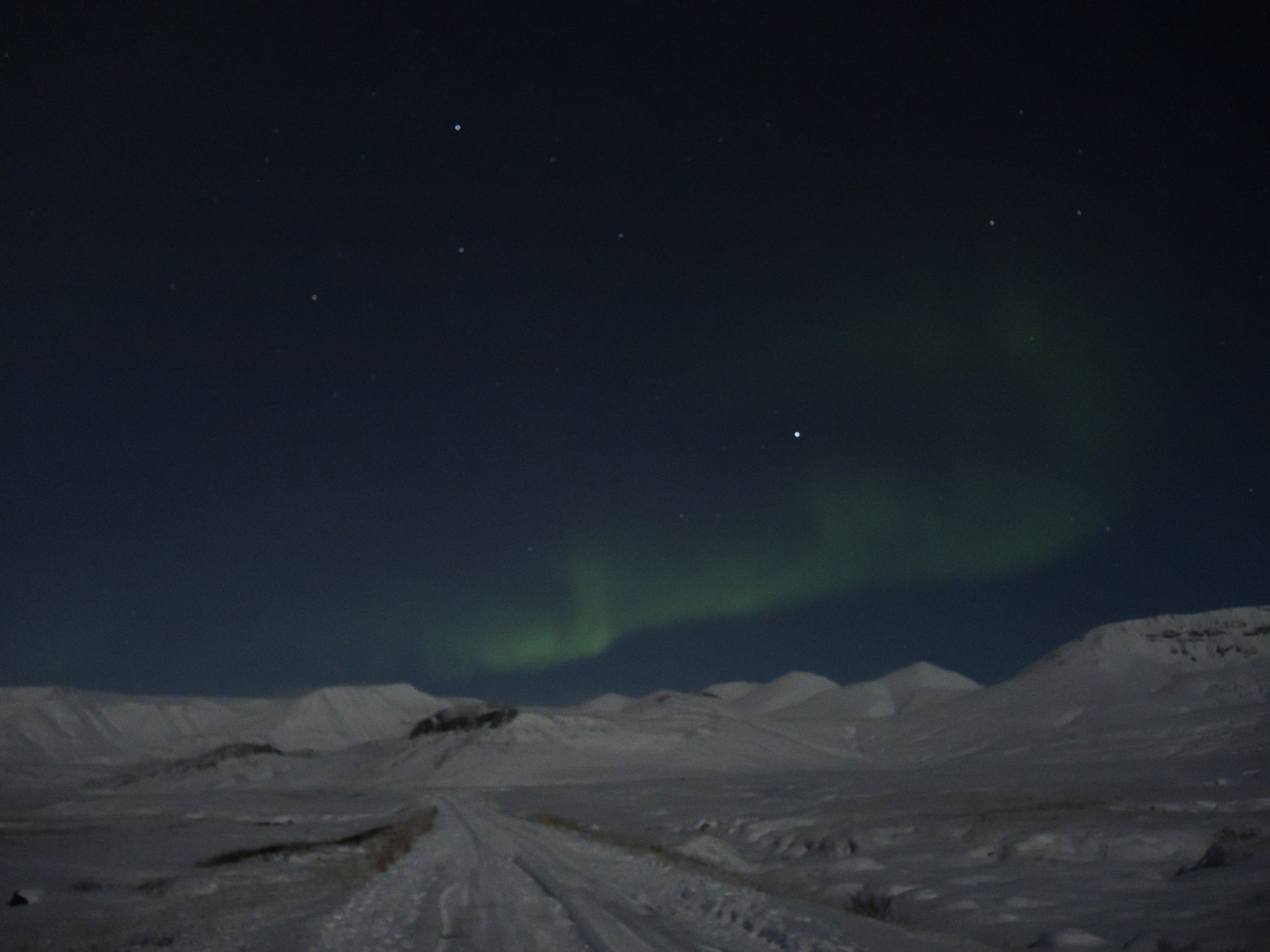
Sorry for the blurry pictures, I didn't have a tripod

They are not as advertised! My father noticed three vertical green bands just north of the Big Dipper. To me, they looked like a whispy cloud, along the lines of a cirrus cloud, not the classic image of an aurora that I believed I would see. I thought I would look up into the sky and see bright neon green ribbons floating overhead, when in fact they looked more like pale green clouds.

The intensity of the light display is ranked into kp values. The values range from 0 to 9, nine being the most intense. The night we saw them, they ranged from 1.67 to 4.33. I would recommend reading up on the kp values. I personally read through this website and kept it handy while out searching for the Northern Lights:

http://www.aurora-service.eu/aurora-school/all-about-the-kp-index/

I took a photograph with a very long exposure time (1 sec. shutter speed, f/ 2.0) to see if it looked like an aurora on the camera to either prove or disprove what we were looking at. Sure enough, it was an aurora.
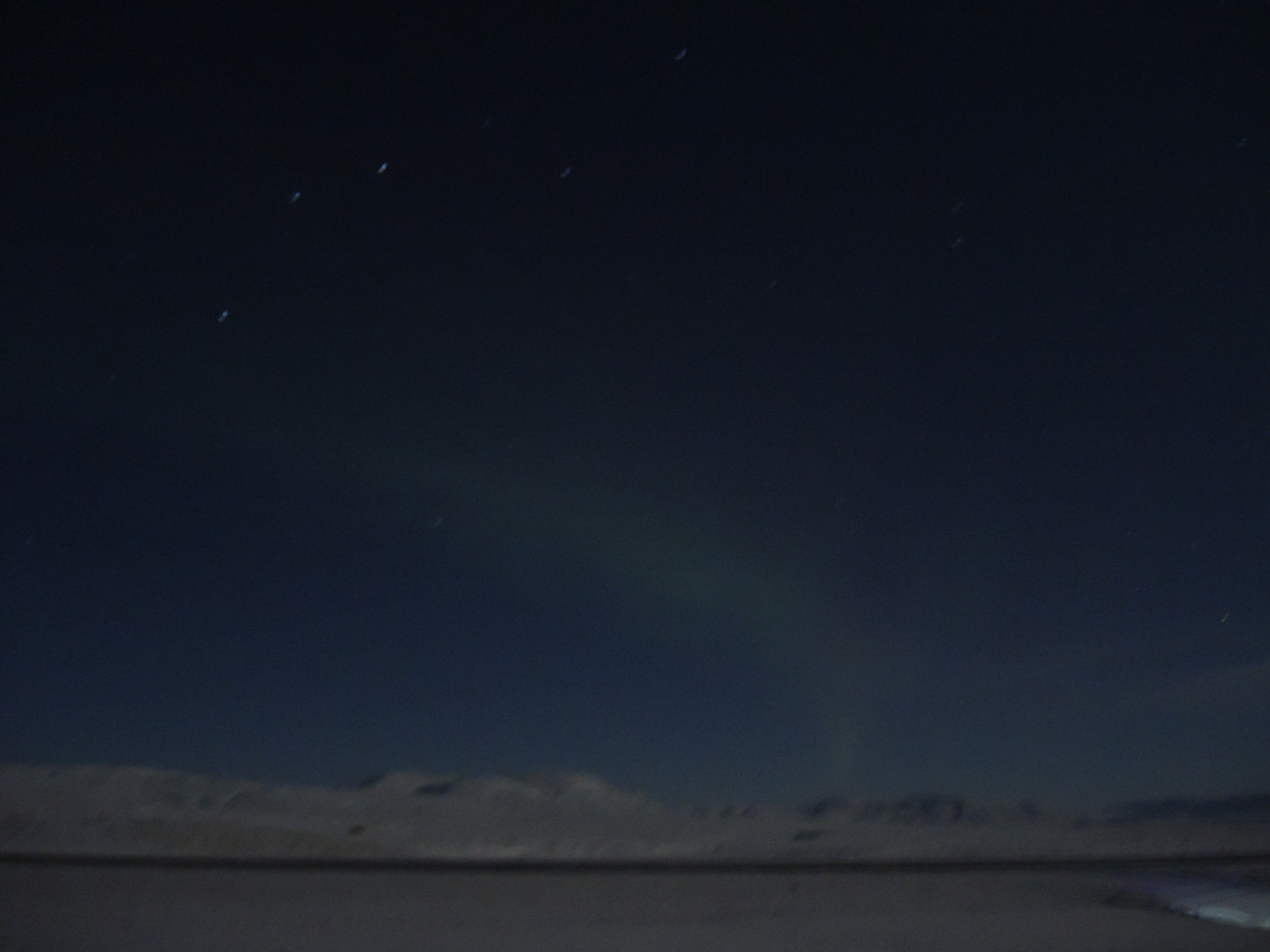
kp = 2
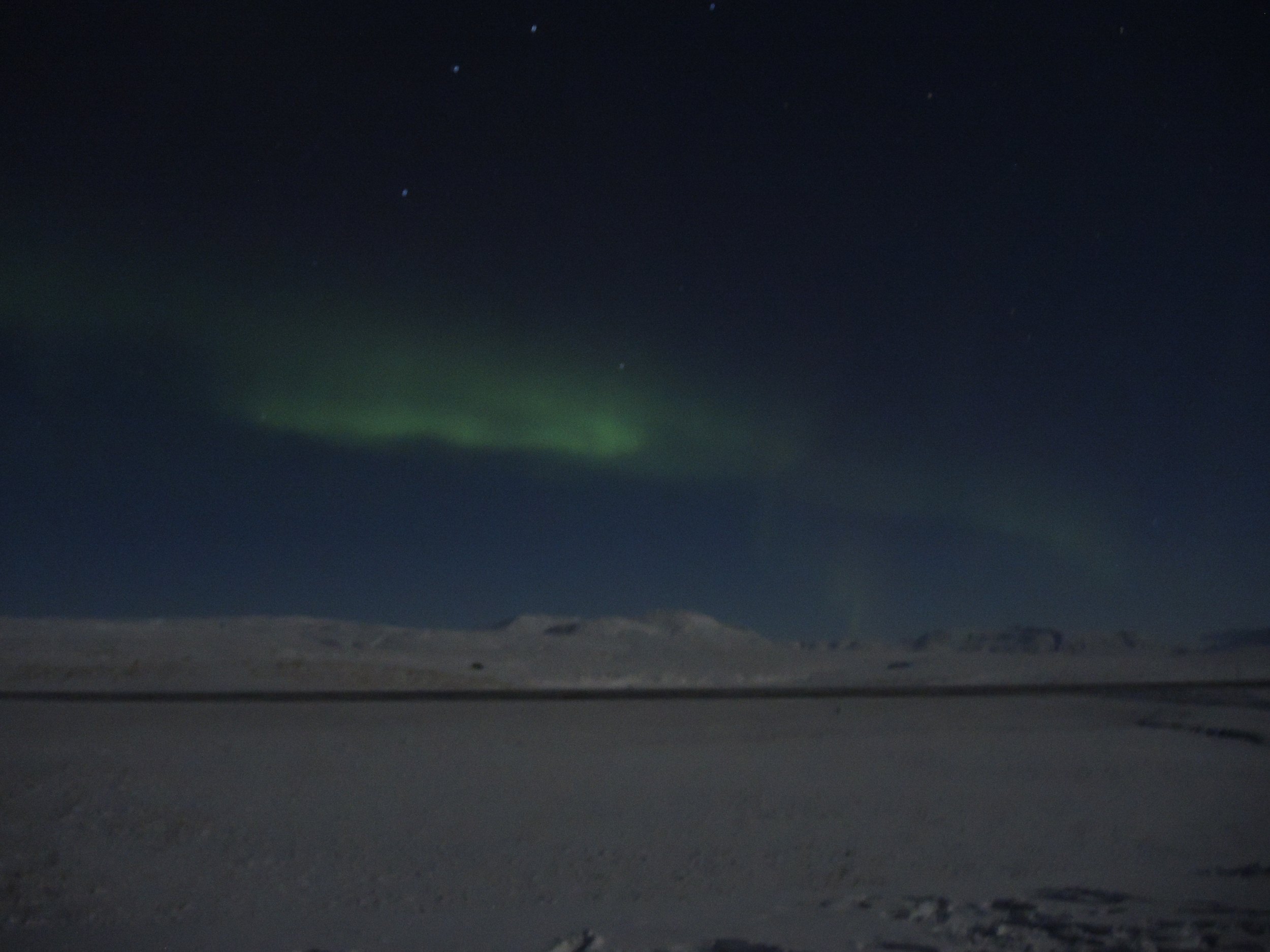
kp = 2

kp = 4

kp = 4

This gave us the motivation to drive an hour out into the country to find ourselves in a land with no light pollution (other than the full moon). Once our eyes adjusted to the darkness, we were able to observe the aurora as it moved across the sky, but it moves much slower than they show in the movies and is much dimmer as well. 
I'm glad I got to see them in Iceland rather than braving the Labrador Sea to find these lights. I would have had much more difficulty trying to capture the lights on board a moving vessel.

If you do get the opportunity to enter the arctic circle to view the Northern Lights, I would recommend it, as it is impossible to actually explain what it looks like. But do take a camera to see if that cloud-like object in the distance is a cloud or the Aurora Borealis!
Traveling While Living Aboard

Living aboard has many advantages, one of which is the reduced cost of living. This can translate into saving for retirement while at the same time having extra money on hand for entertainment.

Maddie and I did a trip over Thanksgivings weekend to Iceland to try and see the Northern Lights. No, she didn't want to go by boat; we had to fly and leave our home behind for a few days.

Whenever you leave your boat for an extended period of time, it is advisable to take certain precautions before going.

Close all seacocks
Turn off all electronics
Leave on battery charger
Leave on bilge pumps
Tell a trusted neighbor

A hose can easily split or slip off of a fitting below the waterline, leaving a giant hole in the hull gushing in water. This is why frequent inspections are necessary to make sure that all hoses and fittings are in working order to avoid this from happening in the first place. Since you will be away for an extended period, it is best to close all seacocks. A closed seacock will not let water through, even if the hose slips off or splits. 

Turning off all electronics is another important step in leaving your boat. If a wire were to overheat and cause an electrical fire, it may create a good amount of smoke before the breaker trips. If the breaker is faulty, it could continue to burn and ignite other structures in the boat which could burn it to the waterline if left unchecked. 

Do leave on the automatic bilge pump and battery charger, that way if water does find its way inside, the pump can get it out and the charger can keep the pumps running if there is a leak.

Most importantly, tell a trusted neighbor that you are leaving. They can keep an eye on your waterline to make sure that you don't start sitting low in the water. I always give my neighbor a key to my boat when I leave so they can also get inside to take care of things should the situation arise. Make sure they know where your pumps are located, where the breaker panel is, which breaker is for the battery charger and the bilge pump, and where the lever is for the manual bilge pump, should the electronic ones fail.

Living on a boat gives you so much more freedom! You should take advantage of these freedoms while still taking good care of your home afloat. 

Jacklines

While there are many methods to recover a person after a "Man Overboard", the best measure is to avoid them!

While having good handholds, nonskid decks, and secure lifelines are all critical measures; I feel that clipping into Jacklines is a wonderful method to keep you attached to the boat at all times.

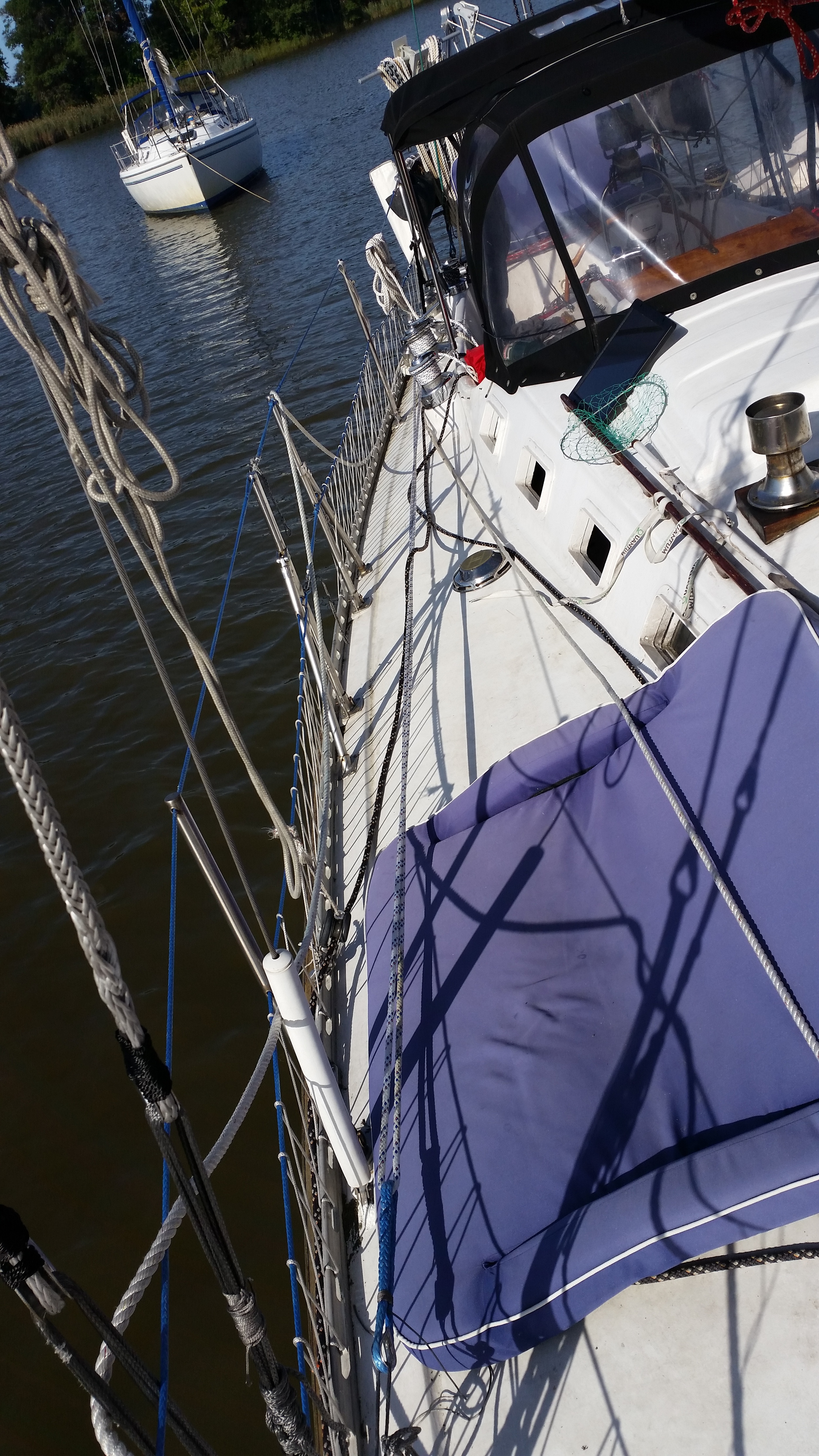
Jacklines are a line that runs uninterrupted from bow to stern. The idea is you can clip in and walk from bow to stern without having to unclip. This way, if you fall over, you will be attached to the boat. Instead of trying to recover a person in the water, you simply have to pull them back on deck. 

Most recommend using nylon webbing because it lays flat on the deck and won't roll underfoot. This is true, but I have found that they will slide underfoot and cause the same loss of balance. 

They also will suffer from UV degradation at an alarming rate. For this reason, they recommend only setting them up when conditions merit, to limit their sun exposure. When conditions merit is when you want to clip in, not when you want to rig them!

I use 1/2" 3 lay nylon rope for my jacklines. They are attached at the bow and stern cleats and run uninterrupted on the deck. They are the same material as dock lines and anchor rode, so I feel better about leaving them in the sun permanently rigged. The moment we feel the need to use them, we have them!

1/2" 3 lay will roll underfoot, so we simply don't step on it, just like we don't step on sheets or jib tracks or slippery painted parts. You will learn your deck and be able to navigate it in the dark!

Our rule is if we go on deck and we are not tied to a pier or anchored to the bottom, we are clipped in! Even on light air days, it would be really annoying to have to jibe the drifter around to pick someone up. If we are clipped in, then we are never disconnected.

There are occasions when we don't follow our own rules, but we both have to OK the decision. Maddie doesn't like to wear her life jacket and harness because it is hot and heavy. When conditions are very light and she is just going to sit on the deck, she will go without wearing it or being clipped in. The important part is we are all in accord on the decisions to keep each other safe while sailing.

Boat Dog!

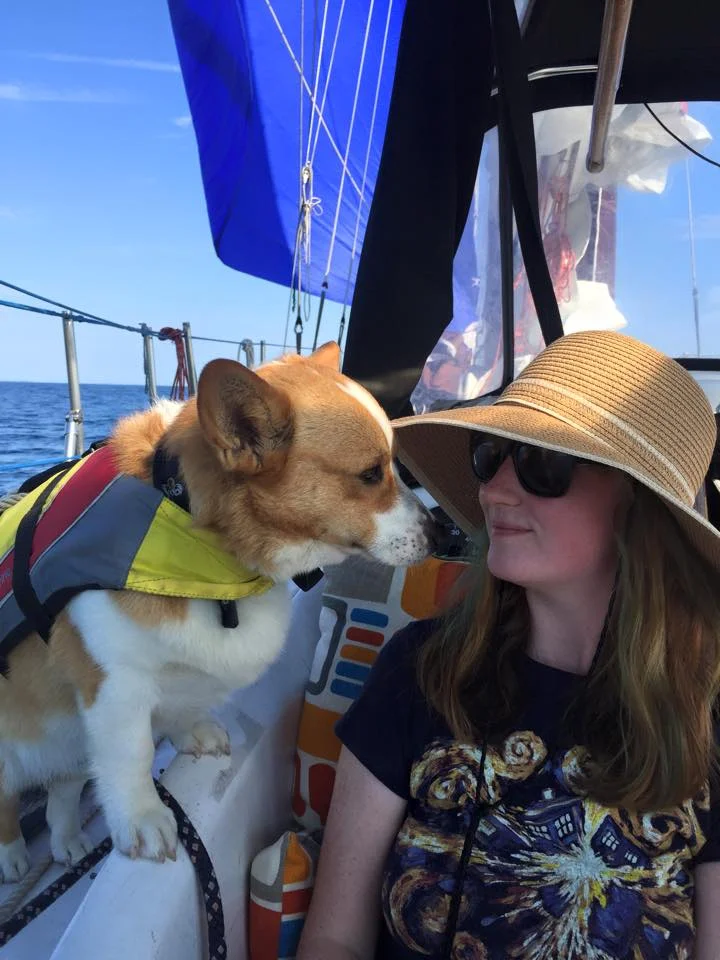
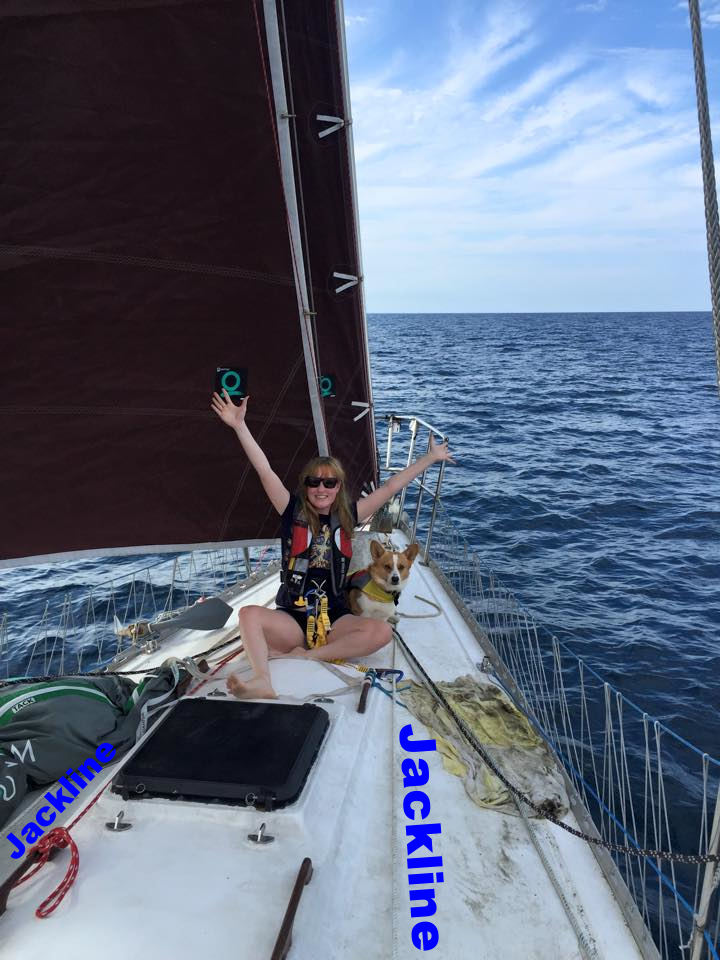
Morty is our boat dog! Short legs for a low center of gravity and no tail to get caught in a winch!

He is a terrible swimmer, which is why we try so hard to keep him on board. 

He always wears a life jacket to help him float while he would wait for his recovery, if he were to fall over.

To avoid a "Dog Overboard" situation, we keep him tied to the jacklines that run the length of the deck, allowing him to walk around. I also wove a net on the bottom half of the lifelines to help keep him on board. 

11040602_10204600274426681_8463966938245648712_n.jpg

The best way to keep him on the boat is to make sure that he is happy on the boat. Being how I raised him from a puppy on board Wisdom, this is his home and he doesn't try to escape (unless we leave without him, then he will jump off and chase after us).


Fuzzy Ends

When you buy rope, they always offer to sear and melt the end of the line to keep it from fraying. While melting the end will help keep the line together longer, it actually does more harm than good.

A seared end will be hard and may have sharp edges that can scrape the topsides or chafe on other parts of the line. The end of this supple line will turn into a rock hard scraper that will tear into everything around it. If you coil the line up on the deck and then pile other things on the line, that seared end will be under a good amount of pressure. Rather than flattening out, it will simply dig into the topsides. As the boat moves around, that hard edge will scrape and scratch everything under it.

The solution is very simple: Don't melt the ends!

Either whip the end of the line, backsplice the end of the line, or if you are in a real rush: tie a stop knot in the end of the line. 

Whipping the end is a bit time consuming, and you need to have whipping twine handy. I personally keep a few spools and needles in my splice kit on board, but I do this professionally. Most people don't keep these sorts of things.

Backsplices are the alternative when no whipping twine is available. It simply takes the end of the line and ties it back to itself. 

Knotting the end is the least desirable solution. It is bulky and clunky, but also insanely quick! If you need to cut a rope in a hurry and put it to use, simply tie a knot in the end and that will stop the whole rope from fraying. Try to place the knot as close to the end as possible, because everything after the end can fray.

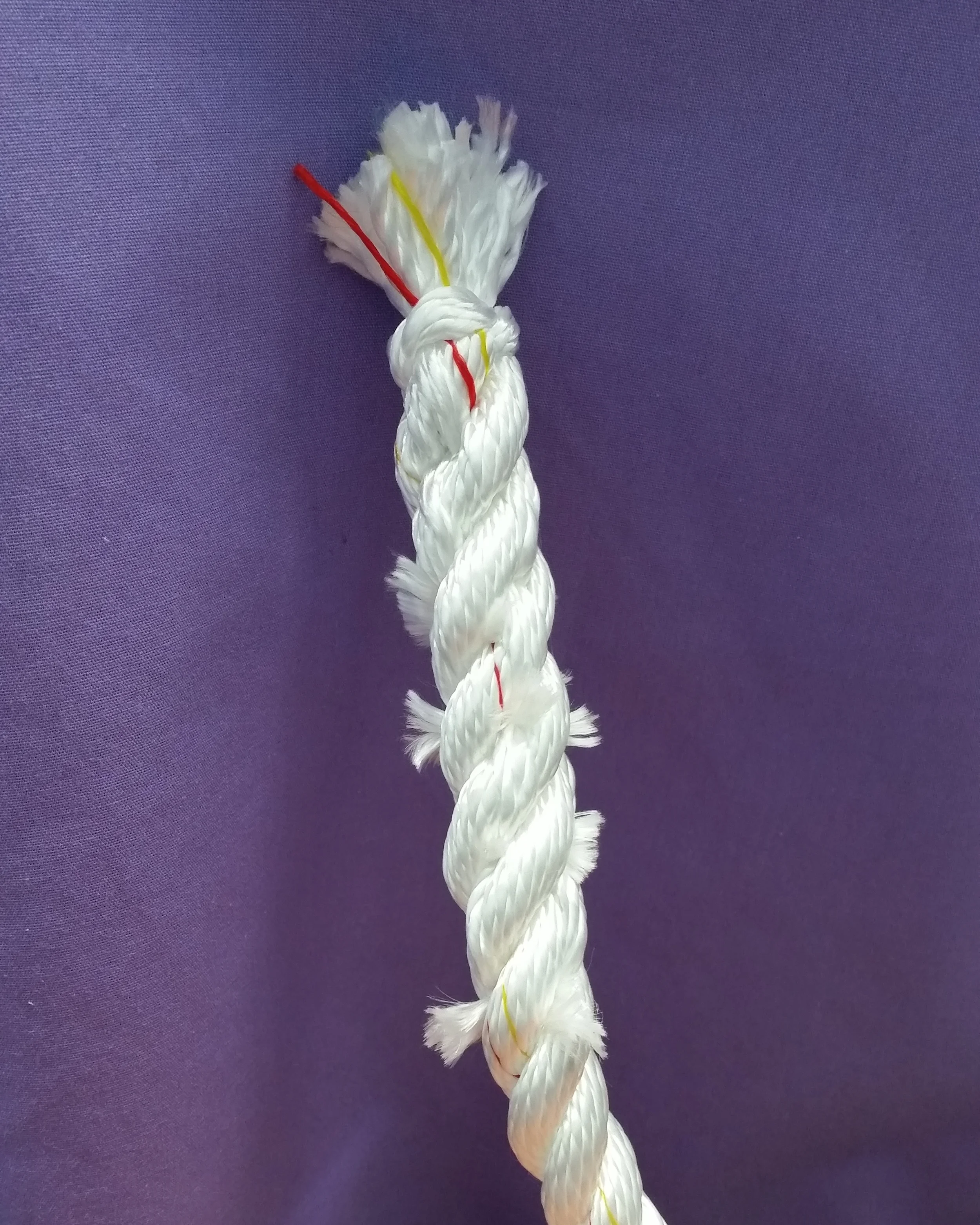
Back to the fuzzy ends! When you finish a splice or whipping, don't sear the ends of the lays. This will simply make more of those hard spots that will cause problems. Simply fuzz the ends of the lines and lays!

Fuzzy ends prevent chafe because when a load is applied to the side of the line, the line can deform and flatten out. When something rubs up against the end, it will be pushing against a very large area (compared to the point of a seared end) that is very soft and forgiving. This is why the chafe protectors (Baggy Wrinkles) on tall ships are fuzzy. Fuzzy ends are something that should be desired instead of melting them out of existence!

Fuzzy ends also weather over time, just like natural teak. As time goes by, the fuzzy parts begin to look more and more weathered as they age. While the line won't be new and shiny anymore, it does begin to look very seasoned as the miles and years pass by.

20150911_191529.jpg
20150915_185218.jpg

The ends get worked and the line stays together. Fuzzing the ends of the line can make a sweeter situation out of a bitter end.