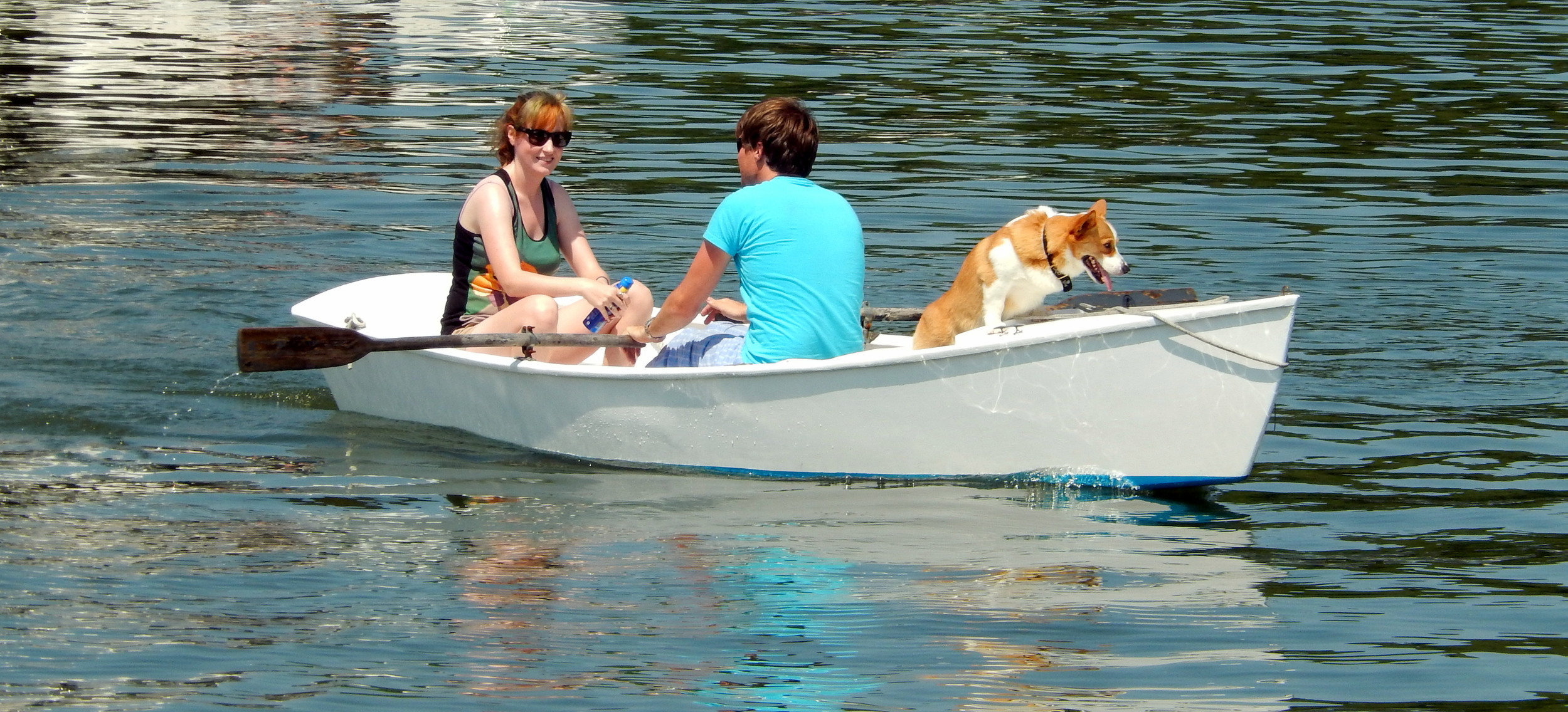
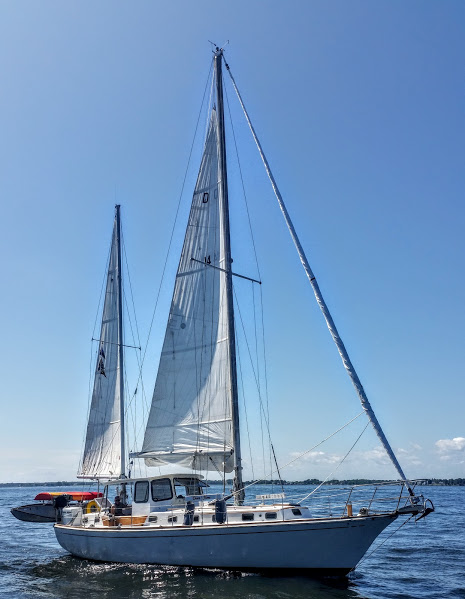
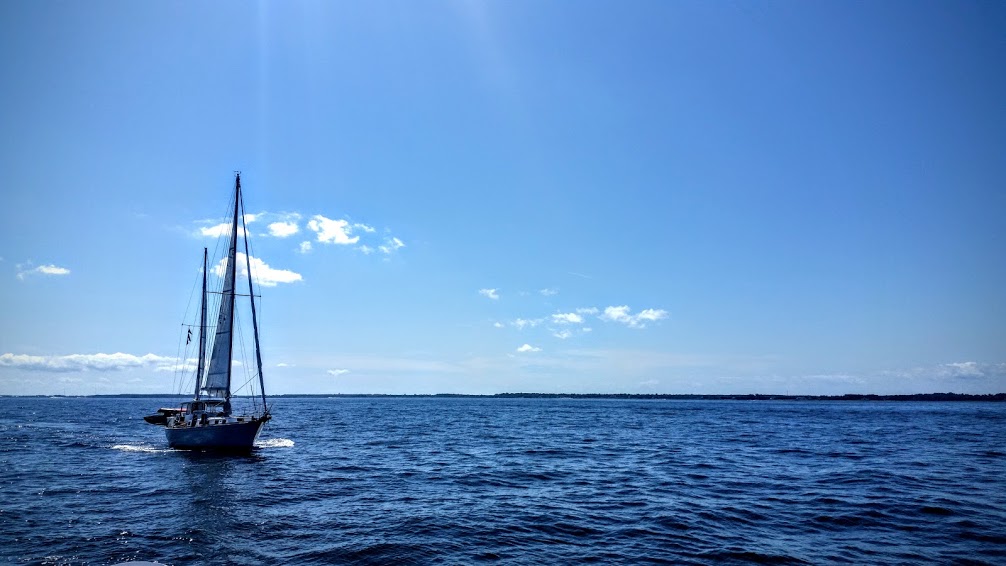
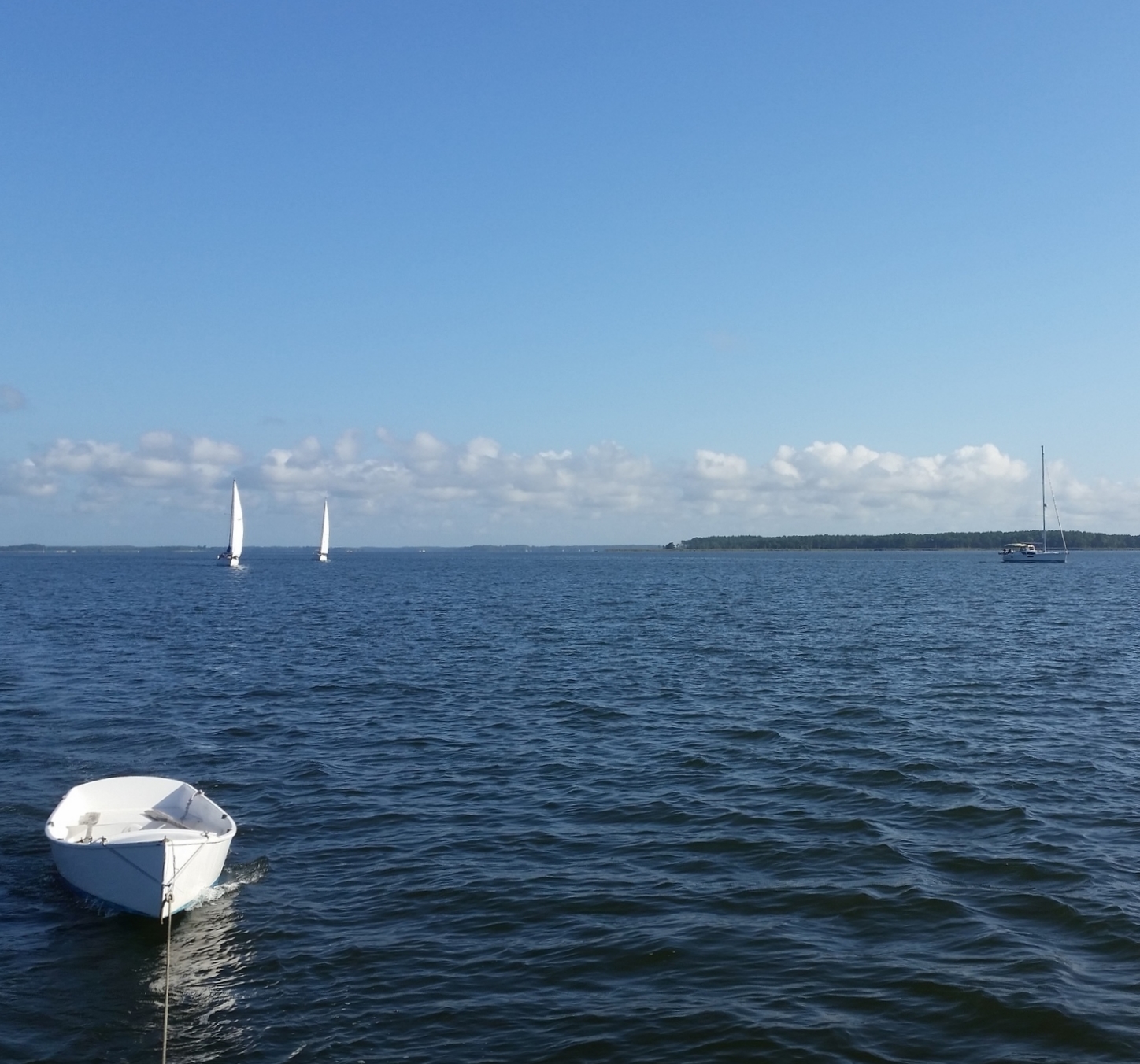
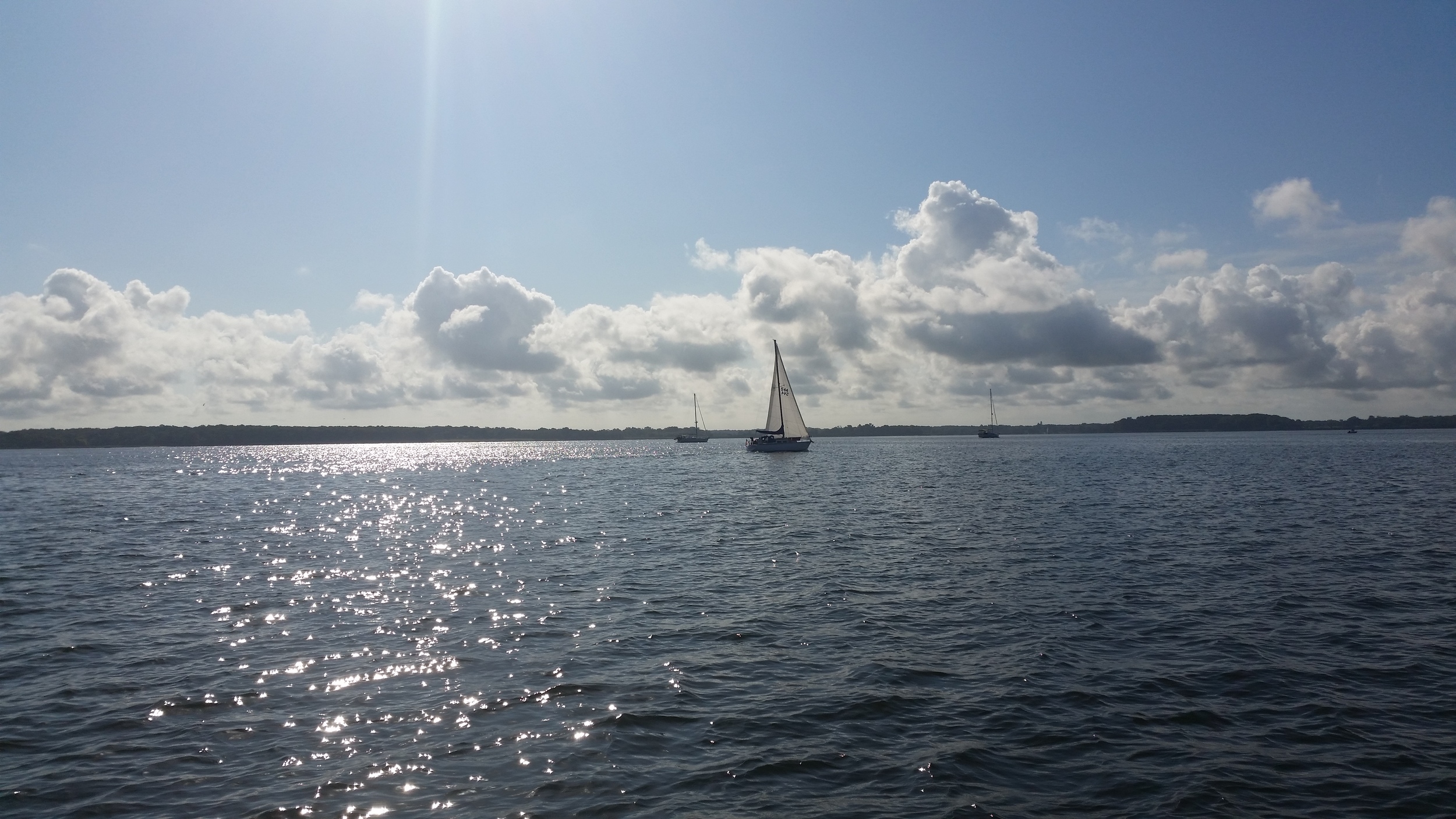
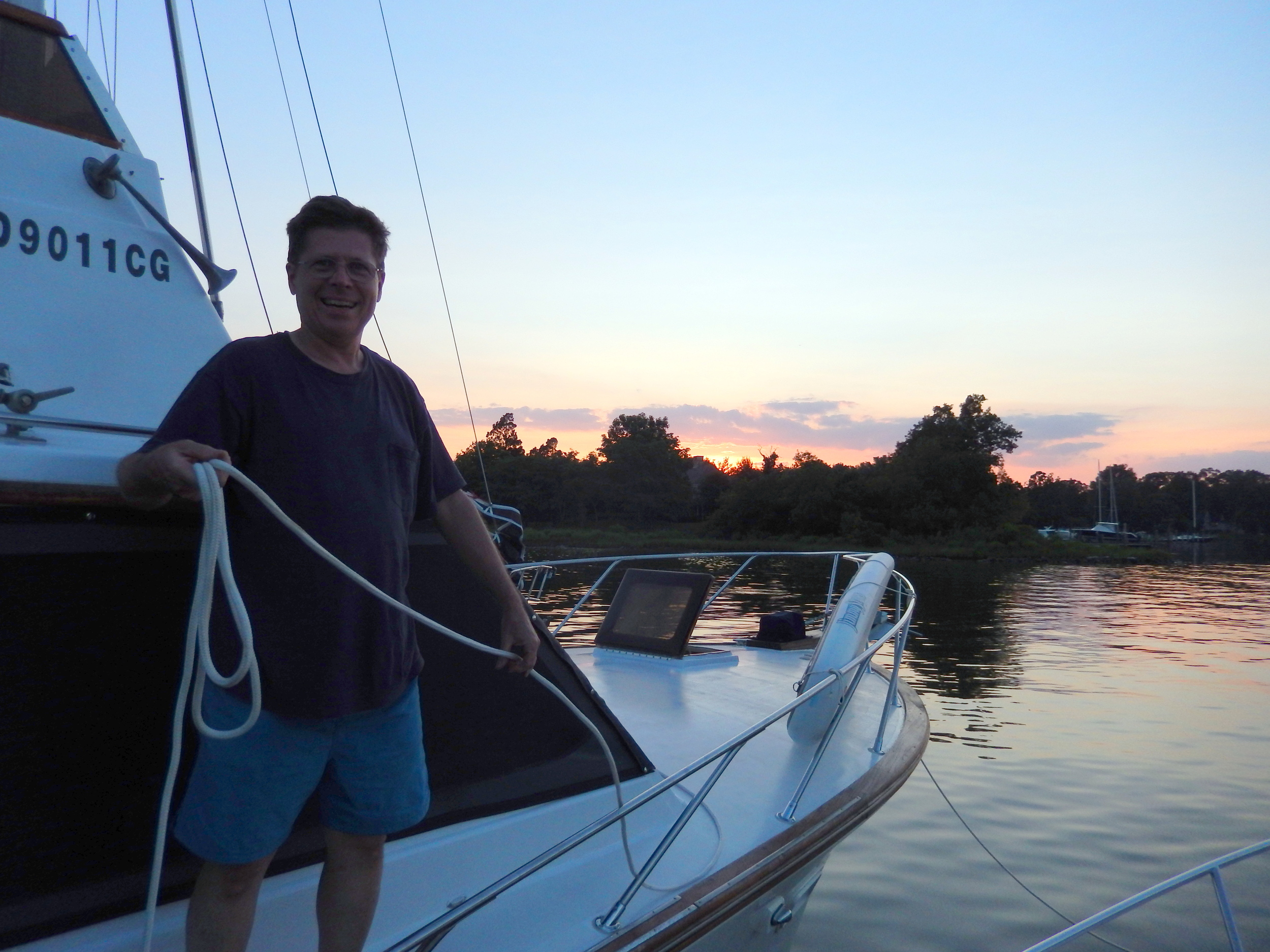
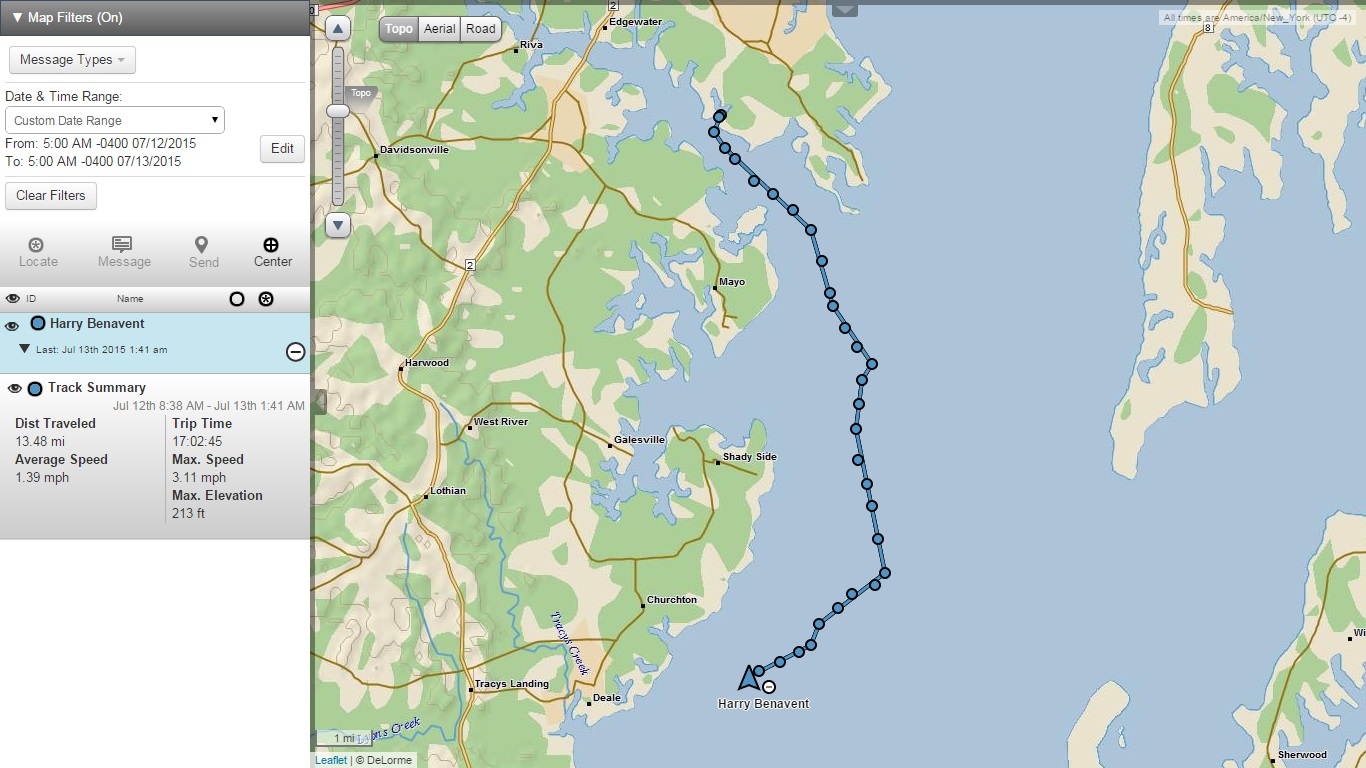
Our go to method for moving the sailboats when there is absolutely no wind is towing them with Tooth, our 13 foot row boat. We are able to tow Wisdom at speeds of 0.5kn to 0.8kn, and Windpuff through the marina, but only when there is absolutely no wind. A whisper of wind and the sailboat can start to drift and pull me along with it. Think about it, 300 pounds of rowboat and person or 5 tons with Windpuff or 17 tons with Wisdom. The other issue is the time it takes to set up and put everything back. You have to get in the row boat, move the painter from the stern cleat to the bow cleat, and then start pulling. When you are finished, you have to do it all in reverse. This doesn't sound like much of a problem, but it is.
Our new plan is to make use of a sculling oar! The set up would be much quicker, simply load the oar into its chock and secure it with a few lines. That's it! If wind picks up, or you need to steer, you're already on board in the cockpit!
I don't know what speeds I will be able to achieve as I have not finished building them yet, but I will be happy with anything over 0.5kn.
The dimensions for the oars are roughly based on the dimensions listed in the Pardey books. I measured the freeboard at the transom, and roughly stood where I wanted to be when sculling, and planned from there.
The oars I'm making are 16 feet long for Wisdom, and 14 feet long for Windpuff. The stock wood I'm using is a 2x12 of Douglas Fir from Home Depot. Not the best wood for boat building purposes, but at $18 for a 16 foot plank of rift sawn, I figured this would be a great way to see if I even like sculling the boats without shelling out a lot of money for excellent clear grain wood.