Life Aboard

Attaching to a Spar

It's really easy to go out and buy hardware that will attach to your spar, be it your boom or your mast, but it gets a bit complicated to attach them.


FullSizeRender.jpg

Sure, you can just screw it onto the spar and continue on with your life! In a few months, that fancy new piece of hardware will fall off the spar and be covered in a white powder. Upon further inspection, you will notice that the holes you drilled are full of this white powder and you can't to get the screws to bite when you try to reattach it. 

What has happened is known as galvanic corrosion. It is the corrosion between two dissimilar metals, in this case, the aluminum of your spar and the stainless steel of your component and fasteners. The two metals are reacting and eating each other away like zombies in a horror movie! 

To avoid this horrible fate, you have a few options:

1. Only use like metals. 

2. Do not let dissimilar metals touch.  


Option 1 sounds pretty straight forward. If your spar is aluminum, so should be your components and fasteners. The problem with this plan is aluminum is not a very strong metal and an aluminum cheek block attached with aluminum pop rivets would sheer right off the side of your boom at the first sign of wind! 

This is why high strength components are always stainless steel. Even if the component is made out of aluminum, they will still recommend using stainless steel fasteners to achieve the needed sheer strength required to hold the component in place. 

Option 2 sounds like something out of a science fiction movie! How will you keep two items from touching if you are connecting them? The secret is to use barrier layers in between them, this way they sit up next to each other but will not touch one another. 

The cheek block shown in the top picture was attached to the boom with nothing separating the stainless from the aluminum. This was just to fit the piece and get all the holes drilled. With the holes drilled and the screws fitted, the entire assembly was removed to add the separation layer. 

FullSizeRender.jpg

What we have here may look like a mess, but it is actually a collection of goodies that will keep the stainless from touching the aluminum. Teflon tape, also known as plumber's tape, is laid out over the entire back of the block. This will provide a base layer of separation between the two components.  

The next layer of separation is polysulfide that is piled into the middle of the block. This overfilled amount of material will ooze out over all the surfaces and provide an additional layer of separation and keep any water from getting in between the block and the spar. Polysulfide is great because the excess simply oozes out and is then allowed to cure. Once cured, it can be cut off for a clean, professional looking installation. 

The brown stuff in the corners is Lanocote. This stuff should really be called "wonder grease" because it does everything you could ever dream of, and it's non-toxic. Lanocote is just wool nap, the grease that sheep produce to keep their wool waterproof. This stuff is probably the only material that you can smear on with your finger and not worry about getting cancer from it in 20 years! It acts as a separating layer, anti-corrosive, and anti-galling.  Best of all, Lanocote is very inexpensive!

I put Lanocote in the corners since these are the only parts that are actually going to touch the spar. The rest of the plate is merely "close" but not in actual contact. The Lanocote also helps hold the teflon tape in place while the block is being positioned, that way it doesn't slip out of the way when you are not able to see it. 

All of these layers might sound wonderful, but there is still one serious fatal flaw in this setup. The screws themselves are stainless steel and will be in the most intimate of contacts with the spar. They have to be holding onto the aluminum or the block will fall off!  

The secret here is once again, Lanocote. Dipping the screws in the pot of Lanocote will pick up a lot of material that will coat all the surfaces of the screw. The Lanocote will get into all the nooks and crannies between the threads and down the shank, everywhere that the aluminum will also be in contact. 

When you drive the screw into the spar, the Lanocote will coat everything and provide all the necessary qualities needed to isolate the two metals while still allowing them to grab onto each other. This will prevent galvanic corrosion and keep all the metals happy, granting you a long service life with happy components.  

You might think that this must be too good to be true. How can such a wonderful material be inexpensive and easy to use?! Unlike other more expensive isolation creams and gels that can be purchased, Lanocote will stand up to the test of time. I have removed old components that were attached with synthetic isolators, such as Loctite, and found signs of galvanic corrosion beginning. On that same note, I have removed components that were installed 20 years ago and there were no signs of corrosion between the aluminum spar and stainless steel fasteners. The Lanocote was still moist, just like the day it was applied! 

If you ever need to attach two dissimilar metals, be sure to apply a liberal coating of Lanocote between them to extend their service life and give you peace of mind that all your boats metals are happy. 

Overfilled Diesel Heater

If your heater accidentally fills with fuel with the flame off, you can create the potential for a real problem. If you try to act smart and throw a flaming paper into the fuel to act as a wick, you will be sorely punished by an out of control blaze until the fuel burns off. Instead of dealing with such a massive fire inside the heater, the alternative is soak up the fuel with a toilet paper roll and then continue to use as normal.

In five years, this is the first time I have had an issue with accidentally opening the fuel valve without knowing. Fuel flowed into the heater for a full day before I noticed the small puddle of fuel on the floor below the heater. This situation was easily remedied though, allowing me to continue using the heater without any issue.

Runaway Diesel Heater

Diesel heaters are a great way to keep your cabin nice and toasty during the winter. They provide a reliable dry heat that will keep you comfortable. Dickinson heaters are very simple and straight forward to operate, making them a heat source you can count on. As long as fuel is getting to the unit, it will burn and it will heat your cabin!

The problem is sometimes these units get a bit too much fuel and will burn way too hot for comfort. The fuel chamber will find itself too filled with diesel, causing it to burn out of control! The fuel is already past the carburetor, so shutting off the fuel flow won't do very much good. You will just have to let it burn itself out as the fuel is consumed and the fire begins to dwindle.

While the excess fuel is burning off, the unit will glow red hot and begin to rattle. This is a bit concerning and very avoidable. By simply opening the door a smidge, fresh air will enter the unit above the fuel and cause the fire to burn much less intense. The fuel will still burn, just at a much calmer rate which will make everyone inside the cabin much more relaxed as everything returns to normal. Once the fuel level has gotten back to normal, you can close the door all the way and resume using it as normal.

Drilling Holes and Containing the Mess

When drilling holes through the deck, it is impossible to be inside with a dust collector at the same time you are outside drilling! It is nice to have a helper that will stand around and wait for the drill to perforate the deck, spewing its dust everywhere while you push with fury on the drill. The truth is, even with help, dust will manage to get away from you and coat everything inside the cabin with itchy fiberglass debris. 


FullSizeRender.jpg

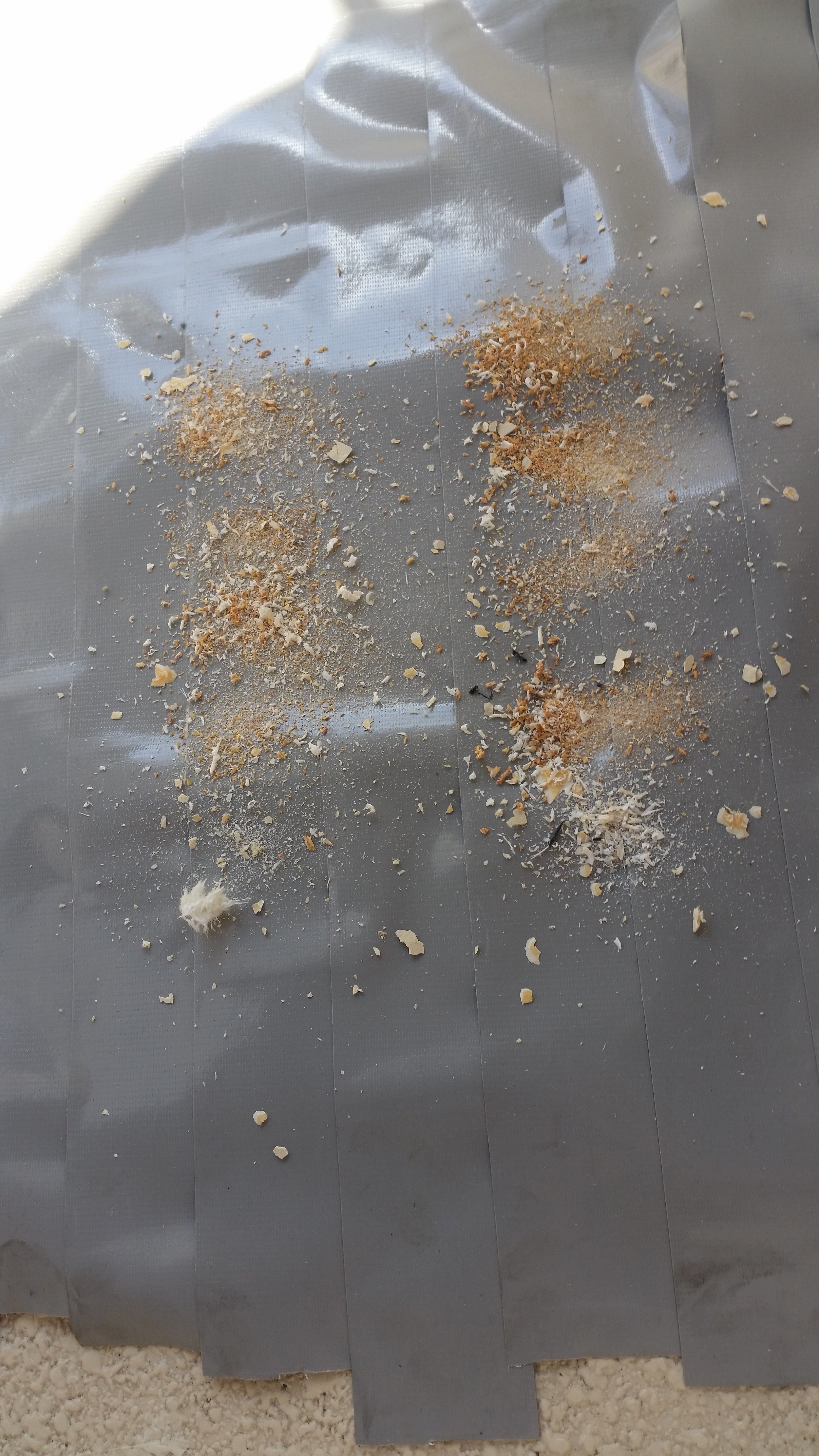
This is where a synthetic helper can make your life much easier. I love to use Gorrilla Duct Tape set up into a sheet of sticky goodness. As dust comes flying out, the adhesive will catch it and not let it go. When you are done drilling, all you need to do is fold the sheet over on itself and all the mess will remain contained. 

FullSizeRender.jpg

When you attach it to the underside of the deck, you want to leave a pocket where the drill bit can exit without damaging the sheet. All you need to do is stick the edges on and leave a bit of a belly where you expect the drill to exit. This lets you drill away without fear of tearing a hole in the sheet or of dust flying everywhere. 

FullSizeRender.jpg

Now you can drill all your holes in rapid succession without worrying about creating a disaster scene inside the cabin! 

Biggest Oyster Ever!

Living in the Chesapeake Bay, I am very aware at the important role played by oysters. They filter out the water at an impressive rate which allows sunlight to penetrate all the way to the bottom. Increased sunlight penetration leads to increased plant growth which boosts the entire ecosystem of the bay! All in all oysters are awesome creatures. 

I personally don't eat oysters because I feel that things are what they eat, and they eat the sludge that floats around in the bay water, thus they are merely an accumulation and organization of all the disgusting factors that exist in the bay water. I appreciate them and encourage their existence, but I take no part in the consumption of these sea creatures either. That being said, I am all for other people eating them, as commercial oyster farming has spurred the cultivation of these impressive creatures that turn filth into clean water.  

The increased demand leads to increased incentive to cultivate these creatures, which leads to more of them filtering the water during their life before the dinner table. This increased consumption does lead to oysters being harvested as soon as legally allowed, leading to small oysters on the table. 

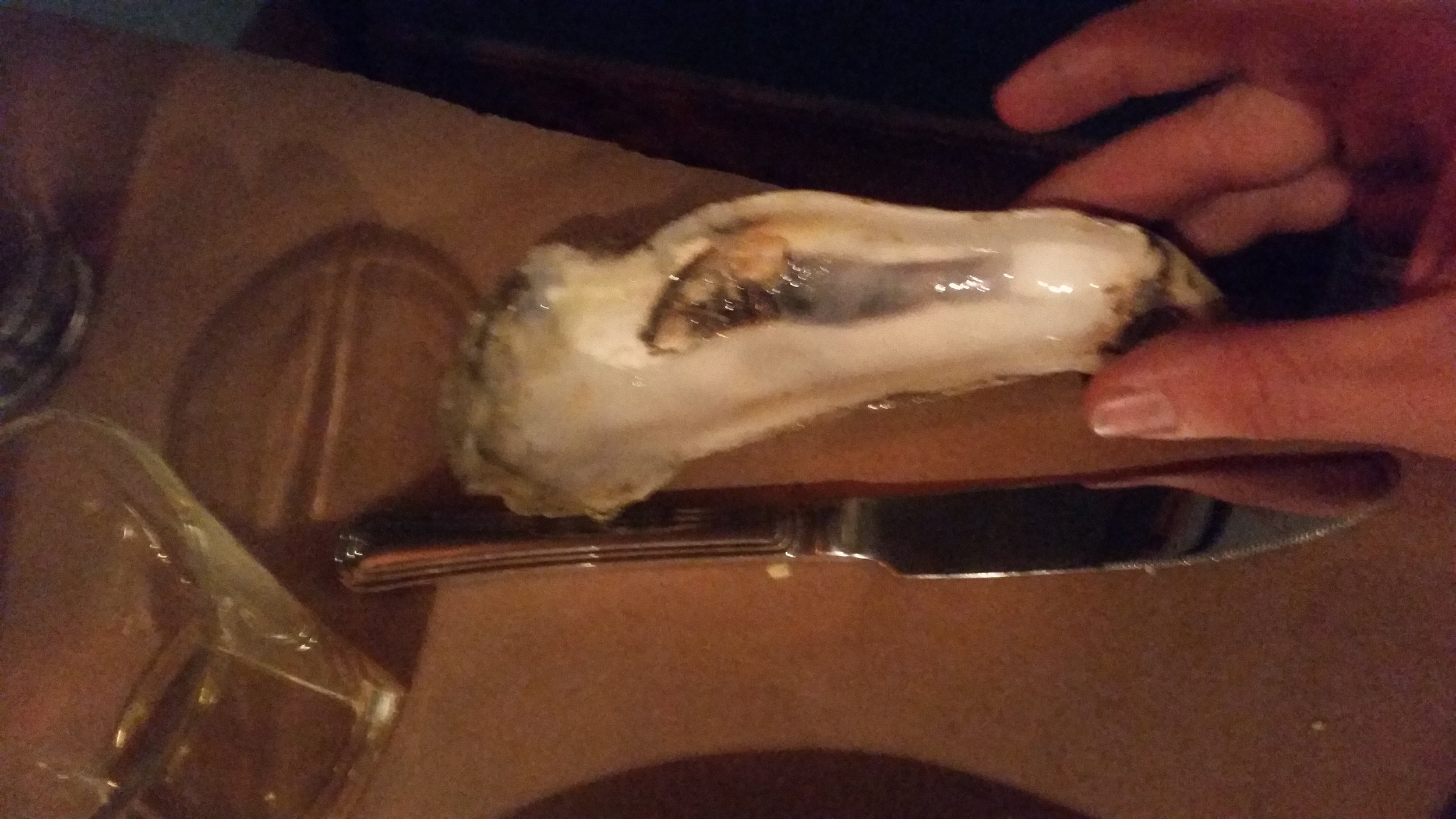
While out with friends who ordered oysters, I noticed this behemoth on the platter! 

FullSizeRender.jpg

My friends mistook my interest into thinking I wanted to eat the giant puddle of snot collected in the shell. I declined their offers to slurp down that salty swallow, simply asking for the shell once the animal had been consumed. 

FullSizeRender.jpg

You can see the other "average" oyster shell sizes next to it, clearly denoting this specimen as a monster oyster! While comparing it to other oyster shells is rather subjective, here it is placed next to a standard dinner knife. This oyster either eluded capture for longer than all the other oysters or it grew remarkably fast in the waters of the Chesapeake Bay.  

Either way, this oyster shell is the biggest oyster shell I have ever seen, ever!