Life Aboard

Change of Plans

Maddie and I were talking, and we decided to revise our cruising plan. Our original plan was to sail to North to Nantucket during the summer of 2017, and then head to the Caribbean during the spring of 2018 for a year. 

The idea of sailing North was to test out sailing to a far away destination that is still part of the continental United States on our own boat. This was so that our parents could feel safer about us heading offshore to the Caribbean the following year. After sailing North, and hopefully to Nantucket, we would then be better prepared to head to the Caribbean for a year during 2018. 

The truth is, we will never be fully prepared. There is always something else that needs to be done, and something new will always break and need to be repaired. Since there is never a perfect time to go, why wait for it if it will never come? So instead, we are going to cast off in the Spring of 2017 and head South to the Caribbean for a year. If we find that we really need something, we will pick it up along the way. 

The changing of the seasons is much more meaningful to me, as they denote the passage of time until we leave. I know that it will continue to get colder as time goes on, but once it begins to warm up, we will be casting off for new horizons!
Water

Water is the most important part of a cruising boat. Your boat needs it to float and you need it to live! Being how this is such a vital resource, getting it, managing it, and storing it should be the most important thing on a boat. 

Fresh water is available at most ports, but some places will charge you to fill up your water tanks. You should make sure you like the water before you put it in your tanks. If the water is dirty or contaminated, it could make a mess inside your water tanks. Another important quality of the water is taste. You will be drinking this water and you should enjoy it. If the water tastes horrible, it will make everything miserable! If you don't like the water, it may be best to wait and search for a different source of water; as long as you have enough to get you there.

The next most common method to get fresh water is to make it yourself with a water maker. Water makers apply tremendous pressure to sea water and force pure water through membranes, leaving very salty brine behind. As you can imagine, this process requires a lot of electricity. If you have the means to meet its electrical demands, a water maker can alleviate your water needs. The only weak link in a water maker are the membranes. These filters are prone to clogging if the water is not clean and they can become damaged if the unit is not used often enough.

While a water maker will represent the potential for thousands of gallons of water, these are all "potential" gallons. If the water maker breaks, you are left thirsty. For this reason, you should never remove a water tank, which offers "actual" gallons, to use the space for installing a water maker. 

The last way to get water is to collect it as it falls from the sky. In areas with heavy rainfall, rain collection will provide a steady flow of water in a daily fashion. Methods to collect rain water vary and are greatly dependent on the layout of your own personal yacht.

 Being how water is such a crucial and vital resource on a yacht, it should be guarded and used as such a resource. You wouldn't dump gold into the water, so why would you leave your faucet on and dump your fresh water overboard?

Conserve the water you have on board and protect it, as it is a very valuable resource. When you have the opportunity to get more, examine it and make sure you want to add it to your tanks. 

Keeping the Bilge Dry

A dry bilge may sound like a mythical creature that will never be encountered by mere mortals. With some careful planning, any bilge can be kept dry!

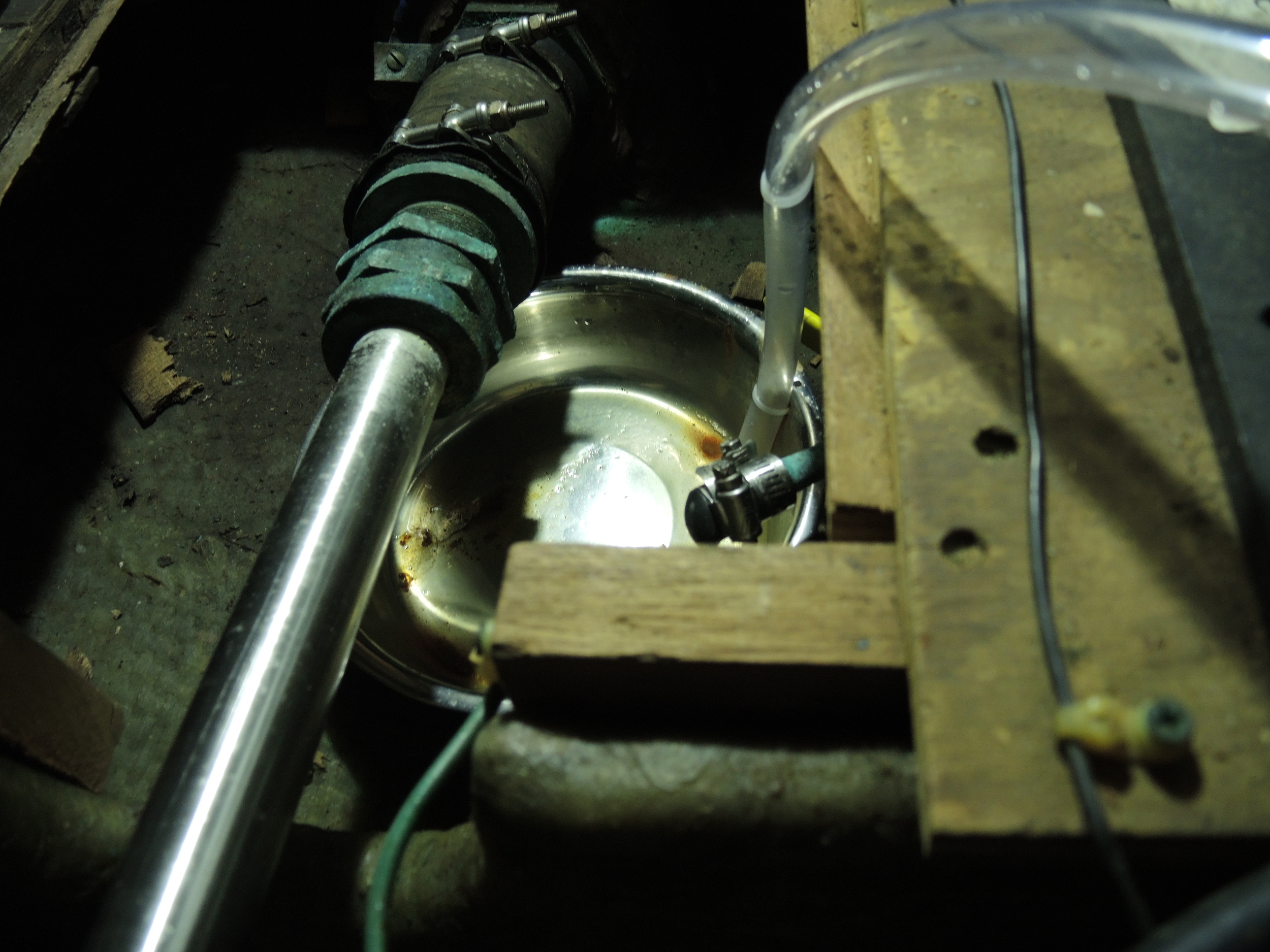
To keep a bilge dry, you need to keep water from getting in, and get the present water out. A sealed deck-hull junction will prevent water from coming in from above, as well as properly bedded deck hardware that does not leak; but what about the shaft? Shafts pass through a massive hole in the hull called a shaft log. To seal out water, the packing gland will press against the sides of the shaft, keeping water from dripping into your bilge.

The moment you begin to spin your propellers, friction will create heat which can cause serious problems in the packing gland. To negate this issue, the stuffing box is adjusted to allow a slow and steady drip of 1 to 2 drops per minute. This steady flow of water will lubricate the packing gland and cool the stuffing box. This dripping water will slowly fill the bilge, defeating one of the methods of keeping a bilge dry (keep water from getting in).

Here enters the second part of the equation, getting the water back out. Most stuffing boxes will drip water into the bilge, letting it accumulate until there is enough water for the bilge pump to extract. To keep the bilge dry, all you need to do is manage where the water goes from the stuffing box. 

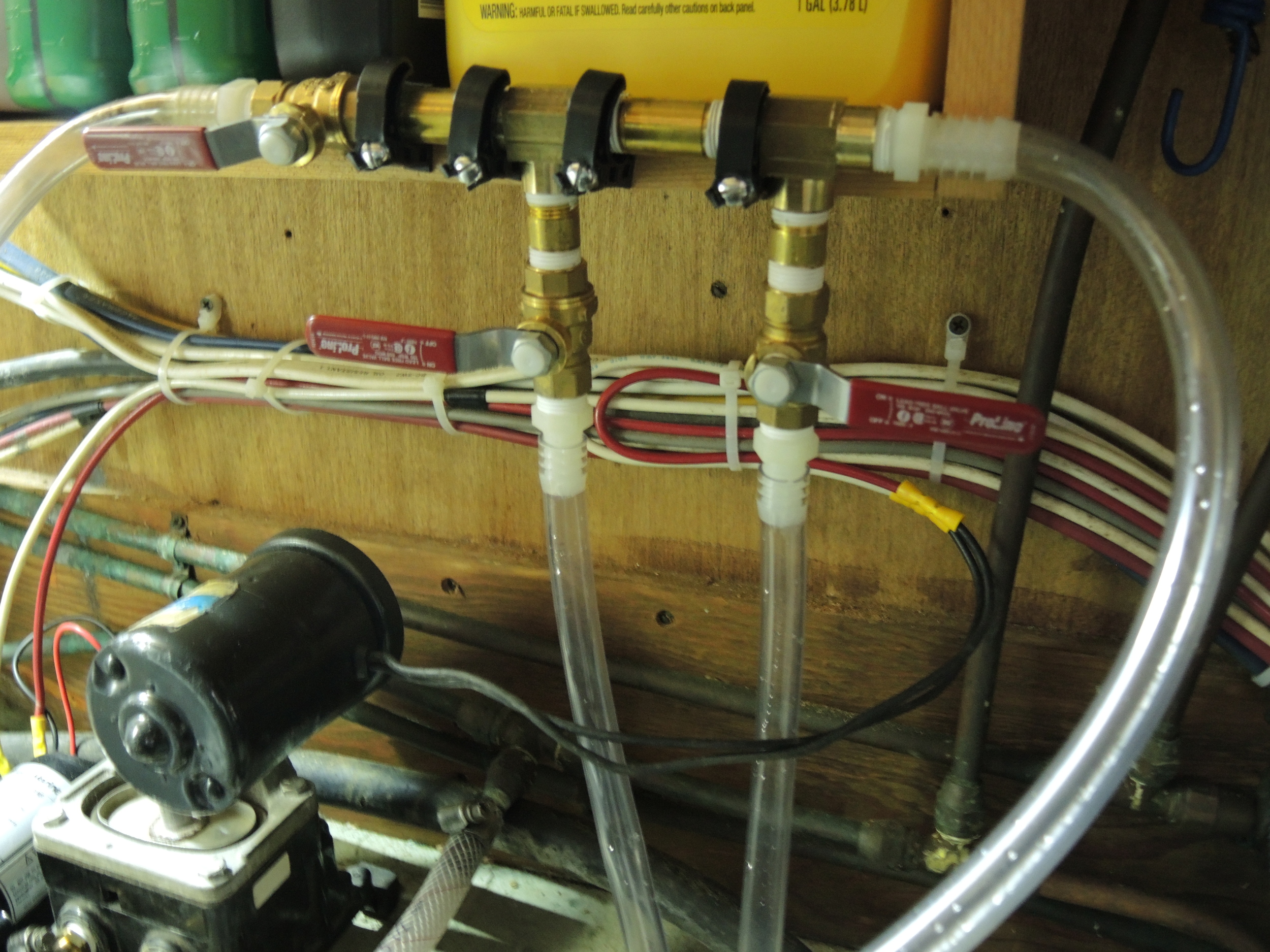
Instead of dripping into the bilge, set a pan or other collector under the stuffing box to accumulate the water without getting the bilge wet. This power boat used dog food dishes set under the stuffing boxes to collect the drips. A small hole was drilled in the top of the dish to secure a zip tie which holds a small hose in position inside the pan.

The hoses are led to a system of valves which act as a manifold. This system leads to a diaphragm pump which draws the water out of the shaft log pans in the stern and from the air conditioner in the bow.  By turning on the pump and selectively opening the valves, each pan can be drained dry, thereby keeping the bilge dry as well. 

Dress Like a Sailor

Source: http://fashionew.com/wp-content/uploads/2015/08/Sailor-fashion-style-clothes-wearing-on-luxury-yacht-trip-1.jpg

Source: http://fashionew.com/wp-content/uploads/2015/08/Sailor-fashion-style-clothes-wearing-on-luxury-yacht-trip-1.jpg

When you picture someone sailing along, you might think they dress like this:

The truth is, these clothes don't work out too well when sailing. Imagine working hard to raise the anchor or raise the sails and breaking a sweat. 

This is what we wear when we go sailing: pajama pants, t-shirt, life jacket with harness and tether. Wearing a lot of clothes means more laundry to do, so less clothing means less laundry! The pajama pants offer sun protection without the need for applying so much sunscreen and are light weight to keep you cool. 

These clothes are comfortable and easy to move around in, making it easier to do all the necessary labors on a sailboat. I try to stay away from white pants because, as you can see, my knees get filthy. When I raise the anchor, mud from the sea floor comes up and falls on the deck. When we are raising anchor in rough conditions, I will need to kneel to avoid falling overboard. Kneeling on a muddy deck will promptly and permanently stain your pants. If you chose to wear nice white shorts, they would quickly be ruined. Instead, wearing pajama pants that are inexpensive and comfortable, we don't have to worry about keeping them getting messed up while working the boat. 

Best of all, light weight pajama pants take up very little space, meaning they can be washed in a small washing machine! And in true sailors attire, wearing the same pajama pants for a few days in a row will greatly cut down on the amount of laundry we need to do. When sailing on long trips, Maddie and I will typically wear the same clothes for a few days before changing them for new ones. While this may sound disgusting to land lubbers who imagine us wearing these clothes for four days straight, that is not the case. We wear them during the day while working the boat; as soon as we finish for the day, we shower and put on clean clothes. When morning comes, we don our old clothes once again after letting them air out all night! 

Wearing any jewelry is also risky, as it can slip off and fall overboard. Maddie and I take off our rings and watches when sailing, keeping them in a safe place inside the cabin. If time is a concern, a mounted clock can tell you everything your watch could have without any risk of falling into the great blue sea. 

One last thing to note is footwear for sailors. You always hear of people wearing special boat shoes, but the truth is barefoot is best! Yes you can stub your toe on deck gear, but once you learn your deck layout, you will be able to navigate it in the dark. Any shoe will get wet and take time to dry, and will begin to smell in the process. Bare feet will dry quickly and will stay smell free for the entire trip if you never wear any shoes. When we reach port, the hardest part is getting used to wearing shoes again because going barefoot is the best!

Pumping Out Rainwater

Our dinghy, Tooth, doesn't have a garboard plug so he has to live floating in the water. If Tooth were out of the water, the weight of the rainwater would blow the hull open. Instead of dealing with a disastrous dinghy repair every time it rains, we leave Tooth in the water where he can fill and simply sink into the water a bit further until I can pump him out. 

When you live on the rainy East Coast of the United States, this almost daily routine quickly becomes a tedious chore when you have to pump out the rainwater with a hand pump or hand bailer. When you walk down the pier heading to your boat after a long days work, the last thing you want to do is deal with this.

The dinghy is sitting a few inches deeper as it has filled up with rainwater during the downpour that occurred earlier today. Since I was not in the mood to pump Tooth out, I set up my handy electric bilge pump. 

The electric pump is a self contained battery powered pump that takes all the effort out of the job. I simply hook the hose over the side of the dinghy which holds the pump in position and turn it on. The pump will suck the water out and slowly get the job done without me breaking a sweat!

As the dinghy begins to empty, the pump will start to draw in air. To remedy this, I simply push down on the gunwale with my feet to tip the dinghy and collect the water in a smaller area with more height. This keeps the pump submerged and continues to suck the water right out of the dinghy. 

After a while, Tooth is floating on his unloaded waterline once again with no major effort on my behalf. To get the last bit of water out of the hull, I will tip the hull and scoop it up with a hand bailer. After using the pump, you will only need to do about 2 to 3 insignificant scoops to get the last bit of water out of the hull.