Life Aboard

Is that a bad egg?

Eggs can keep for a very long time! As they get older, their risk of going bad does increase. If your eggs are rather old and you question their freshness, simply test them before you crack them open. 

upload.jpg

Simply fill a container with enough water to float an egg and then set the eggs you wish to eat in the container. If an egg has gone bad, it will ferment and then float in the water. 

Good eggs sink, bad eggs float! If it floats, dump it without breaking the egg open (it will stink up your entire boat). If it sinks, break it open into a bowl and visually inspect it. If it was good, add it to the recipe; if it was bad, it can be disposed of without contaminating the rest of the good eggs. 

Designing the New Dinghy

Our plan to build a dinghy from set plans has been changed somewhat. The plans will build a dinghy that is 3.5 feet wide, 8.5 feet long, and have a plumb bow with an angled transom. This will make for an efficient rowboat, but this no longer fits our needs.

Maddie wants to have an outboard motor as a backup in case we end up anchoring miles from the nearest shore. We decided that we will buy a propane powered outboard and use it as a backup to the oars for as long as the outboard lasts. The moment it starts to die, we are going to throw it out and not bother repairing it (I have talked to outboard mechanics and they all tell me that the propane units don't work well once the repairs begin). 

Change #1: The outboard means that we need a vertical transom to hang the outboard. 

I measured the space on the deck, and 3.5 feet is a bit wide for where we want to store the dinghy. 3 feet would be much more comfortable on the deck. 

Change #2: The beam needs to be reduced from 3.5 to 3 feet.

The dinghy will live on the deck between the mast and the dodger, but it can't cover the chimney and it needs to cover the salon hatch (the salon hatch leaks). The space available on the deck to comfortably hold the dinghy is 9 feet, and the smaller the dinghy is, the easier it is to build, hoist, and control. I personally need 4 feet in the dinghy (I have long legs) and Maddie needs more space as well. Quickly, the length kept being bumped up until 7 feet seemed reasonable and comfortable (in a small sense). 

Change #3: The length needs to be reduced from 8.5 feet to 7 feet.

As you can see, these are some rather drastic changes that we are making to the design of the dinghy, so much that I decided to scrap the plans and design one myself!

I began sketching out the design of the dinghy on a 3/4 inch piece of particle board. I marked 1 foot increments on the panel, and then marked the boats centerline, bow, and stern. I decided that the bow would rest at Station 0, and the beam of the boat would be around Station 4 (3 feet), with the transom being 24 inches wide at Station 7.

I then set small nails into the board marking the bow, stern corners, and desired beam at station 4. These nails set into the particle board and will hold the batten in place while I trace the curvature of the hull. Once the curvature of the hull is traced, the nails and battens are removed and the design is complete.

This sketch will provide a rough idea what the footprint of the dinghy will be and lets us verify that the dinghy fit before I build it!

Measurements were taken from the sketch and then transferred to the deck of the sailboat to make sure it will fit all of our requirements for the dinghy. It turns out that it did not! The transom was covering chimney which means that the dinghy would need to be removed from the deck if we want to start the fire or risk covering the inside of the hull with soot! Then some creative thinking led me to measure the dinghy in reverse on the deck and set it at an angle, this seems that it will fit and work. The transom hides behind the dorade vents and mast, and the beam of the dinghy covers the hatch while the chimney sits next to the bow. This will probably lead to a soot stain on the starboard bow of the dinghy, but I can live with that.

Our next step will be to trace out a paper template of the dinghy and set it on the deck and make perfectly certain that it will fit on the sailboat. The design process continues as we figure out what our ideal dinghy will be before the first piece of wood gets cut.

Heavy Rainfall and Trash

People often forget that trash left out on land will eventually make its way into the oceans. Trash left on the sides of roads or accumulated around buildings will stay on land for a period of time until wind and rain will wash the land clean and relocate the trash into the waterways. 

This fact is made very clear after strong rainstorms pour down on the land nearby. When nearly four inches of rain fell in a few hours, massive flooding occurred inland as the rivers overflowed. Loose debris that were deep inland were swept away and flushed down the river into the bay which leads into the ocean. 

The waters where we live became cloudy with all the suspended mud and plant debris that was flushed away from places far inland.

Luckily, this storm flushed out a lot of organic matter, leaves and branches, with only a few pieces of plastic. Trash continues to flow past the marina on its way out into the bay which will eventually lead it out into the ocean.

Trash never goes away, it just moves around.

Details of Removable Fiddle Blocks

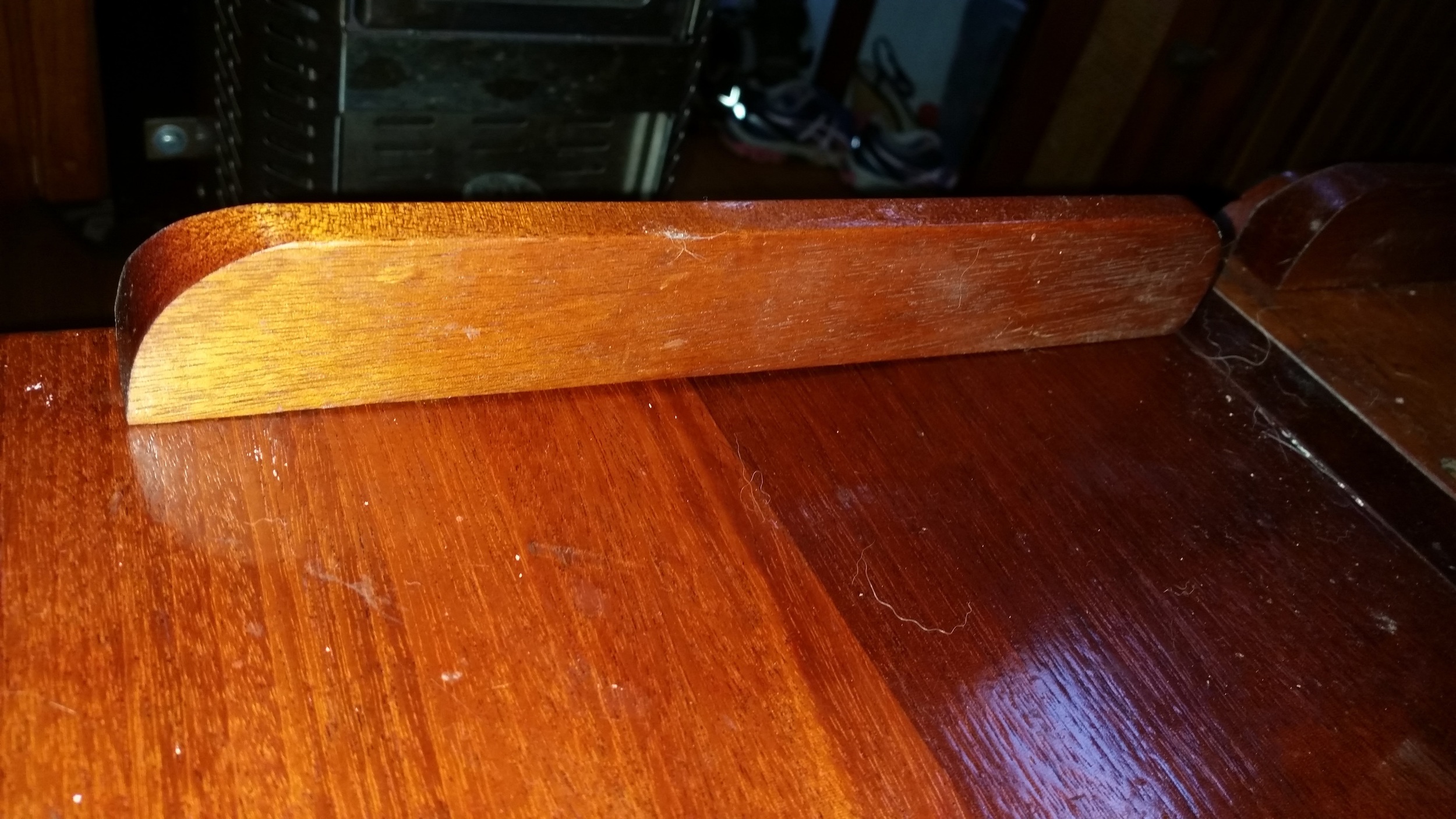
Fiddle blocks at the edges of tables may seem logical and easy enough to add, simply attach a vertical section of wood to end of the table and finish it so that it blends in and looks nice with the rest of the boats interior joinery. What if you want fiddle blocks when you are sailing, but smooth flat table surfaces when in port? This is where removable fiddle blocks come into play!

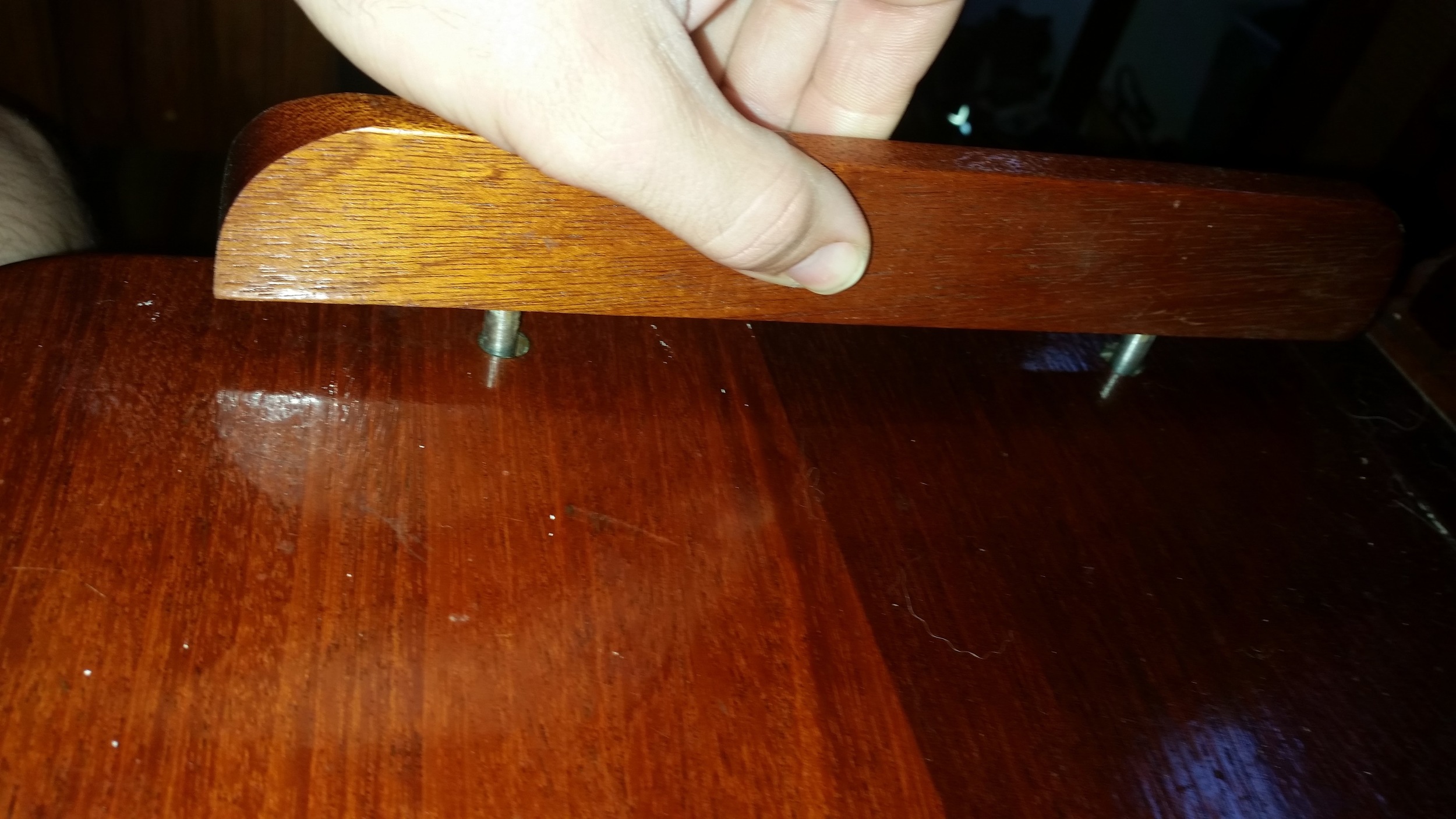
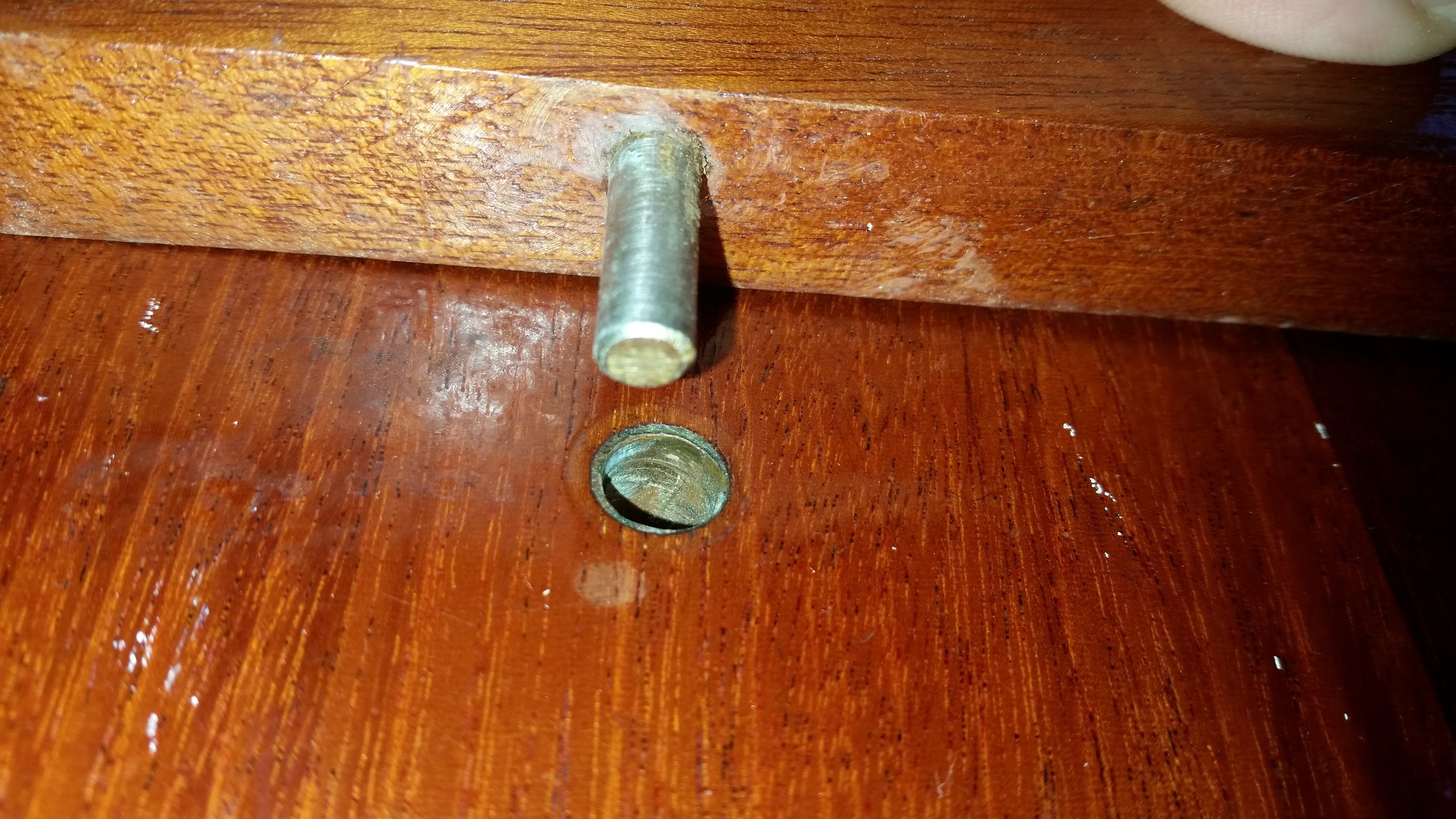
Removable fiddle blocks are simply fiddle blocks that attach to the edge of the table. The simplest method uses a system of rods to connect the block and allow quick and easy removal. On the bottom of the fiddle block, will have bronze (or other metal) rods extending out the bottom of the block that will fit into specific holes on the table top.

To protect the wood of the table, copper or bronze ferrules should be inserted into the hole in the table. Bronze and copper are easily shaped to contour to the holes shape and can be burnished into the wood, holding it in place for the life of the table. The bronze rod simply slides into the copper ferrule, providing a very secure connection between the table and fiddle block.

It is best to make the holes in the fiddle blocks and table after the wood has completely dried out. If you build a table with moist wood, the holes may not line up with the rods as the table shrinks a bit further. For this reason, only do this on an already existing and old table that lives inside and not exposed to the elements.

A small waiting period will give you a wonderful table that will accept your fiddle blocks as needed for the rest of your cruising life.

Top Load vs Side Load Refrigerators

When most people think of a refrigerator, they probably think of the massive monstrosity sitting in their kitchen. These towering units have so much space inside that food can be lost in the back of them for years! 

Boats don't have unlimited space inside them, so these mammoth appliances from your local department store are not typically found inside of a boat. Instead, boats use much smaller "marine" versions of refrigerators.

Some boats have fridges commonly found in college dorm rooms, offering a few cubic feet of storage space and tucking neatly into the galley cabinets. Other boats will have refrigerator systems built into the boat, blending in with all the other interior joinery.

Power boats tend to have side load refrigerators, which is similar to the kind found in houses. Sailboats tend to have top load refrigerators, which may take people some time to get used to. You must be wondering, why have one style over the other? You should look at the pros and cons of each style and decide which is right for you.

Side Load Refrigerators

Side load refrigerators make it easier to access the food stored inside. They also are more familiar to most people, since this is how most household refrigerators are setup.

The problem with side load refrigerators is when you open the door, all the cold air will rush out the bottom and be displaced with warm air. This means that the refrigerator needs to run more often to maintain a cool internal temperature when the door is opened. Standing there for a few minutes looking around for the right item will ensure that all the cool air rushes out and is displaced by warm air. In the long run, these units will consume more energy to maintain the space inside them cool.

The other problem with side load refrigerators is the side of the refrigerator opens. If the refrigerator is positioned with the door towards the midline of the vessel, on one of the tacks the food will be resting into the back of the refrigerator while on the other tack the food will be resting into the door. Should the door be opened when all the food inside is resting into the door, all of the food inside will pour out and into the cabin. Some boats use a small latch on the door to prevent accidental openings, but if you are pounding in rough seas, the last thing you want is for the latch to slip and all of your food to spill into the boat.

If your side load refrigerator is positioned so that the door faces fore or aft, there is less risk of your food escaping when opened underway. As you know, when sailing in rough weather, everything will shift and move meaning the contents of your refrigerator may have shifted. When you open your fridge, be ready to catch anything that might fall out and keep your toes clear of frozen foods.

Top Load Refrigerators

Enter the top loading refrigerator! They have an opening lid rather than an opening door. This means that you can open them and look around on any tack without fear of food flying across the hull. The only way your food would accidentally fly out of the refrigerator is if you capsized, and honestly the food would be the last of your concerns.

The other advantage of a top load refrigerator is they tend to run more efficiently. When you open the lid, the cold air which sinks to the bottom will stay in the bottom of the refrigerator. This means that you can take a little bit of time to find what you are looking for without sacrificing too much cold loss.

While top load refrigerators might seem like a perfect solution for a boat, but they do have their draw backs. Food in a deep refrigerator will have to be stacked. If you want to access food at the bottom, you need to dig for it. This typically involves unloading everything in the top levels to reach the lower levels. Food at the bottom is hard to reach as well, I have long arms and can reach everything if I stretch, but my wife Maddie has trouble reaching food stored along the back wall. It's simply too deep for her to get to comfortably.

The other problem is you need to lift the lid every time you want get into your food. This might not seem like a huge problem, but large doors are heavy and you have to hold it up the entire time you are in there! This is why most top load refrigerators will have multiple small lids, each weighing much less than a giant massive lid.

Sectioning the top into smaller lids means that you now have a smaller hole by which you must access all of your food. You really need to know where you put something, or you might spend a long time searching through a tiny little access.


Neither style is a perfect solution. Top load units are more energy efficient but are not as easy to access. Side load units are less energy efficient, risk spilling all your food, but have great access and feel more familiar to people.

Power boats tend to have side load refrigerators as most first time boat owners gravitate towards power boats. They feel that boats are simply large cars with "entertaining" space inside. Therefore, side load refrigerators are employed to make these boats seem as comfortable and familiar as possible to everyone.

Sailboats tend to have top load refrigerators because opening the fridge while heeled would be a mess. In recent years though, more and more sailboats are offering the combination of top and side load refrigerators. These offer the best of both worlds, allowing you easy access when anchored or in port via the side door, and also through the lid while out sailing. These sailboats should have very robust locks on the side door to prevent accidental openings.

I feel that these combination side and top load refrigerators are being installed to bring more people to the wonderful world of sailing by making them feel more at home when they are in the cabin. Imagine how much easier a sales persons life got when they no longer had to explain why the refrigerator opens from the top, and instead gets to say: "See, the refrigerator opens here, just like at home." 

If you are in the market for a new boat or are refurbishing your galley, consider which refrigerator style suits your needs and desires best and will make you feel most comfortable while aboard.