Life Aboard

Search for a Good Can Opener

Canned food stores for a long time without any refrigeration or effort. This makes canned food an ideal on board a sailboat. If we run out of electricity, the cans don't care; they can't spill, they can't spoil. They just sit there until you are ready to use them! Enter the trusty can opener. Simply pop it onto the can and open up the delicious well preserved food inside.

Herein lies the problem, if you can't get the can open, you can't get to your food! On land, if your can opener stops working, a trip to the corner store will remedy this. Out to sea, there is no corner store. Add to this the salty corrosive ocean air and a perfectly good can opener can seize up with rust.

The search for the perfect can opener is on going. It needs to be strong enough to open all the cans without fail. It needs to survive the attacks of rust and corrosion. Lastly it needs to be comfortable!

We had a very good one that lasted for around 2 years, but then the cutting wheel seized up with rust. Then we purchased another can opener which felt very comfortable, but will slip when trying to open a can. So far it continues to work, but I'm waiting for the day the can opener will die. 

While in a local grocery store, I came across a very simplistic looking can opener that appears to be the solution to our problems! It looks simple enough, but it is not very comfortable to hold.

The obvious alternative to can openers is to simply purchase cans that have a pull tab on the top. We try to purchase all our cans with this feature, but some foods simply are not available in the stores we have visited with them. Common offenders are canned carrots and tuna. Other foods like beans, peas, corn, meats, and salmon are all available with pull tabs, greatly reducing our stress when opening canned foods.

On a separate point, you should keep a second can opener tucked away in a cupboard. If your only can opener were to fall overboard, then you will find yourself in a very frustrated and hungry state.  

If you have any suggestions for a good can opener, please let us know in the comments section down below.

Reverse Cycle Heating and Air Conditioning

Reverse cycle heating and air conditioning work just like the one in your home or apartment. You simply set a temperature and it will do its best to keep it there. 

It works wonderfully, but it does recirculate the same air. Because of this, we like to open the hatches on nice days to completely change over the air in the boat. 

One of the best features is it offers a steady air temperature in the boat. If you set it to 70F, it will get no colder than 68F and no warmer than 72F. 

This may sound like the perfect way to control the temperature of your boat, but as always there are downsides. The system will cool a boat incredibly well, but it has limitations when it comes to warming the boat.  

If the water temperature gets below 38F, the system stops heading the boat. This forces many people to fill their boats with space heaters when their only heat source stops producing.  

The other problem with winter use comes from the fact that the unit recycles the same air over and over again. Moisture in the air will build and during the colder season, condensation will form on everything. This may only seem like a minor inconvenience, but I have seen boats where every surface in the boat is sweating and a portable dehumidifier can't keep up with the demand.  

The convenient system is also a very complicated system with many places to fail. If anything stops working, the whole unit fails.  

One of the weak points in the unit is the need for constant water supply. If air gets into the water line, the flow of water will be interrupted. Air locks are very frequent issues and can be tedious to manage if you are not properly equipped.  

Reverse cycle heating and air condition units are very useful for making a boat a home, but they require constant supervision. It is not recommend that weekend boaters leave their units on all week (or longer) while they are away. If the unit runs dry and fails to shut itself down, the unit can become a fire hazard as it becomes dangerously hot. 

While this may seem like a major downfall to this unit, I can assure you that with proper care and maintenance, these units will make your boat feel like your home!  

Dealing with Tails

When you pull into a marina slip and tie up, you will find that you have long tails leading away from the cleats. This is where the dilemma on what to do with the tails comes into play. There are several common options on what to do with these tails:

Jumble mess
Coil
Chain
Stretch out
Send it back to the boat

One of the most common ways people deal with tails is they leave them as a jumbled mess. Neighboring boaters will not appreciate this method and these tangles can easily become a tripping hazard and the knots they form can become a nuisance when you need to extend the dockline in a hurry.

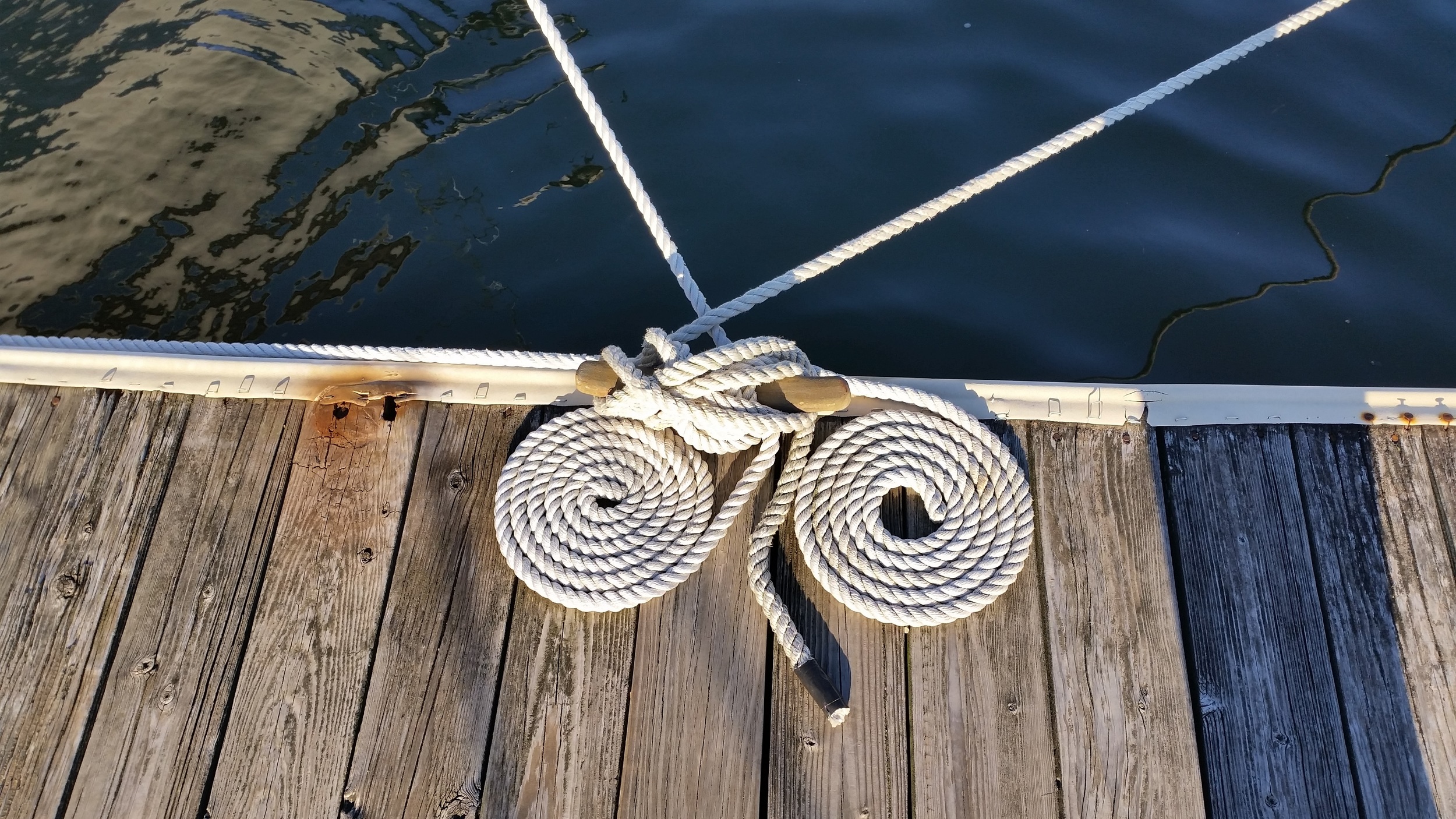
Coils are flat and elegant. One very common coil is called the Flemish Flake which is quick and easy to make. Passer byes will appreciate these coils because they look neat and tidy and show that you take the time to make sure your boat and all of its parts are kept in order. It's these little details that other boaters will pick up on as they make their quick judgments on your boating credibility. The problem I have found with coils is drunk boaters tend to grab the center and stretch it out. They are just doing harmless pranks on other boats, but after a few incidents, my patience grows thin for this prank.

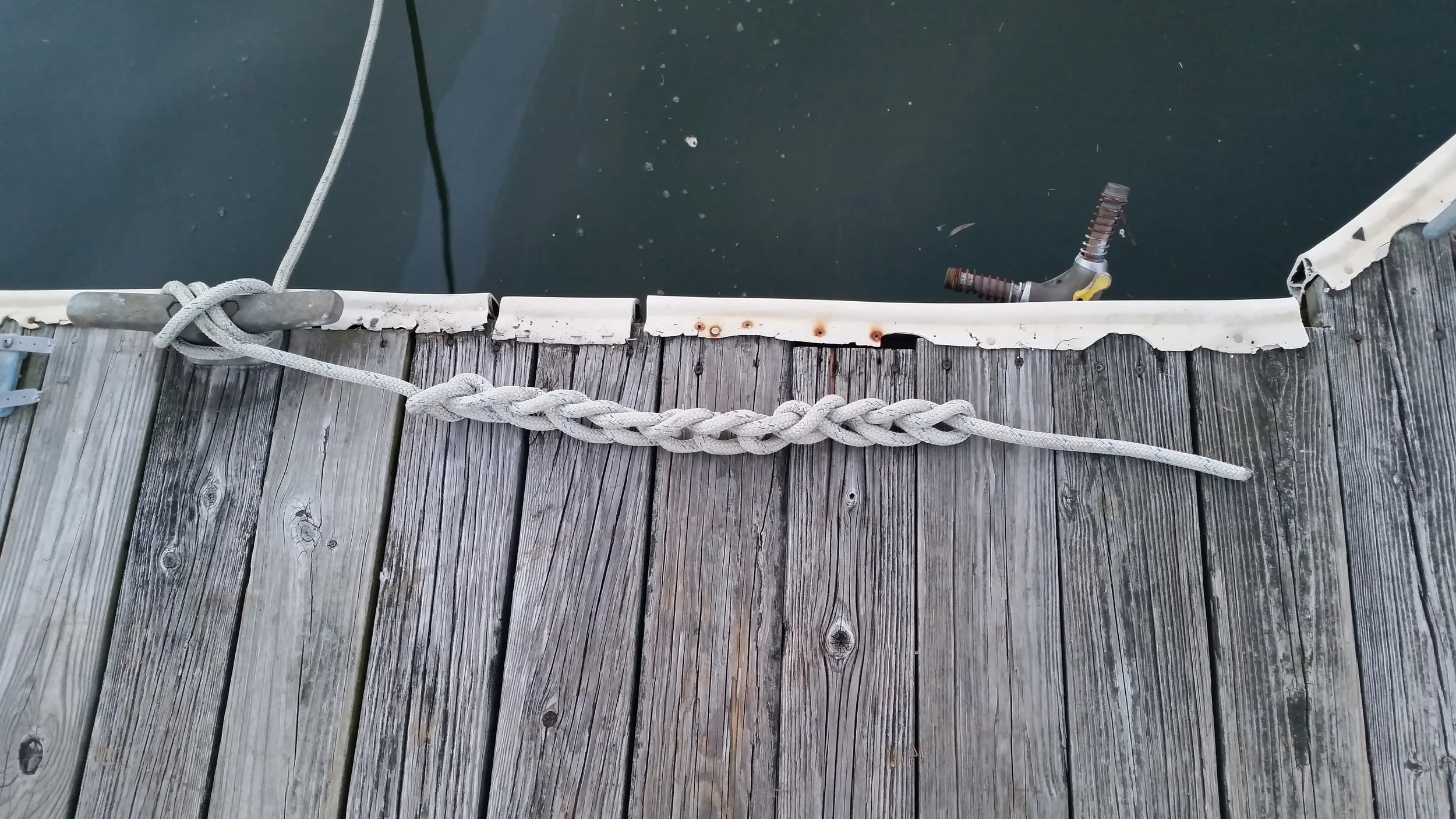
Chains are another alternative to coils. Chains also keep the excess line in a neat and tidy package that is not as enticing to pull apart. Chains are bulky instead of flat, but can be easily tucked up to the cleat or edge of the pier. This way they are out of the way of foot traffic, yet neatly organized. Chains are easy to release in a hurry by pulling on the end, and also help with neighbors split second judgment about your boating skills. The problem with chains is if they are left in place for a long time (longer than one month), they will become stiff and are hard to pull apart. This leads us to our next option!

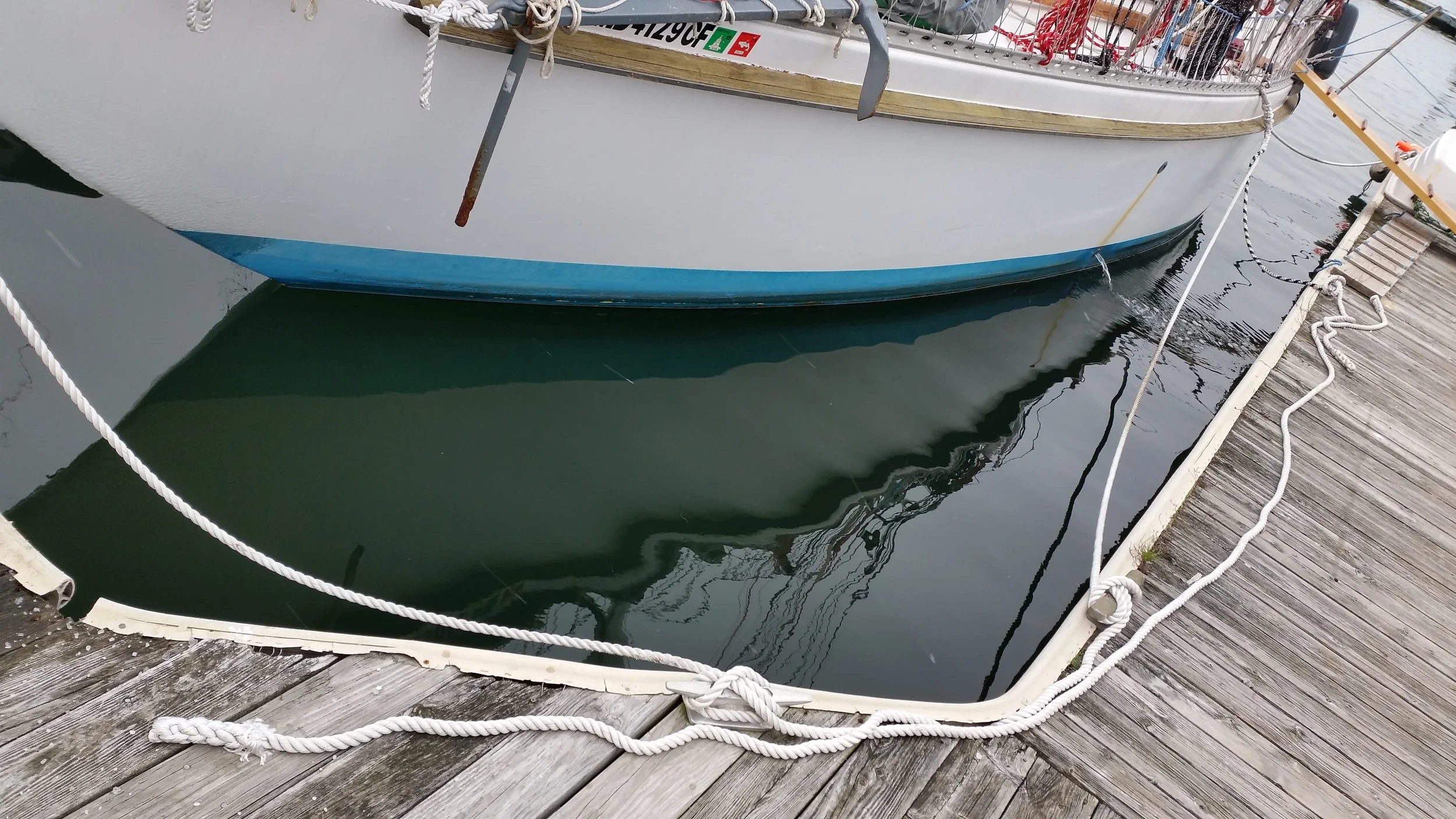
Stretch the lines out. By stretching the lines out along the edge of the pier, they are out of the way of foot traffic, and still relatively neatly organized. The lines are prone to falling into the water, which is why frequent inspection is crucial. If the line lives in the water, a reef will begin to live on the line. The amount of life that can form on a floating line may seem appealing to the observer, until you have to grab that part of the line. For long term docking, I personally prefer to stretch the lines out, that way when we take our dock lines with us for long trips, they don't have odd twists and kinks in them.

The last option is to send the tail back to the boat. This resolves all the problems of what to do with the docklines on the pier, but I don't see this practice done much. This only works if the dockline is excessively long, as the line needs to run the path from the boat cleat to the pier cleat and then back to the boat with enough to secure the line on deck and avoid it from falling into the water. If the line isn't long enough to reach the pier and back, this is not a viable option.

How do you manage the excess tails of your dock lines? 

Unpredictable March

The weather throughout the year for the North East can be simplified as this:

January: Cold
February: Icy
March: Unpredictable
April: Beginning to warm up
May: Warming up
June: Warm
July: Hot
August: Hot and Humid
September: Cooling down
October: Wonderful
November: Cooler
December: Cold

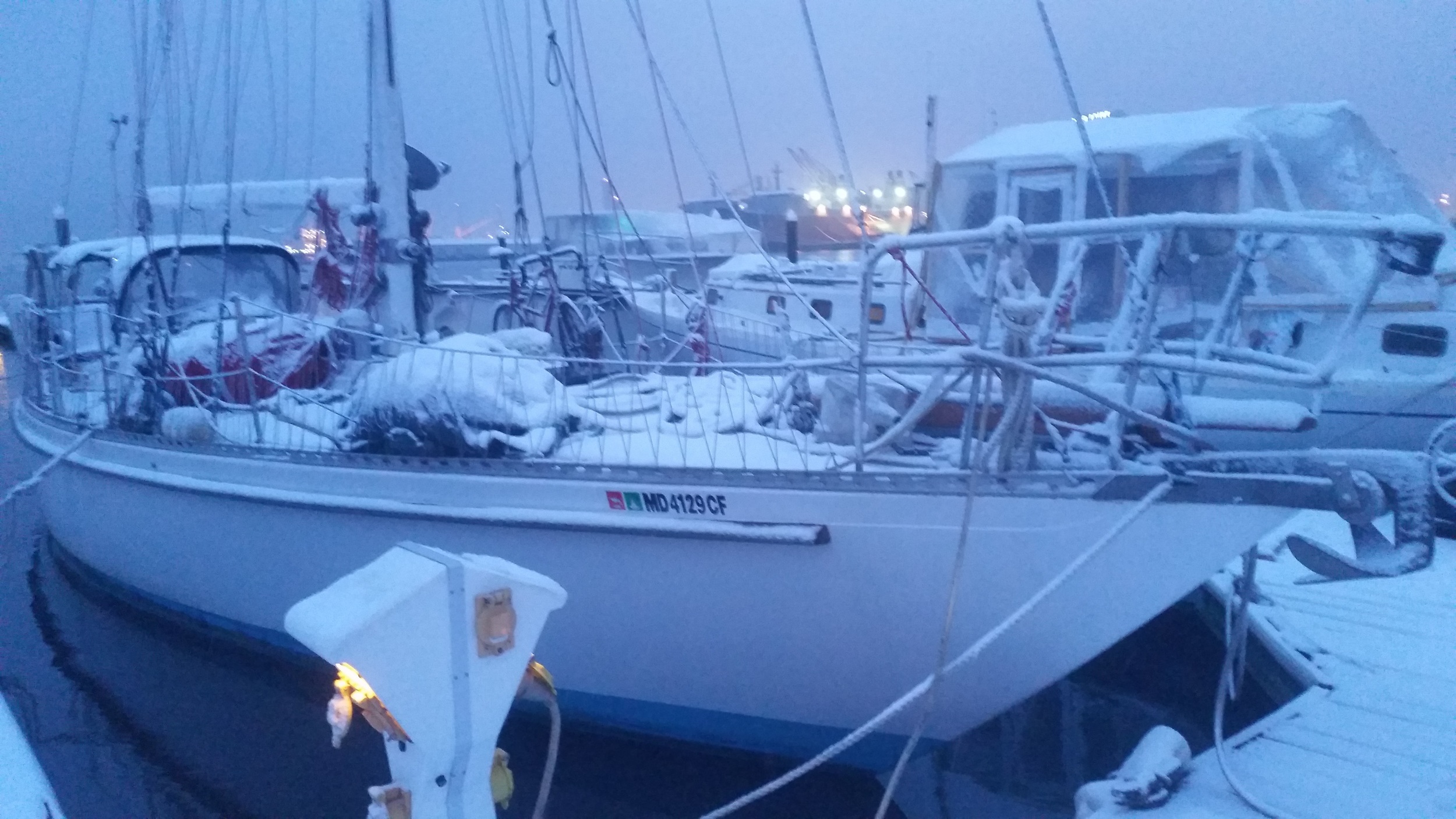
March is certainly unpredictable! Some days are warm and sunny, followed by snow storms. It's a great time to look at the sky to get an inclining as to what is coming. Wispy clouds will begin to fill the sky to warn of the changing weather that is coming. It seems that every few days, a different front will roll through, bringing a drastic weather change with it. Some days will begin with temperatures (Fahrenheit) in the 50s, go up to the 80s, and then back down to the 20s. Strong winds also accompany these strong temperature fluctuations, making it critical to be prepared and well versed in storm sailing before heading out. 

What might start out as a windless morning with small isolated puffs of wind can easily turn into a full gale in a matter of hours. If you are trying to ease someone into the joys of sailing, a day like that may scar a beginner, making them fear that storms will come out of no where! On the flip side, the strong wind will rocket you towards your destination if you feel comfortable sailing during those conditions. 

While March may seem crazy and unpredictable, it is a sign that warmer weather is around the corner and the beginning of a much more comfortable sailing season!

Higher Education

Is higher education really worthwhile? I have been in school for most of my life, and as I look back at it all, I wonder if it was worth it?

What are the pros and cons of higher education?

Pros:

Better paying job
Better working conditions
Greater social acceptance
Greater flexibility with private life

Cons:

Immense student debt

It is a know fact that salaries increase proportionately with education achievements. According to PBS, the numbers are dramatic. 

Highschool dropout: ~$20,000 per year
Highschool graduate: ~$30,000 per year
College graduate: ~$56,000 per year

These numbers seem impressive and can make a good argument for finishing school. The larger jump is when you get into professional schools. 

Average Dentist Salary: ~$124,000 per year Source

That may seem like a significant jump in salary, but so is the amount of student debt. I completed my freshman and sophomore years of college in Puerto Rico at UPRM, costing $76 per semester (if you had a very high GPA, they would only charge laboratory fees). I moved to Maryland for my junior and senior years, and that totaled to $8000. My college education cost roughly $8,304 and I would be set into the average salary bracket of $56,000.

I then went to dental school where I tried to spend as little as possible. The average graduating student debt from dental school is $250,000. I managed to get out with only $160,000 of student debt. 

This debt costs will cost me $2,000 a month for the next 10 years, costing $240,000 to repay it (making minimum payments). Imagine what the monthly payments must be on the $250,000 student debts!

Making more money is great, but then you end up in a higher tax bracket. You have to pay taxes on the money you made to pay the student loan, and in the 28% tax bracket, the $2,000 monthly student loan payment will cost you $560 in taxes. 

This means that the first $24,000 you make per year is already spent on student loans and will have an additional $6,720 in taxes to go along with it. $30,720 of your yearly income is already spent on student debt and taxes. This leaves $93,280 for you at the end of the year! Not really, the $93,280 will carry along another $26,118 in taxes.

At the beginning of the year, you need to earn at least $30,720 to pay your student debt, that's more then a high school graduate makes in a year! After taxes and passing your student debt payments, your $124,000 has now been reduced to $67,162.

If you have a job, you need somewhere to live and you need to get to work. Due to social pressures, you might feel inclined to buy a fancy house and car to impress people you don't know. The house and car payment will have to come out of the remaining $67,162. Don't forget that you also need to pay property tax, as well as insurances. Soon enough, you will have less money leftover than what the college graduate is earning! Luckily, you live close to work and can work everyday until you die to pay off these debts and try to save for retirement. 

Once you're old and stop working, you can try to sell everything and buy the boat you have been dreaming of to sail over the horizon to new lands! Hopefully your health is still good enough to enjoy cruising for a few years before your body can't take it anymore!

The other option is to not follow the system! I have friends that cruise on sailboats in the tropics, everyday is warm weather and beautiful beaches. They don't have much money, but they do have their happiness. When they need some cash, they work as a bartender; otherwise, they just enjoy life for barely no cost!

There is no doubt that cruising has significant startup costs. First, you need to buy a boat! That can be a pricey ordeal. Next, you need to outfit the boat and stock up with provisions, also costly. Lastly, you need to cast off and sail away; not costly!

Having completed my higher educational studies, I have the disposable income to do the first two steps. The problem lies in the last step! It is not costly to cast off, but I have these massive anchors called student debt that are keeping me here! I work to pay them off, but I also need to save up money to cover my student loan payments for a time while I am cruising around. 

As it stands right now, paying the minimum, I will finish paying them off in 2022; that is a serious anchor! It is a project to not form any other anchors to shore during those years that will prolong our departure. Maddie grew up with the land based mentality of "Buy a house, buy a car, buy buy buy" and it is a struggle to not buy anything we don't need or want. 

When we first met, her sole goal for the future revolved around having a house on land, where my sole goal was to get away from land as quickly as possible. After many discussions, we have come to agree on not buying anything with a loan. If there is no debt, there is no anchor; once again, the third step becomes "not costly" and you can cast off to explore anytime you want!