Life Aboard

Delicious Breakfast for my Fiancee

While Maddie was sleeping in, I made a delicious breakfast for her to enjoy as soon as she woke up! She likes scrambled eggs, but wants them dressed up with other flavors mixed in.

I added sliced cherry tomatoes, red onion, grated pepper jack cheese, pesto, milk, and a tiny hint of tomato sauce. I kept stirring the pan over the stove to keep the eggs from burning as it cooked. The cheese melted and mixed into every part of the eggs to add a hint of spice with cheesy goodness! 

Cooking on board a boat in a small galley is not as hard as people make it out to be. This whole meal was created using a single pan in a relatively small amount of time!

Needless to say, Maddie was very pleased when she woke up to this breakfast!

Keeping Warm

It was 27F and blowing 10 to 15 knots. This made for a very chilling walk down the pier to the boat. Once inside Wisdom, it was a completely different story.

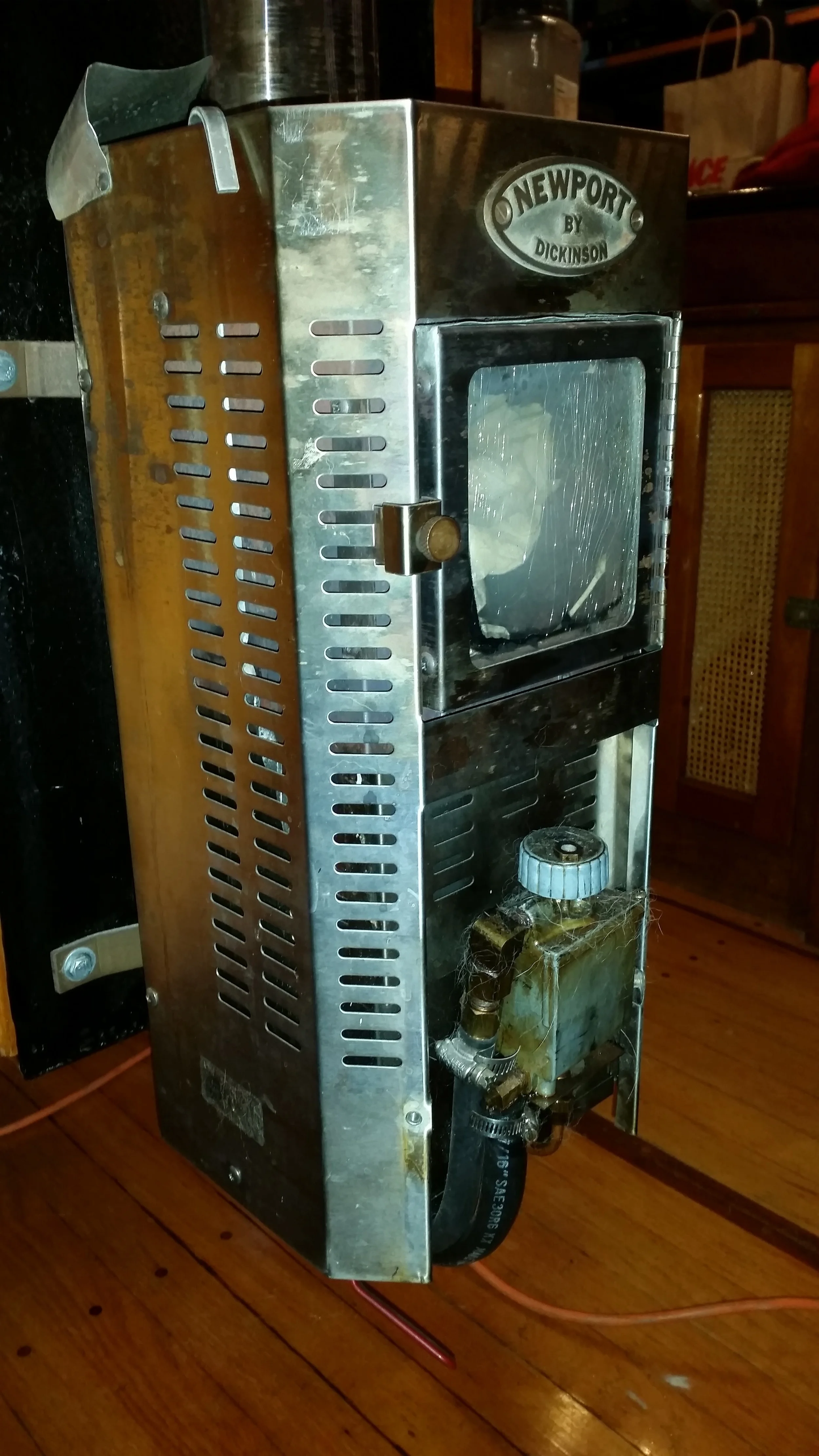
The diesel heater was burning and it kept the small cabin inside nice and toasty. Smaller spaces require less energy to heat, so with little effort we are able to maintain a comfortable level of warmth with the heater set to 1 out of 5. We let the fire burn like this all winter long and it provides us with plenty of warmth through these colder months.

Maddie and I were relaxing by the fire while we read and played with Morty and Sammy. Life in a tiny floating home is special!

Winter Commisioning of the Diesel Heater

When the water cools down and the reverse cycle needs to be shut off, it's time to fire up the diesel burner! But wait, it's been off for the past 10 months. There are some steps to getting it back to operational standards.

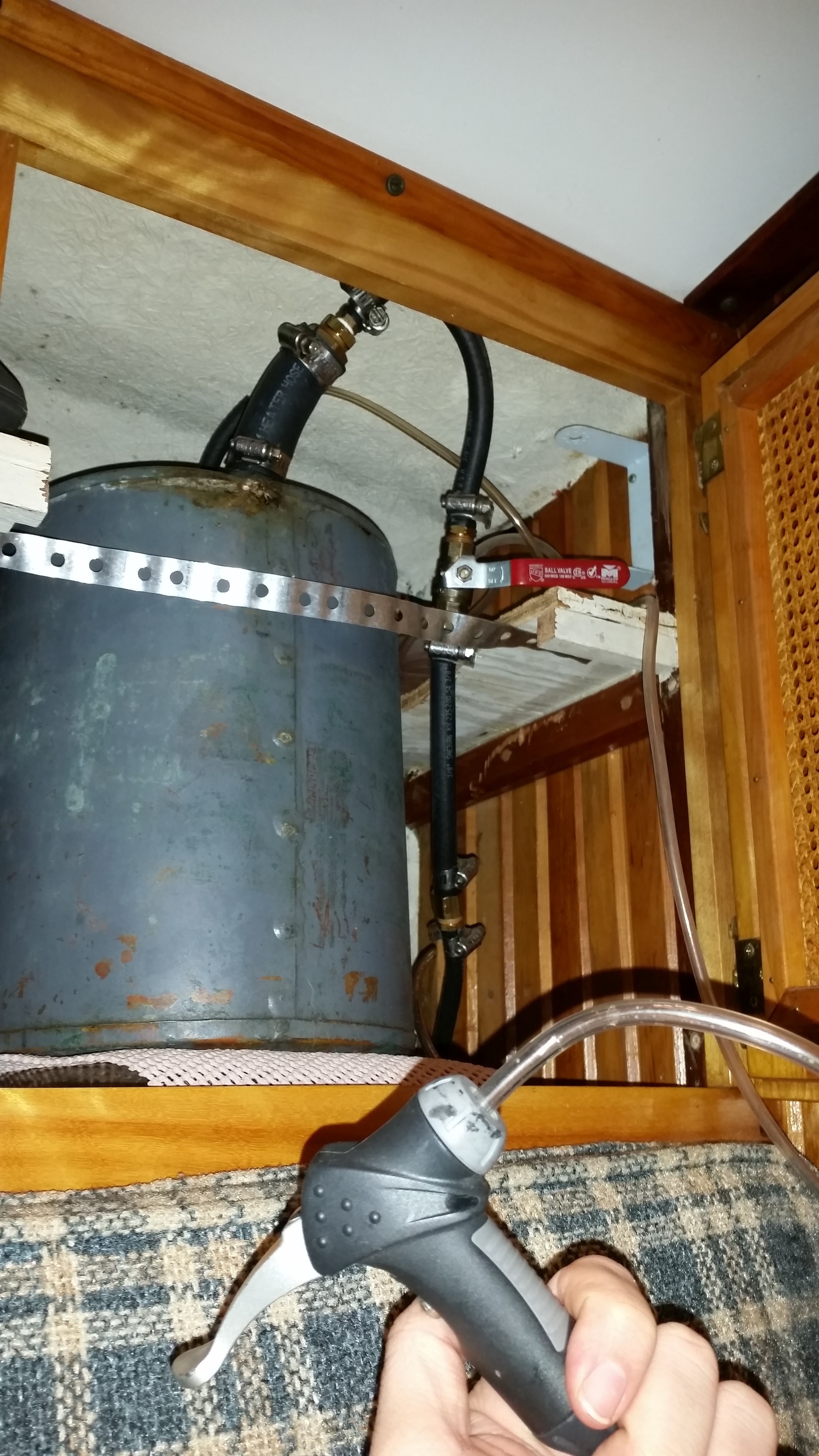
First step is to put fuel into the day tank. I like to fill it up for a few minutes until it feels much heavier.

Pressurize the tank using a bicycle pump. This will force the fuel through the fuel line, bleeding out any air bubbles that may have developed over the past 10 months.

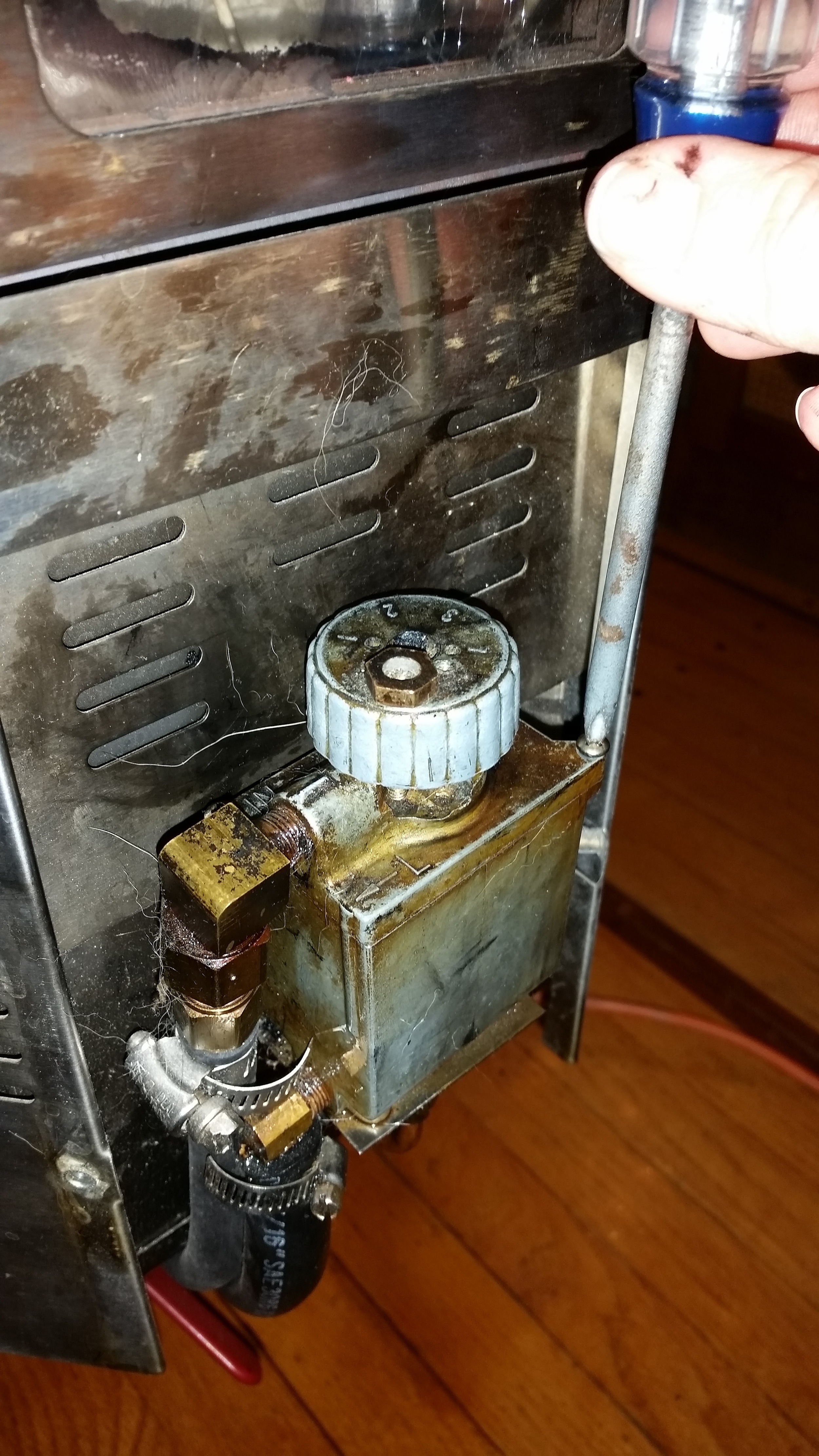
Then disconnect the fuel feed to the carburetor on the heater. I like to remove the top of the carburetor that way I'm certain the fuel line is bled all the way to the float switch. 

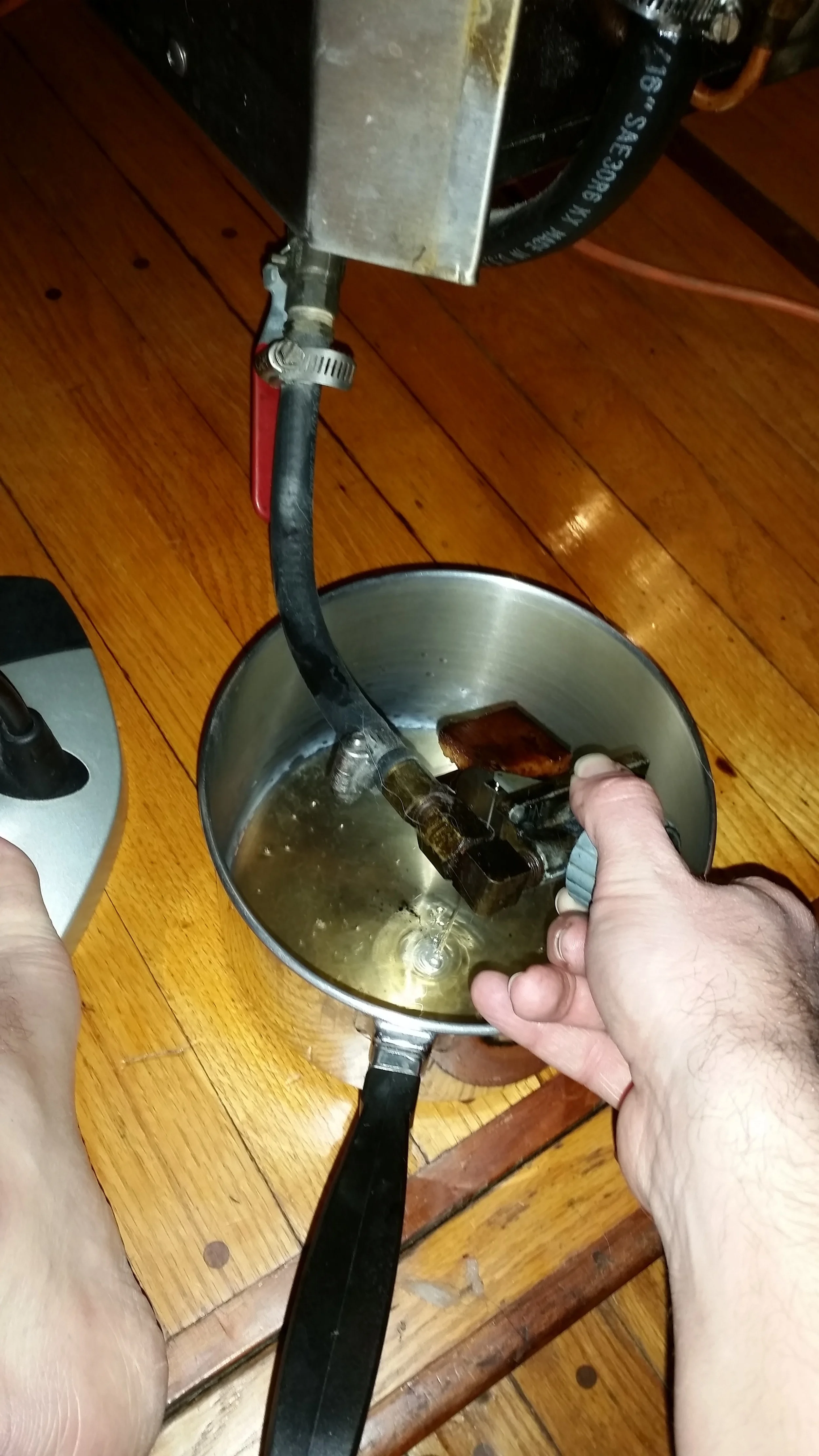
Open the fuel valve near the heater and drain the fuel into an appropriate container. Be careful because it can splash around when a large air bubble pass.

While the fuel is flowing fast and steady with no signs of air bubbles, close the fuel valve quickly.

Remove the bike pump from the day tank vent and allow the pressure to escape the day tank.

Blast some air into the bottom of the carburetor to clear out any debris that may have collected in the fuel line over the past 10 months.

Reconnect the fuel line to the carburetor.

Clean off any excess fuel that may have spilled onto the unit. You don't want to get diesel on anything in the boat, it's hard to clean up.

Let some fuel flow into the burner and light some paper to start the fire. 

It will flash flame, but then it will settle down to normal and be ready to burn safely and consistently for the next few months.

Plastic Bags

Plastic bags can not be dumped overboard, no matter how far out to sea you are. The plastic will continue to float along as it breaks down into fine particles of plastic that accumulate in the ocean trash gyres.

Plastic grocery bags serve a second purpose on board a sailboat, they make excellent trash bags for tiny homes. Their handles let them hang from the galley and when they are full, they can be tied up to avoid spills. While in port, plastic trash bags can be taken to the marina dump to dispose of them. While sailing, I tie them up to the davits on the transom, ready to be disposed at the next appropriate landfall.

This is all well and fine, as long as you can properly store the plastic bags in an easy to access location that keeps them safe so they don't fly away. An empty bag will fly around in the slightest of breeze and can blow overboard far too easily. I have found an easy way to store the bags, I stuff them in this cloth tube which has elastic around the openings at the end. 

I ball the bag up and stuff it in the top when I unload my groceries. When I need a bag, I simply pull from the bottom. The whole tube hangs from the ceiling next to the galley, near the companionway. 

I have never had a bag get free from this device, yet they are always at the ready and accessible. Recycling plastic bags consumes a lot of energy; by reusing them, their useful purpose can be extended until they are ultimately disposed of.

Air Conditioner Water System Primer

When a debris clogs the through hull fitting to the air conditioner, you need to call a diver to swim under the boat and clear the debris or pull the hose and push the debris clear with a stick. Both of these options are either time consuming or costly. 

When an air lock forms in line and the water pump stops flowing water, the hoses need to be disconnected and bled. Bleeding the lines is necessary to remove any air bubbles from the system so the pump can continue flowing water to the air conditioner. This is a very wet and messy job. 

All of these issues can be easily overcome with a simple hose and valve added to the system.

Simply connect a hose from the pressurized fresh water side to the intake hose between the strainer and the sea cock.

If you get a bag or other debris covering the through hull fitting, opening the valve will flush water out the through hull and can clear lightly obstructing debris quickly and easily. There is no need to get a diver to pull a small bag from the hole or the hassle of poking a stick through a gushing sea cock. Simply open the valve, wait a few moments, then close it again!

My through hull is rather low, so I don't typically suck up the bags floating along the surface, but I do get air in the line every time I go sailing. If you heel over far enough, the through hull will come out of the water; and if the sea cock is open, it will drain the whole system out. When you get back to port and plug the boat in, the A/C will not be pumping due to the trapped air.

This is where this system shines! Open the valve and let the water pump prime the system for you. I like to close the sea cock that way all the water is running through the pump. I recommend checking the discharge through hull to make sure that a steady stream of water is coming out. If you have a bunch of bubbles coming out, wait until the stream clears up. 

Once the flow is continuous, open the sea cock and let the pump flush any air that could exist between the T connection and sea cock. Now the system is fully primed and ready to be turned on. 

I like to listen to the pump when it first turns on to listen to air noise. If there is a bubble in the impeller, it will make a rather loud rattle sound. If it's a small bubble, it will sound like sand falling on concrete. If it's completely quiet, the system is perfectly primed and no air exists in the line.

If I hear the rattle, I will open the fresh water valve again to further flush the system until the rattle fades away. If I hear the falling sand sound, I will let it be. You can waste a lot of water to perfectly bleed the system when it will work just fine with a small bubble present in the pump. 

As you can see, this system greatly relies on the fresh water pump to provide the necessary pressure to prime the system. I have a 2 gallon per minute pump flowing at 25PSI to feed a 500 gpm air conditioner pump. A larger water pump would make the priming job easier, but I like to conserve as much water as possible on a daily basis by using a small water pump.