Monkey Fist

This knot is a favorite for key chains and ornaments, but it has a much more practical purpose.

A Monkey Fist adds a considerable amount of mass at the end of a line, allowing this to be tossed across great distances as it trails a small messenger line. Once this line is transferred, the real mooring warp can be hauled to bring the boat into berth.

The video below shows how to tie a Monkey Fist.

How to Fund Your Journey

Cruising is great, you live where your boat is and don’t have to go to work in the morning. The problem with this plan is that money is a thing you need if you want to eat, and not going to work means you won’t have any money.

Well, you don’t necessarily “go to” work, but instead, you “bring” work with you.

Cruising means that you are going to have a mobile lifestyle and it would be best if your work was also mobile. We fund our journey through a variety of sources, and each one is rather small, but collectively, they add up to be enough that we can buy food and sail on.

First, there is the blog that you are reading right now. I started this blog back in 2015 and have posted a new blog post daily since then. This is a lot of work and it takes a lot of time, but it is a labor of love that pays me thanks to the ads that are displayed on the web page. The money comes from Google AdSense, and I get paid monthly.

Second, there is the YouTube Channel Rigging Doctor which also pays from ad revenue generated by ads that play on the videos we make. Filming requires equipment, and equipment is expensive. Editing the footage takes software, which is an additional cost, but the end result is a wonderful video diary of our adventure. The channel started out as something my wife and I were doing for ourselves to document our voyage, but it grew in popularity and has actually begun to pay us a comfortable amount.

Third, Patreon. This is a system where Patrons can donate to your adventure, which helps give you a steady income and lets you know you are going to be able to buy food this month! Now, Patrons don’t want to just give random people money, they want something in return, and that something is usually content that you create for them in the form of YouTube videos. The moral of the story is: if you make videos, make them good videos that people will want to watch!

Fourth, T-Shirts. We design shirts and then sell them. This is far from a guaranteed income source, as some months we don’t sell any shirts, while other months we sell a bunch! Teespring has a great setup where it costs you nothing to submit a design and attempt to sell, so anything you earn is pure profit as there doesn’t have to be any initial investment on your part.

Fifth, Amazon Associates. Basically, you are paid a finders fee if someone buys something from your link. These links look like this:

When someone buys something through a link, you then get a percentage of the sale as a finders fee. This works well for the sellers because they only have to pay advertising when a product actually sells instead of paying a whole bunch of ad money and hope to make a sale. This also means that you wan’t to use and promote products that you value so that others can benefit from it the same way you have, and it helps pay for food!

Sixth, Brand Ambassadorship. Meeting people while you cruise will open up business opportunities. As you come in contact with these people, you will be offered new ways to earn income that you may have never even thought of. One friend has created a website that connects people who want to travel with local tours and local knowledge. This means that they can plan and book their next adventure, all from home. They can take vacation time from work and quickly have the experience of a lifetime, then get right back to work with no wasted time. He calls it TravelGnu, and just like with Amazon Associates, you earn a finders fee from the booking company that hosts the tours and hotels.

Lastly, your old job. If you are able to work part time, you can simply go cruising for a while (until you run out of money) and then return to work. This will let you earn and save up money quickly so that you can then get back to cruising. This has been our main course of action whenever we need more money than we have on hand, or our funds start to dwindle. I fly home and work as a dentist for about a month, then head back to the boat. The reason I work for a month at a time is I have to make the trip worth it. Yes, I could probably earn what I need at the moment in a week, but I just had to pay for flights to get back, I’m going to take full advantage of being back and do everything I needed to do while I am here before I head back to the boat. This minimizes the amount of flights I need to take in a year and as a direct result, minimizes the amount of money we spend on flights for the year.

Cruising is a much cheaper way of living than being on land or tied to land, but it is still not free. Finding ways to earn money while you sail is important to minimize the amount of time you need to spend back at home working and maximize your time on the boat working in exotic places!

Wind Speed and Sea State

The Beaufort Scale is used as a method for judging wind speeds based on sea states. Wind drives the formation of waves, so the stronger the wind, the larger the seas will be.  

The problem with this is waves take time to form, and in the beginning, the sea state will be relatively calm compared to the photos of the sea states that correspond to each Beaufort level.  

FullSizeRender.jpg

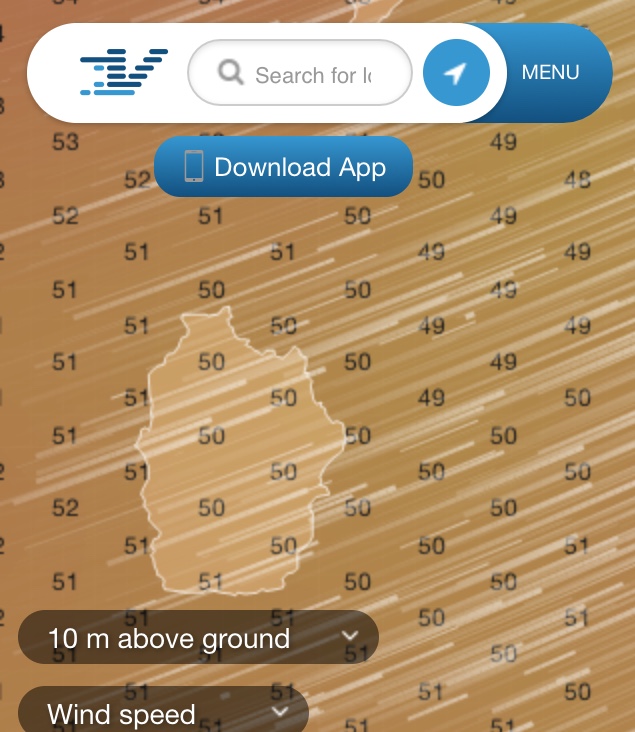
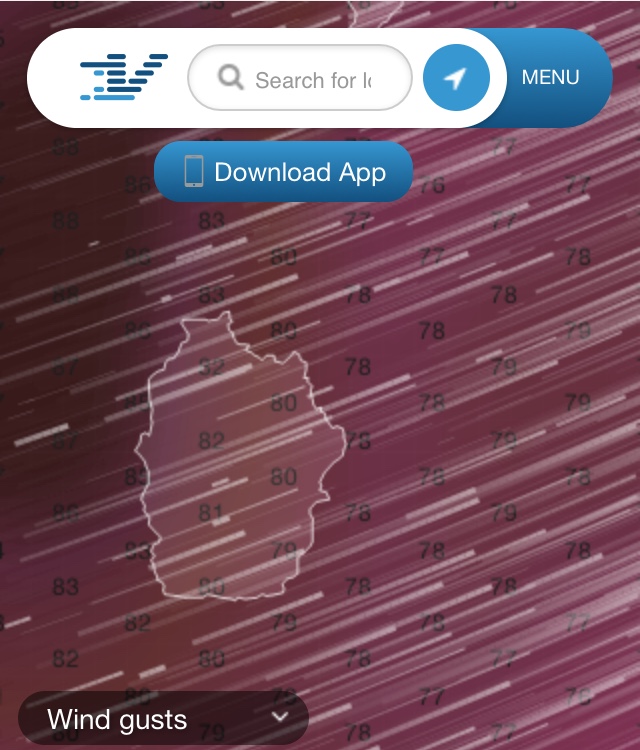
Here, we see a view of the ocean on what looks like a mildly choppy day. There are scattered whitecaps and bits of spray flying through the air. The winds were sustained at 50 knots with gusts of 83 knots.  

FullSizeRender.jpg

Since the winds cropped up out of nowhere, the seas did not have time to mature into the towering walls that you would expect with these winds. 

These conditions are Force 10 and should produce waves of 29-41 feet! These waves look no taller than 6-10 feet.

FullSizeRender.jpg

Why the discrepancy? Well, a few factors can come into play here. First is duration of the wind. Second is depth of the water.  

The water in the picture is about 400 feet deep close to the shore and 4000 feet deep just a bit past the shore. Deep water allows waves to mature into their full size without breaking, as the water is deep enough to support the wave and allow it to move without interruption.  

The second is the duration of the wind. At the time of this photo, the winds had only been at this level for about an hour. To fully mature into the giants of the Beaufort scale, they would need at least a full day.  

If you find yourself out at sea in horrible conditions like these bit feel like putting off reefing down to your storm sails “because the seas don’t look all that bad”, consider how hard it would be to reef once they pick up! 

Reef before the storm hits they way you are safe and prepared for the winds and seas to come! 

Things I Wish I Knew Before I Went Cruising

Cruising is the act of getting in your boat and going somewhere. Some people do this for a weekend, some people do this for a lifetime, but in the end, we are all just voyaging in a boat.

Back in 2012, when I first purchased Wisdom, I didn’t really know what I was doing, cruising wise. I lived aboard in a marina in Baltimore and dreamed of living on the hook, and eventually cruising, but I was afraid of the unknown. This is a list of things I have learned over the past 1.5 years of cruising that I wish I could tell myself back then.

Untie the lines

When I lived aboard in the marina, I always dreamed of living on the hook. I thought it would be so cool to anchor somewhere new every week and get back and forth to the boat by dinghy. To me this was the first step towards cruising.

I would go sailing every weekend and anchor out, but I was always in a rush to get back to the marina by Monday morning so I could commute to work.

What I should have done is stayed in an awesome creek that I loved and brought the car to there!

I didn’t have to get back to the marina, I could have just stayed at anchor, but I was afraid. Leaving the boat anchored in a calm and very protected anchorage was a foreign concept to me and I wasn’t ready to untie the lines. This meant that I was unnecessarily tethered to the pier and wasting marina fees that could have been saved up in the cruising fund.

When we went cruising, we had the good fortune of living on the hook for the first year as we made our way down the East Coast of the United States. Life on the hook is THE BEST! Granted, there are places that living on the hook is better than others. Some creeks in Maryland are surrounded by private land and there would be absolutely no feasible way to get to your car without trespassing on private property. Sure, you might get away with this on the first day, but the people will wise up and be waiting for you, and the gig will be up in a bad way!

Look for waterways that are cruiser friendly and live there. If you are uneasy with the idea of leaving your boat unattended at anchor, find a marina with a mooring ball field. What you want to do is get off the dock and out into the water. You need access to a public pier and some place you can leave your car (if you have a car). Explore a little and find a great spot, and don’t be afraid to ask someone with a dock if you could pay them a fee (weekly or monthly) to tie your dinghy up to, or maybe even to park your car in their drive way. This will cut your costs and give you the freedom you have been searching for.

Get a good dinghy

Your dinghy is your connection to shore, and it better be a good one. My first dinghy was a cheapo plastic shell from West Marine. I bought it used from Craigslist for $300. It was a waste of money. The thing rowed horribly and the box design towed terribly!

I then upgraded to a 13 foot wooden boat from Chesapeake Light Craft. This dinghy didn’t fit on the deck but towed well and rowed incredibly well. We used this dinghy for several years and for the first several months of cruising.

We changed dinghies because the 13 foot dinghy didn’t fit on the deck and towing a dinghy all the time is not very fun. We downsized to a Livingston 7.5 foot catamaran dinghy which did fit on the deck.

The Livingston towed well enough, and rowed well enough, but it’s best feature was by far the ability to ride on our deck! We took this dinghy all the way to the Bahamas, where we lost it because we were towing it in bad weather.

Don’t tow your dinghy in bad weather

This is a recipe for disaster. The dinghy will get tossed around and will either flip or get swamped. The result is the dinghy will then over stress the painter and break the line. Dinghies disappear quietly, and in the bad weather, you won’t be able to spot it among all the white caps and waves. This is an excellent way to loose your dinghy, so don’t do it!

Rowing is fine, but outboards are nice

Outboard motors are expensive. You need to buy them, and then you need to fuel them!

Oars, are cheap and will always work. We rowed for a year, even up to a mile from shore, instead of using a motor because we had oars and we didn’t want to have the expense of a motor. In the Bahamas, we salvaged an air-cooled Honda 2hp outboard and began using that to power the dinghy.

What we learned from this is that oars work just fine, but an outboard motor is nice! You can get places quickly, and you can go at any time you want without waiting for slack water.

Don’t stock up on food when you start cruising

I made this mistake. I thought that I was going to leave Baltimore where I had several grocery stores around me, and set off into the desert of a world with no places to buy food. I needed to have a lifetime supply of canned food on the boat so that I wouldn’t starve to death!

Everyone eats, and if you need food, go to the grocery store. There are these really cool devices called smart phones where you can search for grocery stores near you, and I can assure you there is always one within walking distance from any civilized anchorage.

One of my favorite places to anchor out was Harness Creek on South River. I liked it because I felt like I was “so removed” from society. There are a few mansions on the water and then trees forever! The place feels like you have been teleported to a new world and civilization is gone. Yeah, we were anchored in there for a few weeks when we started cruising and there is a grocery store about 15 minutes away from the anchorage.

Don’t do a big grocery run before you go, just untie the lines and be happy. When you run out of food, go ashore and get some more.

Don’t stay in the same state

Each state has it’s own flavor of cruising, and this is very apparent based on the laws that govern the waterways. Maryland is a state where the property line is dictated by the high tide water mark. This means that at high tide, there is no public land to walk on by a house. At low tide, all the land that has been uncovered is public (and you can walk your dog here legally).

Virginia sets the property line based on the low tide mark, meaning that there is no public land in front of a house. Maryland and Virginia also don’t have much in the way of public piers or good shore access from the water. It almost feels like they don’t want people living aboard in their waters. If you are in these areas, consider finding a mooring field to live in, as this gives you some rights when a land owner complains and the marine police come and start hassling you.

North Carolina is the most friendly state in our opinion. Everywhere we went, there would be wonderful free docks for us to tie up our dinghy and come ashore. The towns almost wanted us to come ashore and spend our money on groceries, meals, and supplies!

South Carolina was almost as inviting, but the dinghy docks required a fee.

Florida, while people talk about them cracking down on anchored boats, seemed really cruiser friendly! They had many free docks where we could tie up, even with free buses that would make stops right at the free dock! The boats that seemed to get hassled were the derelict looking boats, you know, the ones that you see listed on Craigslist for FREE. We take pride in our boat and make sure she always looks spiffy when she is anchored and we never had any problems with the police while we were anchored. That said, we did see the policy “check on” a dismal looking boat that was anchored next to us. The owner of the boat would yell at the police to “stop harassing him” which would usually lead to a morning show in the anchorage.

Keep your boat looking nice

You are judged by your boat. If your boat looks like a dump, people won’t want you near their stuff. They will fear that you are going to steal stuff and will frequently call the police on you. If your boat looks nice and you make yourself look presentable, people will usually invite you over for a meal and will want to get to know you! Appearances are what you are going to be judged on, and first impressions really matter.

Get an education

Educations come at a price. The price tends to be insane student debt but the result is the ability to land a job that you can work and go cruising. I went to college from 2004 to 2008, then dental school from 2008 to 2012. I graduated with a hefty sum of student debt.

The result is I earn enough money when I work to afford to buy items for the boat. This means that I can afford a nicer boat and it doesn’t look like a homeless person living in a free boat. This also means that I can work for a short period of time and afford to go cruising for an extended amount of time.

While we were cruising, we came across many many cruisers in the ICW. It seemed that there were two categories: No education and educated. The ones with no education were in 20-some footers with tarps over the boom (also called the liveaboard tent) and had no money for anything. Police frequently badgered these cruisers because the locals would complain about them. When these people pulled into port, the locals knew they had no money and were not going to offer anything to the town, but instead feared that they might rob from the townies. These people were all very nice and would not commit such forms of crime, but they were broke and they couldn’t afford to experience the towns they stopped in.

The educated people would show up on boats that were larger and much nicer. The boats were well cared for and the locals would welcome these people into their towns. Our interactions with police were always pleasant and usually involved them giving us advice on things to see in the town or places to eat! Having a degree also helps if anyone questions who you are or what you are doing. We arrived in one town after dark and were trying to find a (cheap) restaurant to eat in. A local saw us looking around the town and asked us what we were up to. At first they seemed suspicious and rather defensive, but once I introduced myself as Dr. So-and-so, they became totally relaxed and actually helped us find a great local restaurant that was still open!

Don’t wait

I waited for 5 years to go cruising because I always thought of another thing I needed to do before I could untie the lines and go. Truth is, the boat is still not ready to go and we have crossed an ocean! Once you have the basics (good ground tackle, good steering, good rigging, good sails) you are ready to go!

All that waiting was unnecessary because once we set off, it was amazing! Had Maddie never pushed me to go, I would probably still be in the marina coming up with more and more projects that I “need” to finish before we could go. When you are actually out there, you will figure out what you need, and you will then make it. If you prepare for every hypothetical case, all the time spent preparing for the things that never happen would be a waste of time. Do what you need as you need it so that you can get out there sooner.

Don’t buy electronic devices

Chart plotters look cool, but they are a waste of money! Anything that your fancy chart plotter can do, your phone can also do with a much cheaper app. Chart plotters, as well as other electronic devices will depreciate so fast, that they really become worthless and a waste of your valuable cruising money.

Even more of a waste of money than chart plotters are electronic autopilots. They are very expensive to purchase and to operate! They draw so much electricity that you will either need to run your motor or generator to keep them powered. Best off is to buy a reliable wind steering system that will let you keep your course without drawing endless amounts of power from your batteries.

Yes, a Monitor Windvane will cost you around $5,000, but that is a one time purchase! The unit will then run flawlessly forever without ever drawing a single amp from your batteries. Best of all, it is a simple system that works with ropes (something you are going to be very familiar with) so if something fails, it is easy for you to repair promptly and inexpensively.

Electronic autopilots might seem like they cost less than $5,000, but they really end up being too expensive to operate and you will never use it once you get a good wind steering system. Save your money and buy a Monitor Windvane. If you can’t afford it when you set off cruising, stay coastal and hand steer until you can save up and make the purchase. Then you will be ready to head offshore and have it steer you the whole way across the ocean!

The only electronic device worth getting is a good radio with integrated AIS. This will take all the guesswork out of sailing by night as well as navigating your way across busy shipping lanes.

Any other electrical gizmo that you can imagine is a waste of money and you should avoid falling into that dark hole of “gadgets that you need”.

Don’t sail close to shore

Shore is dangerous, that is how you get beached! Stay as far from land as you can. If you are tired, don’t force yourself to stay at the helm. If you have to stay close to shore and get tired, either anchor or trade watches, but do not risk falling asleep at the helm. One small mishap and you could find yourself looking at a hefty salvage bill!

Go Now!

I know this list sounds like a bunch of “don’t do this” and “don’t do that” but these are all mistakes that I had made and it would have been nice if someone had told me NOT to do them. Knowing this would have saved me time, money, and headache!

The most important thing that I wish someone would have told me is to just go now! Life is short and we should enjoy it to the fullest. If cruising is something you want to do, then go do it!

Just start small and as you feel more and more confident, you can then take further and further steps in your cruising career. You don’t have to make your maiden voyage an ocean crossing. Just take a weekend in a creek and venture off from there! A great place to really get a feel for cruising is the ICW. You really become self sufficient while you are in the ditch, and if you need food, repairs, or entertainment, it is only the next town away! We really grew the most in the ICW and found that cruising is a lot easier than we thought it would be. Maryland isn’t really an easy place to cruise, and neither is Virginia. The water is too isolated from the land. The ICW almost seems inviting to the prospect of cruising. Designated anchorages are easy to come by and the worst weather you can see in the ICW is nothing compared to being in the Chesapeake Bay or the Atlantic Ocean.

Get going and have fun cruising!

Electric Outboards, are they worth it?

Electric propulsion is growing in popularity! A few years back, the thought of something being powered by an electric motor was just a distant dream.

I remember when our school was “visited by an electric car.” The engineering department at the local university put a considerable amount of focus and effort into creating an electric vehicle. This car was something out of a science fiction movie, with everything being ultra sleek and efficient in an attempt to barely meet the minimum standards of what a normal citizen would consider to be a “car”!

Jump forward a few years and electric cars are common place on streets and parking lots. They no longer draw a crowd around them when they appear, as they have become somewhat accepted and commonplace.

The same seems to have occurred in the marine environment. Boats are being powered by electric motors instead of by an internal combustion engine. Large boats have inboard electric motors, and their dinghies are being fitted with electric outboard motors.

When it comes to propulsion for your dinghy, is it worth the upgrade to electric? Well, it depends on what you want.

The most prominent and trusted brand in electric outboard motors is Torqeedo. They are the motor that people picture when they are talking to someone about electric outboards. This is because Torqeedo made the perfect electric outboard.

The battery is included in the motor assembly, so it looks like a clean installation. Then they made the battery information clear and easy to understand! When you are motoring along, it tells you how long you can sustain this speed and how many miles you can go at this speed. This made it easy for people to realize and understand that you can’t go full power all the time! The faster you go, the shorter a distance you can motor. The slower you go, the farther you can go on a single charge.

So, what are the great advantages to a Torqeedo motor? Well, first of all, the thing is silent! The motor is powered by electricity, not thousands of explosions per minute. This means that the motor will be silent when you are coming in to dock, which makes it easy to communicate with people in the boat with you as well as those on shore. How often is it that someone is trying to tell you something but you can’t hear them because you are sitting right next to the noisy outboard? That problem disappears!

The drawback to this very green situation is that the motor runs on electricity and that power won’t just fall out of the sky! Or will it? Charging the battery is a slow process. If you have the time and enough solar panels, you can easily charge the battery with the sun, which does mean that power is falling from the sky. Charging the battery up is going to take a few hours, whether you have a giant solar array and all the sun in the world, or if you are plugged in to a generator. Charging takes time and that time means that you can’t use the outboard while the charging is taking place.

I had the opportunity to speak with the Torqeedo representative at the Annapolis Boat Show in 2018, and he said that the outboard will charge overnight when plugged into the mother ship. This is fine, but the problem of generating the power just got shifted over to the main boat.

In our opinion, the boat or the dinghy can be electric, but not both. We have an electric motor in our sailboat, and therefore can't run our motor to generate the power to charge the outboards’ battery; we already need that power for the boats battery bank! We rely on solar power to charge up the boats batteries, and barely have enough for that task, throwing in the need to charge another battery is simply out of the question.

We find that when we anchor somewhere, we then motor around in the dinghy to get to different beaches, snorkeling spots, or shore. We have to be conservative with our motoring when on the boat, since we have limited range with our electric motor, and the thought of having to be equally conservative in the dinghy would get old really fast!

Sometimes, we feel like we are putting on a show in the anchorage, as we will go between shore and our boat a few times before we actually “go to shore.” This is because we may have forgotten something and need to return to the boat to fetch it before we go. With an electric outboard, these “whoops I forgot something” trips might be too much and consume your range too quickly. We also do a fair amount of exploring by dinghy, going into uncharted waterways where we can explore. Having the worry of range will quickly take away from the carefree joy that comes from exploring new mangrove canals in an island you just landed on.

For these reasons, we have a gasoline outboard which we use on our dinghy. We have a 2hp Honda air cooled outboard, because it is light enough that I can carry it in one hand, which makes mounting it on the dinghy even easier, and it has an internal gas tank that holds a quart of fuel.

The setup is just as clean of an installation as the Torqeedo, and the range is probably also very similar, but the charge time is where the Honda runs ahead of the Torqeedo.

Since the fuel tank is 1 quart, we simply carry a 1 quart mason jar of gasoline in the dinghy, along with a funnel. Should we find ourselves low or out of fuel, all we need to do is decant the jar of gasoline into the outboard motor, then we can fire back up and continue on our way. Technically, that was the recharge phase which would take the Torqeedo hours to complete.

The Honda is much louder, and you can’t really have a conversation in the boat while motoring, but you will get there faster than rowing, and you can carry an entire “tank of fuel” with you.

We feel that if you have an electric motor on your boat, maybe a gasoline outboard would be a good idea over an electric outboard. This is because charging is the biggest hurdle to overcome with electric motors, as the power has to come from somewhere and if the sun isn’t power the solar panels and the wind isn’t powering the wind generator, you will need to fall back on fossil fuels for electrical production.

If you have an internal combustion motor in your boat, then you can generate the power needed for the outboard motor’s charging, and suddenly, the thought of producing power for the outboard’s battery doesn’t seem like such a stressful point!

So, if your boat is electric, consider a gasoline outboard for your dinghy.
If your boat is not electric, an electric outboard would be a fun way to enjoy the joys of electric propulsion while still having a reliable source of electricity for the charging times.