Losing Tooth III

Tooth III is a Livingston 7.5. This is a hard dinghy with a catamaran hull. They are very stable boats and very useful boats. They are a bit wet when motoring or rowing into a seaway, as they have relatively low freeboard so any splash or spray will come right in and soak everyone, but they certainly are a good dinghy. 

We were anchored off of Nassau when we decided our next destination would be Allen's Cay in the Exumas. This destination was only 37 miles away from us, but it was upwind. The winds were forecasted to be 20-25 knots for the next several weeks, so we figured that there was no point in waiting for better weather since it wasn't going to change for a while. We were also told that on the flats of the Bahamas, the waves "are like waves in the ICW, the water is too shallow for them to develop so they won't be more than a few feet." 

With that in mind, we set out it make the windward trek towards Allen's Cay, and we decided that we would tow Tooth III since we were going to be sailing over shallow flats. The idea was that if we ran aground, we would need to row out a kedge anchor, and to do that we would need Tooth III in the water. Since the seas would be relatively calm, we figured we would just tow him along. 

Well, the seas were not calm and it is much deeper than charted. Everywhere on the flats, Conch Spit, Yellow Bank, and White Bank is around 15-20 feet deep. We sailed over waters charted as 5.7 feet and had 8 feet under the keel. We draw 6.5, so the water there was 14.5 feet! 

Not only was the water deeper, the seas were much higher than in the ICW! We were beating in to 6+ foot waves, and poor Tooth III was being dragged through all of this. Spray would slowly make its way into his hull and I would have to heave to, pull him up to us, and bail him out. When he was empty, he sat higher and kept most of the water out. As he filled, he would sit lower and then waves would actually break into him, filling him much more quickly. 

At one point, we tacked and then looked back to make sure Tooth III was doing ok, but he wasn't there! We pulled the painter in and when we got to the end, the line had snapped. Poor Tooth III had quietly stayed behind, probably swamped and sank to the bottom, if not awash with the seas. We turned around and began searching for him, but it was futile. The strong winds made every whitecap around us look like him, and if he were awash, we would never see him in the seas. We searched for an hour, but sadly had to call it off and return on our voyage, without Tooth III.

Tooth III was a very good dinghy, and we promptly began searching for a replacement Livingston 7.5 dinghy, but so far have not found one yet. 

This experience taught us a valuable lesson that we hope you can learn from without going through it yourself. It turns out that losing a dinghy is very common and it is especially common when towing. Painters break quietly and uneventfully, leaving your dinghy behind as you work your way forward.

The lessened learned is never tow your dinghy over long distances. If you tow, look back at your dinghy every 10 minutes to make sure it is still there. Have multiple painters attaching to multiple points on it.  

When we tow Sophia, our inflatable dinghy, we have a massive painter tied to her bow. A stern line tied to the painter with a rolling hitch (should the attachment point at the bow fail) and a second painter tied through the oar lock (so if the primary painter fails, Sophia would be towed sideways until we notice it and rectify the situation.).  

Ideally, always carry your dinghy in davits or on your deck, where they are out of the water and in view of you as you are sailing. If you must tow, have redundancy in your towing system so that should anything fail, you will still have your dinghy in tow. 

Getting Internet in the Bahamas

In the Bahamas, you can either get internet access on your phone by paying an exorbitant amount of $10 per day for 500MB or you can get a BTC (BalTeCo, Bahamas Telephone Company) SIM card and access internet like a local would. 

BTC stores are all over the Bahamas and usually in walking distance from any port of entry. Once you have a SIM card, you will need to do these steps to get and to renew internet on your phone. 

First, you need to have money on your account. To do this, you can either call BTC and add funds to your account, but this is a very slow and ineffective way. The other way is to download and install the BTC app and register your account with it. 

In the App, there is a menu called BTC Top Up, where you can add money to your account with a credit card. Once you have money in the account, you can then follow these steps to convert your money into data.  

FYI, the best value plan costs $35 + 7.5% tax, so you should add $38 to your account when you Top Up. 


IMG_2282.PNG

The first step is to call *203#  

This will take you to the BTC menu option where you can carry out all changes to your account and convert money into products. 

IMG_2283.PNG

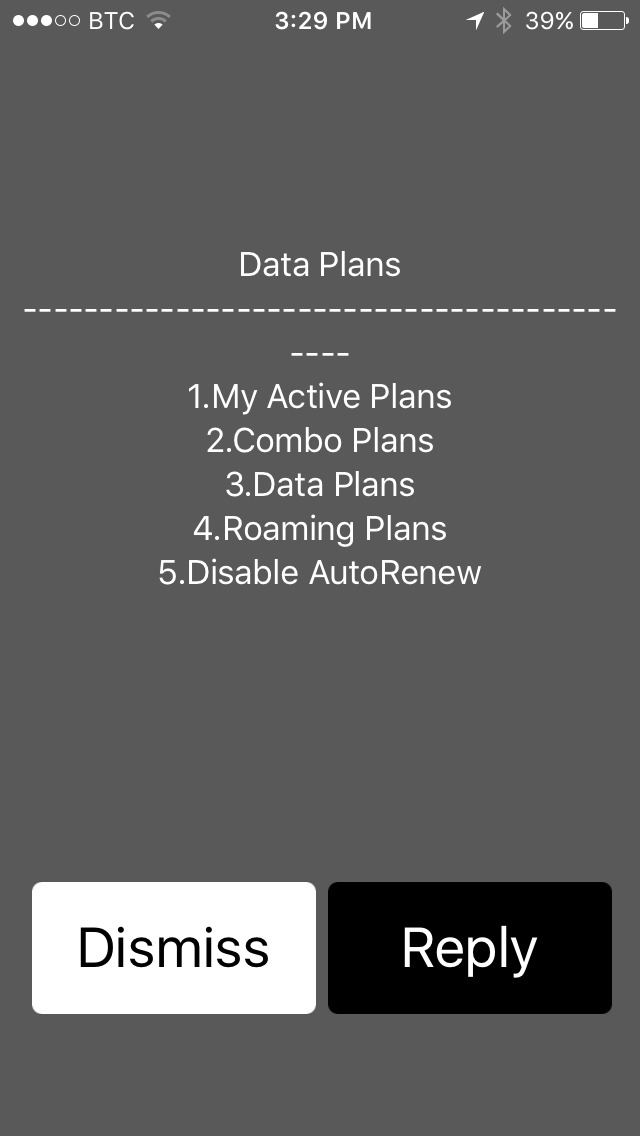
When you hit send, this screen will pop up. I speak English, so I selected option 1. 

IMG_2284.PNG

Option 1 shows you what plan you currently have. 

Option 2 is voice and data, but if you have WhatsApp, then you can make calls over the internet and won't need to spend extra money on voice plans. 

Option 3 is just data. 

Select Option 3. 

IMG_2285.PNG

Now it gives you the choice of the different data plans available. Option 5 has the best value of dollars per gigabyte, and costs $35 + 7.5% tax, so a bit under $38. 

Select option 5. 

IMG_2286.PNG

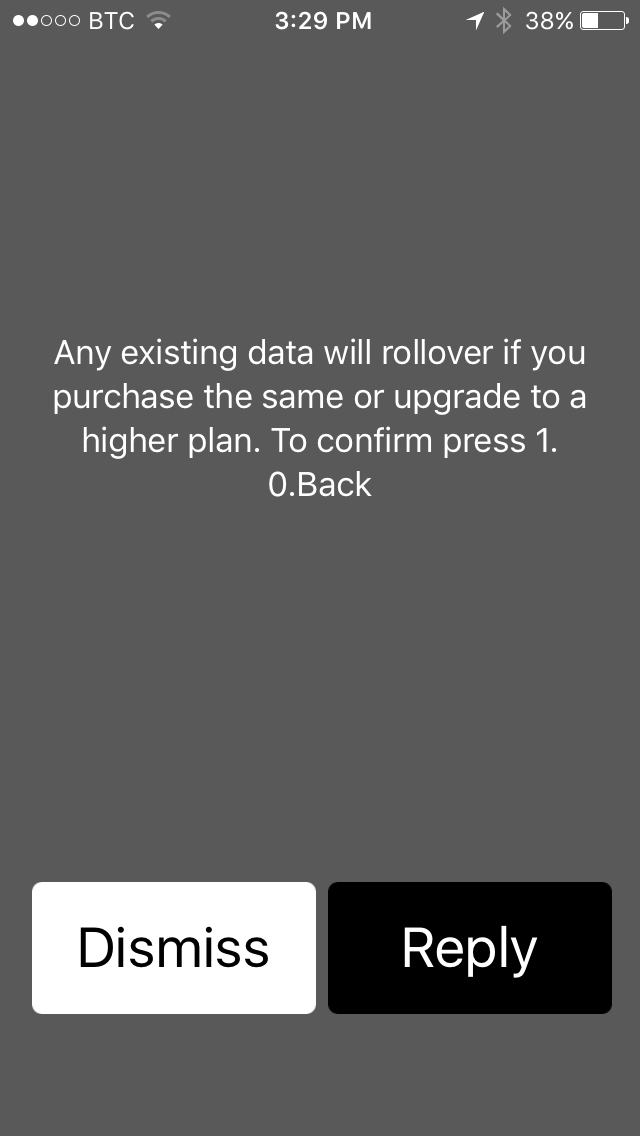
Press 1, and you have now selected your new data plan.

The call will now terminate and you will not have internet. You now need to turn off and restart your phone. When your phone turns on, you will receive a text message from BTC letting you know that you have renewed your data plan and that you need to restart your phone to activate it. You now have internet access! 

The BTC App's Quick Top Up requires internet access to work, so it is wise to keep money in your account so that if you run out of data, all you need to do is dial *203# to add more data. If you find yourself without money in your account and no internet access, you will have to wait until you get to a BTC store or try the long process of waiting on hold for the next available BTC representative to add funds to your account for you. 

With that you are all set to enjoy internet access while in the Bahamas! 

Food Prices in Nassau, New Providence, Bahamas

They say that food prices are higher in the Bahamas, and it's true. Nassau is known for having the best prices on foods, as it is the biggest city and has more volume of imports coming to it. While the prices are cheaper than other places, the prices are still higher than stateside prices.  

Take a look at these two receipts from different grocery stores. 

IMG_2485.JPG
IMG_2483.JPG

Taxes here are 7.5%, so the price that is already higher is about to climb even more! It is very easy to spend way more than $100 on a small grocery run, making it very expensive to provision for a long trip here without destroying your cruising budget. 

Ocean Acidification and Coral Bleaching

For years, an epidemic has been sweeping around the world, threatening the survival of a pivotal ocean ecosystem. As carbon dioxide levels climb in the atmosphere, the levels of carbonic acid also climbed in the ocean waters. Increasing levels of carbonic acid lead to a lowering of the oceans pH, and causes the water to become more acidic. This change in pH affects all living organisms in the water, which depend on a rather basic pH of 8.2. Current ocean pH is around 8.1, which might not sound like a big difference, but it is! 

Enzymes in fish, for example, are pH dependent, and operate best at around 8.2. This slight change in pH means that many systems now have to work harder to survive or can't survive at all! Corals are one such organism that suffered severe casualties as the pH dropped. 

Corals are tiny polyps that live on a calcium carbonate structure. As they grow, they deposit more calcium carbonate beneath them and this "grows" the coral. The true life only lives on the surface of it, and if the water quality is not correct, the polyps will die, leaving behind the white skeleton of the structure behind. 

Corals all over the world were bleaching and dying and it was a critical fear that the entire ocean ecosystem may collapse! Thankfully, there has been a lot of research in ways to bring corals back to life, by selectively breeding stronger and more resistant strains of corals, and then re-seeding these back onto reefs.  

IMG_2559.JPG
IMG_2530.JPG

You can see the large white patches of this coral reef. These are areas that have bleached away, but you can see the new growth of corals on top of the dead structures, these are corals that are recovering!

IMG_2536.JPG

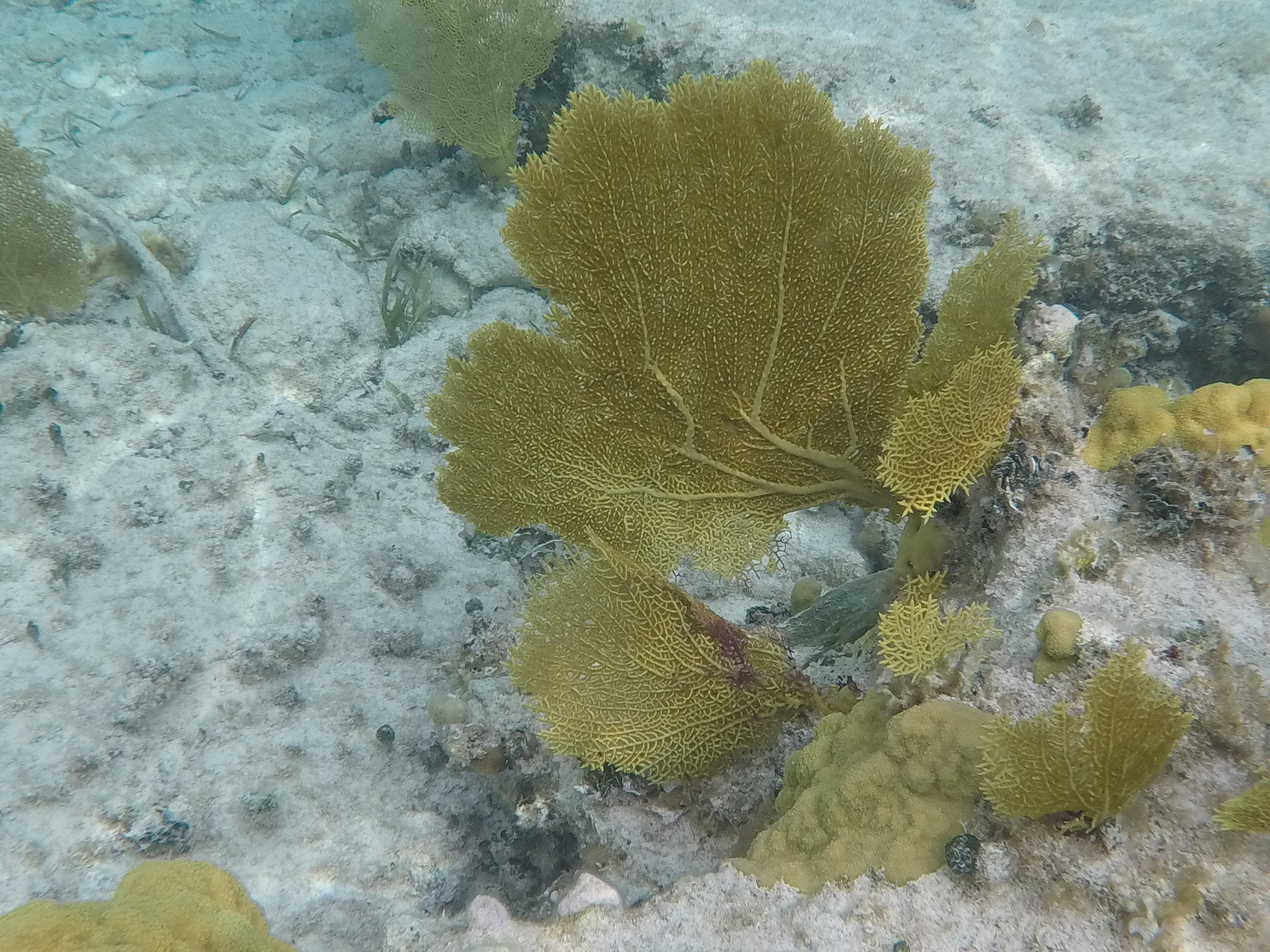
Large structures that were once completely covered with corals, had become barren wastelands, but now seem to be making a comeback, at least in this small reef in the Berry Islands.

IMG_2570.JPG

Seeing corals bounce back gives hope that the oceans will evolve and survive, keeping life on this planet going.

Snails

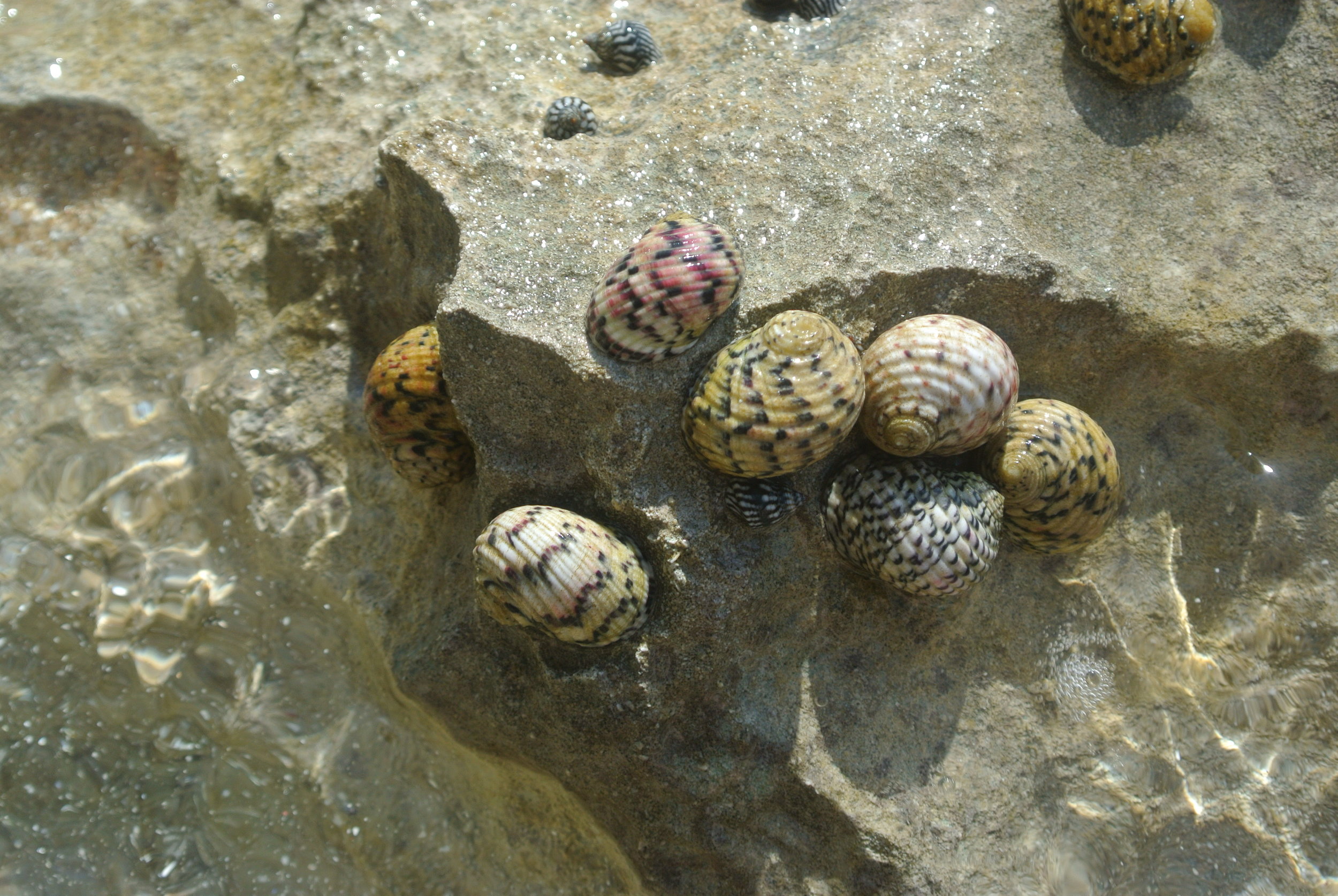
Nature is full of majestic wonder. On this simple rock located by the waters edge, we found a rainbow of patterns and colors clustered together.

IMG_2561.JPG

These snails, while they appear to be very similar, all have slightly different shells that just make this rock glisten with beauty in the sun. Sometimes you just need to slow down and appreciate the little things that are right before your eyes!