Cruising Mindset

Cruising is not just the act of taking long trips on your yacht, it is an entire mindset that becomes you as you cruise. 

Maddie and I have cut the dock lines to society and set off as full time cruisers. We have no schedule, no itinerary, no nothing! We simply pick a place and start heading there. We get there when we get there is a good way to sum it all up. 

When we had taken "extended vacations" before that we called cruising, we had a set amount of time available to us. We had a destination in mind and a return date already set. Everyday that we weren't heading towards our destination was a day lost, because we did have to turn around at some point to return to work. 

While the trips were relaxing, they were still speckled with stress. If the winds were not right, or we didn't get far enough on a day, we felt like we might not actually get to our destination and we would be forced to turn around by our jobs. 

Now, we don't worry about these sorts of things. We wake up when we wake up, raise anchor when we feel like it, and sail until we decide to stop for the day! 

We were anchored in Harness Creek in South River when we decided to visit a little town called Easton. This town is located far up a river and was rather far for us by sail. We didn't care and we set off towards this new destination.  

After three days of sailing, we were nearing this town on the river and were only 0.3 nautical miles from the place we want to anchor for a while when we ran aground. 

Running aground is never a fun time, but the truth is it isn't that bad for us.  Wisdom, our sailboat, has a full keel. Running aground simply means that we are sitting on the bottom of the river with no worry about damage to our undersides. 

We checked the tide table and found that it was nearly low tide, and the tide was going out. We tried to heel over with the sails, kedge off, even be pulled off by the assistance of a passing powerboat. Alas, the tide had gone out too fast and our waterline was about 6 inches higher than normal. Our keel was stuck in the mud and our only hope was to wait for high tide to lift us off. 

The tide would take a few hours to come back up, and instead of stressing our situation, we simply got out some cheese and a game to eat and play in the cockpit while we waited. 

That is the true sense of cruising. Time no longer matters, as you simply take each day as it comes and each moment as it presents itself. There is no worry about deadlines nor schedules, as we are merely sailing along as best we can in the direction of our next destination. 
Blister Repair

Osmotic blisters may be the bane of a fiberglass hull, but it is a small problem that has been blown way out of proportion. The truth is, all hulls suffer form some form of degradation: wood hulls rot and get worms, fiberglass hulls get blisters, steel hulls rust, and aluminum hulls disappear by galvanic corrosion. You simply need to choose a hull material that you feel comfortable repairing yourself.

Blisters are caused by the osmotic pressure of water that passes through the layers of fiberglass and exposes areas of delamination. When the hull is lifted from the water, these areas will bulge out like lumps. When you crack them open, water will pour out with intense pressure. 

Fixing blisters can be a very costly endevour if you pay to have someone else do it, but they are actually very easy to fix yourself. You only need a grinder and an sander. 

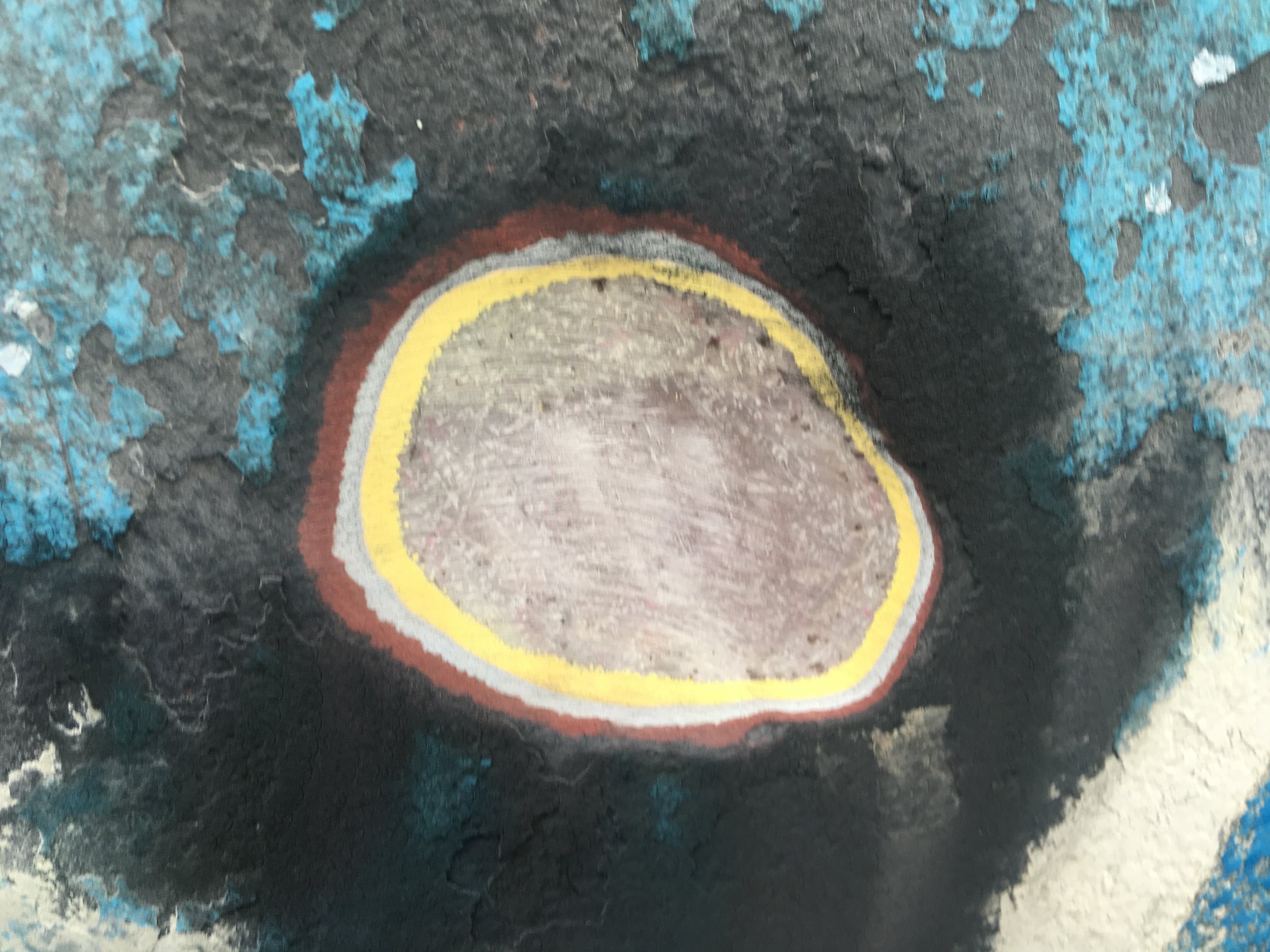
Using a grinder, you can rip through the blister, tearing out all the delaminates fiberglass that is overtop. Then you can begin to tear out laterally, as you follow the damage from the blister. As you work, the affected area will be wet and have a slight brown color to it. You simply want to grind away until you no longer see any brown or wet, and you can't even see where the different layers are of the hull. 

At this point you will have a gaping hole in the side of your boat. This may seem like a major problem, but it is easy to fix. 

IMG_0296.JPG

If the blister is not too deep, the repair is very straight forward. If the blister is rather deep, then you simply need to take a few extra steps to fix it. Neither of these two methods are difficult, and both can be done in a few minutes. 

If the blister is shallow, and not passing through many layers of the hull, you can simply fill the hole with thickened epoxy. How deep is too deep for just epoxy is dependent on the hull itself. If you have a 1/4 inch deep hole on a 1/2 inch thick hull, you have just compromised 50% of the hull in a blister! Yet, if the hull is inches thick, this is a small surface scratch that is inconsequential to the total structural integrity of the hull. 

In my case, the hull in this area is 1.5 inches thick, and the blister was 1.4 inch deep. This comes out to be 1/6th the hull thickness, so I simply repaired it with thickened epoxy. 

Regular West System Epoxy can be mixed well, then 406 thickening agent can be added until the entire mixture looks like thick peanut butter. This thick mass can then be stuffed into the hole and wiped over with a plastic spatula. The spatula will contour the blisters surface to be flush with the hull, taking all the work out of fairing the repair job! It is just that easy, simply smear it in and smooth it off! 

If th blister is deep, you can wet the area with untickened West System Epoxy, and then add some chop strand mat to the hole. This will provide new fibers that will add in the structural integrity of the entire repair. Over this layer, you can then add more unthickened epoxy to fully wet the strands of fiberglass. When they are all wet, you then proceed with the thickens epoxy just like before. Simply smear it in and scrape it smooth! 

Blisters may be an eyesore, but they are more an annoyance than anything else. Small blisters will not sink your boat, only it's resale value! Keeping your boat out of the water through winter allows the hull to dry out well and reduce the incidence of blisters as well. If you live aboard though, your boat will always be int eh water and blisters will become a fact of life when you haul out. 

You can choose to ignore them until they get big, or you can choose to repair each and every one of them as they occur. Which ever way you choose to go with, just keep in mind that blisters are not a death sentence to a fiberglass hull, simply an annoyance you get in response to your relaxed maintenance schedule of haul outs. 

Casting into the Past

Over 5000 years ago, humans entered the Bronze Age when they melted and mixed copper with tin. This simple combination of metals unleashed a huge technological boom as tools could be made out of this stronger and more durable material.

Copper is a great metal for working because it bends easily. Tin is also a very soft metal. These two metals are great for making shapes, but their softness will cause them to deform easily while in use.

This is why you never see a copper wrench, the handle would bend at the first sign of resistance.

Bronze is the combination of these two metals, and is ridiculously strong! This allowed them to create more advanced tools that also lasted longer. Weaponry followed, as a bronze sword would hold its edge far longer than a copper blade would.

Over the past few millennia, humans have mastered new metals, advancing through the ages until we finally arrived at today, when a single person can build a foundry in a day that is capable of melting bronze in a few hours!

Technology may have improved dramatically, but as I stand by the foundry that is powered by a propane torch, I can't help but feel the wonder that they must have felt when they also stared into the pot of molten bronze.

The cherry glow of the stone around the metal is enticing as the sky reflects on the surface of the liquid metal. It almost looks like looking into a mirror where magical wonders lay on the other side,

As far as we have come with our advancements, there is still something beautiful about the sight of molten metal ready to be cast into the shape of your desire.

Countdown to Castoff

We are planning to cast off in a few days now, and all of a sudden, a rush of clarity has come to light. When we first decided that we would go on this voyage, we made lists of all the things that need to be accomplished for us to go. The lists were long and I worked all through the winter to complete each task.

As we have been getting closer to our departure date, the list has gotten even shorter via a different method: we have been removing "needed" items from the list. This has dramatically shortened the list until we reached a point when the list was gone. I do not remember scratching off the last line item, and I don't recall us discussing the removal of the last line item. Sadly, I can't even tell you what the last line item was! All I know is that it is gone and we are going cruising.

This clarity that has overcome both Maddie and me, is the clarity that there should have never been a list from the beginning. As we sail, we will pick things up as well as discard unneeded items. We will, in effect, prepare for the journey as we progress through it!

Yes, there are obvious safety items that you should carry on board before a long voyage: life raft, EPIRB, and updated charts of the waters you will be cruising are the first that come to mind, and were also the first on the list while the list still existed.

The truth is, even if we had infinite time and managed to cross off every line item on the list in preparation for our voyage, we would still be grossly unprepared for it.

Packing to go cruising is like moving into a new apartment. There are two ways of doing it:

Option 1 is to go to a store and buy anything and everything that you think you will need. In this method, you are only allowed to go to the store once, and never again. If you don't buy it right now, you will never have that necessary item that you might need for your daily life! Sounds kind of scary to do it this way; what if you forget something, how will you do without? Worst of all, you haven't even seen your apartment yet, so you are merely guessing at what you will be needing to fill it and make it a home.

Option 2 is to move into your new apartment with the bare essentials: a bed, toothbrush, and some food for the next few days. As you need things, you can simply go out and pick up what you need in small trips. Now moving in doesn't sound so scary, you get there, figure out what you need, and then go get it as you need it!

Most people view preparing for cruising as Option 1. They will fully load their vessel with everything they can possibly imagine needing. This will be very expensive and also wasteful. Buying everything up front is a tough bill to confront. Worse yet, if you buy something because you think you might need it and end up never using it, you technically just wasted all that money!

We started out with the mindset of Option 1, but as the departure date got closer, we slowly switched over to Option 2. Option 2 is a very doable option. As you cruise, you will discover things that you are missing. When these discoveries are made, you simply write them down in a list. The list will grow as you sail along until you hit a port where you can make all of these purchases. The list becomes very handy when shopping because it avoids impulse buying. If it is not on the list, you don't buy it! You will also find that as you sail along, you will scratch things off the list before you have the opportunity to purchase them because you will realize that you can get by without buying.

All of these viewpoints will help you get cruising sooner and cheaper!

The most important item not to pack when you first cast off is food. I have made the mistake several times of buying a whole lot of food right before we cast off because we will need it! The truth is, people eat everywhere, so you will never be far from a grocery store. All the fresh food I bought will spoil, and the canned foods will last us months after we return from the trip.

The right way to pack food is to untie your docklines and head out. Don't stock up on anything, simply get going! As you sail along, you can stop at any port and pick up the food that you need once you are already cruising.

An important point to make though is that you should never cast off and instantly go on a long distance voyage. It is best to slop around the coast for a bit, getting you acquainted with what you like to cook and eat while cruising. Then you can make a list of what you want for the upcoming long leg in your voyage and pack accordingly.

Maddie and I are setting off for a very long voyage in a few days, and we have merely stopped preparing the boat in preparation for the voyage. We will unite the lines and shove off on our adventure. We plan to spend 3 months cruising the Chesapeake Bay, which is riddled with towns along the water to re-provision as we go until we do our first long leg to Bermuda.

Cutting Edge Boat Design

When people picture a boat in their head, they are likely either picturing a classic yacht design or an ultra-modern yacht design. This holds true with sailboats and powerboats alike. We never seem to picture any of the designs that live in between these two extremes.

Classic yachts seem to be a timeless design that most consider beautiful to look at. This is why when you go into a novelty store, all the models of sailboats are "classics". The toy manufacturer doesn't have to worry about brand details or anything, it is simply a "sailboat".

On the opposite end of the spectrum, you have the modern day designs. Contemporary yachts have plumb bows and sugar scoop sterns, cabin tops that are long and sleek, almost disappearing into the deck. The rigging is radical and tall and the keel is thin and deep with a bulb at the end.

This may be the current modern design, but little more than a decade ago, this was far from the case. The bows were raked, and the transom was pointy. The cabin top popped out of the deck like a house with large port lights lining the sides. These sailboats do not have the lines of a "classic", yet they are not the contemporary design either. What are they other than an "Old Model"?

When yachts turn into an older model, you can really begin to appreciate the beauty or question what the designer was thinking. On a new boat, you will be all wrapped up in the experience of seeing this creation for the first time! You will be surrounded by sales people telling you this is the latest and greatest and other onlookers who are awestruck at the wonder of its beauty. 20 years later, will it still have that effect on you as you walk down the pier to look at it?

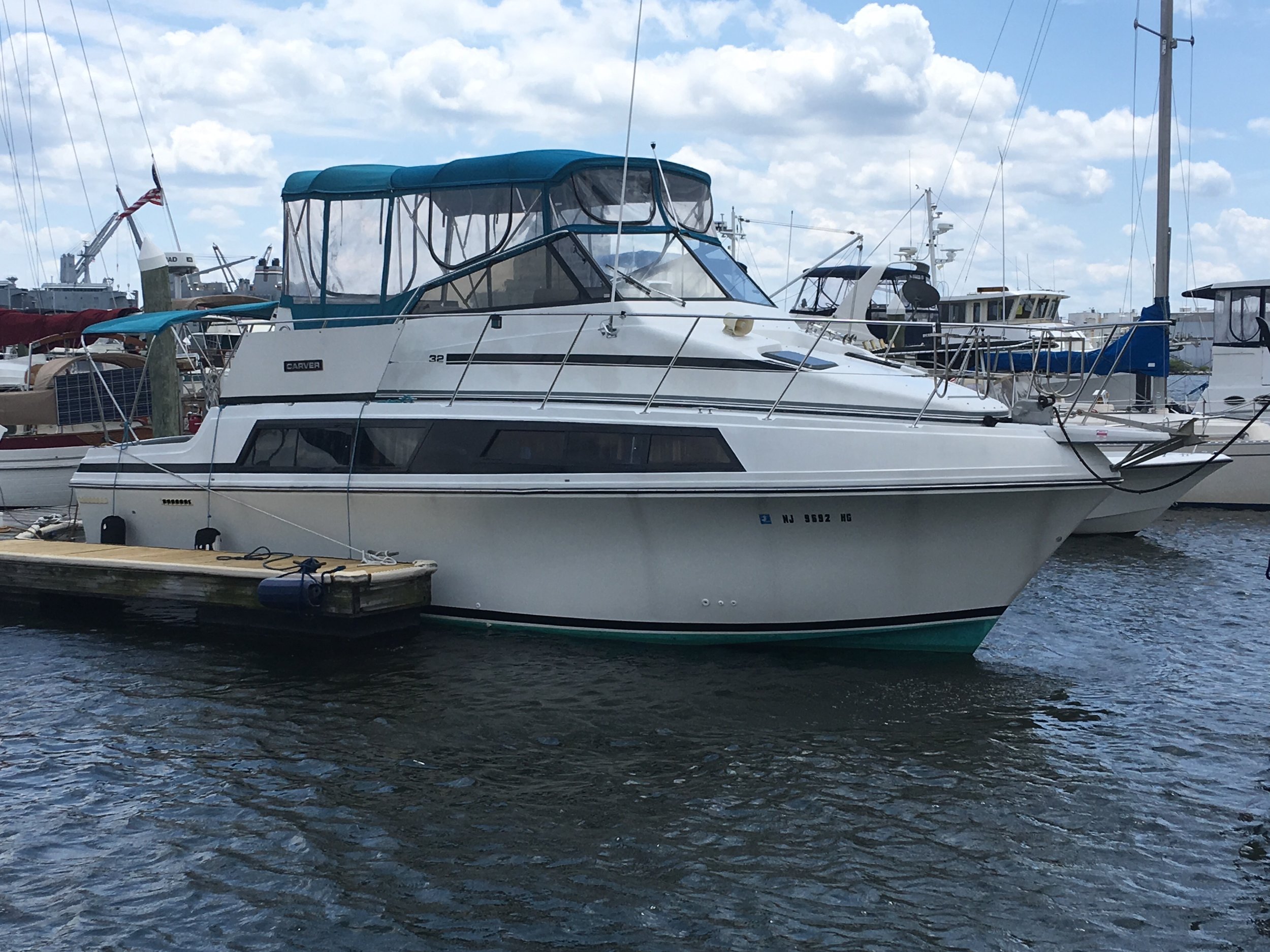
Carver, a popular powerboat manufacturer is known for creating "original" designs. I have heard them affectionately referred to as Clorox bottles, since they are short with very high freeboard and all white. The contemporary Carvers I see are interesting to look at, and I never thought about it past that point.

FullSizeRender.jpg

Then one day, an older Carver came into the marina and I looked at it in confusion. It looked like many layers of boats piled on top of each other, each more confused about its purpose than the last!

It got me thinking though, when this boat was new, did people look at it in the same way we look at modern yachts? Did the owner love the layers look? Or did they question what the designer was thinking as he wrote the check to buy it?

It also made me wonder if we will look back at the current trend in designs with the same shock as I looked upon that boat, or will we still find the modern yacht pleasing to look at?

Let me know what you think about the style trend of modern yachts in the comments down below. What are your favorite features that you would like to see continue on in future designs?