Cruising Mindset

Cruising is not just the act of taking long trips on your yacht, it is an entire mindset that becomes you as you cruise. 

Maddie and I have cut the dock lines to society and set off as full time cruisers. We have no schedule, no itinerary, no nothing! We simply pick a place and start heading there. We get there when we get there is a good way to sum it all up. 

When we had taken "extended vacations" before that we called cruising, we had a set amount of time available to us. We had a destination in mind and a return date already set. Everyday that we weren't heading towards our destination was a day lost, because we did have to turn around at some point to return to work. 

While the trips were relaxing, they were still speckled with stress. If the winds were not right, or we didn't get far enough on a day, we felt like we might not actually get to our destination and we would be forced to turn around by our jobs. 

Now, we don't worry about these sorts of things. We wake up when we wake up, raise anchor when we feel like it, and sail until we decide to stop for the day! 

We were anchored in Harness Creek in South River when we decided to visit a little town called Easton. This town is located far up a river and was rather far for us by sail. We didn't care and we set off towards this new destination.  

After three days of sailing, we were nearing this town on the river and were only 0.3 nautical miles from the place we want to anchor for a while when we ran aground. 

Running aground is never a fun time, but the truth is it isn't that bad for us.  Wisdom, our sailboat, has a full keel. Running aground simply means that we are sitting on the bottom of the river with no worry about damage to our undersides. 

We checked the tide table and found that it was nearly low tide, and the tide was going out. We tried to heel over with the sails, kedge off, even be pulled off by the assistance of a passing powerboat. Alas, the tide had gone out too fast and our waterline was about 6 inches higher than normal. Our keel was stuck in the mud and our only hope was to wait for high tide to lift us off. 

The tide would take a few hours to come back up, and instead of stressing our situation, we simply got out some cheese and a game to eat and play in the cockpit while we waited. 

That is the true sense of cruising. Time no longer matters, as you simply take each day as it comes and each moment as it presents itself. There is no worry about deadlines nor schedules, as we are merely sailing along as best we can in the direction of our next destination. 
Blister Repair

Osmotic blisters may be the bane of a fiberglass hull, but it is a small problem that has been blown way out of proportion. The truth is, all hulls suffer form some form of degradation: wood hulls rot and get worms, fiberglass hulls get blisters, steel hulls rust, and aluminum hulls disappear by galvanic corrosion. You simply need to choose a hull material that you feel comfortable repairing yourself.

Blisters are caused by the osmotic pressure of water that passes through the layers of fiberglass and exposes areas of delamination. When the hull is lifted from the water, these areas will bulge out like lumps. When you crack them open, water will pour out with intense pressure. 

Fixing blisters can be a very costly endevour if you pay to have someone else do it, but they are actually very easy to fix yourself. You only need a grinder and an sander. 

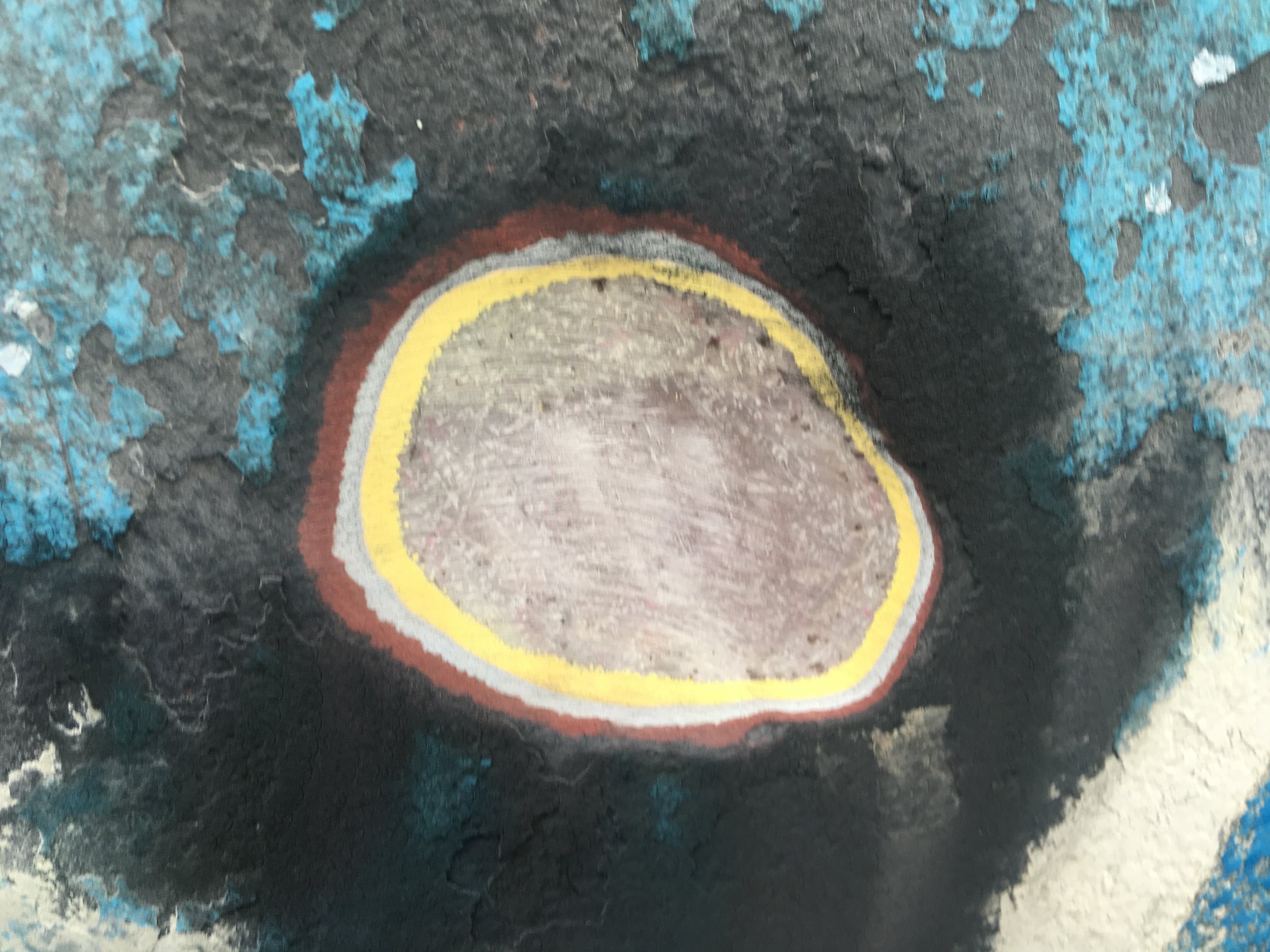
Using a grinder, you can rip through the blister, tearing out all the delaminates fiberglass that is overtop. Then you can begin to tear out laterally, as you follow the damage from the blister. As you work, the affected area will be wet and have a slight brown color to it. You simply want to grind away until you no longer see any brown or wet, and you can't even see where the different layers are of the hull. 

At this point you will have a gaping hole in the side of your boat. This may seem like a major problem, but it is easy to fix. 

IMG_0296.JPG

If the blister is not too deep, the repair is very straight forward. If the blister is rather deep, then you simply need to take a few extra steps to fix it. Neither of these two methods are difficult, and both can be done in a few minutes. 

If the blister is shallow, and not passing through many layers of the hull, you can simply fill the hole with thickened epoxy. How deep is too deep for just epoxy is dependent on the hull itself. If you have a 1/4 inch deep hole on a 1/2 inch thick hull, you have just compromised 50% of the hull in a blister! Yet, if the hull is inches thick, this is a small surface scratch that is inconsequential to the total structural integrity of the hull. 

In my case, the hull in this area is 1.5 inches thick, and the blister was 1.4 inch deep. This comes out to be 1/6th the hull thickness, so I simply repaired it with thickened epoxy. 

Regular West System Epoxy can be mixed well, then 406 thickening agent can be added until the entire mixture looks like thick peanut butter. This thick mass can then be stuffed into the hole and wiped over with a plastic spatula. The spatula will contour the blisters surface to be flush with the hull, taking all the work out of fairing the repair job! It is just that easy, simply smear it in and smooth it off! 

If th blister is deep, you can wet the area with untickened West System Epoxy, and then add some chop strand mat to the hole. This will provide new fibers that will add in the structural integrity of the entire repair. Over this layer, you can then add more unthickened epoxy to fully wet the strands of fiberglass. When they are all wet, you then proceed with the thickens epoxy just like before. Simply smear it in and scrape it smooth! 

Blisters may be an eyesore, but they are more an annoyance than anything else. Small blisters will not sink your boat, only it's resale value! Keeping your boat out of the water through winter allows the hull to dry out well and reduce the incidence of blisters as well. If you live aboard though, your boat will always be int eh water and blisters will become a fact of life when you haul out. 

You can choose to ignore them until they get big, or you can choose to repair each and every one of them as they occur. Which ever way you choose to go with, just keep in mind that blisters are not a death sentence to a fiberglass hull, simply an annoyance you get in response to your relaxed maintenance schedule of haul outs. 

Cutting Edge Boat Design

When people picture a boat in their head, they are likely either picturing a classic yacht design or an ultra-modern yacht design. This holds true with sailboats and powerboats alike. We never seem to picture any of the designs that live in between these two extremes.

Classic yachts seem to be a timeless design that most consider beautiful to look at. This is why when you go into a novelty store, all the models of sailboats are "classics". The toy manufacturer doesn't have to worry about brand details or anything, it is simply a "sailboat".

On the opposite end of the spectrum, you have the modern day designs. Contemporary yachts have plumb bows and sugar scoop sterns, cabin tops that are long and sleek, almost disappearing into the deck. The rigging is radical and tall and the keel is thin and deep with a bulb at the end.

This may be the current modern design, but little more than a decade ago, this was far from the case. The bows were raked, and the transom was pointy. The cabin top popped out of the deck like a house with large port lights lining the sides. These sailboats do not have the lines of a "classic", yet they are not the contemporary design either. What are they other than an "Old Model"?

When yachts turn into an older model, you can really begin to appreciate the beauty or question what the designer was thinking. On a new boat, you will be all wrapped up in the experience of seeing this creation for the first time! You will be surrounded by sales people telling you this is the latest and greatest and other onlookers who are awestruck at the wonder of its beauty. 20 years later, will it still have that effect on you as you walk down the pier to look at it?

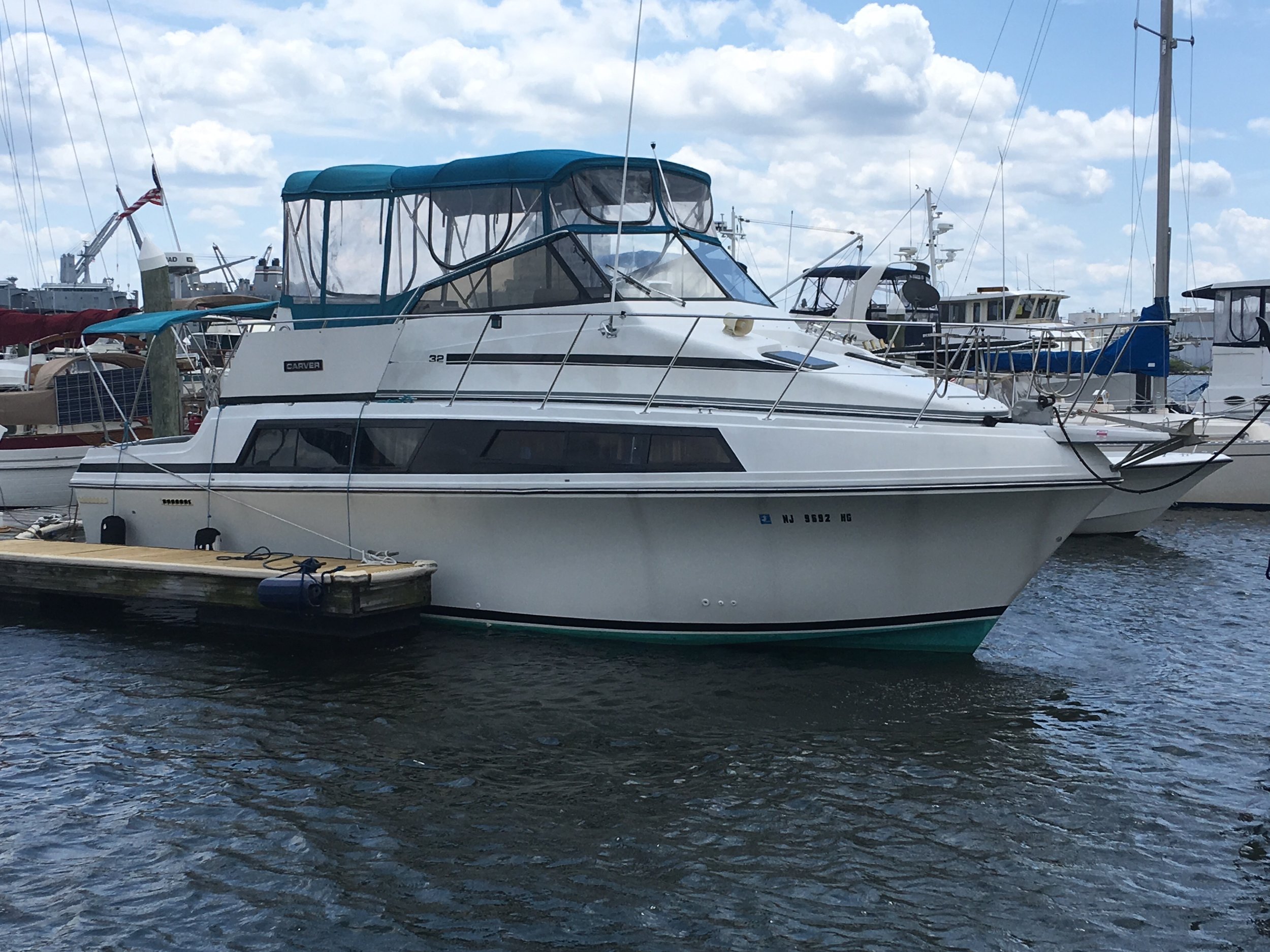
Carver, a popular powerboat manufacturer is known for creating "original" designs. I have heard them affectionately referred to as Clorox bottles, since they are short with very high freeboard and all white. The contemporary Carvers I see are interesting to look at, and I never thought about it past that point.

FullSizeRender.jpg

Then one day, an older Carver came into the marina and I looked at it in confusion. It looked like many layers of boats piled on top of each other, each more confused about its purpose than the last!

It got me thinking though, when this boat was new, did people look at it in the same way we look at modern yachts? Did the owner love the layers look? Or did they question what the designer was thinking as he wrote the check to buy it?

It also made me wonder if we will look back at the current trend in designs with the same shock as I looked upon that boat, or will we still find the modern yacht pleasing to look at?

Let me know what you think about the style trend of modern yachts in the comments down below. What are your favorite features that you would like to see continue on in future designs?

Engine Choices

On older and smaller sailboats, a popular motor choice is the gasoline outboard. These motors offer the ease of replacement of any outboard, but suffer from the fire risk of carrying gasoline onboard. A common argument for these motors arrangements is that you will already be carrying gasoline for your dinghy outboard, now you can power both with the same tank!

Gasoline is a very dangerous substance on a boat. The liquid is highly flammable and the fumes are explosive! A small problem can easily become a life threatening explosion that will engulf the boat in flames.

Gasoline inboards complicate this problem further by bringing the entire unit inside an enclosed area where fumes can collect and await detonation.

Modern boat builders have recognized the risks involved with gasoline, and have since moved over to diesel motors. Diesel fuel is flammable, but not explosive and there is no fear of the fumes blowing your boat up.

While much less dangerous, there is still a safer option yet: electric. Electric motors require no fossil fuels at all, and therefore pose no risk of fires or explosions from fuel leaks. Instead, electric motors are powered by massive battery banks that feed them the needed amps to keep the propeller spinning.

As with everything, there are pros and cons of each.

Gasoline outboards are very inexpensive and if they die, they are the easiest to replace. Their fuel is a hazard, but it is usually kept in a red plastic tank in the cockpit. If the tank starts to deteriorate, it can be easily replaced. All of the fuel and fumes is kept out of the cabin, so there is much less risk of an accidental explosion.

Gasoline inboards are inexpensive to buy, but costly to replace and repair. They also bring gasoline and all of its hazards inside the boat where deadly explosions could occur. Gasoline engines are also not that efficient and will struggle to push a sailboat at hull speed for days on end without any rest.

Diesel inboards are work horses! They will keep banging along as long as they have oil and fuel. They are expensive to purchase, expensive to replace, and expensive to maintain, but they will power you along without complaints or rest! This is one of the key selling points of a diesel inboard in a sailboat. If you cross an ocean and have no wind the entire time, a diesel motor will be able to power you along the entire way without complaining. While they are an invaluable tool to those who have them, they are also a smelly companion in your cabin. That classic "boat smell" is a combination of the toilet hoses and diesel motor. It isn't always very strong, but it is always present.

Electric motors are the last of these options. They will never explode because they have no fuel, but they will also never push you across an ocean without complaints. As they power you along, they will draw on your batteries. More range means more batteries which means more weight, which means more power to push you along. It is an endless cycle that will never get you very far. Electric motors should be seen as "short term" power options. Say you need to motor into a marina berth, or out of the way of a cargo ship, this is where the electric motor will shine. It will power you along on short distances without problem, but it will run out of electricity long before you make it across the ocean.

Electric motors are best for those who plan to sail. In the situation where there is no wind while crossing an ocean, you would be forced to sit there as you wait for wind to come (which it will eventually do). Cost is another variable. All electric motors achieve the same end result, and the different brands available offer a huge spread in prices. We went with one of the cheaper options by Electric Yachts and it has been a blessing! It always runs when we need it and it didn't break the bank to purchase or install. There are other brands that are many times more expensive, but they too achieve the same goal.

The choice about which motor is a personal one. If you can't really afford anything, a cheap used outboard will be your friend. If you are a power boat disguised as a sailboat, a diesel will be your best friend. And if you want to sail, an electric motor will be your best friend.

Budgets

Maddie and I are budgeting $1,000 per month. This may seem very low, as that would only be $12,000 per year, which is far below the poverty line, but the truth is, this will be more than we need.

We set this budget based on several factors, and they have been thought through with consideration.

The first factor is the more you spend, the more you need to have. By setting a goal of $12,000 per year, we only need to save up $12,000 to cast off for a year! As we sail, we can also add to our funds by working along the way. Since our budget is so low, a small sum of money feels like more to us.

The second factor is it keeps the math simple. Looking at $1,000 as a month, means that any fraction of money can be viewed as a fraction of a month. Would you buy a $500 dress if you looked at it as half of a months budget? It also makes money seem like freedom instead of a tie to society. Viewing money saved as time away from the next job makes us feel better about holding onto money instead of buying a souvenir that we don't need.

The last factor is this is actually a rather high budget in our opinion. We have a friend who cruised for 7 years on a budget of $7,500 per year. Maddie and I are only 2 people, but they were a family of 4!

Their $7,500 budget included $1,500 for the kids home schooling books. This means that their real budget was only $500 per month for four people. Their secret was being mindful of money and not wasting it. They would eat in instead of spending on a fancy dinner. They would go on excursions and have adventures instead of buying keepsakes.

Knowing that four people could live on $500 per month, we know that the two of us can live on $1,000 a month with ease. As we go saving the money and not spending it, we also get to stretch out our savings into more time away from the next job.

Budgets are easy to set, but hard to stick to on land where you are constantly surrounded by places to spend money. It is much easier to not spend money when anchored out in a creek, surrounded by tress, birds, and fish. Sitting out on the deck watching the sunset as you light up the grill to make some dinner out of inexpensive foods like potatoes or chicken. Living on the hook while we cruise will keep us happy, well fed, and below budget.