2016 Honeymoon Cruise vs 2015 Summer Cruise

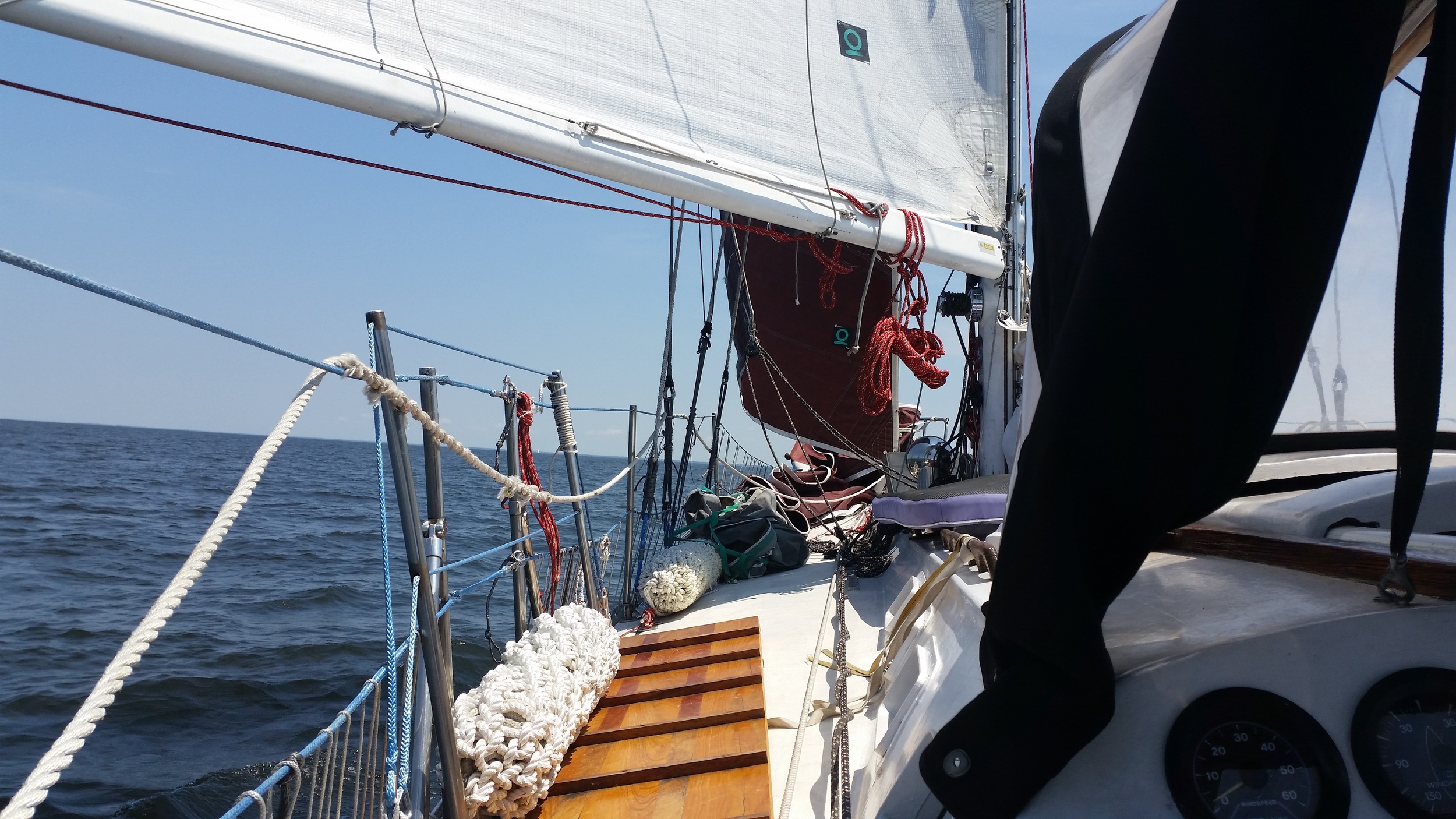
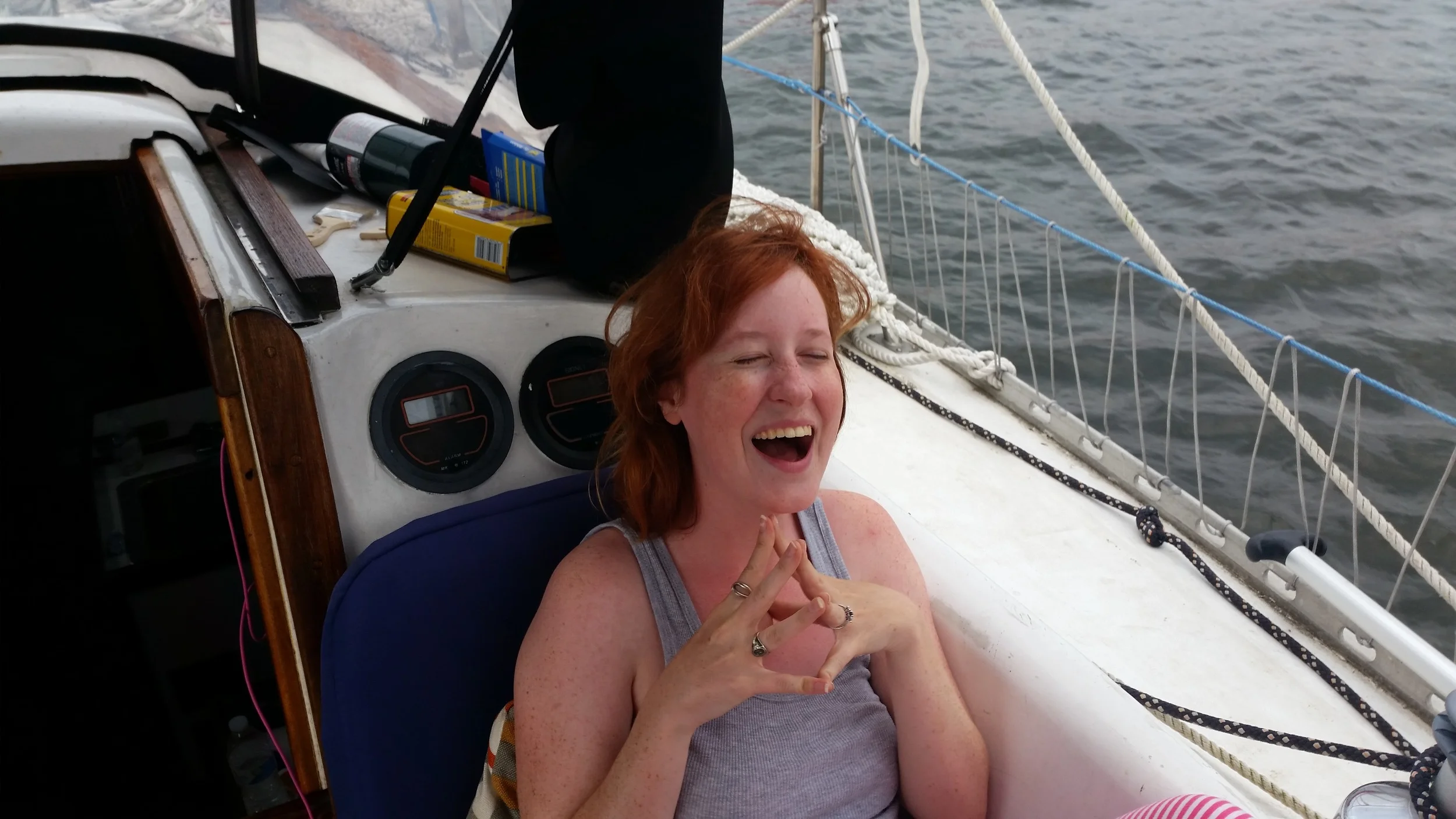
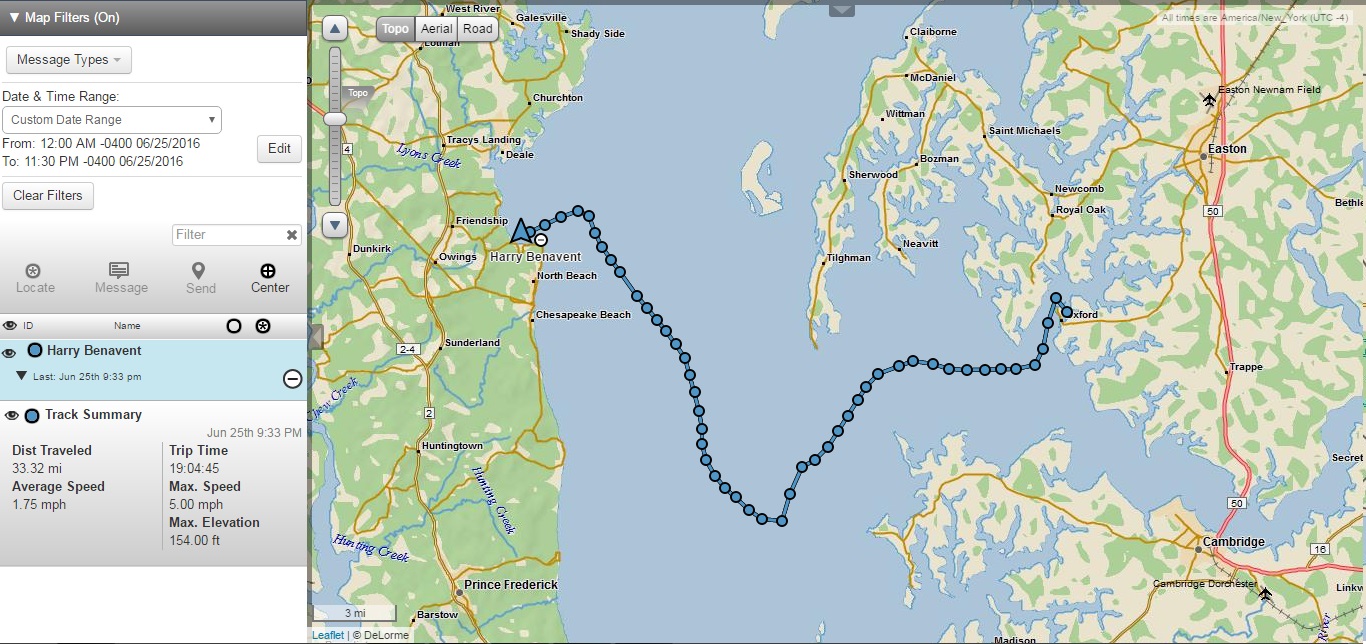
Our honeymoon cruise was very relaxing. We spent more time at anchor than under sail, and enjoyed more meals off the boat than on board. Most of the trip consisted of calm weather with light winds, with a few isolated storms. We only sailed 190 miles and stopped in Harness Creek, Annapolis, Deale, and Oxford.

Our relaxed pace was the polar opposite to our previous years cruise. We traveled 190 miles, as opposed to 751 miles, and we stayed in protected anchorages for a much longer amount of time. 

On our 2015 cruise, we would sail from dawn to dusk, everyday and all day. We spent very little time relaxing as one of us had to be steering the boat at all times as we worked our way to windward. We anchored out in the middle of the bay, where the winds and tides would toss us all night long and make for a very rough anchor recovery in the morning. We suffered through this because our main goal was to reach the Atlantic Ocean and spend a few days out there beyond sight of land. 

For our 2016 cruise, we had much smaller goals: sail to Oxford to visit my grandmother. We had a week and a half to get there, so we took our time and enjoyed the trip. We spent our first night in the marina waiting for better weather, then made our way to Harness Creek. We stayed in the protected creek for a few days as we relaxed and took it easy. When the weather was favorable, we set sail and made our way to Deale, where we pulled into Herring Bay and enjoyed a delicious dinner ashore. Once in Oxford, we relaxed on the boat and did day trips by car to other nearby towns. Wisdom stayed anchored in the same spot for several days before we decided to make our way home. The return trip was equally as relaxed; we slept in, we sailed to the nearest protected harbor, we ate ashore, and slept well.

Our slow pace did greatly reduce the distance we would be able to cover in a set amount of time, but a combination of the two will yield a very pleasant pace for our future voyages. 

The goal of the 2015 trip was to give us a taste of sailing in the ocean and to make sure that Maddie wouldn't go stir crazy when land was not in sight for some time. Our next big trip is going to take us far out into the ocean, so we need to have some practice before we go. This trip to Oxford was simply a relaxing continuation of our honeymoon, and not a trip to test anything out (even though we did experience a wonderful opportunity to test out sail combinations for heaving to). We were simply going cruising for a week and a half and going to enjoy every moment of it.

Sailing South in the bay is a tedious process, the prevailing winds blow from the South meaning the entire trip is spent beating to windward. We will stop at convenient anchorages along the way and enjoy nice shore side meals while we are still close to land, but there will still be some nights when we anchor in unprotected waters in the interest of making it South as fast as possible. 

Once we are out in the ocean, we won't need to find protected anchorages because we heave to at night. This means that the windvane can steer us all day long and we will be able to relax around the boat while underway (in between sail changes and storms), until we heave to for the night and go to sleep again. 

The only reason we feel any rush when sailing, and the reason we don't sail everywhere with this relaxed pace, is because we do have a fixed amount of time to sail. I take time away from my dental practice and Maddie takes time away from painting and teaching to go on these trips. Without these time constraints, the only logical method to travel would be at the slowest and most relaxed pace. In our case, we need to work a bit at getting there first, then we can relax and meander our way back. The longer we take off for these trips, the more relaxed we can travel through the water.
Honeymoon Cruise: Day 12

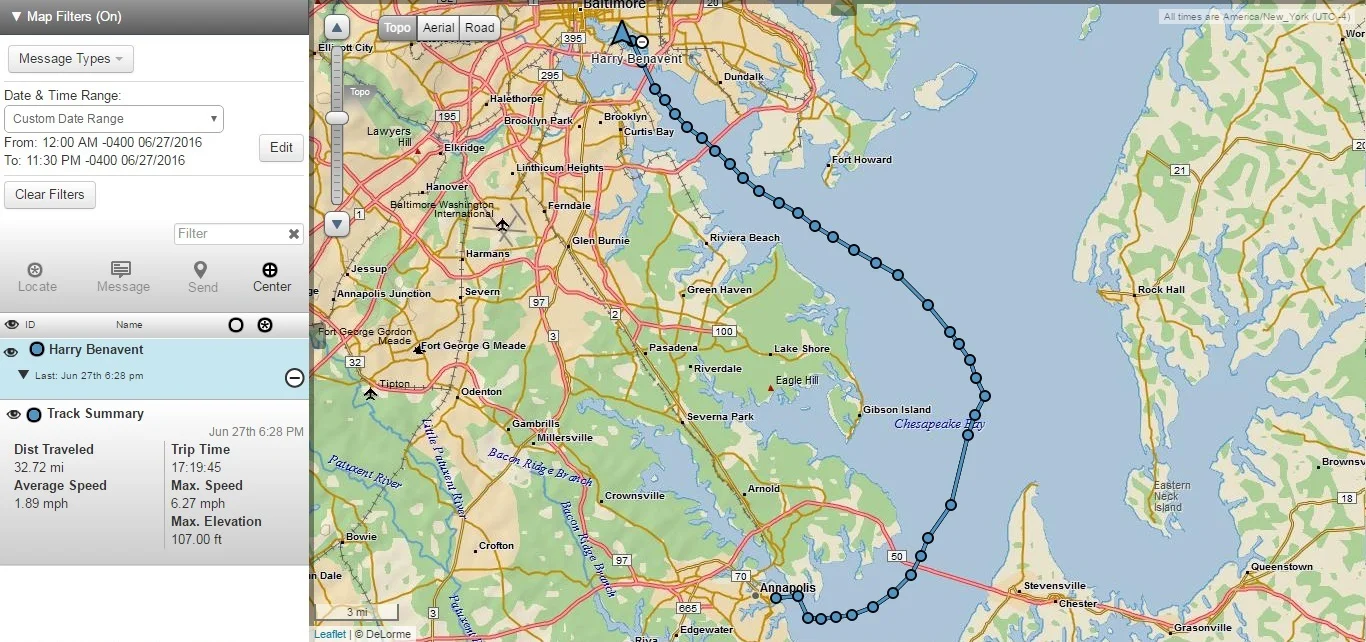
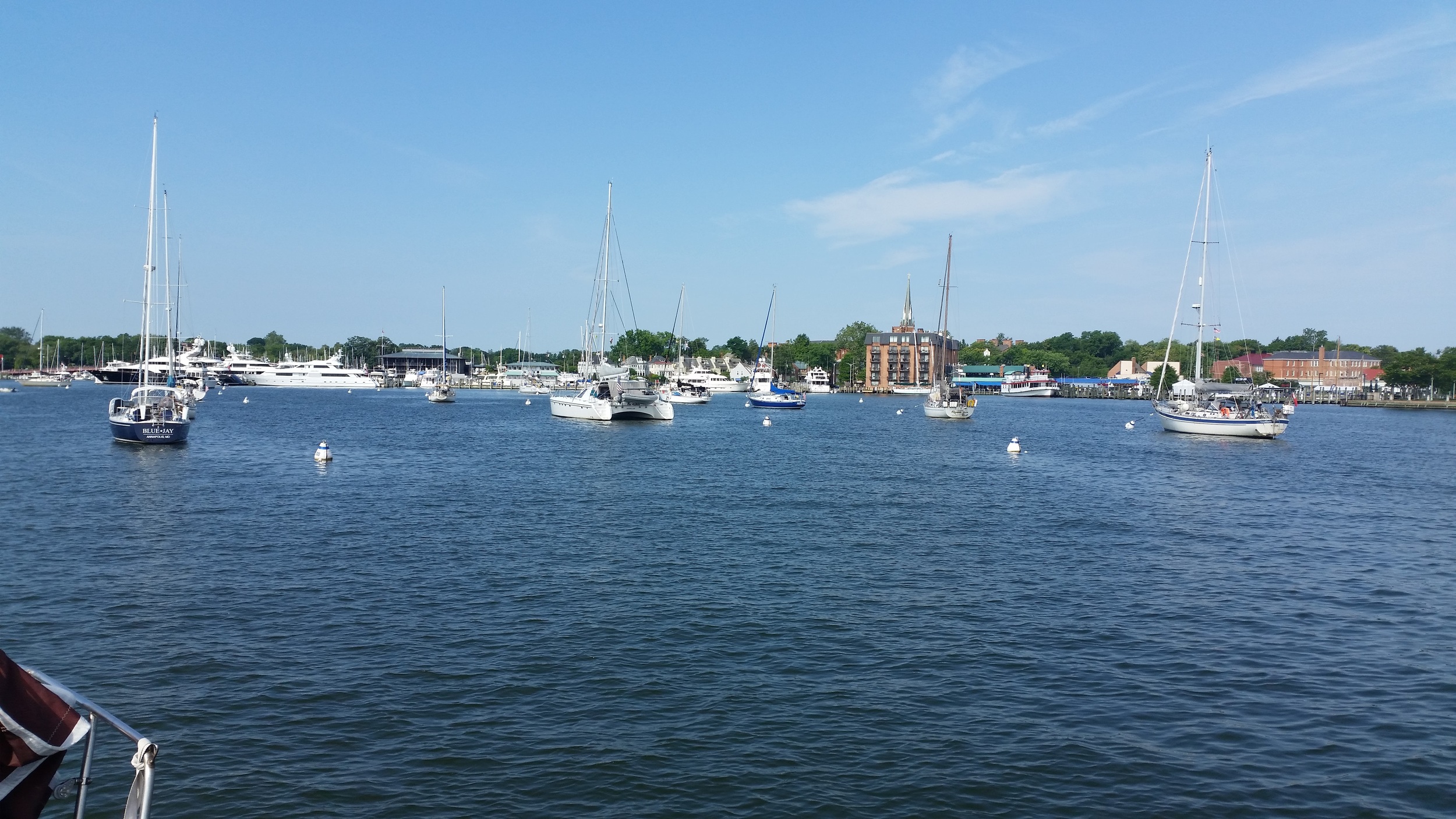
Waking up in a full mooring field in the heart of the Annapolis, MD; the sailing capital of the world! What a sight to see. There were cruisers here from all around the world, enjoying the protection from the wind and the convenience of being in downtown Annapolis.

The winds were blowing 15 to 20 knots, but the water was very calm in Spa Creek. We decided to return to Baltimore today, so I got Wisdom ready to go early in the morning. A small craft warning was in effect, so I put in two reefs while tied up to the mooring ball. 

Instead of hooking the tack ring over a horn, I tie the tack line to the gooseneck. This provides a very secure attachment to the tack without any risk of puncturing the luff of the sail. 

The reefed main was raised and the mooring line casted off once we were pointing away from the mooring field. With the staysail up, we ghosted out of the harbor and into the river under very reduced canvas. Most other boats in the river were flying full sail as we slowly moved along under double reefed main and staysail.

As we left the wind protection offered by the harbor, the boats with full sail began to heel over excessively as they scrambled to reef their sails. We simply moved along at a comfortable speed, quietly sailing out of the bay. The winds in the bay were wonderful, blowing steadily from the South and pushing us home.

One of the best parts about sailing near Annapolis is you are bound to come across a gorgeous sailboat. Coming through the bridge, we saw the massive wooden schooner Woodwind, sailing back into Annapolis. 

We were making wonderful time this morning and I expected us to be back in Baltimore in a few hours. Maddie was pleased with the sound of water rushing past the forward berth, knowing that we were sailing along quickly, and Morty was excited to return to his old marking grounds. It looked like the forecast was correct, today would be a very windy day blowing us home!

As soon as we crossed under the Annapolis Bay Bridge, everything changed. It almost felt like if we had crossed into a different time and date! There was no wind, there was certainly no small craft warning, and most importantly there was no speed.

Before the bridge, we were cooking along at 5 to 6 knots; after the bridge, we were barely doing 2 knots. At first I thought the loss of wind was due to the bridges wind shadow. The Bay Bridge is a massive structure, with its roadway 186 feet into the air and its towers 379 feet into the air. This will create a wind shadow that extends 758 feet up and 7580 feet away from the bridge. This means that wind 1.4 miles away from the bridge will be disturbed. 

I accepted this to be the case and refrained from shaking the reefs out of the sails, instead we drifted along under double reefed main and staysail. Once we were 2 miles from the bridge, I knew we were in very light undisturbed air and we weren't getting back to Baltimore any time soon.

I shook out the reefs and eased the outhaul, letting the sail fill up with the little wind available. I didn't raise Josh, our jib, because Maddie was still sleeping, and also since the main blankets the headsails so much. It would be a lot of effort for a small boost in speed. I really wanted to raise Dill, our drifter, but I was leery that the winds would return and I would be forced to strike the sails without any help. 

Instead, I set up the barber hauler, which gave us a fraction of a knot extra without much effort or concern about returning strong winds.

Morty found himself a shady place to relax on the leeward deck near the shrouds. We all began to feel a little tired as we drifted along at a snails pace, slowly reaching our home. With all the pillows available in the cockpit, I decided to lean back and relax while the autopilot kept us on course. 

We sailed to the right of the shipping lane, where little boat traffic exists and the risk of a collision is negligible. This means I can lean back and relax, doing periodic watches where I scan the horizon. I prefer to do a 720 degree scan, in other words, do three spins to check everything three times. If you miss a boat on your first pass, you should see it the second or the third time. 

The only downside to these lazy and sluggish days is you never get very far. We passed the bridge hours ago, and it never seems to move away.

The light airs continued and we were toying around with the idea of anchoring close to Baltimore and completing the trip in the morning.  As if the weather heard us, clouds came in and the sky went gray. The winds shifted and began to blow much stronger, rocketing us back to our home port. I quickly put a reef into the mainsail and carefully sailed her up the river.

Maddie was quite pleased with the wind, as it meant we would be able to arrive this afternoon and not late tonight. We made it up the river with speeds between 3 to 4 knots, nothing outlandish, but we were moving steadily and predictably. 

As we approached the marina, we made the decision to dock the boat in a different manner. We usually drop our sails and motor in under the power of our electric motor, but the battery bank was almost depleted and we were concerned that it would die on us when we needed it most. Instead we decided to dock under sail!

The marina, and our slip was downwind from us, meaning we could run into the marina and slip, then hard reverse to avoid colliding with the pier. There would be no tacking or jibing involved and we would save our battery power for once we were in the slip and absolutely needed it.

We lowered Josh, the jib, and Marge, the mainsail, coming in on only Stan, our staysail. The dock lines were all set and ready to toss towards anyone who wanted to come give us a hand with tying up. I was at the helm while Maddie stood by the mast, ready to release Stan's halyard. We quietly and slowly came into the marina, turned into our fairway, lined up with our slip, dropped Stan, and drifted right into the slip. Once well into the slip, I used the electric motor to bring us to a stop as Maddie tossed the dock lines to our neighbor who saw us coming in and came out to help with the lines. 

We were home!

Honeymoon Cruise: Day 11

Today was an easy sail to Annapolis, the winds were light and we were on a steady run up the bay. 

We started off with fair winds which slowly died down to a whisper of wind. We sailed along with all our sails set, trying to move forward any amount. When the wind died completely I broke down and set up the sculling oar. I have gotten okay at sculling Windpuff, our Alberg 30 which weighs 4.5 tons, but I can't seem to get Wisdom to move quickly. I attribute our slow pace to our large three fixed blade propeller and our massive 17 tons of displacement. While sculling, we were able to move at 0.5 to 0.8 knots. Certainly not record setting speeds but we were moving forward! I did this for around a half hour when Maddie convinced me to sit back and wait for the winds to return. I really wanted to make it all the way to South River or maybe even Baltimore on this run, but these fantasies were unrealistic without any wind.

As we passed South River, my parents came out to say hello.

1968 Morgan 45 Wisdom

1968 Morgan 45 Wisdom

1976 Egg Harbor 36 Eggstraction

1976 Egg Harbor 36 Eggstraction

On days like today, the appeal of a power boat is very apparent. When you set out for a destination, the time it will take is directly proportional to the speed you want to move forward through the water. You don't have to worry about the weather as much, since you can make it from one point to another in a predetermined and calculated amount of time. All you need is a weather window that will allow you safe passage. When sailing, you set out on a cruise towards a destination and deal with all different forms of weather that get thrown at you as you slowly make your way.

A few hours later, we finally made our way to the mooring balls in Annapolis and we snagged one that was on the outer edge of the field. Other boaters don't appreciate when someone comes sailing into the middle of a crowded mooring field under full sail! It comes across as dangerous and reckless. Instead we sail up to the edge of a crowded mooring field under reefed sails, slowly and under complete control.

Sailing with Maddie has made so many maneuvers so much easier! I used to sail up to a mooring ball, luff the sails, go forward with a boat hook, set the painter on the cleat, and drop the sails. It was a one shot deal with very little room for error since I was alone, and no one was at the helm while I was up on the bow cleating the line. Having Maddie on board, we can both manage the boat and it makes picking up a mooring ball much less stressful. 

Under reefed main and staysail set up on the self tacker, Maddie takes the helm while I was to go forward to grab the mooring ball. The reefs were put in while out in the river, well before reaching the mooring field and our plan was discussed. We use hand signals to communicate direction since the dodger blocks a lot of sound, making verbal communication difficult. We decided that I would point in the direction she is to turn as we made our way into the mooring field. Once in the mooring field, I would then point at the mooring ball we are going to pick up and she would steer us from there. 

We like to pick up a mooring ball on the leeward edge of a mooring field, that way we can come around the field and sail up to the mooring ball. As we come up to the ball, we luff the sails and the boat will come to a stop as it aims into the wind. We also like to pick up the mooring ball on the starboard side because I like to lower the sails onto the port deck. The port deck is typically covered with sails ready to be raised while the starboard deck is kept clear and open to make it easy to run forward to the bow unobstructed. 

As Maddie came up on the mooring ball, I lowered the staysail, allowing us to point much further upwind without moving forward too much. Once I grabbed the mooring balls painter with the boat hook, Maddie released the mainsheet which ensured that the mainsail wouldn't offer any push. As the boat began to drift back, I walked the painter forward on the boat until I could hook the painter on the bow cleat. I tied the snubber through the painter and set it up as a bridle for the mooring ball, letting the boat rest evenly behind the mooring ball and giving us a smoother nights sleep.

Once everything was set, we rowed into the heart of Annapolis to grab some dinner at Chick and Ruth's Diner. If you are ever in the area, I highly recommend grabbing a meal here! The food is very reasonably priced and the portions are huge! 

We sailed for 14 hours to get to this restaurant, which made the giant milk shake all the more delicious! It's amazing how tired we were after this sail, the winds were light and we never worked hard all day; but all day we were out in the sun working the sails trying to get as much power as we could from the little wind available.

Honeymoon Cruise: Day 10

Today we left Oxford at high tide! I got up at dawn to raise the anchor and drift out of the creek in the ebbing tide. The forecast last night said there would be no wind until closer to noon, so we decided to drift with the tide and catch the wind in the river whenever it arrived. Simple enough, but the weather rarely cooperates as planned.

At dawn, the wind was blowing up the creek with considerable force! There was not enough water to tack against the wind, so we were stuck until the winds changed. We waited a few hours until the wind shifted, allowing us to sail out on a beam reach under reefed sails due to the high winds even though the forecast was calling for no wind. 

I got the anchor up and the sails partially raised in the narrow creek as the boat began moving forward. I turned the helm to take us a bit upwind into a wider part of water while I got the sails up the rest of the way. I felt we were getting too close to a shoal, so I ran back to the helm to alter course a bit more but the rudder was stuck! At first I thought something must have locked into the quadrant on the rudder post and was not letting it turn, so I ran below deck to check. Everything was clear, meaning we were aground in an ebbing tide.

Maddie came up to help as we tried to get off the shoal before the tide went out, and our soft grounding would become a hard grounding. I quickly got in Tooth, our dinghy, and lowered the anchor and 100 feet of chain onto the back of the dinghy. I began rowing away from Wisdom, our sailboat, letting chain flow overboard as I moved. I controlled how much chain went over with my foot, making sure to move far enough away from the boat before letting out another span of chain. Once at the end of the rode, I dropped the anchor over and returned to the boat. On deck, I began hauling in the anchor rode, pulling our boat towards the set anchor. I had to crank the windlass in low gear to get the keel off the bottom. Maddie waited at the helm, alerting me as soon as the rudder broke free from the soft mud bottom.

I cranked our way over to the anchor with the sails ready to go and Maddie at the helm. When the anchor was about to break free, I waited until the boat was on the right tack. When anchored with a very short scope, the boat will tack around behind the anchor. This will make an anchorage feel like the open seas as the boat bounces all around in the wind. This same phenomenon can be used to your advantage when raising anchor, simply wait for the boat to be on the correct tack before you break the anchor free. Imagine that you have a shore on your starboard and open waters on your port side, if you break the anchor free while aiming at the shore, you risk running aground as the boat will begin to drift towards the shore. If you break the anchor free while aiming out towards open waters, you have plenty of time to get everything ready on the boat as you have no navigational hazards ahead of you!

We were tacking behind the anchor alternating between aiming up the creek and towards the mouth of the river. If we had broken the anchor free while aiming up the river, we would need to jibe as we turn to aim out the river. By waiting for the right time, we were able to easily sail out of the creek and into the river. It went much smoother this time since Maddie was at the helm steering us on a straight course out of the river while I ran around the deck getting the anchor up all the way and setting the sails for her.

Once out into the river, the winds died completely! We then drifted along for some time as the tide continued to ebb. Maddie wasn't feeling well, so I didn't raise Dill, our drifter, because I expected the winds to return later. We slowly made our way out the river on a run, carefully jibing our way out of the Choptank River.

Once clear of the shoal to the South of Sharps Island, we began making our way North. I expected the winds to be blowing rather strong, carrying us all the way up the bay in one run! As the day drew on, we continued to wait for the winds to pick up, just as my dreams of making it all the way up the bay picked up and left. The sun began to hang low on the horizon, signaling to Maddie and me that it was time to anchor somewhere for the night. We had enjoyed our anchorage in Herring Bay on our way to Oxford, so we decided to anchor there again on our way back.

The winds did finally pick up, speeding us along towards our anchorage as the sun was beginning to set. Maddie took the helm as we came into the bay while I went forward to drop the anchor on her command. She sailed us right up to where we anchored last time and gave me the signal, the sails and the anchor all came down in a matter of moments and we were securely anchored for the night.

Once we had everything put away, we noticed that the swell from the bay was not subsiding. A constant 1 to 2 foot swell was coming at us from the East while the winds had our boat pointing South. This meant that the waves were hitting us on the beam and making the boat roll very uncomfortably at anchor. I was going to take Morty to shore, but Maddie wanted me to set up a bridle first.

An anchor bridle is a nifty trick that will let you lay beam to your anchor, and bow to the waves that are hitting you! I tied a line with a magnus hitch to the anchor chain and began letting out the rode. The other end of the line was wrapped around our primary winch, allowing us a strong but adjustable location to attach the bridle line that is close to the stern. The rode was let out almost a full boat length and then the snubber was attached and cleated. Now that the bow part of the equation is taken care of, I went to the primary winch in the cockpit and began winching in the bridle line. As I cranked the bridle line in, the stern began to turn towards the anchor rode, bringing us beam to the wind and bow to the waves. I continued to crank on the winch while Maddie guided me from down below. When she felt that the boat was comfortable, I stopped cranking the winch. It was very dark and hard to see the wave direction to adjust our attitude towards the waves, so instead we based our adjustment off of comfort; which is the whole point of the bridle anyways!

Now that Wisdom was comfortably anchored, it was time to row Morty to shore and then get some sleep!

How bad will my prop walk be?

Now that you know what propeller walk is, and what makes its effects worse, it is time to figure out how your own boat will respond.

There are generalities, such as Right Hand propellers will walk to port when in reverse and Left Hand propellers will walk to starboard when in reverse. It is easy to know which propeller you have by looking at the hub. Stamped on the hub of the propeller will be LH for Left Hand or RH for Right Hand.

This propeller is Left hand, which means it will walk to starboard when in reverse. Great! This is easy to tell on a boat that is out of the water with a propeller that is high and dry. What if your boat is sitting in the slip with the propeller under water and below the hull? How will you read if your propeller is RH or LH? You don't have to!

Instead of worrying about which handed propeller you have and then trying to remember RH to port under reverse or LH to starboard under reverse, simply observe the way your prop wash moves around your yacht. This will give you a real world understanding of how your vessel will behave. 

All the factors that relate to prop walk will be tied together and prominently displayed for you in one easy test. All you need to do is tie the boat up in a slip on a calm day with still water and put it in reverse under hard throttle. 

As you know, hard throttle will lead to faster propeller speed which will cause prop walk. This along with prop angulation, enclosures, hull and keel type, will compound to display how the entire system will behave in the real world and not just in the theoretical realm.

With the boat properly tied and placed in reverse under hard throttle, look at the water around your yacht and note where the prop wash is coming out. In the most idealistic situation, all the prop wash would rush out from under the bow of the boat. This would indicate that all the thrust from the propeller is being directed forward and the boat will move astern in a straight line with no prop walk.

If you see the prop wash coming up on one side of the hull, then you know you will have prop walk away from the side you see the prop wash rising up on. This is because the thrust is being directed towards one side of the boat, and the boat will move away from the direction of thrust causing it to walk towards the side without the thrust and notable prop wash.

How severe your prop walk will be is directly, related to where the prop wash is appearing in relation to the boat. If the prop wash is appearing near the bow of the boat, the prop walk will not be that severe. If the prop wash is appearing near the stern (or near the propeller) then you know the prop walk will be more severe. Worst case scenario, the thrust and prop wash will appear all on one side of the hull and directly next to the propeller. This would indicate that all the thrust is being projected laterally from the propeller, creating a boat that will reliably move forward and sideways. 

While it would be ideal to have a boat that can comfortably pull in and back out of a slip, knowing how to use your prop walk will help you maneuver your yacht in close quarters without the sheer panic of a boat that is moving the wrong way when you didn't expect it to. Once you know how your boat will respond when placed in reverse, you can properly predict and plan out your approach and exit from a berth without causing an entertaining show for all the bystanders who are waiting to grab a line and pull you into the slip to end your embarrassment.