What is Line Service?

Line Service is one of the oldest ways to protect a line from chafe and wear. It was used on tall ships to protect the halyards where they would pass through shivs, where dock lines would pass through hawse pipes, and where stays would be subjected to chafe. When steel rigging first started, service was used to prevent rust and protect the cable from the elements.

Three strand line was traditionally used for everything on a boat. It was the sheets, halyards, stays, lashings, dock lines, steering cables, ect. In locations where it was going to be subjected to a lot of wear, it would be "Wormed, Parceled, and Serviced". 

Worming is the process of filling in the grooves between the lays with a smaller cord. Then the line is Parceled, which involves wrapping a cloth soaked in tar over the line to hold the worming in place and smooth the outer surface of the lines. 3 lay would have 3 peaks that would chafe more and 3 valleys. Worming fills these valleys and the parceling covers them up. Worming and parceling go with the lay of the line, while service goes against the lay. It is important to parcel the line starting at the bottom of the line working your way up with each wrap overlapping the next. This will create a shingle effect, helping to keep water from entering the line when it is set up as a stay. The tar helps to seal out any voids that might be left, further preventing the ingress of water which could lead to degradation of the line.

Lastly, the line is serviced. Service is applied opposite to the lay of the line. The reason is, as the line is stretched, it will straighten out a bit; unwinding its lays just a bit. If the service were applied with the lay as worming and parceling were, the service would loosen when the line is stretched. By going against the lay, it will actually tighten even more when the line is tensioned. After the line is set up, it must be coated in slurry to help keep it waterproof. Slurry is a combination of stockholm tar, varnish, and black paint. The idea is to refresh the tar so that it keeps water out while forming an external hardened layer that won't rub off.

Hemp rope needed to stay away from water to prevent rot, whereas nylon is much more resistant to rot. Nylon rope still benefits from service to prevent chafe, but doesn't need the slurry or tar applied. This allows nylon rope to be parceled using "Friction Tape" usually marketed as Hockey Stick tape.

Galvanized wire really benefits from worm, parcel, and service. Galvanized wire is more rust resistant due to its coating, but with time, the galvanized layer will wear off and corrosion will set in. By shielding it from the elements, galvanized wire can be protected in a cocoon of tar and slurry where it will remain indefinitely. In this environment, it won't suffer oxidation because there is no air exposure and it won't corrode because there is no moisture present. 

Galvanized rigging that is worm, parceled, and serviced sounds amazing! But if there is any lapse in maintenance, corrosion could set in and there would be no way of inspecting it. If you opt for this type of rigging, you must commit to regularly climbing the mast and painting slurry on all sides of each stay. My concern was if I went away for a month on vacation or if the harsh part of winter lasted for too long, my maintenance would lapse and the problems could set in. Doubt would set in and I would begin to worry about the condition of my rigging. For this reason, I went with synthetics as the maintenance schedule is much more relaxed and inspection is very simple.

Synthetic rigging can benefit from service as well. Areas that will be chafed can be wrapped to form a sacrificial coating that can be replaced when needed. Since dyneema is braided, it doesn't need to be wormed. Since it doesn't suffer from rot, it doesn't need to be parceled. Lastly, since there is no lay to the line, service can be wrapped in either direction (clockwise or anti-clockwise).

Areas that certainly need service are the section on the cap shroud that passes through the spreader tip. Areas that are highly recommended to service are the ends of the headstay where the hanks will be under the most force. These areas will wear first and service helps prolong the life of the stay.


How much chafe is too much?

Dyneema is a wonderful synthetic fiber that is lighter and stronger than comparably sized steel. While its strength is unmatched, chafe is its weakness. But how much chafe can the stay withstand? When is it considered a structural concern?

The only way to accurately determine how much strength is left in the line is to perform a destructive pull test, which destroys the line. A study was performed by Samson to determine if there was a correlation between visual cues and residual strength left in the line.

Abrasion, or chafe, lead to broken filaments in the line spread out over a large area of the line. This will result in a fuzzy appearance to the line which will be our visual cue as to how damaged the line is and what the estimated remaining residual strength is.

The visual scale runs from 1 to 7, 1 being minimal damage and 7 being severely damaged.

Source: http://samsonrope.com/PublishingImages/Currents/July%202014/04C_Pocket_Guide_Image.jpg

Source: http://samsonrope.com/PublishingImages/Currents/July%202014/04C_Pocket_Guide_Image.jpg

The general guidelines are:

1 and 2, safe to continue using
3, 4, and 5, consult and expert
6 and 7, retire the line

External wear is caused by chafe, over loading, and UV damage. Internal wear is caused by passing the line through repeated severe bends and introduction to rough substrate, such as working the line through gravel. 

Internal damage is more likely to occur in other uses, such as pulling a log through a forest, where the line is dragged along the dirt forest floor. 

In the world of standing rigging, internal damage is not such a concern. The stays are fed through thimbles to ensure that they have proper radius bends, and they are not worked through the bends regularly. It is a one time thing and then they are set for life. The rigging won't be exposed to gravel, but I haven't found any information about salt crystal exposure. Regardless, there is minimal movement in the stay, so internal abrasion should be a minimal occurrence.

External wear is a concern though. The outer fibers will be exposed to UV, which will cause some degradation, but they will protect and shield the internal fibers from further UV damage. This will eventually lead to a fuzzy layer around the whole stay, placing it in category 1 or 2, thus still safe to use. Since this damage is minimal, I don't recommend using a sun cover, as it would add bulk and windage.

As far as chafe goes, all damage will be located on the outer layer of the fibers and usually only on specific areas where the chafing occurs. When these areas begin to show up as a localized fuzziness, a chafe cover can be applied to protect the stay from further damage. 

As long as you keep an eye out for chafe, you will be able to catch any problems early and make the necessary alterations to protect it from chafing further. This way, any damage will be confined to grades 1 or 2 where there is no structural loss of strength yet.

Remember, dyneema is incredibly strong and is many times stronger than needed to hold the mast up since it is sized based on creep. Even if you catch a chafe point after damage has occurred, it will probably still be strong enough to get you home to make repairs.

The wonderful part of synthetic standing rigging is problems are very easy to spot. You never have to worry about a separated wire inside the 1x19 bundle, or stress hardening of your swagged fittings. Dyneema is just a fancy rope! If you are able to tell when a sheet or halyard looks torn up and needs replacement, then you can also look and tell when the dyneema stay is torn up and needs replacement.

To sum it up, chafe left unchecked can destroy the rigging. By checking the rigging often, you will be able to catch problem areas in their early stages before damage occurs and make alterations to protect it from further damage. Chafed areas also have tell tale signs that are easy to spot, as they appear fuzzy. External damage will occur but the internal fibers of the stay will be unharmed. Look at it often, and you will be able to fix it yourself allowing you to keep sailing, no matter where you find yourself!

Summer Cruise Day 16.5

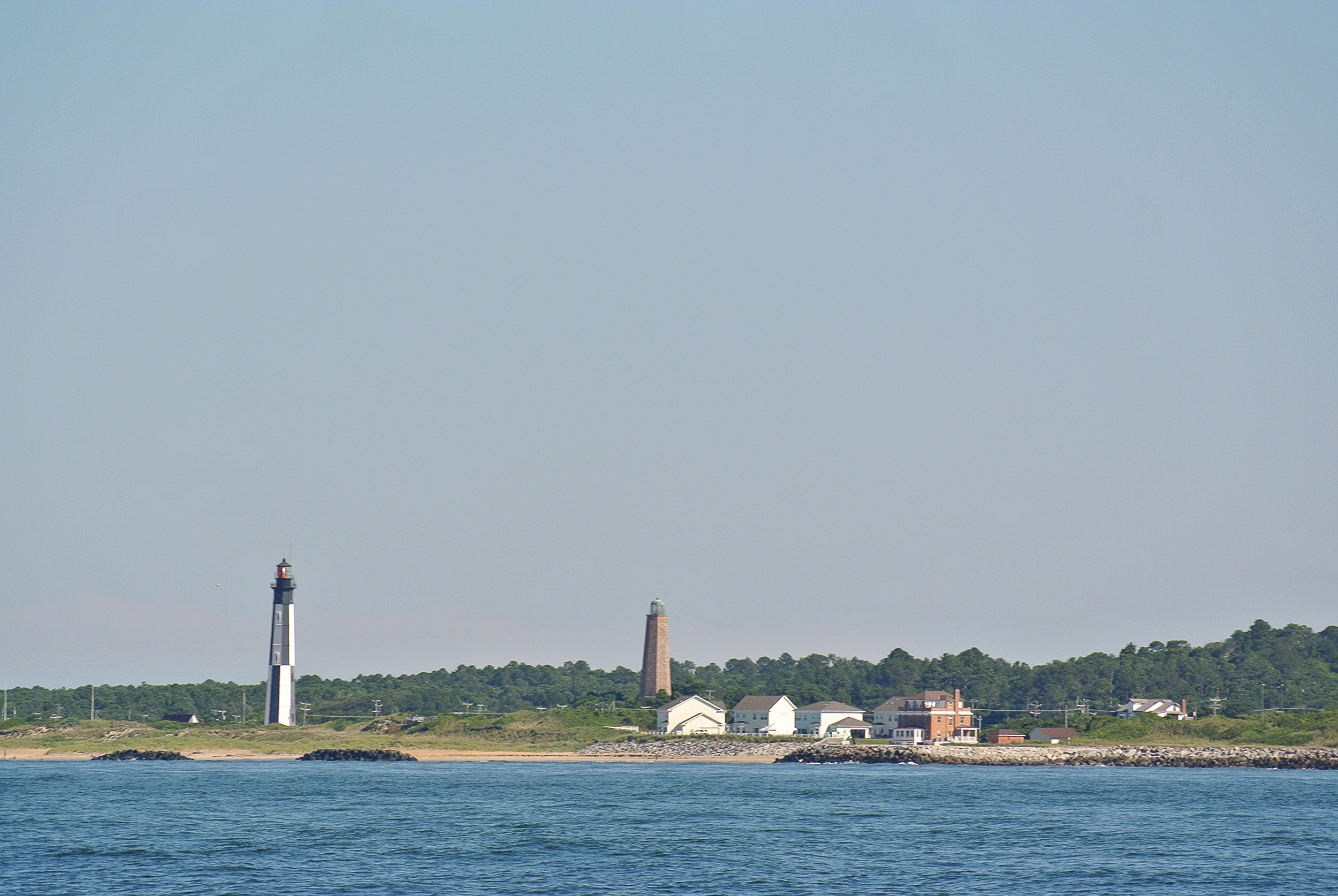
Once we were reefed, we made our way towards the mouth of the bay. We were sailing as close to the wind as we could with the current sea state. As the wind shifted, we were not able to clear the point of land just north of Virginia Beach. We came close to shore and were going to tack when the winds shifted again. We needed to pinch for a few miles but we would be able to make it around the point with 1 mile of sea way between us and shallow water. 

I didn't want to tack because that would add several hours to our arrival time. This is usually not an issue, but the mouth of the bay is subject to very strong currents. If we would be able to make it in time, we would be swept in by a several knot current. If we tacked, we would arrive later and be fighting the current, in the dark, in a very busy shipping channel. I suggested that we set out back to sea but Maddie wanted to be back in the bay today, so we continued on. 

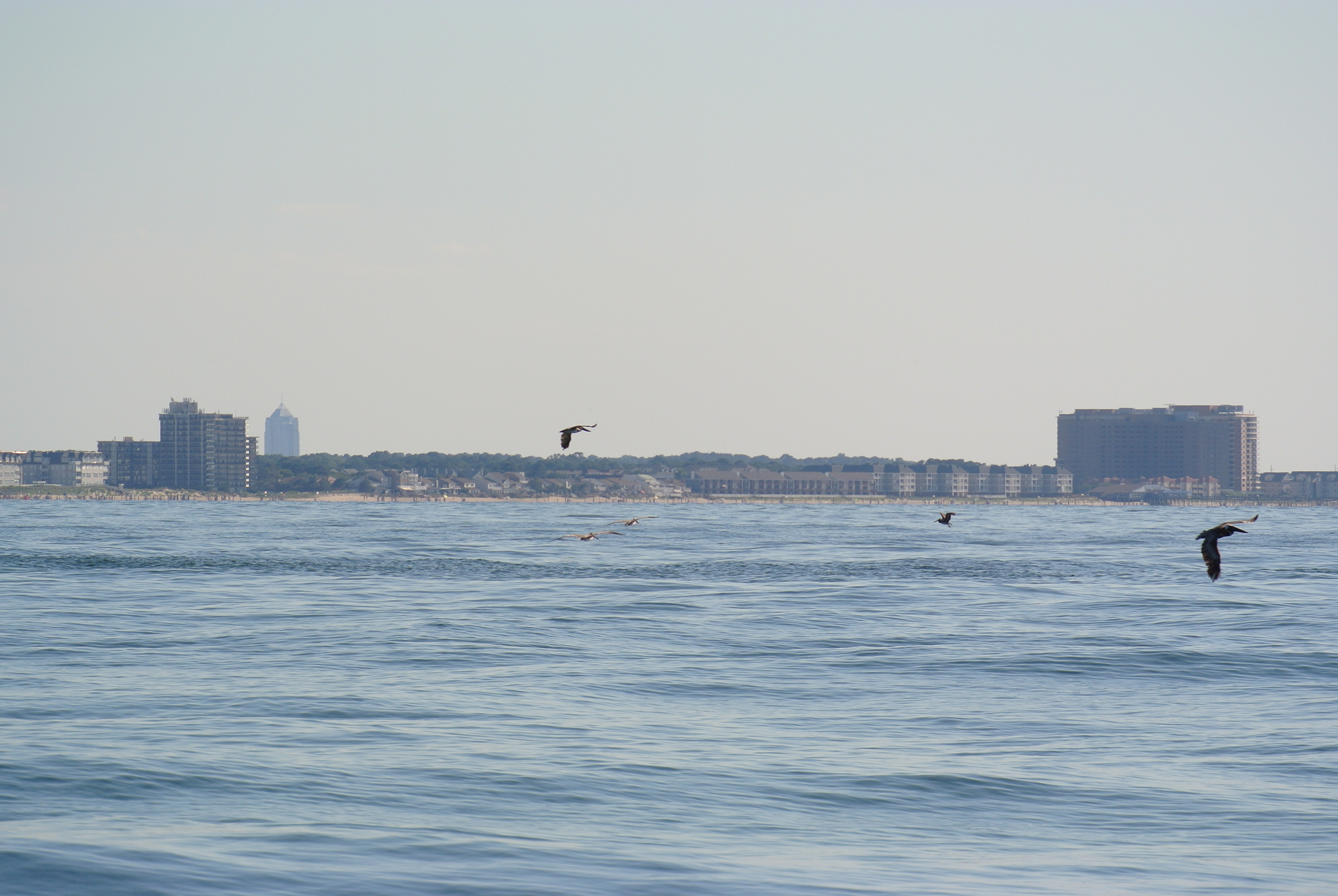
As the winds were, we would arrive to the point in 1.5 hours, which would put us in the strong current flooding the bay. We were rather close to shore and got a wonderful view of the crowded beach.

Being very close to the naval base at Norfolk, VA, we were passed by many naval boats. A fleet of 3 black speed boats flew past us in formation. Later a submarine went by us as he headed out for deeper waters. The submarine moved quietly through the water but created a monster wake! The submarine wake was on par with a tug boat moving at hull speed. I wonder if they create a wake when submerged?

DSC_3343.JPG

As we neared the point, the winds began to die, but we were still able to maintain movement through the water. At this new pace, we would catch the tail end of the flood tide, so while not ideal, we would still make it in today. 

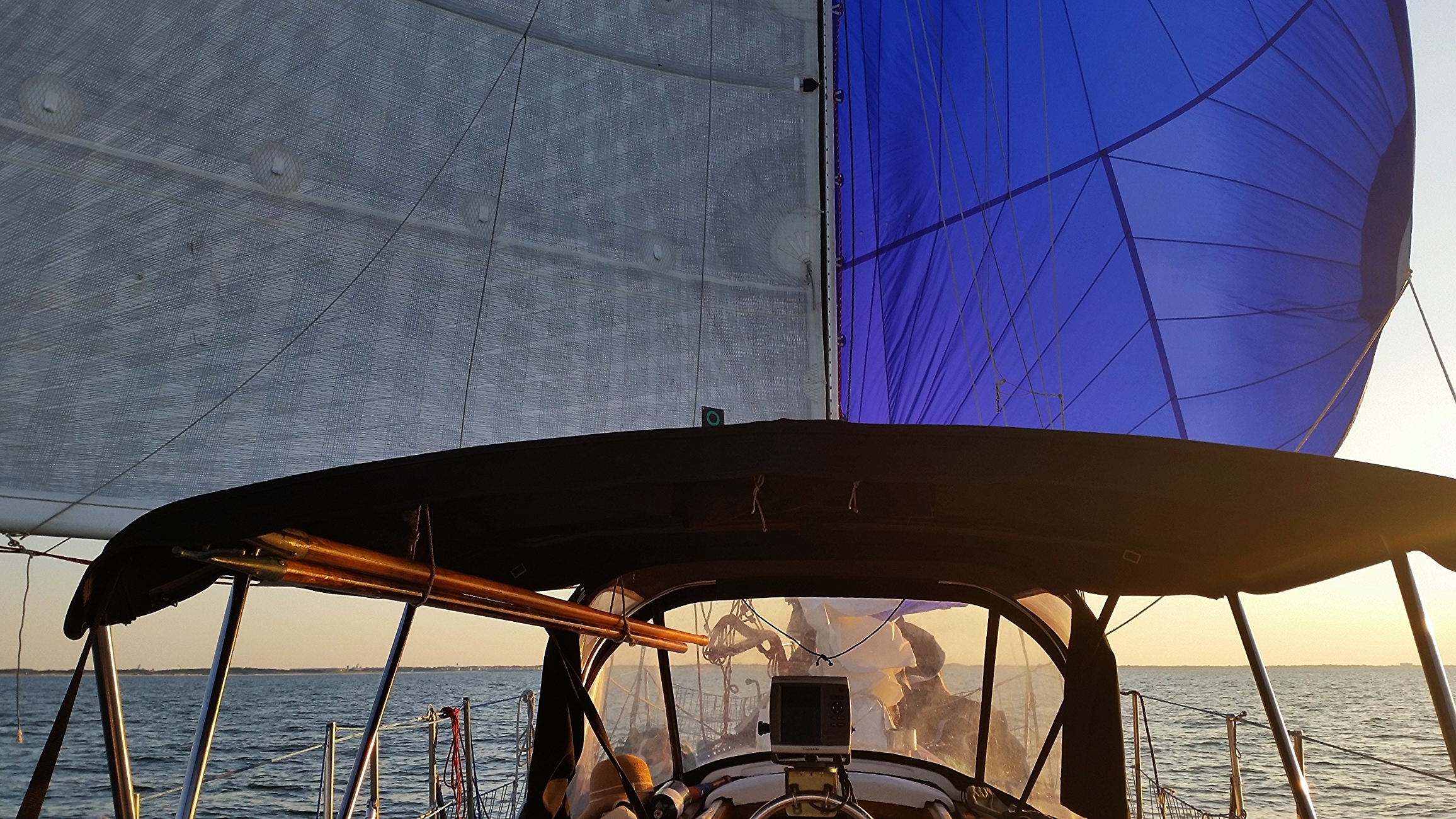
We rounded the point of Virginia Beach and the winds died completely! We switched the jib for the drifter, but there wasn't even enough air to fill it. We sat still as the current slowly pushed us into the mouth of the bay.

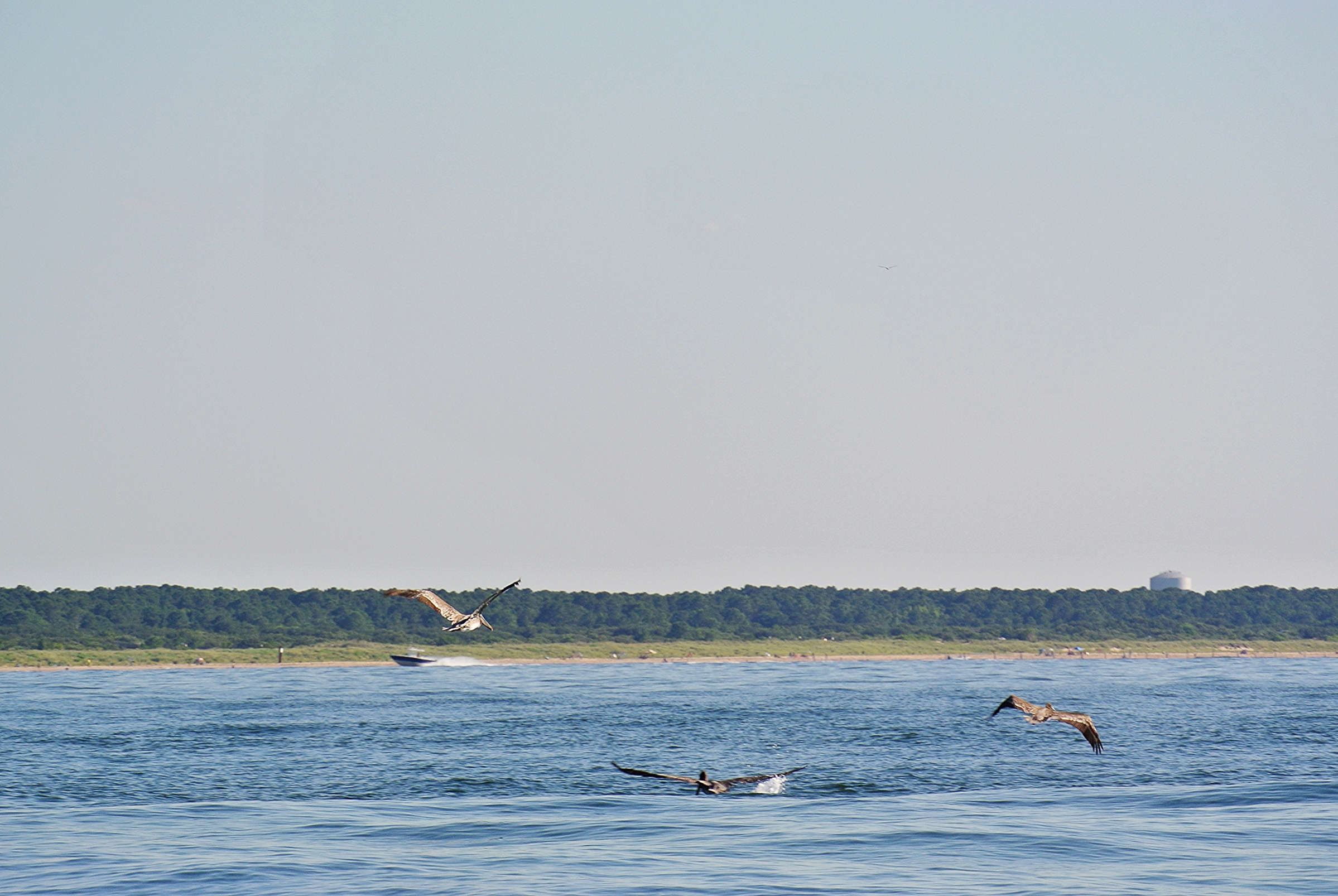
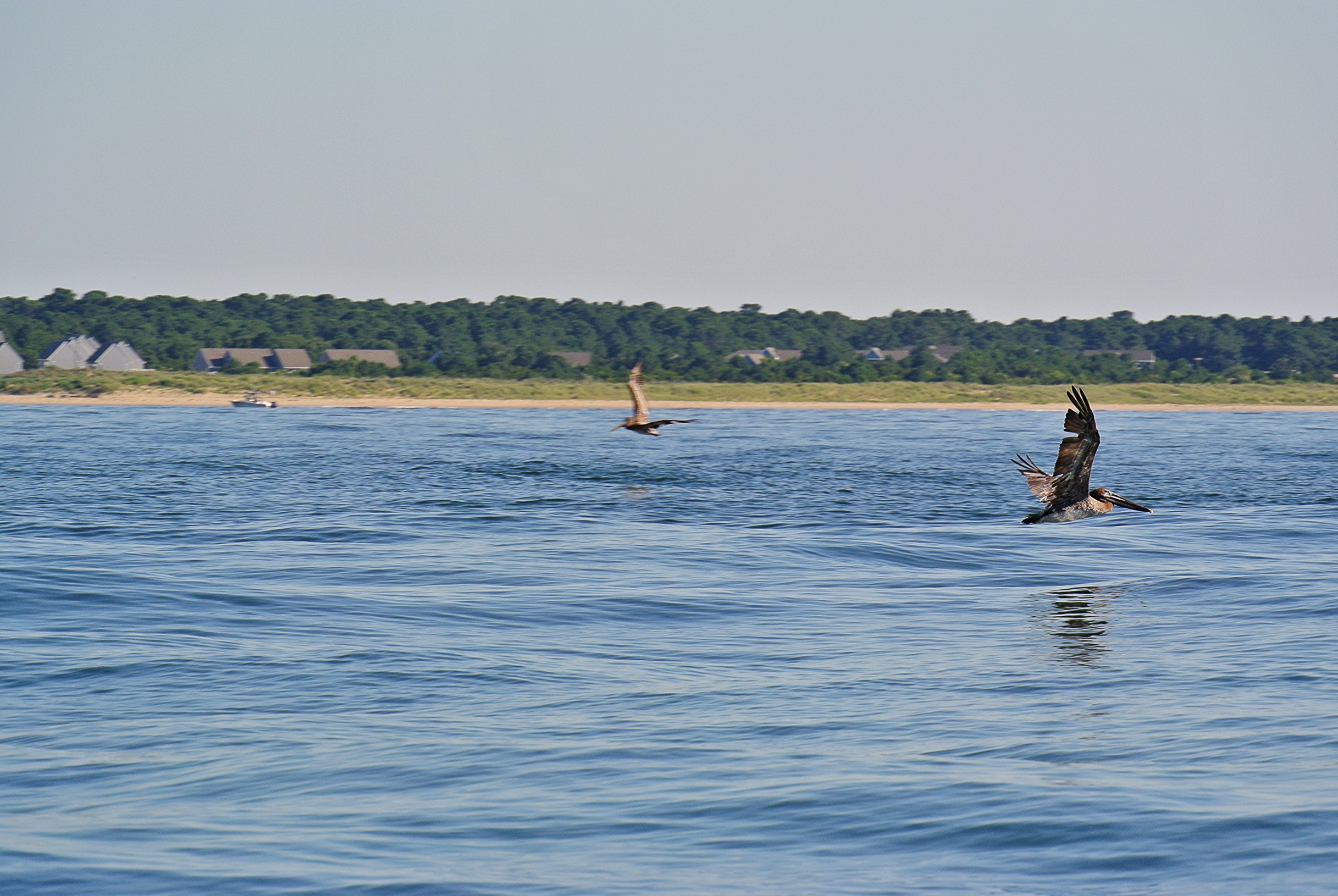
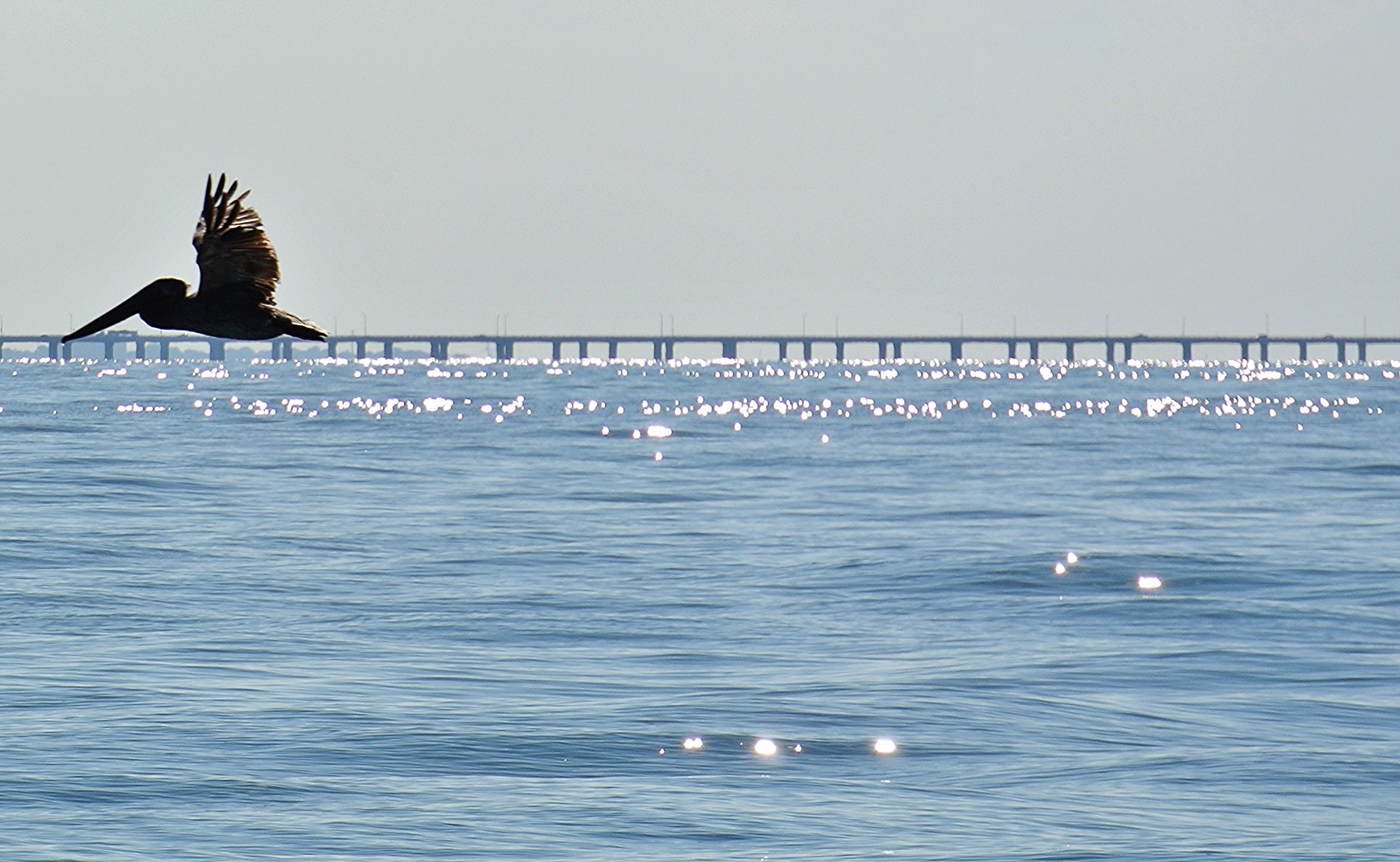
As we sat nearly stationary in the water, pelicans began flying near by. Maddie got a bunch of pictures with the intention of painting pelicans next in her series of bird paintings.

The tide began to slow and the winds had not returned yet. I was worried that we would soon be swept out to sea and lay drifting near the busy channel during the night. I began looking at places to go once we made it into the bay, preferably a marina where we could recharge the motor battery since I was about to drain it down getting into the bay. We found one on the charts and I called them, they had a slip waiting for us and we could arrive after dark. 

I entered their location on the chart plotter and that gave us an ETA. Then I turned on the motor and set the engine speed so that we would have enough run time to make it to the marina and with 1 hour of battery time left. 

As time went on, the tide was going to begin ebbing, and we would begin fighting the current. I decided to push it harder and figure it out once we made it into the bay or else we would run out of battery while fighting the current. We pushed and made it in past the bridge's channel, then turned to port. Luckily, there was a tiny bit of wind directly behind us and we were able to sail wing on wing with the main and drifter. 

We sailed along at 1.5 to 2 knots, nothing fast, but at least we were moving. 

We found a buoy marking the entrance to the channel and we turned in. It was dark, the sun had set hours ago by this point and we were ready to sleep in a protected marina. We sailed down the channel which was teeming with power boats, even at this late hour.

We encountered the blinding lights of the naval yard so I had Maddie go forward to make sure we were not going to hit anything. Out of the darkness we saw a large log float. I thought it was a mooring ball for the navy, but it turns out that it was a log boom separating the civilian marina from the naval yard. I steered to avoid the log and took us straight into the naval base.

Search lights focused on us and a Zodiac came over to question us. They were understanding enough and let us tack out of their side to head over to the marina. Apparently, many people come into the naval yard looking for the marina.

After a series of tacks, we made it out of the naval base and found our marina, and our slip. We were nestled in behind a very large catamaran, tied up, and plugged in to recharge the very exhausted engine batteries. We burned them all the way down to 16% trying to get into the bay against the current. 


We went ashore to find the only restaurant open at this hour for a land cooked meal, followed by a very deep sleep! I miss the ocean, but it's nice to keep the admiral happy too!

Summer Cruise Day 16

This was our last day at sea for the trip. Today was the day that we would return to the bay.

I slept like a log last night! I never had to get up to do watches, and the proximity alarm never went off. I laid my head down and woke up when I was ready to, not when I had to.

I always wake up on the early side, but today I slept in until 8 AM! The winds were light so I shook out the reefs in the main and raised the jib. We were flying under full sail in the rather light winds of the morning. 

As time progressed, the winds began to build, slowly but steadily climbing from 8 knots to 12 knots, then around 30 min later, climbing to 15 knots, then to 20 knots. I like to take down the jib and put a reef in the main at 20 knots because if it continues to build, I'll need the sails reefed; whereas if it stays steady, we can always shake the reef out. 

Our rule is we don't go forward while the other person is sleeping (unless we are raising the sails first thing in the morning). While we are tethered to the boat, we would just be dragged along until the other person wakes and finds us dangling. Since we were moving along at speeds of 7+ knots in large rolling seas, I felt it would be best to wake Maddie to helm Wisdom while I reefed.

Herein lies the problem! Maddie likes to sleep until around 10 or 11 AM, and waking here for no reason would incur her wrath! My concern was if I woke her up to reef the sails and the wind died down, making her mad at me for waking her. So I decided to call out to her very quietly, hoping she would hear me and come up without blaming me for waking her.

Around 9:30 AM, the winds had built to 27 knots steady with large seas when she awoke. We were on starboard tack on a broad reach with full sail up. I needed to get the jib down in a hurry and reef the main fast! When she came up, a bit groggy yet, I began ordering her around telling her to put us on a run and blanket the jib with the main so I could bring it in, then come about and put us on port tack so I could reef, then jibe back onto our original course under reduced canvas. I will admit this was the one time in our trip where I was not diplomatic and ran the boat like a hot headed dictator spouting orders and commands in every direction. This was because for the past hour and a half, I had been watching the winds build and figured out the best way to go about the situation.

She took the helm and I went forward, clipped in and ready to work! I sat on the foredeck with the jib halyard in my hand leading to the winch that only had a few wraps on it so I could let it down in a controlled manner. I sat there letting out a bit of halyard as I pulled down on the downhaul. The jib began coming down without me having to go forward to the forepeak. I was able to do all of this in a seated position just forward of the mast. Once the sail had lost its air and collapsed, I began pulling the clew onto the deck as Maddie eased the sheets slightly (we didn't want a repeat of what happened in the bay when the drifter sheet fouled the prop). Once the sail was on deck, I lashed it to the toerail and returned to the cockpit.

Now we turned hard to starboard, timing the waves so we wouldn't take any on the beam. As we came into the wind, we sheeted in the main to power us through the turn but we stalled and began drifting backwards onto Tooth's painter. I quickly ran to the stern and pulled the painter in, luckily it never found the propeller. Maddie then gunned the engine and powered us through the turn to put us on port tack. The electric motor was a life saver in this situation. If it were diesel, we would have had to start it (praying that it would start), let it warm up for a moment and then gun it. If we had no engine, we would have had to sheet the jib to port while turning the rudder to port as well. This would cause the reversing sailboat to turn its stern to port which would then pull the bow through the wind until the jib would be backed then pushing the bow over completing the turn. While not the hardest maneuver to perform, gunning the electric motor was a simple command to give as opposed to explaining how to do the other maneuver since I was not at the helm. The electric is always ready to go at a moments notice for those quick short bursts of thrust. 

I prefer to reef on port tack since the winches for the reef lines and halyard are on the port side of the mast. If we are on starboard tack, I would have to work on the leeward side and be blanketed by the sail as it falls off the boom. When we do this, I have to ask Maddie if the clew line is tight enough or if I need to keep working. On port tack, I'm on the windward side, everything is easy to see and I can work standing. It's a matter of comfort when working in rolling seas. Once the sails were reefed, we jibed and resumed our previous heading towards the mouth of the bay. 

Summer Cruise Night 15

People often ask us how we would sleep out in the ocean where it's too deep to anchor? The answer is hove to. This night we slept with 2 reefs in the main and the staysail, keeping us steady in the calm seas. 

We were 20 miles out, with no risk of running aground, no one around, just vast amounts of empty ocean surrounding us. Absolute peace and tranquility! 

That night we never came up to do watches as there was no fear of running into shore or obstacles. We set the AIS proximity alarm to 2 miles and went to sleep as we drifted along at speeds ranging from 0.2 to 1 knot. I figured that if we slept for 10 hours, that would only be 2 to 10 miles drifted which would still place us 10 miles from shore if we aimed straight for land all night.

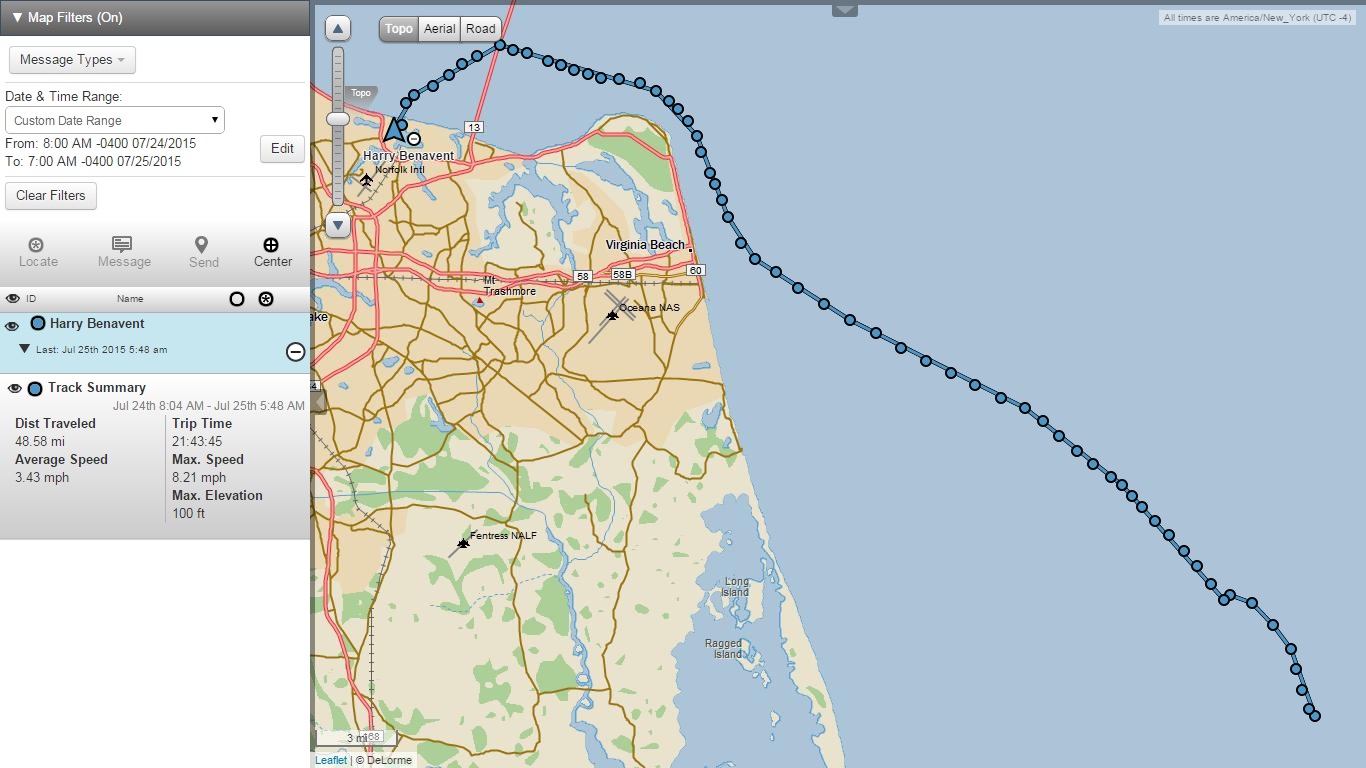
We ended up drifting 8.9 miles straight towards shore, placing us around 12 miles from the coast over 12 hours. Still plenty far for comfort as far as I'm concerned. 

This was the first time in the whole trip that I never awoke. I never got up to do watches, I never awoke in a panic thinking the anchor was dragging, I slept beautifully and so did Maddie!

I knew in my heart that this would be our last day in the ocean for this trip, and I really didn't want to return to the bay yet. I offered the idea of sailing North and coming in the Delaware Bay to enter the top of the Chesapeake Bay, but Maddie really wanted to sail up the bay, passing all the places we had seen on our way down.

The next time we go out to sea, I'm really going to look forward to our nights far offshore, sleeping hove to without worrying about a thing.

Sleeping hove to will not move you towards your destination as quickly as sailing around the clock would; but it will let you get a wonderful full night of restorative sleep that will make you ready to go full force when the morning comes.