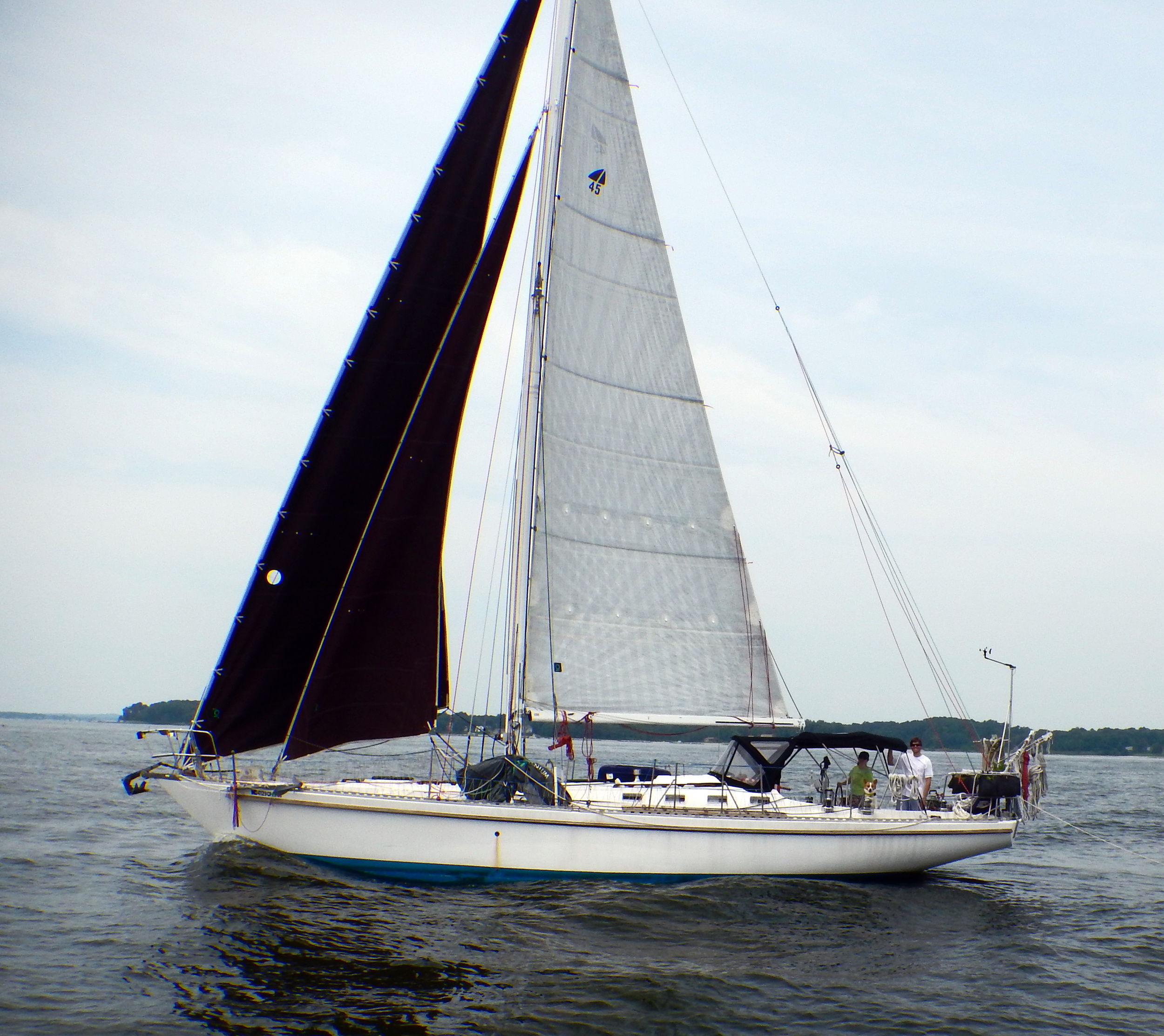
Summer Cruise Day 13

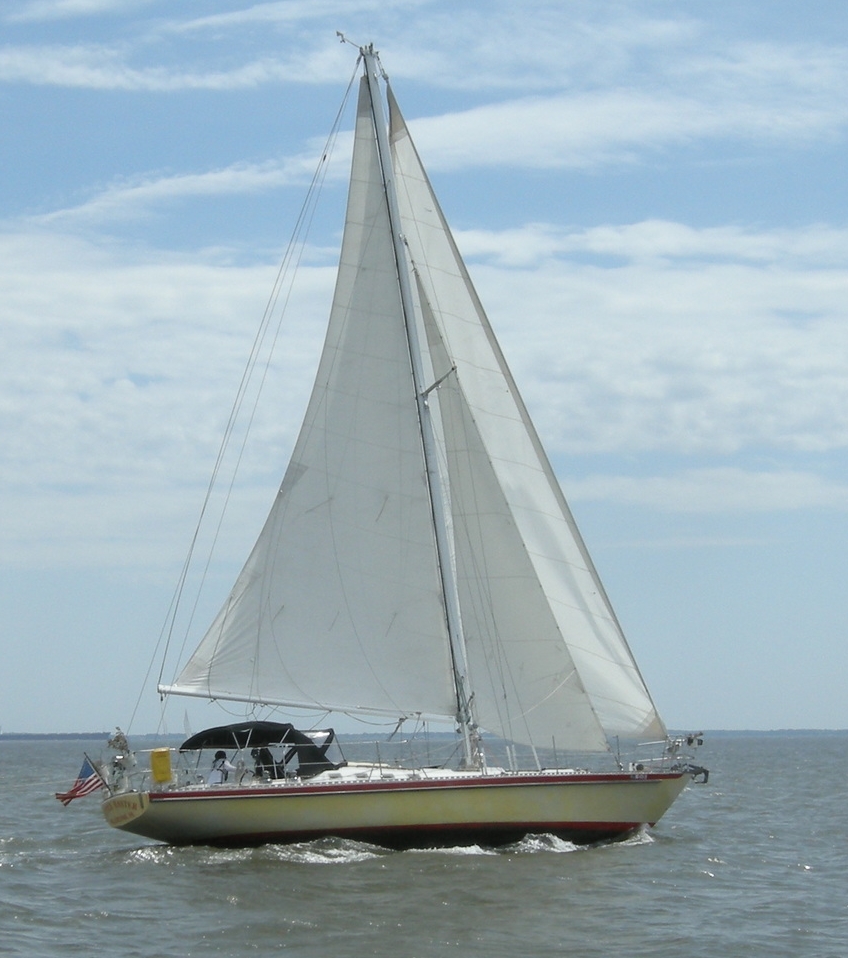
Today is the day that I have been waiting 7 years for! Sailing in the Atlantic Ocean! When I was in dental school, my dream was to go cruising and sail off into the Atlantic. I found a seaworthy boat that was in my budget and worked hard on her to bring her up to speed. I re-rigged her, new sails, repainted her topsides, new motor, the whole nine yards! Today was finally the day!

We raised anchor after that epic storm last night in rather light airs, but we were heading straight towards the ocean! 
Even though it was light airs, I still lowered the jib because I was expecting stronger winds out in the ocean. My logic was as follows: 

If the winds are stronger, we will need to reef. 
If the jib is down, I only need to put in a reef, whereas if the jib is up, I now need to address lowering the headsail and putting in a reef.

Maddie humored me, letting me lower the jib, cutting our speed from 7 knots to 4 knots. While she did not appreciate the loss of speed, she let me do it anyways.

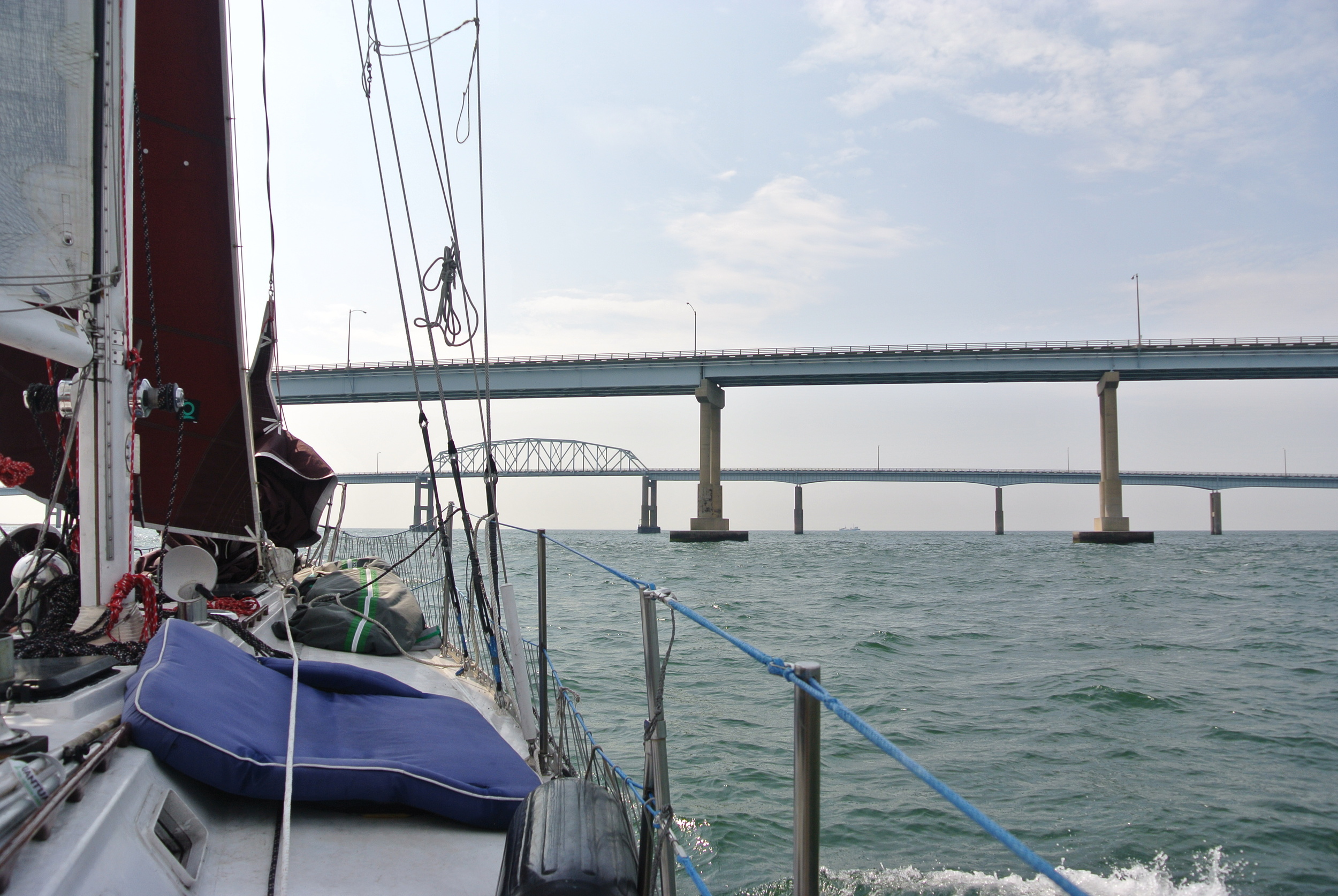
As we approached the bridge, we had ourselves a scare. Will we fit under this bridge? The chart plotter said this bridge is 85 feet tall and 980 feet wide. As you can see, the span is not 980 feet wide. This made us concerned that the chart was wrong and not tall enough for us to pass. 

We quickly looked at the trucks driving overhead and tried to see how many we could stack in the opening by eye. We figured a truck is around 14 feet tall, so we needed 6 trucks high to be 85 feet. 

As we approached, the moment of truth came. Would we fit? Or would we snap our mast in half at the spreaders?

We fit! We are now in the Atlantic!

Summer Cruise Day 12

At dawn, we were already away from the pier! The entrance to Deltaville would be nearly impossible to navigate by sail, and I didn't want to consume much of the battery bank motoring through its twisty and curvy channel, so we left at peak high tide so we wouldn't have to worry about currents and have a little more leeway with the keel. 

We slowly, but steadily electrically motored out of the channel and raised the sails. At first, the wind was extremely light, but that soon changed. The forecast for today was calling for stronger winds in the late morning, so I raised the Jib instead of the Drifter in anticipation of the winds to come. We were once again on our way out to the ocean!

As the winds built, we began sailing along making wonderful headway, almost as wonderfully as we had before we fouled the drifter sheet. Then, the winds all disappeared. We raised the drifter and waited as we slowly ghosted along on the other tack heading towards where we planned to anchor for the night. 

We arrived at New Point and dropped the hook. I was exhausted as I was starting to come down with a cold, so as soon as I knew the anchor was set, I went to sleep. I hadn't flaked or tied any of the sails up even though it looked like a storm was approaching. 

A few hours after I had gone to sleep, Maddie woke me because the storm was almost upon us and I needed to tie everything down. By the time I made it on deck, the winds had picked up and the sails were flapping around like flags, causing extra windage and unneeded stress on the anchor. I quickly lashed the sails to the deck and boom, but didn't have time to get a snubber installed on the anchor rode.

I stood at the helm trying to steer the boat with the current to keep our bow into the wind, as I was worried the chain would come out of the roller and stress the forestay again.

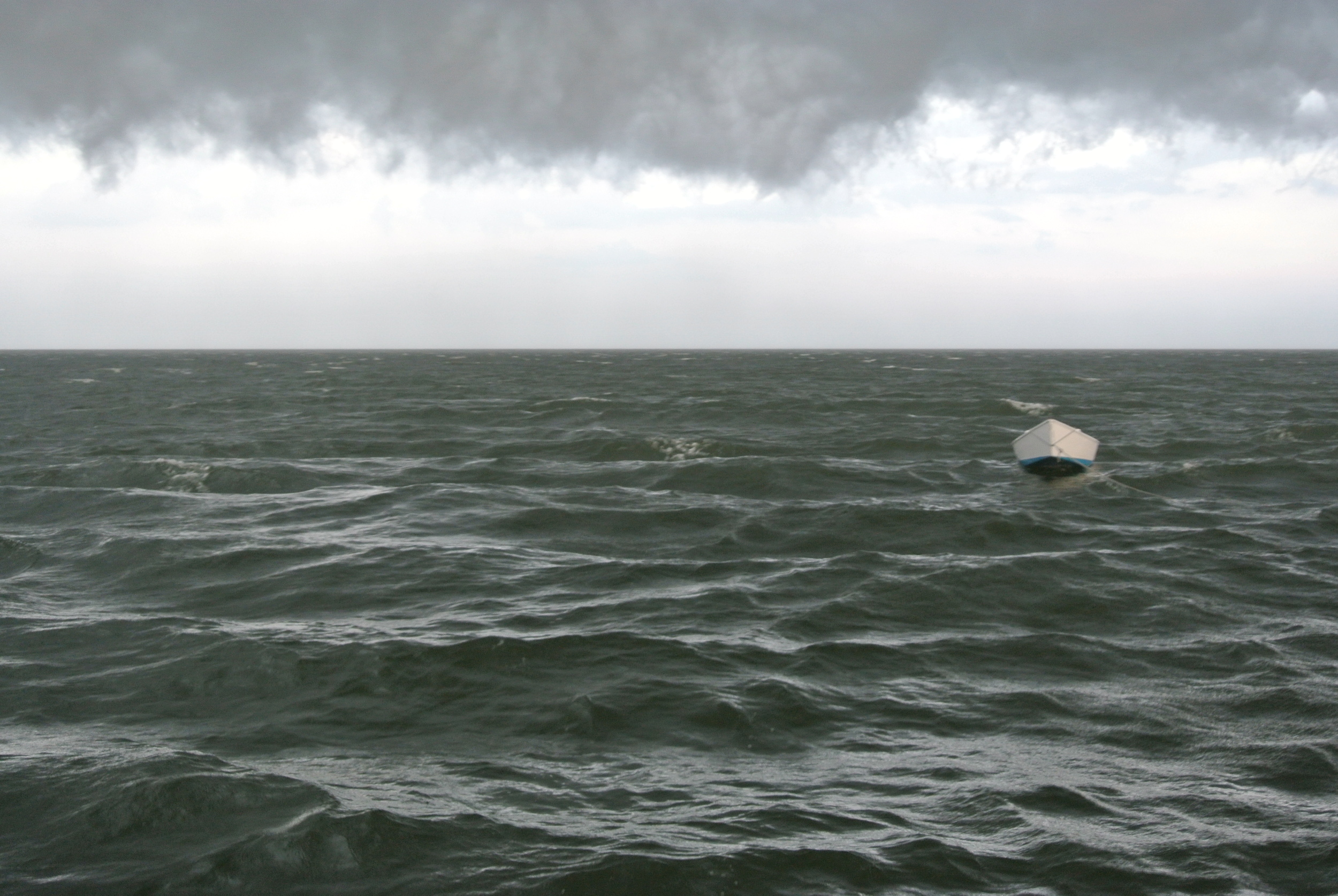
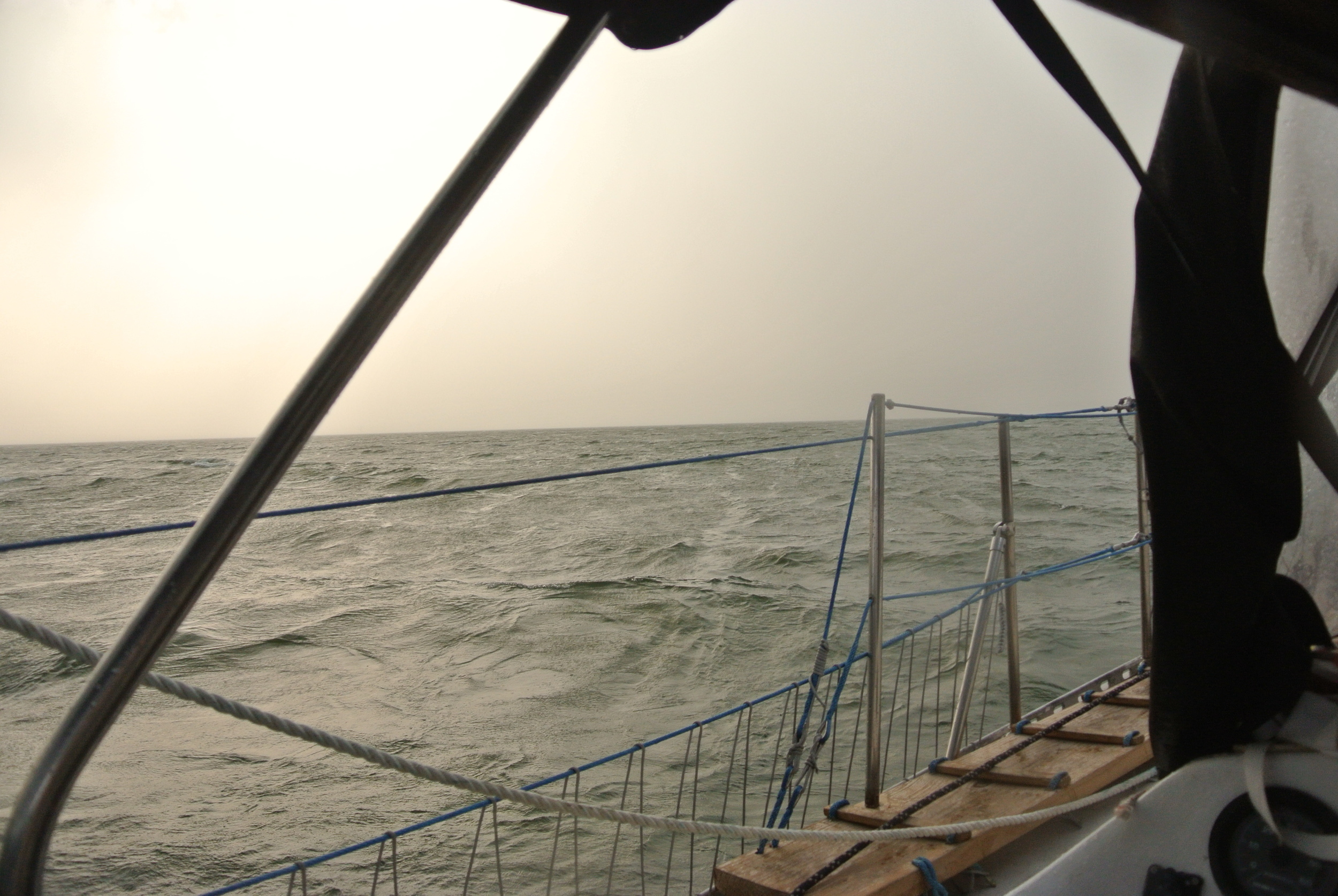
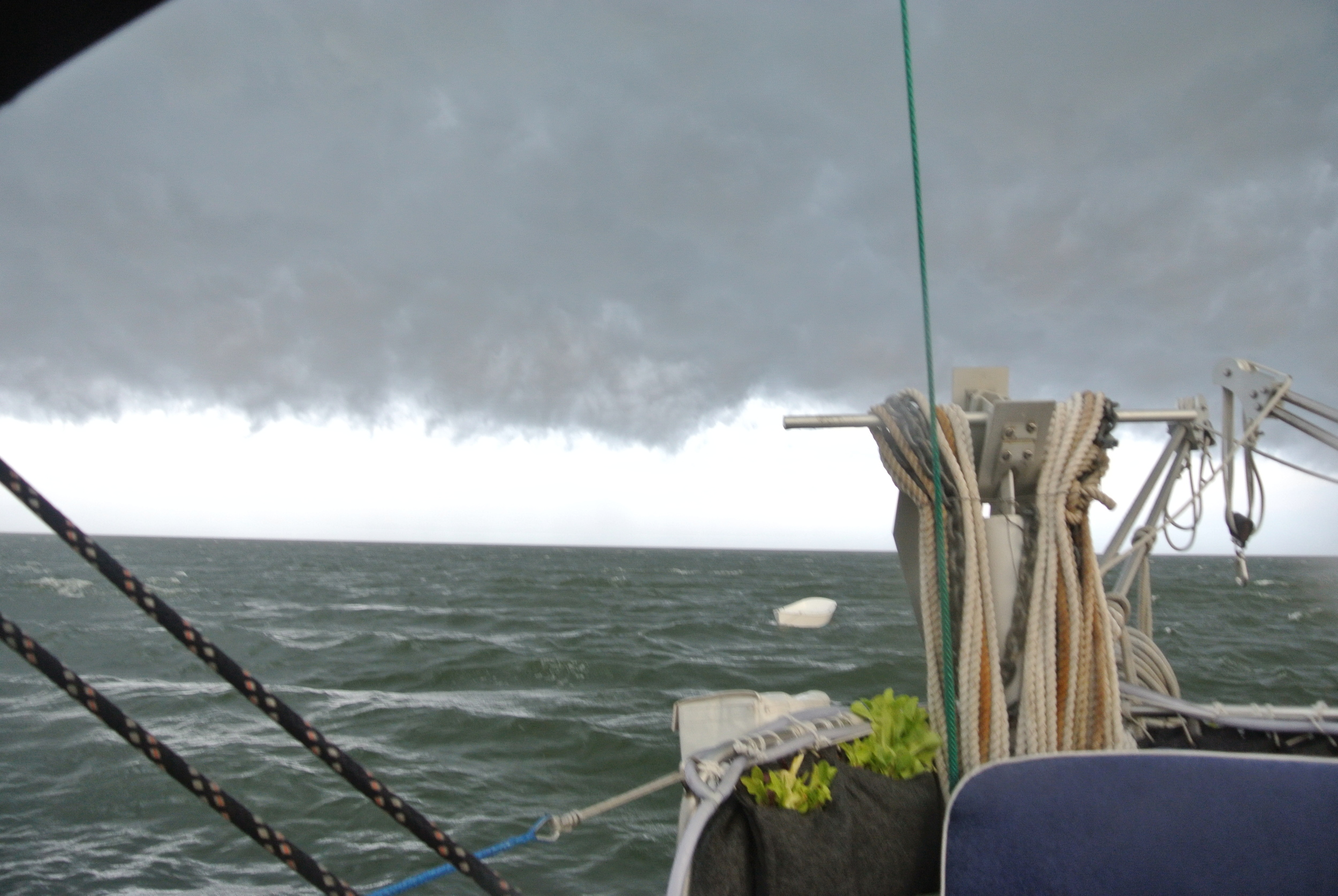
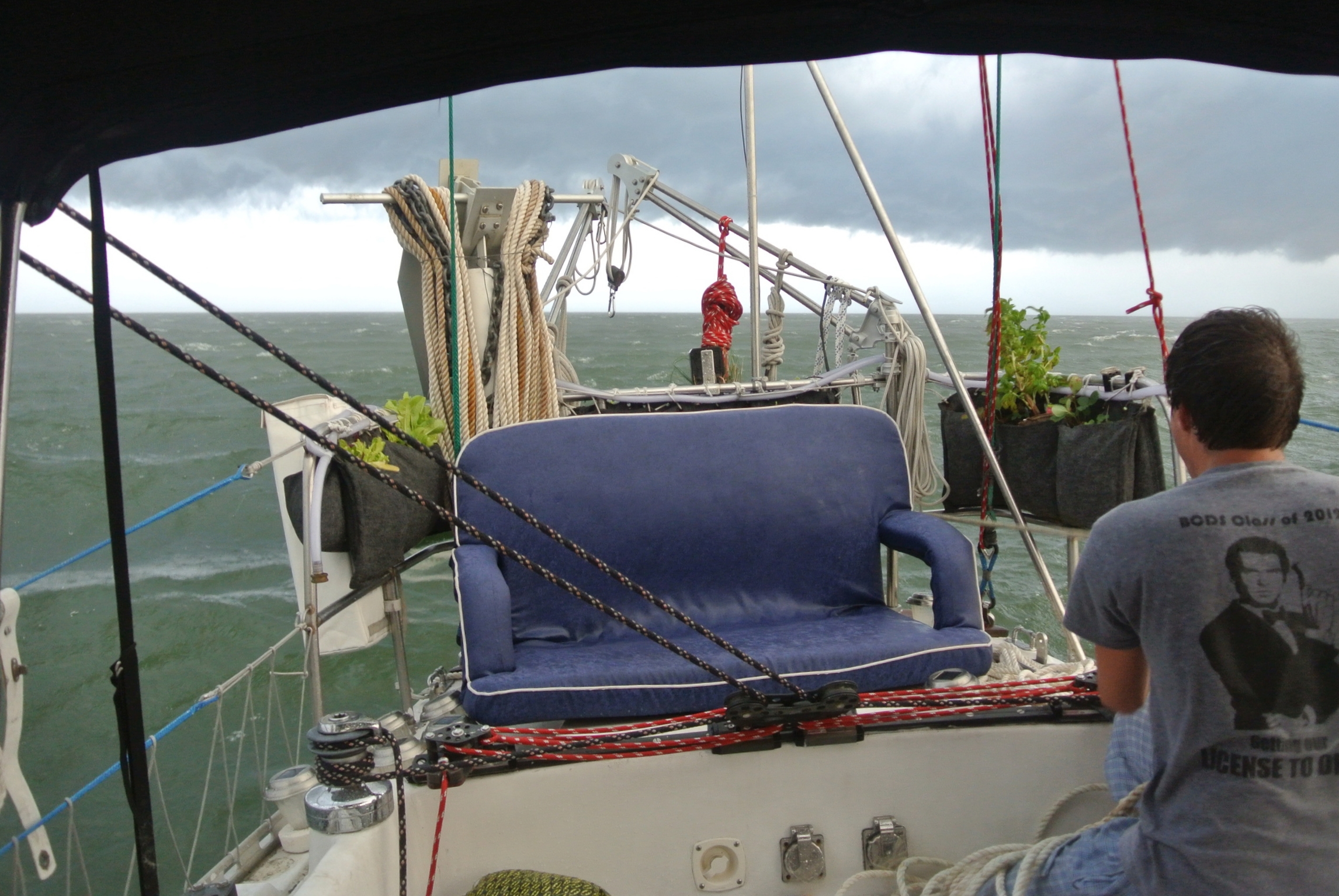
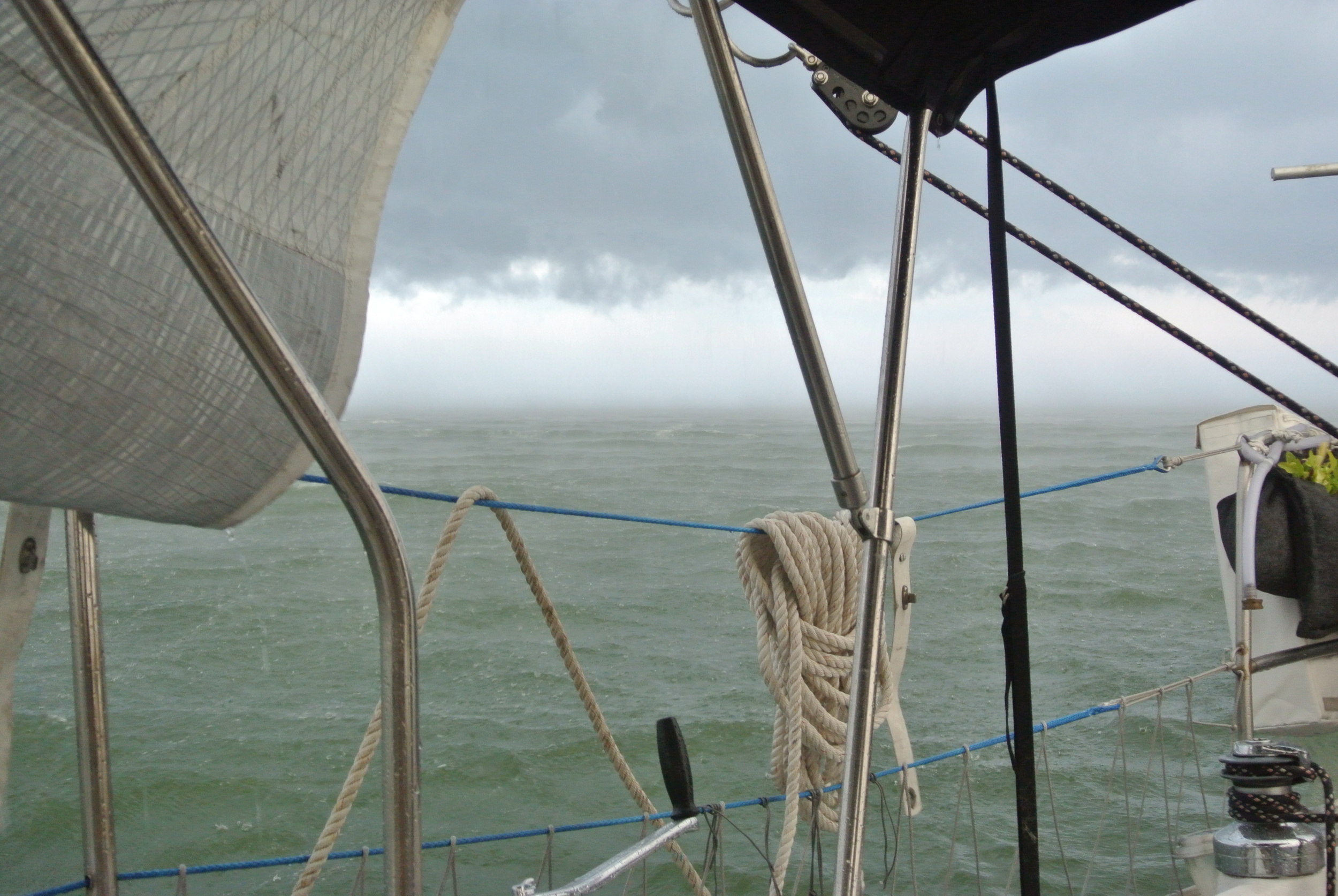
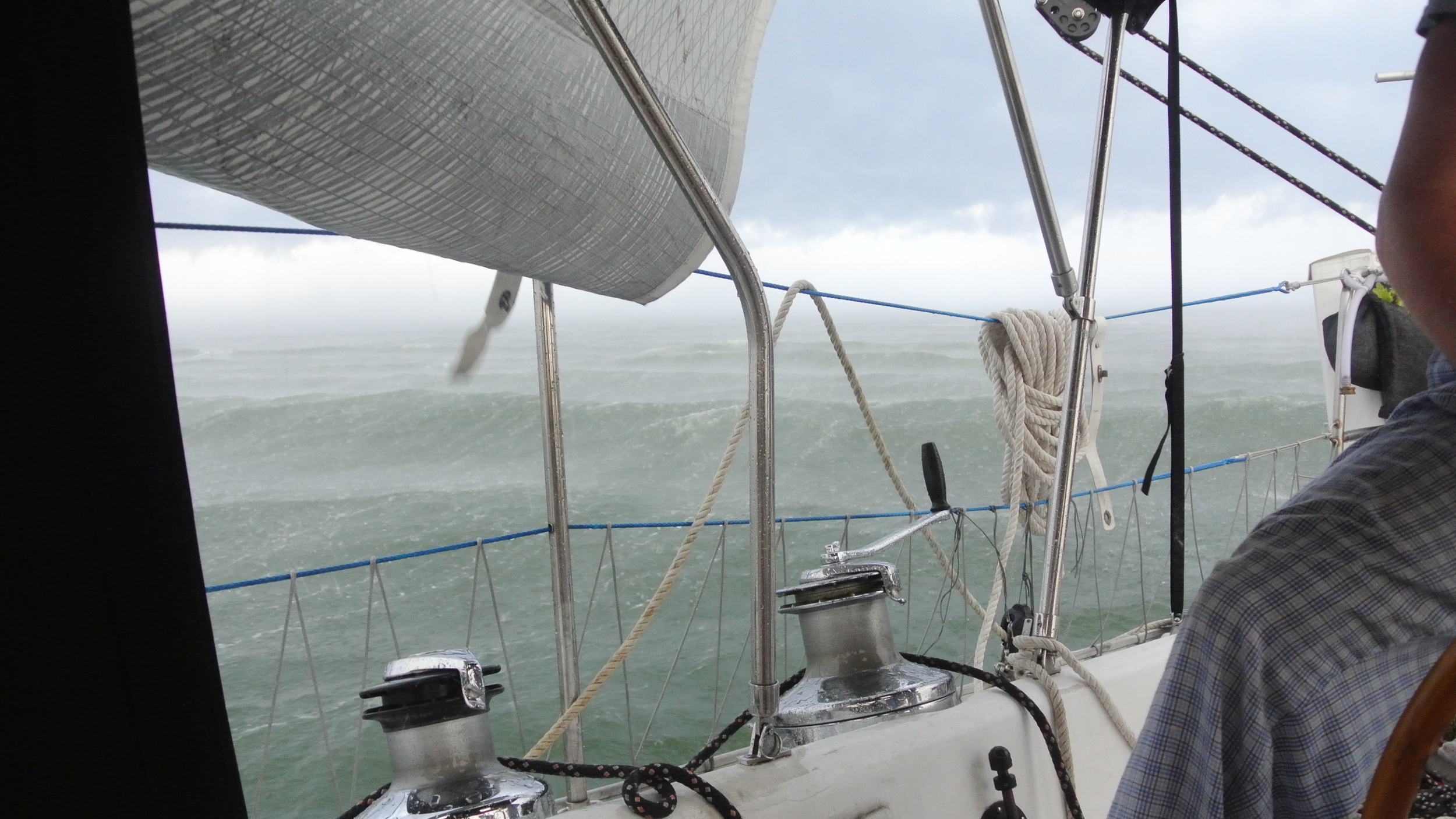
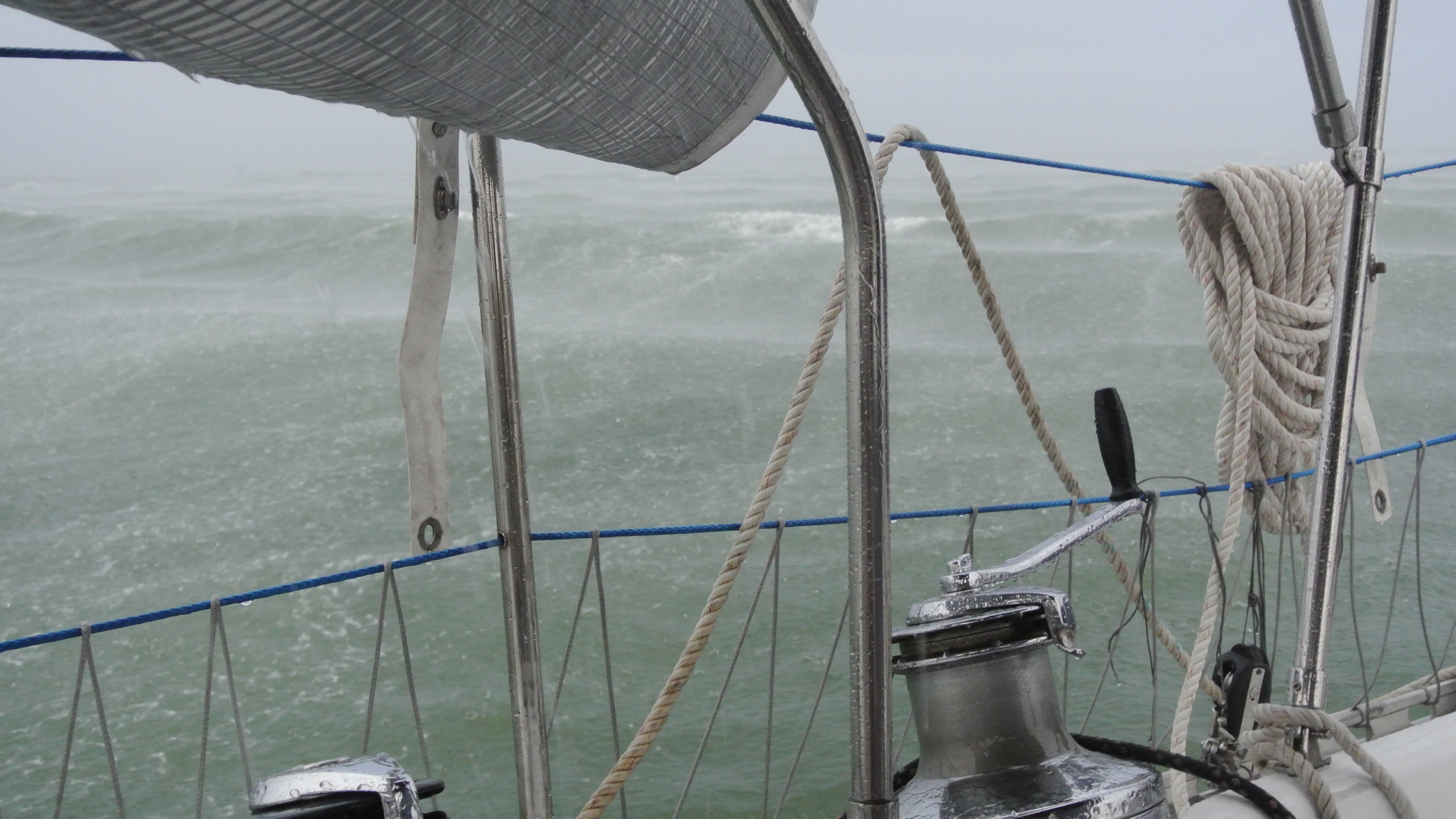
A wall of rain descended on us and visibility was reduced to just past the boat. We were in an eerie pale pink world as the suns rays were refracted by all of the moisture in the air. We found ourselves in a little world where we had no visibility and relied entirely on our anchor to keep us in place. I had let out more chain as the storm began, so with all 300 feet of chain released, there was nothing else we could do but wait it out. Luckily, the anchor held during the ordeal as winds picked up to 52 knots sustained. 

I do have to give credit to Maddie who stayed calmer than I during the squall as she took pictures of the storm while we waited for it to pass. 

Overlapping Headsails Part 3

Tacking a large headsail can be troublesome. The sail sliding past all the shrouds, and then rubbing on the front of the mast as it makes its way across the deck. It's just asking for something to get snagged and catch the sheets on something during the tack. For a novice sailor with a large sailboat, this could be quite challenging. I think this might be why the sailboat manufactures are switching over to self tacking non overlapping jibs.

A non overlapping jib is able to flop from one tack to the next without any interference. As long as the lazy sheet doesn't get snagged on deck hardware, the tacks are fast, easy, and stress free. The logical progression from such a simple to tack headsail is to make it able to tack by itself. 

The self tacker makes the headsail as easy to tack as the mainsail, allowing the captain to focus on steering his sailboat to windward rather than worrying about setting and trimming his sails after each tack. This can change tacking up a river from being a chore to an extension of the journey.

This amount of ease will make infrequent boaters more likely to fly their sails, as they won't see it as such a chore and instead find it rather enjoyable. Self tacking headsails on a roller furler would be the ideal for someone interested in the minimal amount of set up and clean up involved with going sailing. It would simply involve them unfurling their sail and setting the sheet. To put the sail away, its just a matter of furling it back up! Nothing to flake, never needing to go forward, all the ease of modern sailing.

The smaller sail area would also be less difficult to manage on the larger boats which would otherwise have monumental sails. This may also seem less intimidating to the captain, knowing that even full sail is still easy to manage by hand and winch use is a matter of convenience rather than mandatory.

I think the switch from genoas to self tacking jibs is a wonderful transition for sailboat manufacturers to make to appeal to a wider consumer base. It might make someone who was reluctant about a sailboat more interested in them, bringing them the joys of sailing that we have been enjoying for years! What are your thoughts on headsails? Do you prefer to fly a genoa or a jib? Let me know in the comments down below.

Overlapping Headsails Part 2

The genoa is a wonderful sail for close reaching. Its low clew allows it to be sheeted in tightly and power the sailboat along to windward. The problem is as soon as you begin to ease the sail, the clew begins to raise, the leech opens up, and the sail twists. This results in spilling a lot of wind and reduces its efficiency off the wind.

With taller rigs, the genoas are taller as well. To keep the aspect ratio similar, the genoa ends up as a massive headsail. My old genoa was 700 square feet, while my old main was only 400 square feet. I need a pulley system to manage the boom, but the genoa can't have a pulley system to help sheet it. All of the force is transmitted via one sheet to one winch. When the wind builds, is this too much sail to handle? It was for me!

When I had new sails made, I switched from a 150% genoa to a 95% jib. Now when the wind builds, I can still manage the sail using the winch comfortably without having to put all of my strength into the winch handle. The jib performs very well to windward due to its long luff and minimal drag; and because it is a smaller sail than a genoa, we are able to fly it in wind speeds much higher than I would feel comfortable flying the genoa in.

For your first time boat owner, is it a wise choice to place such a large sail on its furler? It's just asking for them to let the whole thing out in a blow and find themselves heeled over in a panic. That experience might make them swear to never put up their sails, converting their sailboat into a complicated and under powered power boat.

More to come in Part 3

Overlapping Headsails Part 1

I have noticed a shift in head sails lately. For awhile, everyone had massive genoas overlapping the mast and coming back very far. More boats now are coming with non overlapping jibs instead.

The explosion in genoa use was partly due to the rating rules that were applied to them. A massive headsail didn't add to your racing handicap as much, so it was almost like free sail area. The shift to non-overlapping headsails seems to be fueled more by simplicity of management. 

Many modern boats feature self tacking jibs. For this to work, the clew needs to be ahead of the mast. I personally have a self tacker set up on my staysail and it is a dream when short tacking out of a harbor or river. I will purposely sail under canvased simply for the ease when sailing short handed. 

It seems that windward performance is the top priority of modern sailboats. To do this, they have switched from shorter rigs with short and long sails to much taller rigs with skinny sails

High aspect ratio sails offer more lift compared to the amount of drag generated by the sails, while low aspect ratio sails will generate more drag for the same amount of lift. This is because the longer the air is in contact with the sailcloth, the more resistance it generates.

It seems counter-intuitive that the shift towards high aspect ratio sails would generate more use of long overlapping, low aspect ratio headsails. This is because all the sail area behind the mast helps to move the center of effort aft, pulling the vessel to windward rather than creating lee helm. A large overlapping headsail paired with a high aspect ratio mainsail will really help drive a sailboat to windward.

More to come in Part 2