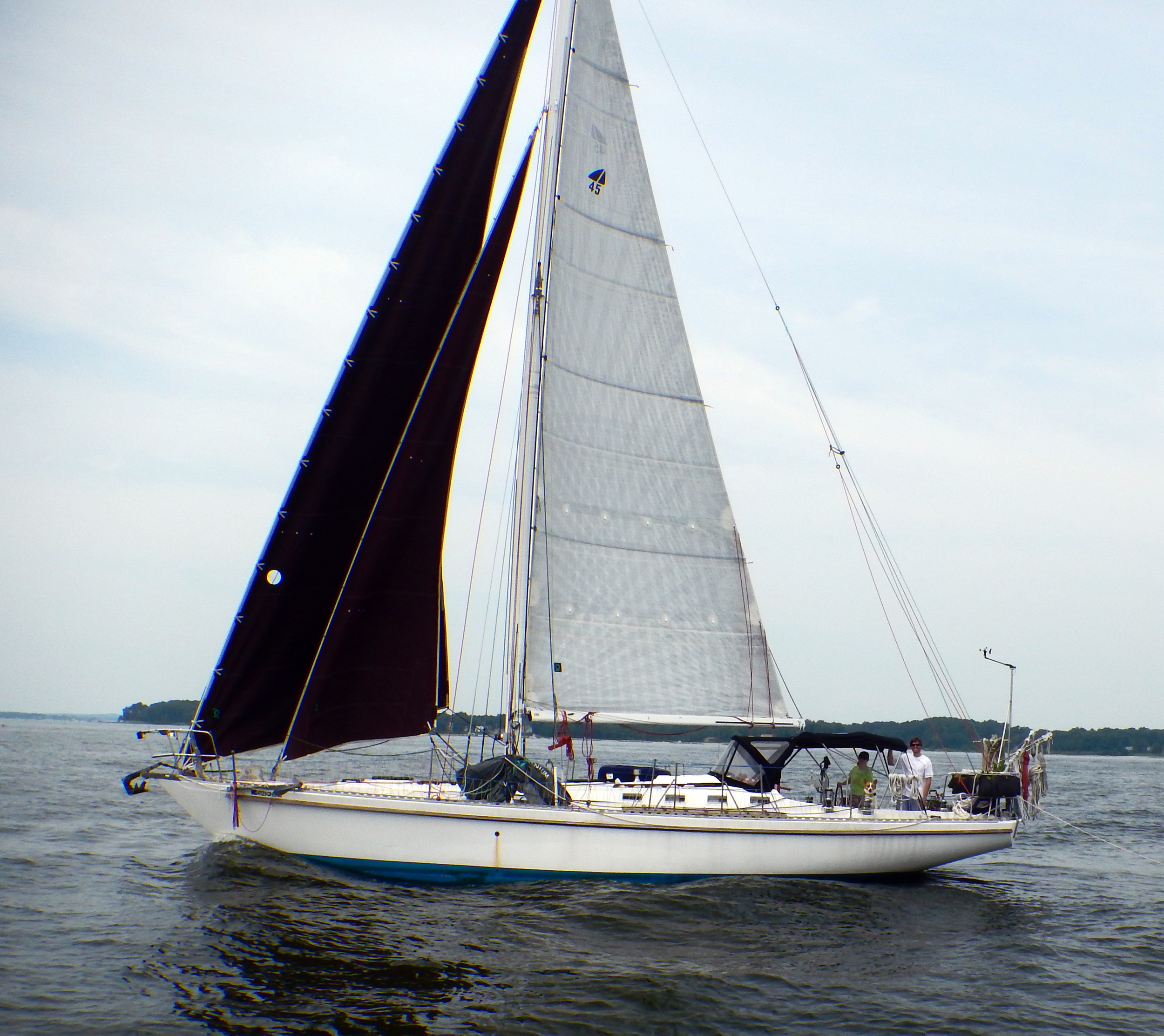
Overlapping Headsails Part 3

Tacking a large headsail can be troublesome. The sail sliding past all the shrouds, and then rubbing on the front of the mast as it makes its way across the deck. It's just asking for something to get snagged and catch the sheets on something during the tack. For a novice sailor with a large sailboat, this could be quite challenging. I think this might be why the sailboat manufactures are switching over to self tacking non overlapping jibs.

A non overlapping jib is able to flop from one tack to the next without any interference. As long as the lazy sheet doesn't get snagged on deck hardware, the tacks are fast, easy, and stress free. The logical progression from such a simple to tack headsail is to make it able to tack by itself. 

The self tacker makes the headsail as easy to tack as the mainsail, allowing the captain to focus on steering his sailboat to windward rather than worrying about setting and trimming his sails after each tack. This can change tacking up a river from being a chore to an extension of the journey.

This amount of ease will make infrequent boaters more likely to fly their sails, as they won't see it as such a chore and instead find it rather enjoyable. Self tacking headsails on a roller furler would be the ideal for someone interested in the minimal amount of set up and clean up involved with going sailing. It would simply involve them unfurling their sail and setting the sheet. To put the sail away, its just a matter of furling it back up! Nothing to flake, never needing to go forward, all the ease of modern sailing.

The smaller sail area would also be less difficult to manage on the larger boats which would otherwise have monumental sails. This may also seem less intimidating to the captain, knowing that even full sail is still easy to manage by hand and winch use is a matter of convenience rather than mandatory.

I think the switch from genoas to self tacking jibs is a wonderful transition for sailboat manufacturers to make to appeal to a wider consumer base. It might make someone who was reluctant about a sailboat more interested in them, bringing them the joys of sailing that we have been enjoying for years! What are your thoughts on headsails? Do you prefer to fly a genoa or a jib? Let me know in the comments down below.

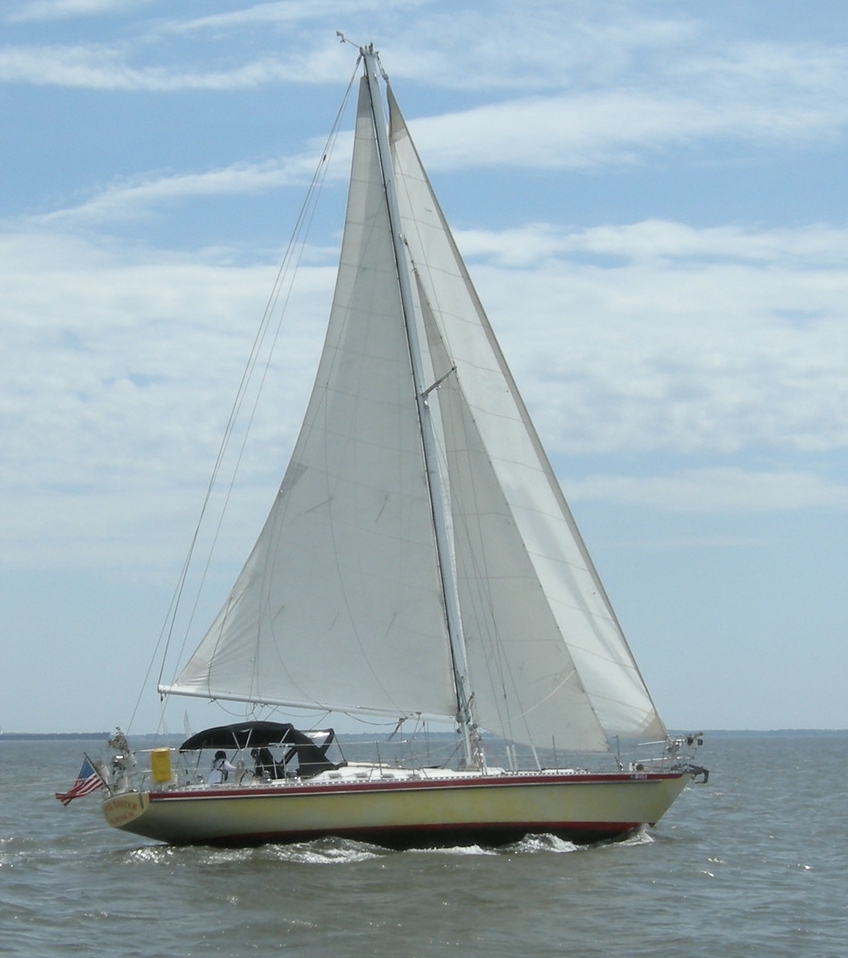
Overlapping Headsails Part 2

The genoa is a wonderful sail for close reaching. Its low clew allows it to be sheeted in tightly and power the sailboat along to windward. The problem is as soon as you begin to ease the sail, the clew begins to raise, the leech opens up, and the sail twists. This results in spilling a lot of wind and reduces its efficiency off the wind.

With taller rigs, the genoas are taller as well. To keep the aspect ratio similar, the genoa ends up as a massive headsail. My old genoa was 700 square feet, while my old main was only 400 square feet. I need a pulley system to manage the boom, but the genoa can't have a pulley system to help sheet it. All of the force is transmitted via one sheet to one winch. When the wind builds, is this too much sail to handle? It was for me!

When I had new sails made, I switched from a 150% genoa to a 95% jib. Now when the wind builds, I can still manage the sail using the winch comfortably without having to put all of my strength into the winch handle. The jib performs very well to windward due to its long luff and minimal drag; and because it is a smaller sail than a genoa, we are able to fly it in wind speeds much higher than I would feel comfortable flying the genoa in.

For your first time boat owner, is it a wise choice to place such a large sail on its furler? It's just asking for them to let the whole thing out in a blow and find themselves heeled over in a panic. That experience might make them swear to never put up their sails, converting their sailboat into a complicated and under powered power boat.

More to come in Part 3

Overlapping Headsails Part 1

I have noticed a shift in head sails lately. For awhile, everyone had massive genoas overlapping the mast and coming back very far. More boats now are coming with non overlapping jibs instead.

The explosion in genoa use was partly due to the rating rules that were applied to them. A massive headsail didn't add to your racing handicap as much, so it was almost like free sail area. The shift to non-overlapping headsails seems to be fueled more by simplicity of management. 

Many modern boats feature self tacking jibs. For this to work, the clew needs to be ahead of the mast. I personally have a self tacker set up on my staysail and it is a dream when short tacking out of a harbor or river. I will purposely sail under canvased simply for the ease when sailing short handed. 

It seems that windward performance is the top priority of modern sailboats. To do this, they have switched from shorter rigs with short and long sails to much taller rigs with skinny sails

High aspect ratio sails offer more lift compared to the amount of drag generated by the sails, while low aspect ratio sails will generate more drag for the same amount of lift. This is because the longer the air is in contact with the sailcloth, the more resistance it generates.

It seems counter-intuitive that the shift towards high aspect ratio sails would generate more use of long overlapping, low aspect ratio headsails. This is because all the sail area behind the mast helps to move the center of effort aft, pulling the vessel to windward rather than creating lee helm. A large overlapping headsail paired with a high aspect ratio mainsail will really help drive a sailboat to windward.

More to come in Part 2


Summer Cruise Day 11

This morning, we slept in.

There was no rush to raise anchor or set sail as we were peacefully tied up in Deltaville.

We cooked a proper breakfast and then I decided to stop waiting around for someone else to fix the prop. I didn't want to get in the water as there had been a series of shark attacks lately and the attacks seemed to be moving north. I was concerned that the sharks might have come into the bay and therefore didn't want to go in.

While I was eating breakfast, I watched some kids playing in the waters just next to the marina. They were thrashing around, kicking the water, doing all the right things to attract a shark, but none came. I figured that if they are ok, I'll be fine. 

I lashed my GoPro to the boat hook and stuck it down around the area of the prop to see why the drifter sheet wouldn't come free. I could see that it was leading to the propeller, but on the starboard side. Somehow, the sheet dragged through the water, went behind the rudder and forward into the propeller. I have no idea how this could have happened, but that is the situation as it presented itself.

I donned my dive gear and went in to take a closer look. The sheet was lightly wrapped around the propeller, but the cotter pin at the end of the shaft had pierced the drifter sheet. My original intentions were to remove the sheet from the prop without cutting anything, but this whole section of line was chewed up and worthless. 

I cut the line in two and easily pulled the ends off of the propeller. Later I long spliced the two ends so that we would once again have our fully functional drifter sheet.

Once that was completed, we spent some time in the pool at the Deltaville Marina. There was a gorgeous Fallmouth Cutter tied up near the pool. While Maddie was swimming around relaxing, I was admiring the beauty of its lines. There is something very stunning about a sailboat with a long bowsprit and boomkin. They seem to be a forgotten part of the design on modern sailboats. It really was a gorgeous sight!

Later that day I figured out why my housebank was not able to run the fridge, the whole bank was dead! Rightfully so, as it consisted of batteries from 2007! To not put too much of a dent in our cruising kiddie we, we decided to only install one battery for now and then worry about the rest of the bank once we have returned. So I signed up to use the courtesy car in the marina and when my turn came, the car would not start. I wasn't too disheartened, as I figured I would just load the battery in a cart and walk the mile to West Marine. 

This is where the hospitality of the people in Deltaville really showed. Sketch, the dockmaster said "Don't worry, I'll drive you after I finish work." Being from Baltimore, I first thought these were empty promises, but when he got off from work, he knocked on our hull and off we went!

Out with a dead battery, in with a new Group 31 AGM, giving us 105Ah. We figure it would run the fridge for about a day, and then we could recharge it from the motor bank as needed. 

We spent the rest of that afternoon walking through the maritime museum next to the marina and then settled in for another relaxing night. as the next day, we would be back to the old routine.

Summer Cruise Day 10.5

After our hair raising adventure to arrive in Deltaville, we were exhausted and just wanted to relax the rest of the afternoon; we arrived in the right place.

In the marina office, we received a map and a description of the town from Sketch, the dockmaster.

"Here is the restaurant, here is the West Marine, here is the grocery store, and there are the bikes you can use to get around town."

It was a small town, but everyone seemed so nice and laid back. There was no hurry or crime, we didn't have to lock up the bikes when we went inside a store. Everything was surreal and peaceful compared to what we had just been through.

I did inquire about getting short hauled to check out the prop, but was informed that no one would be working until Monday, and this was Friday. I was given a phone number for a diver who might be able to take a look sooner, but he never got back to us. We decided to just relax and enjoy the afternoon and deal with the prop tomorrow.

We spent the rest of that day walking through wooded trails and biking around the town. 

That night we stayed in the boat with air conditioning and watched a movie while relaxing without a care in the world! 

It was the perfect end to offset the ludicrous morning.