Life Aboard

Finishing the Bow

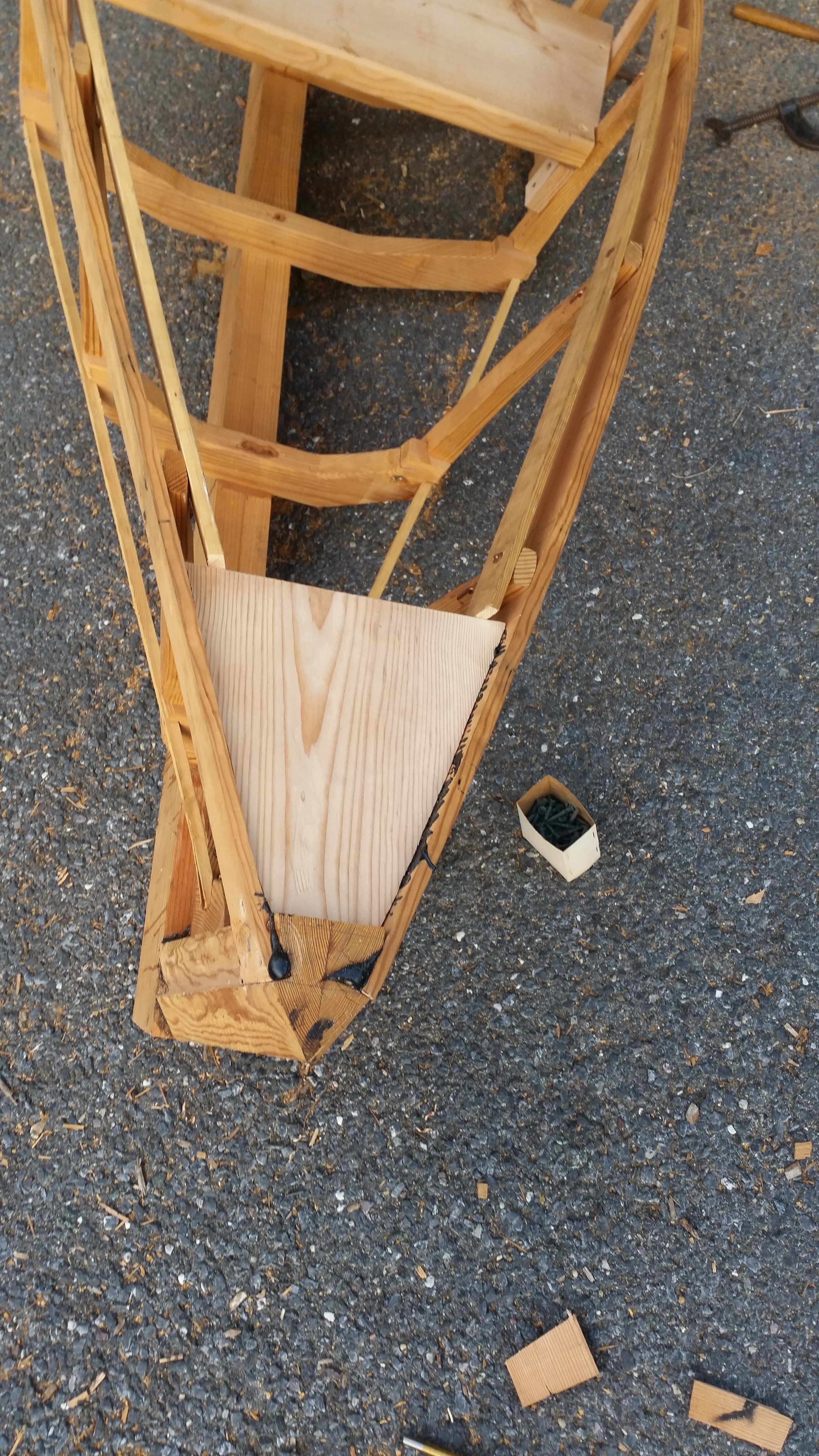
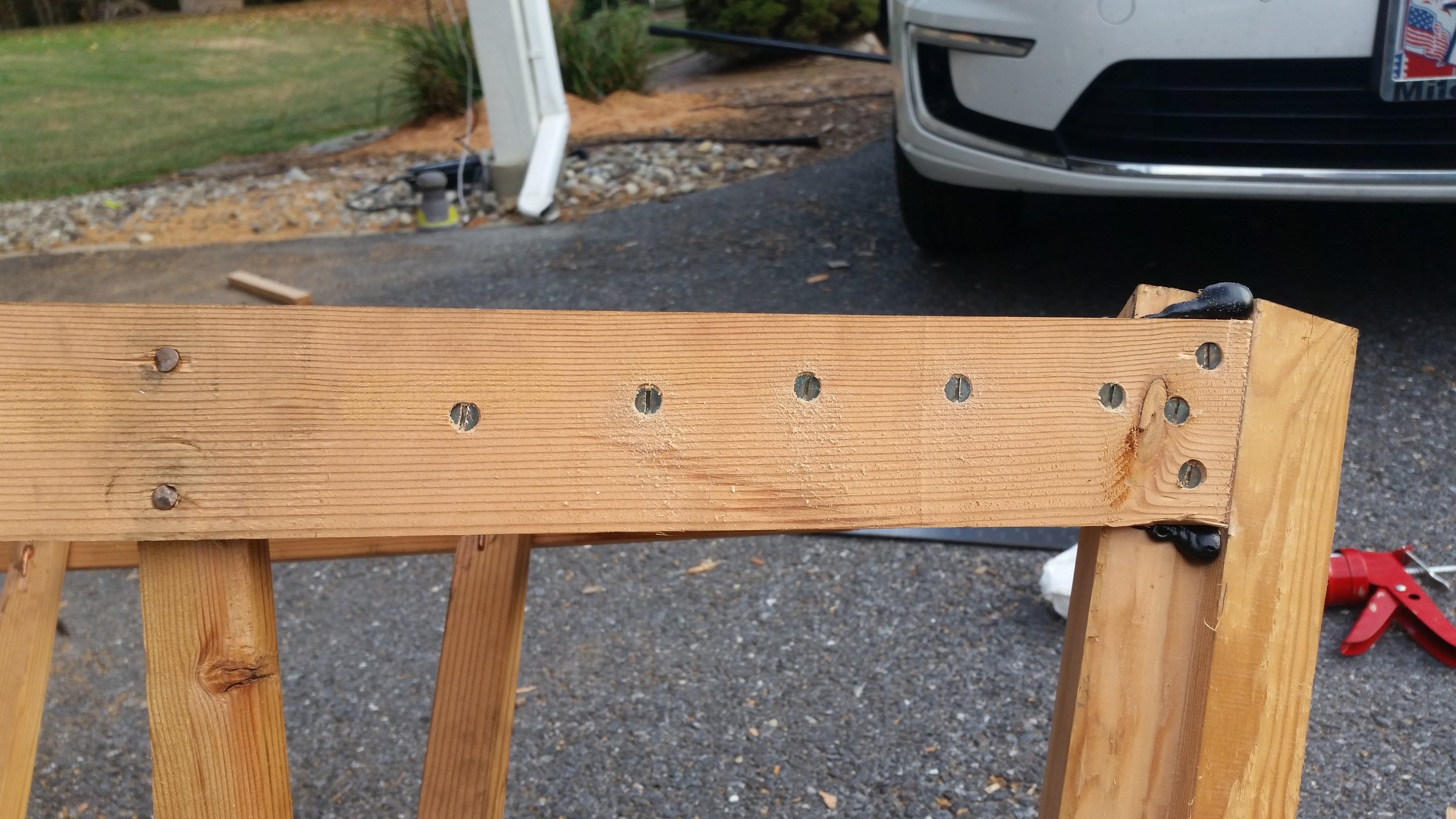
The black polysulfide bedding compound has had plenty of time to cure, now we are ready to make the stem and bow look like a composed boat instead of a pile of wood.
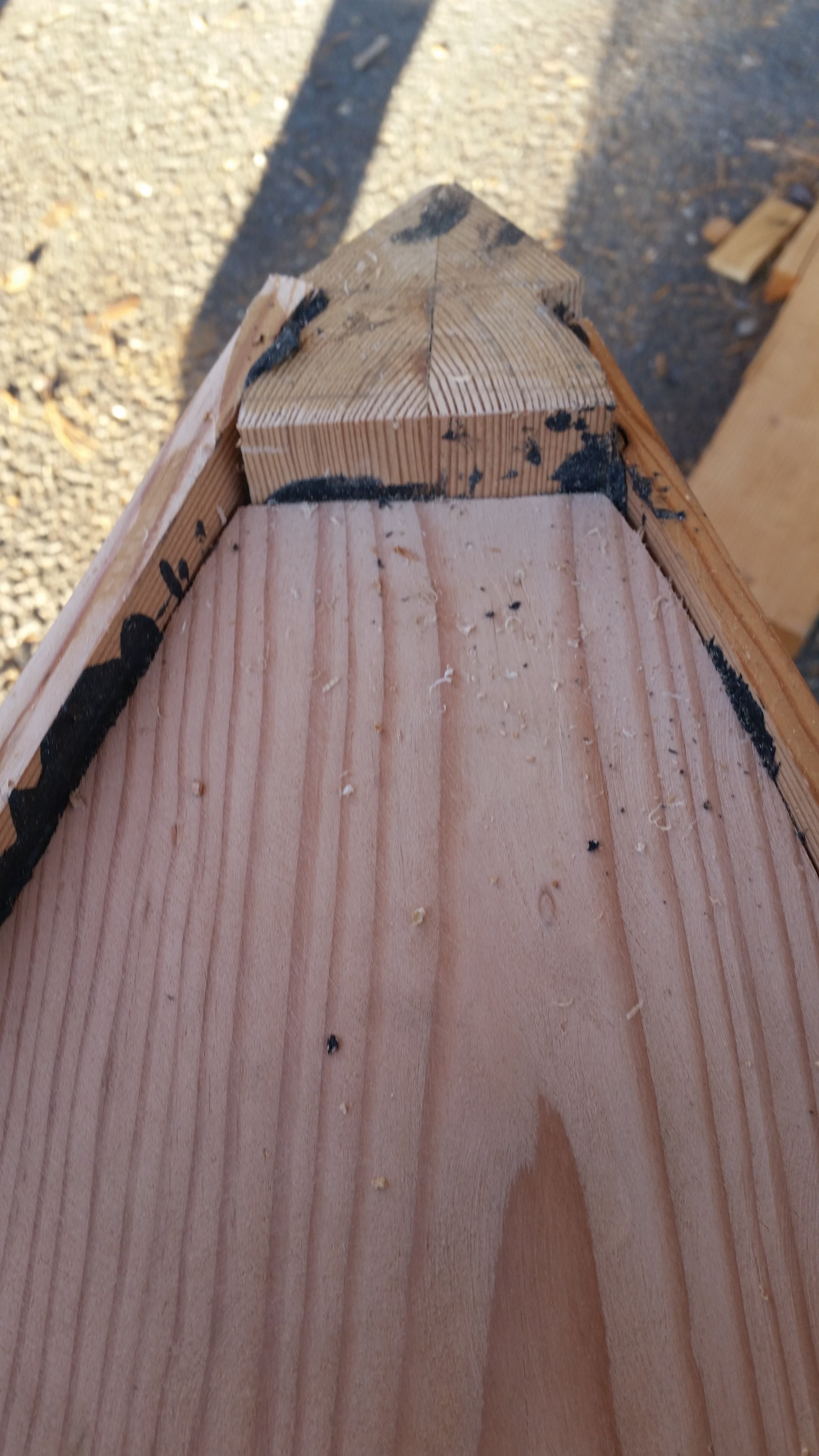
The top of the stem is sloped down, while the bow slopes up. Then the port and starboard sheer strakes are far from even. All of this needs to be evened out to make the bow look presentable as well as functional.
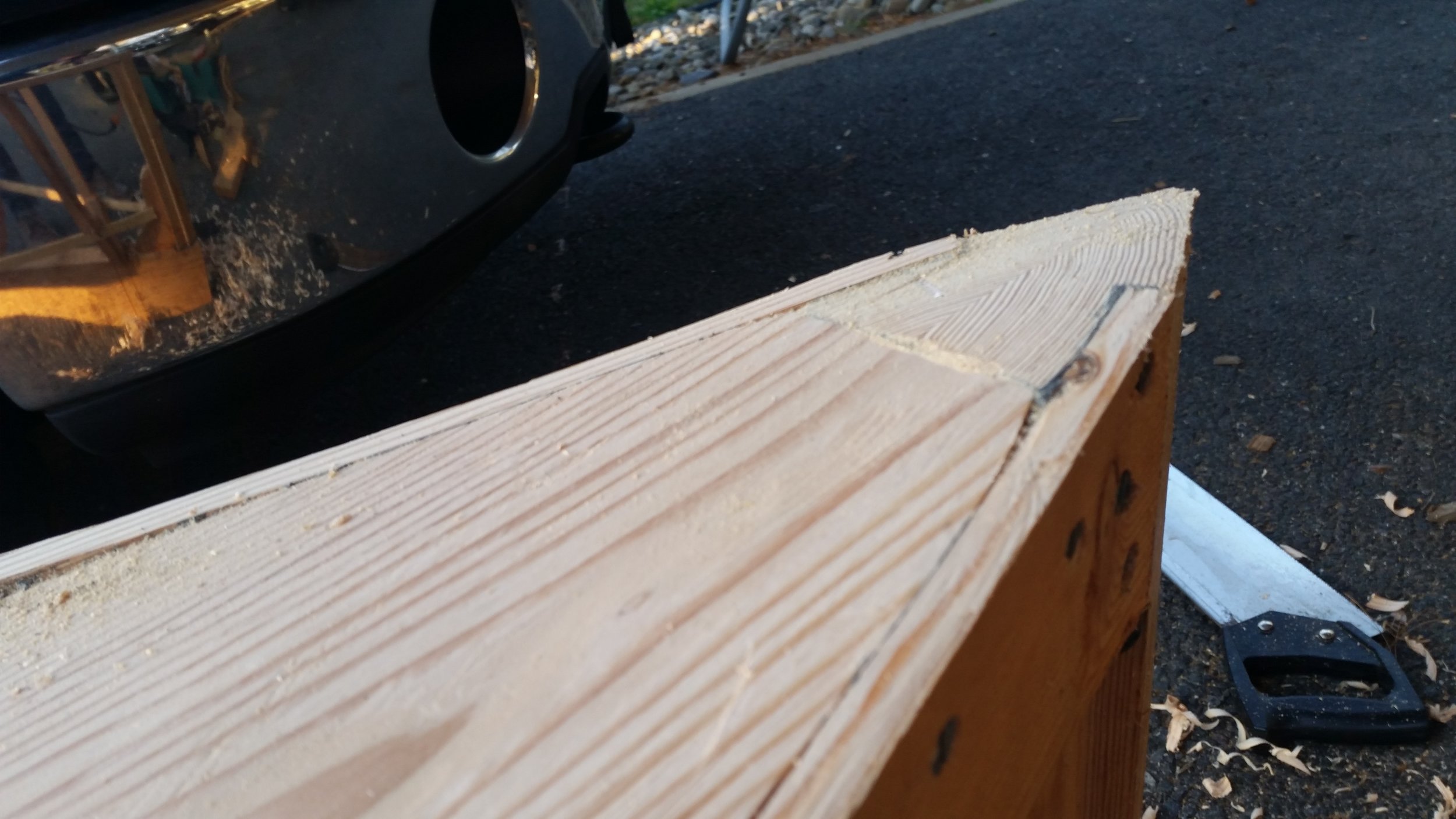
The first step is to take a handsaw and cut the top of the stem flush with the breasthook. The sheers are then planed down until they become flush with the breasthook. At this point, the bow looks a lot more presentable! Running over everything with sand paper helps to blend all the different boards together and make the bow look like a single unit rather than a hodgepodge.

The sheers and shelf clamps were also rounded as they approached the bow to take away any harsh steps that would otherwise be present.
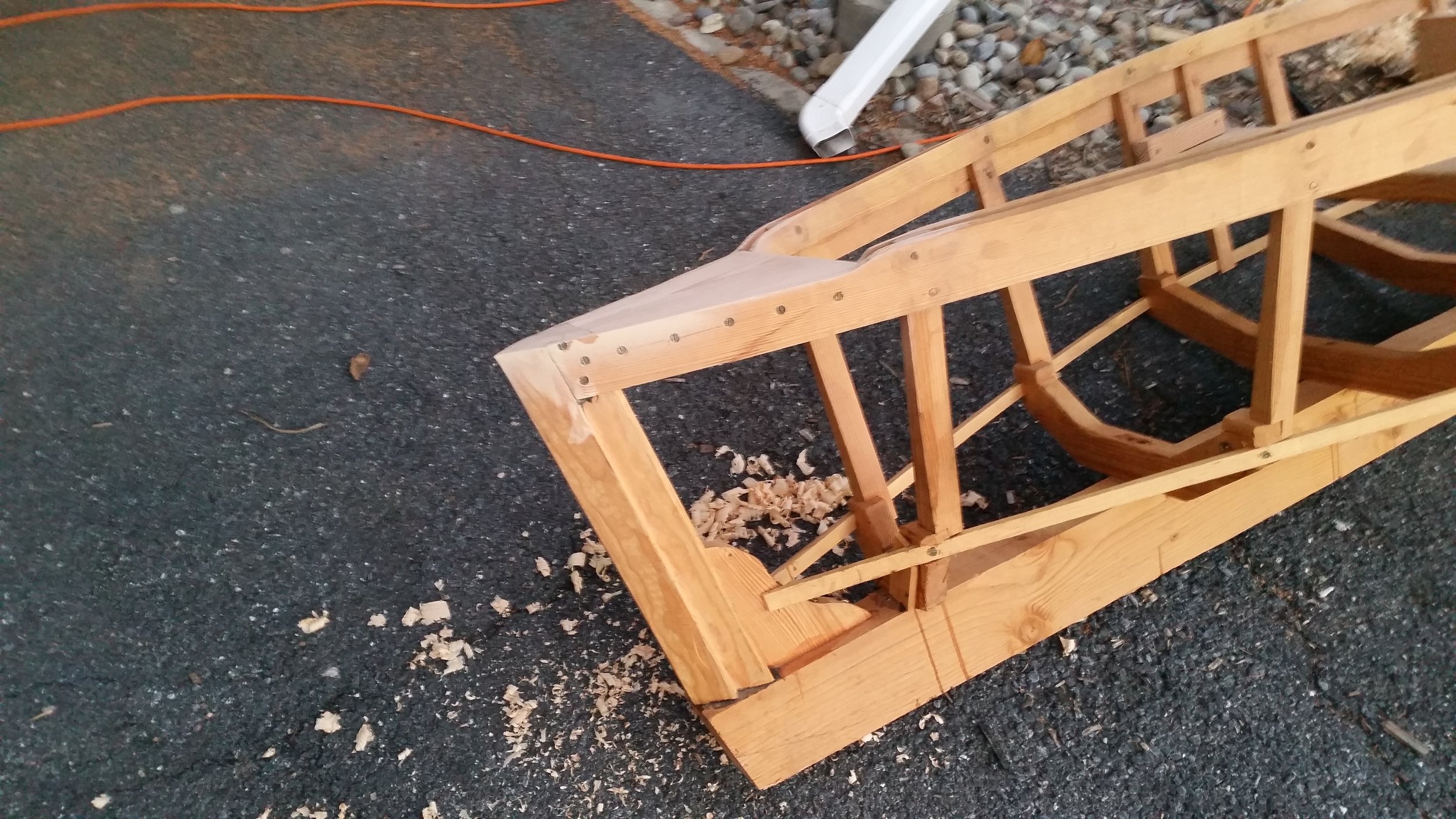
After a fair amount of sanding, the bow of the boat looks much better and smoother with the lines of the dinghy.

The breasthook is set angled slightly inboard so that if something were set on the top of the board and were to fall or roll, it would hopefully fall into the dinghy rather than overboard. Also, if someone were to sit on the breasthook, they would have a flatter seat to rest on as the dinghy pitches forward. 

Lighter sanding will be done when the rest of the boat is ready and before the planking goes on. It is always easier to clean and prepare the wood before the planking is placed as you have much better access to all the "open" nooks and crannies of the hull.
Banana Hammock

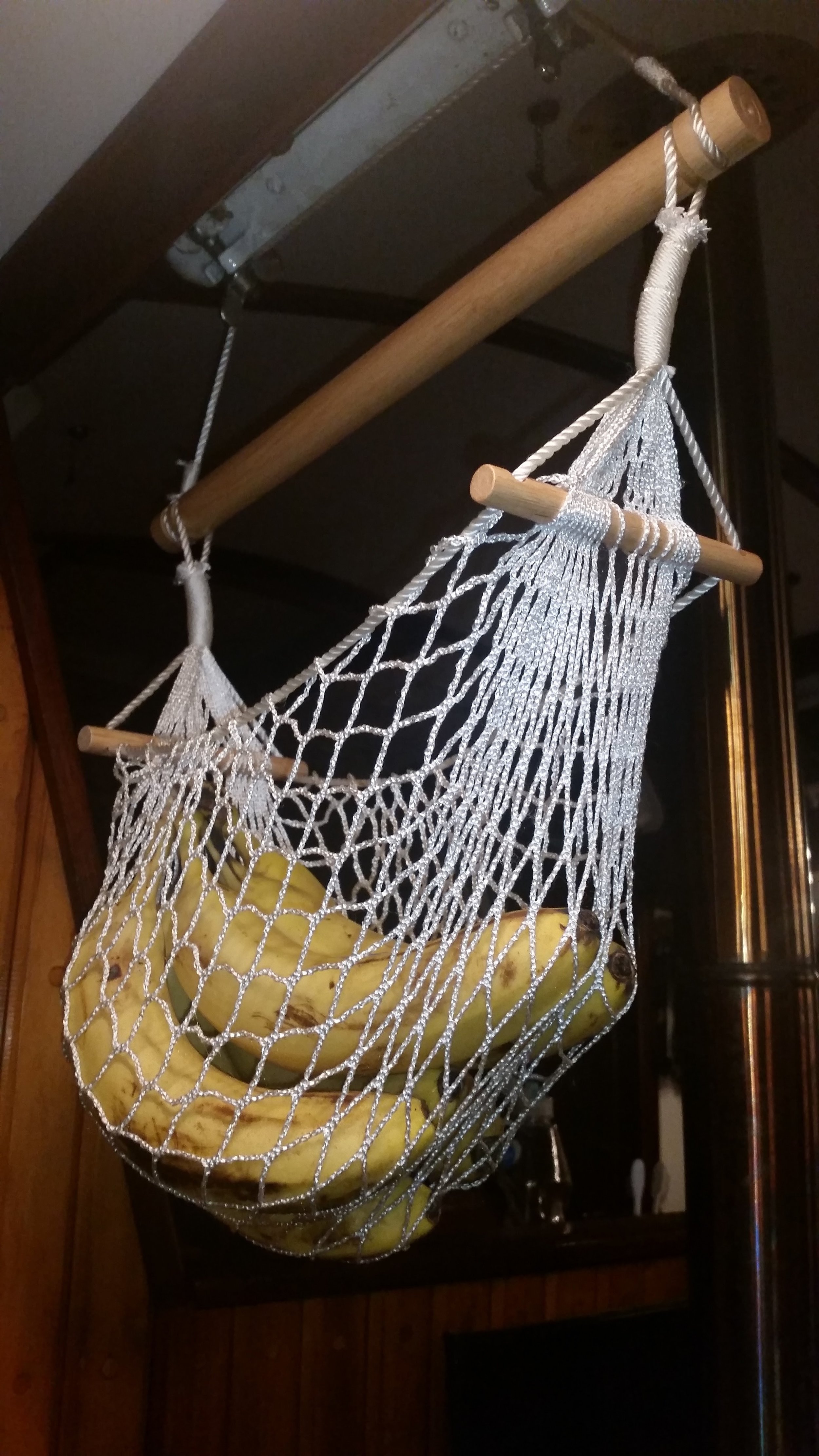
Bananas can be hard to store on a sail boat. They bruise easily and need to be kept with plenty of fresh air. A fruit hammock can resolve most of these issues! The netting allows plenty of air to flow through while keeping the fruits happier for longer. As the boat moves around, the bananas simply swing with the waves, keeping clear of any obstacles that could cause them harm. 

My favorite part about this contraption is the fact that it keeps the bananas right by the settees, so the moment I crave a snack, I can reach up and grab myself a tasty banana!

Monitor Wind Vane Installation: Part 3

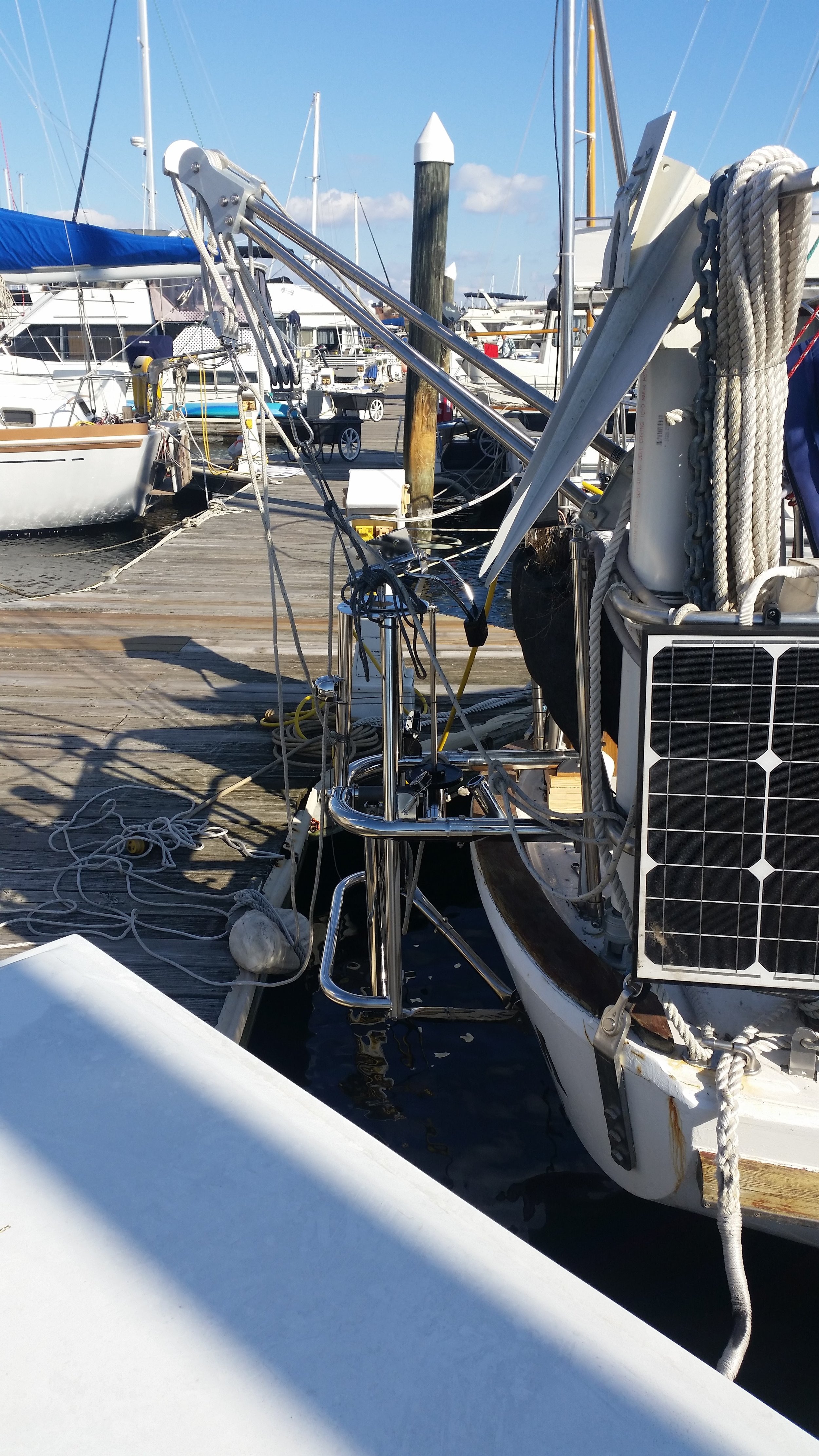
With the support struts drilled, braced, and through bolted, it was time to test fit the unit onto the transom of the boat.

The unit looks good! I tied many lines to the frame, allowing me the ability to adjust the position of the Monitor on the stern of the boat. Positioning the Monitor was a very time consuming practice. 

Each time I adjusted a line to re position the unit, I had to crawl out of the stern, walk over to the gangplank, down the pier, walk over to the stern of the boat, sit down on the dock, and sight the Monitor. This small simple task too hours to complete! Once everything was perfect, I was ready to drill the first pilot hole.

Wisdom is an old boat, and back in the 1960's they didn't know how strong fiberglass was. This led to the production of very thick hulls which weighed a ton! Racing boats always have thinner hulls than usual because weight is kept to a minimum, and why build the hull heavier than it needs to be? Assuming that the hull is much thicker than needed, we all figured that the thickness of the hull would be 1/2 of an inch (12mm) thick where it meets the transom. 

This thickness is important because the lower bracket needs to be mounted as low as possible on the transom. The bottom through-bolt hole needs be located above the bottom of the hull with enough clearance for the large washer to distribute the forces on the inside of the transom.

Being how we are going on a guess that the hull is 1/2 an inch (12mm) thick, I decided to play it safe when drilling holes in the hull. If my first pilot hole was the bottom hole, and I needed to scoot the bracket up for any reason, the pilot hole would then be exposed below the bracket and would be a hole in the hull that would need to be closed up. On the other hand, if my first pilot hole were the top one, and if I needed to scoot the bracket up for any reason, the pilot hole would then be covered by the bracket and sealed by the bedding compound! My hull is not cored so I don't need to worry about sealing the internal portion of the hole to avoid core rot from occurring. Following this logic, I decided to drill the top pilot hole first, just in case the bracket needed to be scooted upwards.

The first pilot hole is the white dust that appears in between my fingers. The bracket is 3 inches long, so there is no way I would have space for the lower through bolt's washer to be located between the bottom of the hull and the bolt. It turns out that the hull is 1.5 inches (38mm) thick! This measurement was based on the difference between the internal hole and the bottom of the hull to the external hole to the bottom of the transom. The bracket was scooted up (and then re-centered with all the lines to the unit to position it) and a new pilot hole was drilled.

The new pilot hole is the dusty portion that is inside the top washer. Three inches down from the top washer would be the location of the bottom through bolt and its washer. With the knowledge that the bottom hole would come to be in the correct position, the bottom pilot hole was drilled.

With both pilot holes located in an appropriate location, the Monitor was removed from the transom and the real holes were drilled with a 5/16" drill bit. With the holes made in the hull, the inside of the bracket and the orifices of the bolt holes were covered in a liberal application of bedding compound. I used 3M 4200 since the bracket is so close to the waterline when we are sailing. 

While the transom with its long overhang may look far from the water at rest, it actually rides down the stern wave while sailing. The boat rides in a trough between the bow and stern wave, and the stern wave comes all the way up to the transom when sailing heeled over at hull speed.

The other reason I used 4200 instead of a polysulfide is the 4200 is also an adhesive. I know that the through bolts are doing almost all of the "holding" but a little bit of help from an adhesive would be nice for peace of mind. I purposefully did not use 3M's 5200 because 5200 is permanent and will never let me remove the bracket (should I ever need to). 4200 will allow the removal of the bracket, but it will put up a fight!

Now that the lower bracket is installed and mounted, I just need to perfectly align the unit and measure for the pillow blocks which will act as spacers between the top arms and the deck.

Breasthook

With the transom knees in place, it is time to begin working on the last of the knees, the breasthook! The breasthook is merely the knee that goes in the bow. It sits on the heel of the stem and is screwed to the sheers. 

It all begins with a rough cut timber. I set a large piece of scrap on the bow behind the stem and traced the curvature of the sheer onto the face of the board. The shelf clamps had to be cut a bit shorter to allow the knee to fit into position.

With the initial cut completed, the breasthook was test fitted into the space available, but it was still a bit too large. The other factor that was inhibiting proper seating of the breasthook was the evident lack of bevels.

The stem is raked and the sheers have a slant to them. The breast hook has no bevel to the sides because the bevels are unknown at this moment. Once the breasthook is test fitted, the bevels can be transferred over to the wood by simple tracings. 

The bandsaw table was slanted to match this bevel and the sides of the breasthook were passed through the blade to impart the same bevel on the wood. With the bevel cut, the breasthook can slide down into place and produce a much tighter fit.

With a tight fit verified, bedding compound was applied to the faying surfaces of the breasthook, sheer, and stem. Then the breasthook was tapped into place with a mallet. 

You might be wondering why bedding compound was applied for the breasthook but not for the transom knees. Well, the rule of thumb is wood glue is used between pieces that wont be submerged, bedding compound is used between pieces that will be submerged. I do not ever plan on submerging the bow of the dinghy, but it might happen during the life of the dinghy. The chances of water breaking over the bow is much greater than water breaking over the stern! 

Back to reality, I don't plan on water breaking over either end of the dinghy, but the transom knees are glued and the breasthook is bedded.

To lock the bedded breasthook in place, bronze fasteners were driven through the sheer and into the sides of the breasthook. A bronze screw is driven into the front and back of the breasthook to lock it in place.

The intermediate holes were drilled, countersunk, and driven home to lock the breasthook into place and solidify the front of the bow. As part of my obsessive focus on details, the screws were all clocked so that their slots are all aligned to a mostly vertical orientation, just like every other screw on the dinghy. 

With the last knee in place, the dinghy was left alone so that the bedding compound could finish curing. Once everything is cured, the excesses will be removed and work can continue on the little craft.

Montor Wind Vane Installation: Part 2

The monitor was removed from the transom and taken to the work shop to drill and through bolt the stanchions. I was planning to drill the tubes with the drill press, but I wasn't able to position the unit onto the drill press properly. The unit was just too heavy and bulky to hold in position while operating the drill press. 

I then switched to using a cordless hand drill to make the needed holes in the stanchion tubes where needed. This process was easier to manage but not as easy to carry out. Drilling stainless steel is a very slow and tedious process. Drilling stainless steel was discussed further here when I fabricated a new set of chainplates for an Islander 36.

All I needed to do was drill four holes in tubes and I would be set! I started with a trip to the hardware store to purchase two new drill bits. Stainless steel is a real pain to drill, and any tricks will help make the task less arduous. A new, sharp drill bit will make this task proceed a bit more smoothly. 

As always, there is a right tool for the job. For drilling stainless, you want to use a cobalt drill bit, as these are made of a harder metal and will hold their edge longer. If you took your regular drill bit and started spinning it on the pilot hole, you would dull and destroy the drill bit in a few minutes.  I purchased two of these because they are very sharp, but one mishap can cause the drill bit to dull or shatter. Should this happen and I only purchased one, I would then need to make another trip to the store to pick up a second drill bit!

The Monitor was positioned firmly in a flower bed where nothing sharp would hurt its polished finish and the through bolt holes were slowly and steadily made. Keeping the speed low reduces the amount of heat buildup while removing the metal. If the bur starts to blue, you need to stop and slow down as heat is building up. If the bur turns blue, the edge is soon lost and you will need to switch to a new one soon. If you see orange appear in the bur, it is toasted and you might as well drill at full speed and finish your hole because the bur is dead and not worth using for the next hole.

Drilling stainless steel is a slow and tedious process that results in an unnoticed hole in the metal. There should be no change in colors nor excess heat buildup near the hole, just a punch out in the metal where surface once was.

The next step is to install the through bolts which will tie the unit all together. If you simply bolt up the stanchions, the metal tubes would be crushed during the tightening process! To avoid this catastrophe, you need to install metal tubes that will provide resistance to the tightening bolts. 

The problem with this simple task is it is not very simple. The metal tubes are snug and do not slide through the pipe. If they did slide, there would be no way to hold them in place while the bolts are installed.

The small metal tubes were placed over the opening to the pipe in line with the holes in the side and tapped in with a hammer. This worked well until the pipe was at the maximum depth of the hammer. I then switched to a center punch (used backwards) where I tapped on the small end and transferred the force to the tube via the large wide end. This allowed the pipe to be tapped into place without issue and in line with the holes. If the pipe needs to be twisted, simply grab the pipe with a box wrench and spin the wrench with a lever bar to provide the mechanical advantage needed to spin the restricted tube inside the pipe. This trick works, but it is hard to carry out and best to not need. Just make sure to start out lined up and keep it lined up during the entire process.

With all the through bolts supported, the Monitor was fastened together and all the nuts were tightened until the lock washers laid flat. I did not over tighten the fasteners as this would cause undue stress on the whole unit. 

Next step will be another test fit!