Life Aboard

Dealing with the Heat

This summer has been very hot in Maryland. The outside air is incredibly hot and humid, making any desire to go sailing on the weekends wither and die. Our top priority is to keep cool and stay comfortable while this heat wave blows by.

We have air conditioning installed in the boat, which cools and recirculates the air presently in the boat and an active and passive air circulation system which keeps the boat filled with fresh outside air.

We keep the air conditioning set to 68 during the summer and the unit is able to keep the boat around 70 to 72 degrees Fahrenheit. During this heat wave, the air conditioner was struggling to keep the boat cool as the interior temperature reached 84 degrees! We need to take some steps to help it out.

Our first step is to tackle the air circulation system. The active air circulation is powered by solar fans which draw the interior air out. As the air is drawn out of the boat, the passive air circulation lets fresh air enter the boat via a series of vents.

We decided to leave the head's air circulation intact. This consists of a dorade vent to let air in and a solar fan to draw air out. Our composting toilet likes the air to turn over and circulate, so this setup can be left alone as long as we keep the door closed so the heat doesn't enter the rest of the boat.

The other dorade is in the hallway that connects the forward berth and salon. It also lies right over the air conditioner intake. Air from this dorade makes its way through the boat and then exits via a fan above the galley, also keeping a fresh turnover of air inside the boat. During colder months, this constant turnover of air helps keep condensation issues under control, but we don't have to worry about that with the summer heat. 

Maddie and I noticed that the hallway was significantly hotter than the rest of the boat. The heat also became more intense as you moved your hand closer to the vent in the deck where the dorade feeds. 

Dorade vents are typically screwed into the dorade box and held in place with a set screw. Simply loosen the set screw and unscrew the dorade vent to remove it from the box.

We then covered the dorade vent hole with a cover plate that screws into the same threads which hold the air scoop on. These covers are meant for heavy weather use, when raging seas are expected to swamp the deck and fill up the dorade box. Dorade boxes allow air to enter the boat while separating out any water, letting it drain out through the weep hole visible in the bottom right corner. If a huge wave were to fill the box faster than the hole could drain the water, water will then pour into the boat and soak the interior in salt water. In these situations, replacing the vent with a cover plate will prevent the ingress of water and keep your interior dry and clean. 

We have never needed to use these cover plates before, since we heave to in heavy weather and don't take waves over the deck, but we had them in a locker and I knew right where they were. 

As soon as I installed the cover plates, the heat in the hallway vanished and the interior temperature in the boat started to drop. In a few hours, the temperature was 71F and the air conditioner doesn't need to run as often either. 

During these hot times, keeping cool takes priority over sailing. It certainly is nice to be plugged into shore power in a marina while living aboard!

Hot Showers Without Electricity

Showers are nice, and what's even better is a hot shower! When you are plugged in at a marina, the water heater makes the shower on the boat as comfortable as a shower on shore, but what about when you are anchored out and not plugged in to shore power?

Some people will crank up their generator to power the water heater, others heat their water with the diesel motors coolant. On Wisdom, we don't have either option since we never had a generator and have replaced our water cooled diesel with an air cooled electric motor. Living with an electric motor should not condemn you to a life of cold showers!

We use the power of the sun to heat our shower water in a way that uses no electricity or fancy complicated systems. 

We call it the BatShower!

We call it the BatShower!

This contraption is simply an insecticide sprayer (new and never filled with pesticide) wrapped in black tape with a kitchen sprayer hose connected to the container. 

The black tape helps collect more radiation from the sun, heating up the water inside all the faster! Black paint could also work but we worried that the paint would chip off and make a mess on the boat. The black tape has developed some scrapes and nicks over the years, but there has yet to be any flaking or mess caused by this setup.

The kitchen sprayer nozzle has been a wonderful addition to the shower. We felt weird spaying ourselves with the pesticide nozzle, and the nozzle took up a lot of space. The kitchen sink nozzle is small, compact, and works just like a regular shower nozzle. The button on the handle lets you control the flow of water as well, depress the button to flow water, release the button and the flow stops completely! Thanks to this shower nozzle, we waste almost no water during our showers.

To operate the shower, simply pump the handle a few times to build up pressure, then wet yourself, lather up, and rinse yourself off. Maddie and I can both shower with the volume of water stored in this shower, and still have some left over! Having the very limited quantity of hot water also reduces the risk of a long shower depleting our water tanks. Long showers with the sprayer are interrupted by the need to re-pump the tank! This helps keep showers short and water use to a minimum while still getting you clean and making sure you smell nice.

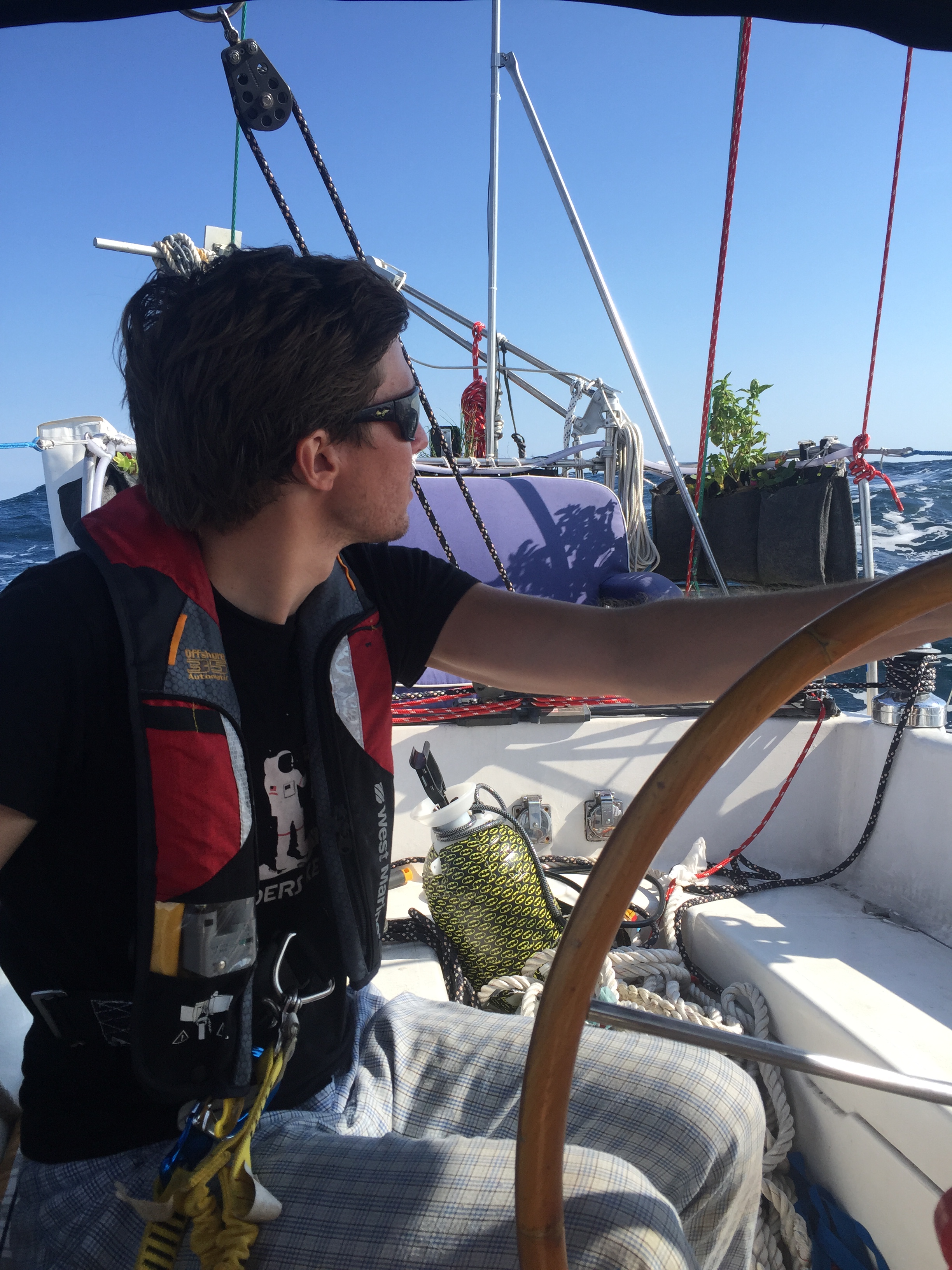
To warm the tank, we simply leave it laying in the sun all day. You can actually see it in most of the pictures, it's left resting in one area or another while we sail or at anchor; passively collecting sun and heating up our shower water.

By the end of the day, when we are ready for our shower, we have plenty of hot water for us! If no one is around, we shower on the deck or in the cockpit; if we are in a crowded anchorage, we shower inside in the head by placing the shower on the composting toilet and standing in the shower stall area.

It takes up a lot less space than a regular shower, requires no plumbing, and only relies on sunlight to generate our heated shower water! If we have a cloudy or cold day and the shower is unable to warm up, we simply boil some of the water on the stove and pour it back into the container. That will give us plenty of hot water in a hurry!

Air Circulation

Air circulation is very important on a boat, it keeps the air fresh, fights mildew growth, and helps control condensation. There are many ways to achieve air flow in a boat and we will look at some of the options.

There are two main types of vents on a yacht, passive and active. Passive means that air can flow through them if it should desire but there is nothing pushing it to do so. Active air flow is achieved when a fan pushes the air through the vent. By using a combination of active and passive vents, proper circulation can be easily achieved.

Active air flow utilizes fans to push the air through. This can range from your engine room blower to solar vent fans. These systems actively push the air in our out of an area. 

Passive air flow typically utilizes dorade vents, grates, hatches, and port holes. These openings can be directed to draw air in without the use of a fan. 

Active air flow alone is not as effective as the combination of active and passive. When used alone, they will either create a change in pressure that will work against them. Imagine a sealed engine room with a blower trying to suck all the air out as quickly as possible. It won't be able to! As much as it draws, there needs to be new air to replace the extracted air. The same with a boat riddled with solar fans all drawing air into the cabin: if there is no place for the current air to go, no new air can come in.

When used in conjunction with one another, the blower can draw the engine room air out while vents feed fresh air in; turning over the engine room air and ensuring an explosion free engine start! The same goes for a vessel with a bunch of solar fans pushing air into the cabin, a few vents to let the current air out will greatly increase air flow.

While vents and fans are useful when there is little breeze, hatches and dorades shine when the wind pipes up! Hatches can be angled into or away from the wind, the same with dorades. When angled into the wind, they will draw in great volumes of fresh air. When they are angled away from the wind, they will create a low pressure behind them that will draw out the cabin air. This is why if all the vents aim into the wind and you close the companionway, the draft will stop; the air needs someplace to go.

When it's cold out, no one wants to be opening hatches to keep down moisture levels, but you still need that air turnover to combat condensation. This is where passive vents shine. They will let in and out just enough fresh air to keep the boat much drier. 

I typically keep my two dorade vents aimed in opposite directions. This way one is always drawing in air while the other is expelling air. 

Vent position is also very important. If all the vents are in the same area, the rest of the boat will suffer from still air. Vents should be laid out in such a way that air will flow through the whole boat. Placing dorade vents near midship will draw air in, and having vents for it to escape forward and aft will draw the air through the whole vessel.

Another place that is often overlooked but greatly appreciates the airflow is the bilge. Airflow helps fight wood rot. If the wood is sealed up with still air and high moisture, spores will begin to activate and eat away at your timbers. Having a grate in the floor is a minimally invasive addition that can help promote bilge airflow. Feeding a large air hose down into the bilge connected to a dorade vent will further promote airflow into the bilge. 

If you find that your boat is stuffy inside, think about adding a combination of active and passive vents to help circulate the air inside to make it just as fresh as the air outside!

Top Loading Refrigerators

We have an obscenely large refrigerator/freezer on Wisdom, which lets us carry plenty of cold food (as long as the batteries and solar panels can keep it running). Our fridge is 14.5 cubic feet, and is insanely deep! This may sound like tons of space, but the reality is the fridge relies on proper airflow to keep everything cold and organization so that we can access our foods.

The boat originally had holding plates that were driven off of the old diesel motor. This large compartment had two holding plates, making it a giant freezer. The other smaller side had only one holding plate and was the refrigerator. We converted the chill plates and re-arranged the setup making the small side the freezer with a spill over fan to the large side (now refrigerator).

In order for the fridge side to work, we need air flowing through. A small fan set low in the fridge draws low cold air from the freezer side and sends it over to the fridge side. A series of holes in the top of the divider lets the air return to the freezer from the fridge. This setup lets air flow and circulate from the freezer side over to the fridge, and back to the freezer.

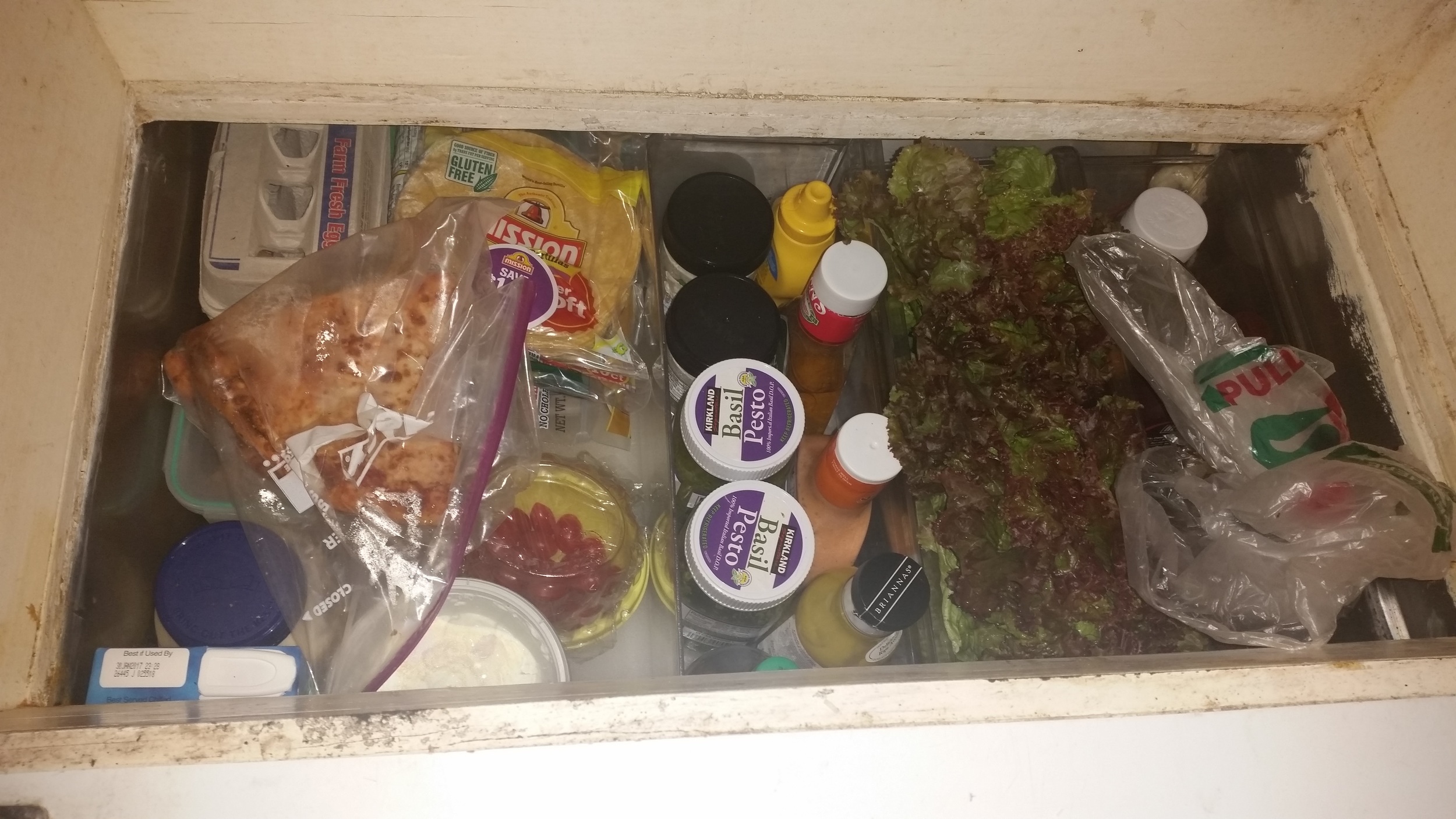
The problem with this setup is air needs to flow freely through the compartments. If we packed it full with food, air would not flow and the fridge would begin to heat up! To avoid this, a series of containers is used to keep the foods organized and still allow air to flow freely.

Two plastic boards hold everything up near the top where we can easily reach it and provides a flat surface to store food on. The left has a very large plastic cutting board and the right has three drawers from an old refrigerator. Air can easily flow into the bottom compartment, through the gaps in the plastic and back up to the surface where it returns to the freezer side.

Using plastic for all the dividers makes clean up much easier if something were to spill or spoil. Everything can be easily wiped down periodically, keeping our food stores fresh and accessible.

Sailboat Art

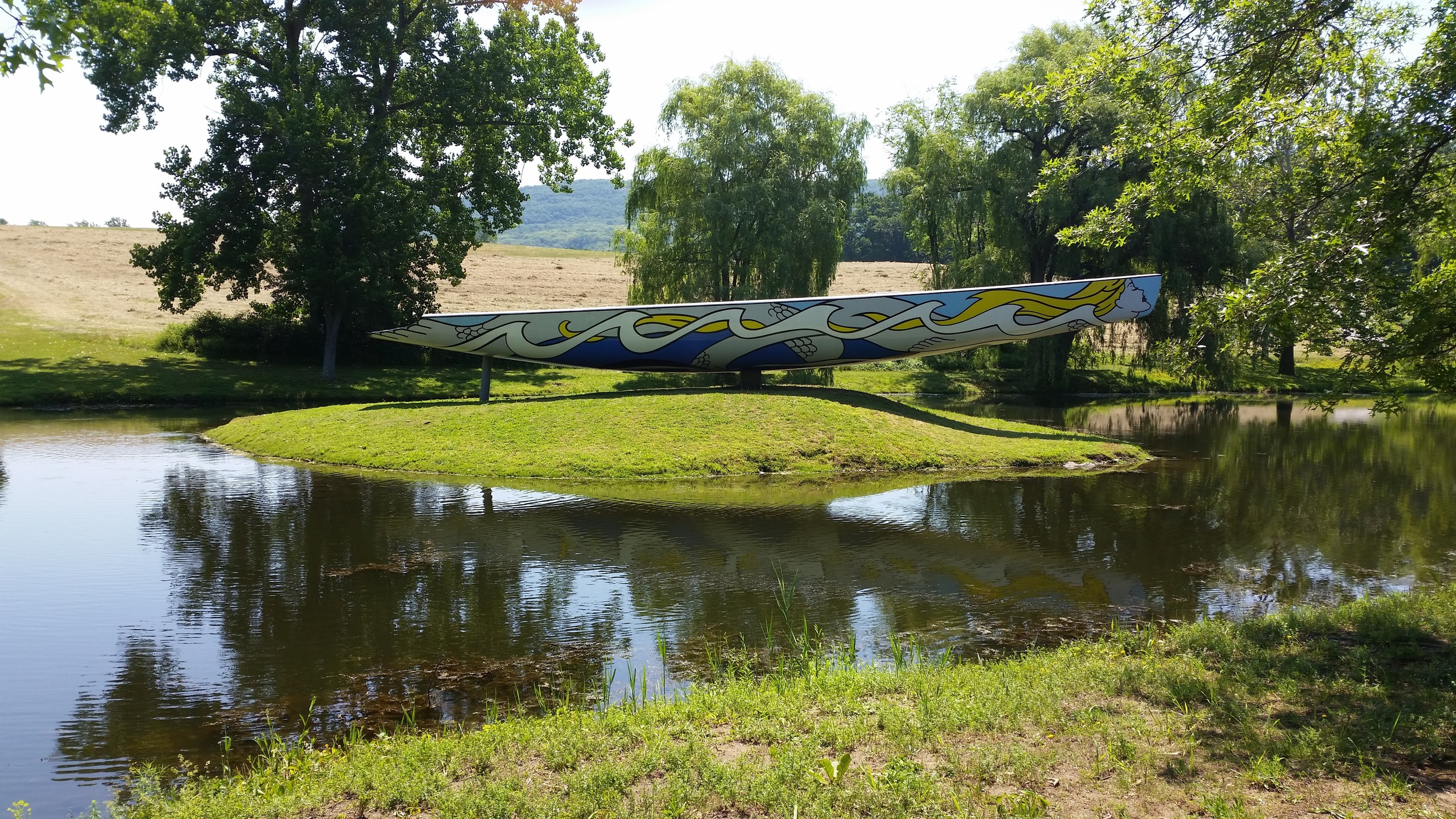
Maddie and I visited an outdoor sculpture garden of mammoth proportions. One of the installations caught my eye from a distance.

It looked like the hull of a sailboat from a distance! As we closer, I was more and more certain that it was in fact a sailboat hull.

When we got up close and read the plaque, I was proven correct! The artist took a retired sailboat and painted a mermaid on the side of the hull. This installation was in stark difference to the other sculptures, mostly metal giants that towered over the landscape; whereas this one floated on along on its small island in a protected lake. No modification needed to be made to the shape of the hull, as the hull of a sailboat is already graceful and pleasing to the eye. All that separates our sailboats from this work of art is a paint job!