Life Aboard

Liveaboard Safety

Living on a boat has many advantages as well as its disadvantages as compared to life on land. The biggest issue I am frequently asked about is drowning. (This is going to be such a chipper topic)

Motor boats typically have swim platforms and ladders placed conveniently on the stern. If you were to fall into the water, this ladder will let you climb back out with some effort. 

Sailboats, on the other hand, typically have no such platforms or ladders. Instead they have tall smooth sides that offer no aid in your climb from water.

The piers are also unforgiving. most floating piers are 2 feet above the waters surface. 

The only option is to swim to shore and come onto dry land at the waters edge. Once again, marinas are huge and this could end up being a very long swim from some slips.  

If it were winter with freezing cold waters, you would only have a few minutes of working time before hypothermia sets in and everything ends.  

You can not rely on a neighbor to hear you splash, as boats are well insulated and no one will hear your cries for help.  

This is why you must have your own emergency plan set in place and ready to save yourself if you were to fall in the water. 

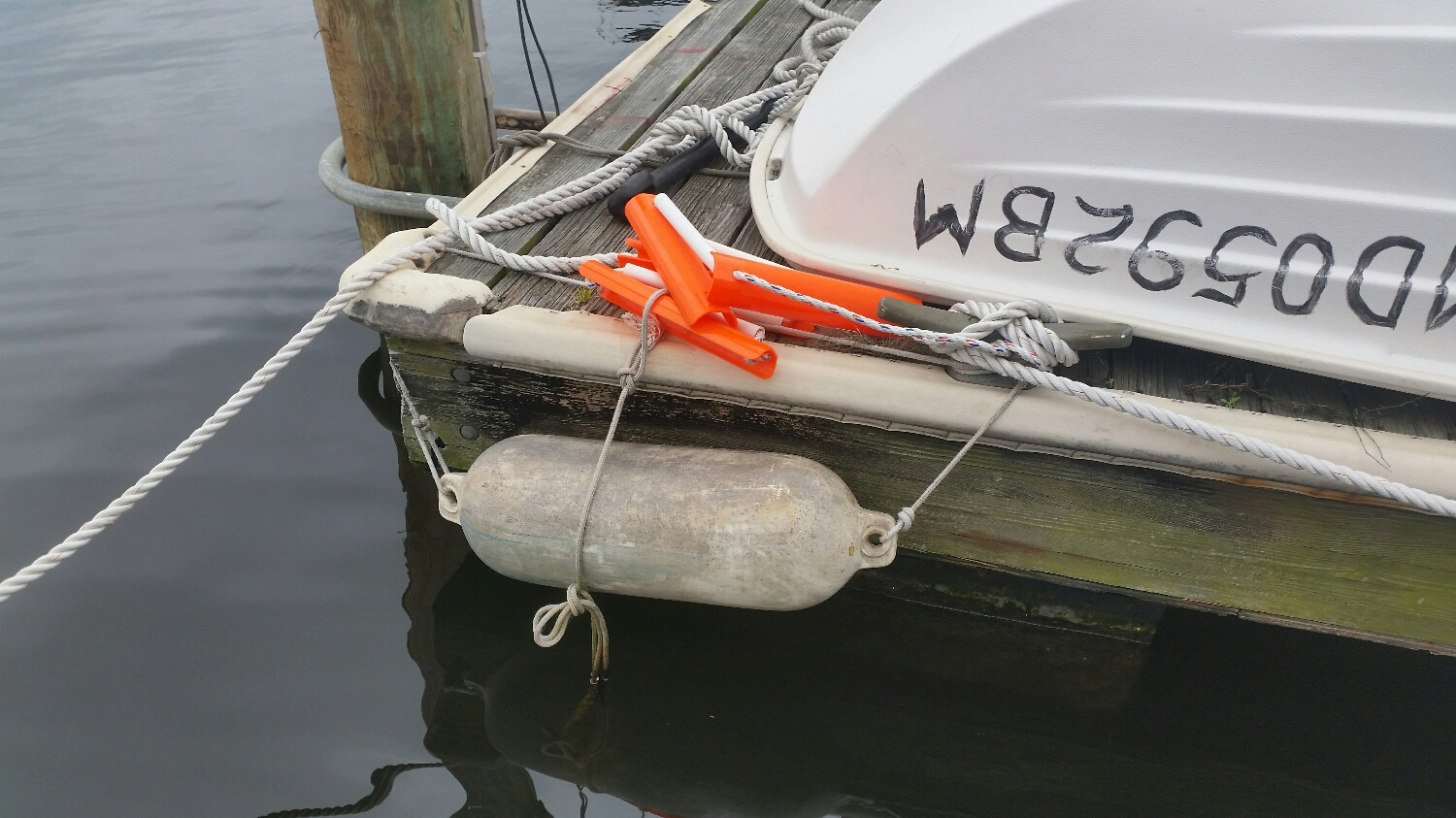
At the end of our finger pier, I have a rope ladder tied to the cleat at the corner of the slip. Since I didn't want it to get covered in growth, it remains on the pier with a line hanging from it into the water. I tied some knots near the end to make it easier to grab and pull into the water.

In a moment of panic, it will be hard to find this safety line, so it rests conveniently on a fender.  

upload.jpeg

All we need to do is swim over to the fender and pull on the line. The ladder will drop into the water and we can climb out to safety. 

I (thankfully) have never tested this ladder in this location, but I have tried it out in a creek. It isn't the most comfortable thing to climb, but it will get you out of the water!  

Obviously, the first priority is to not fall in. If you do happen to fall in, having these safety measures in place will make all the difference.  

Morty Turns Three Years Old

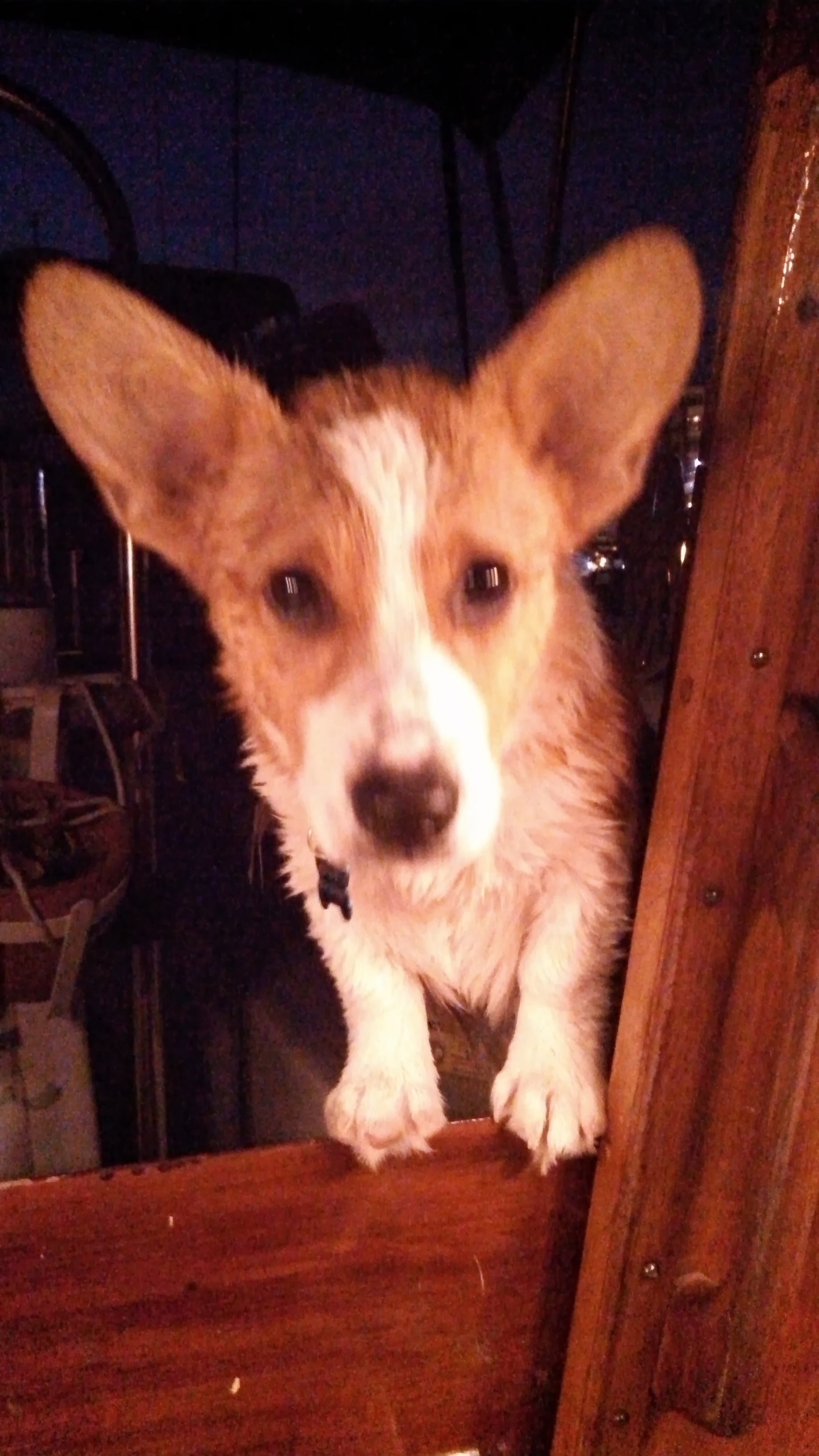
Morty is our boat dog! He lives a happy life on board Wisdom, enjoying life with me as a bachelor before I met Maddie, and now greatly enjoying life with Maddie in our lives.

I got him as a puppy, and he was tiny. He rode home in a cat litter box (in case he had an accident).

He quickly grew to like life onboard (as it was all he knew). He was a very relaxed puppy who liked to sleep and lay around all the time. He would play with his rope toys, but then quickly fall asleep.

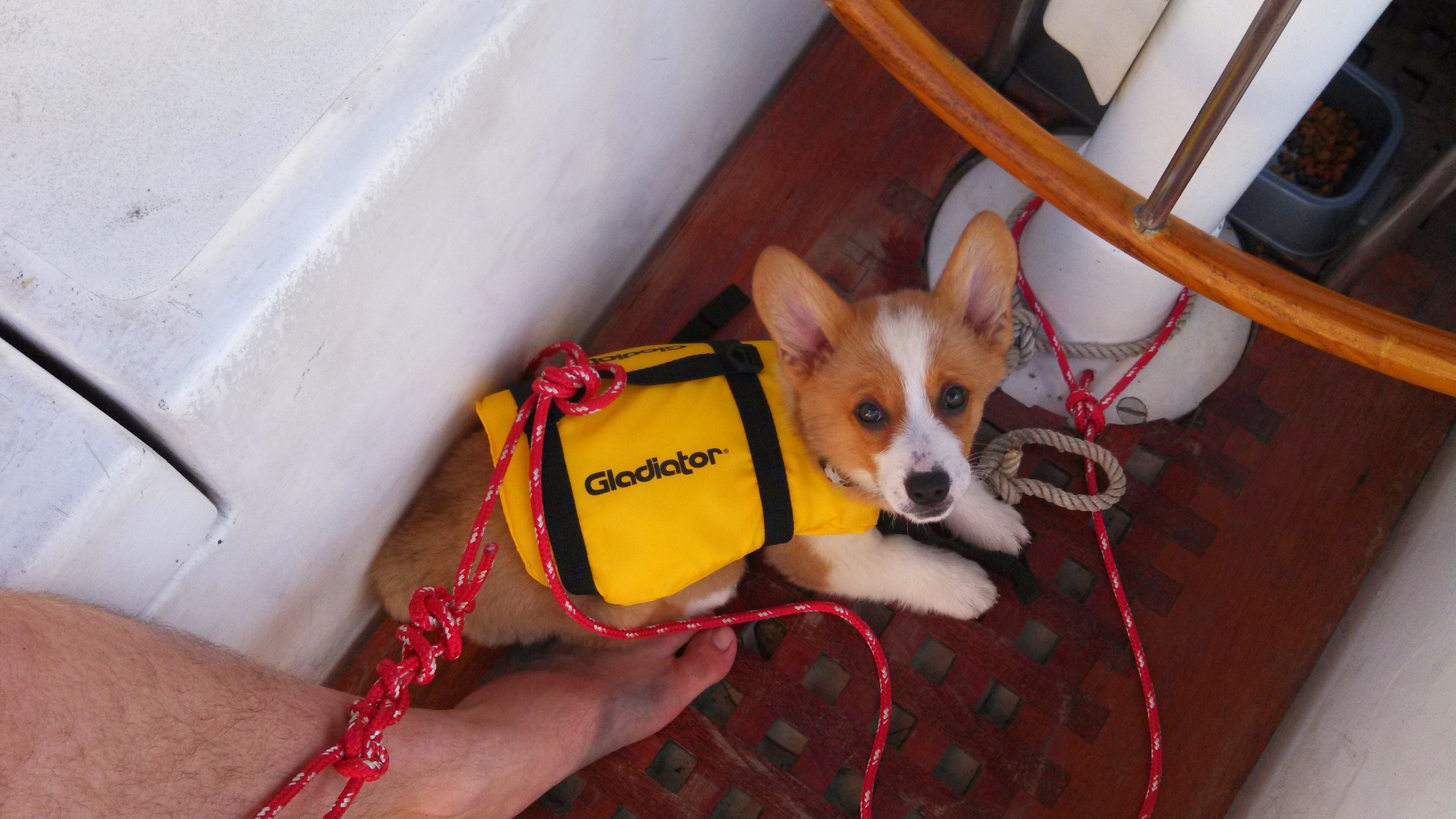
When he was big enough to wear a chihuahua life jacket, I decided to take him out sailing. I expected him to run around the deck and fall into the water, but he stayed in the cockpit with me and never left my side. If I was standing, he was by my foot, if I was sitting, he was by my side. 

I kept a line tied to his life jacket, tethering him to the binnacle, but he never tried to run around the boat anyways. The truth is he would always lay by my foot and go to sleep while we sailed through the waves towards our destination.

As a young puppy, I kept him well socialized; always introducing him to new dogs so he could make new friends. One of his favorite friends is named Ginger, she's my parents dog, and they used to play together all day while I was at work.

He also learned valuable life lessons, such as "Don't fall into the harbor" and if he jumps into the water, he will get a bath as soon as I pull him from the water. He doesn't like baths, so he also avoids getting in the water.

On his first Christmas, Morty received his skull and crossbones collar. My mom got him an elf costume which he only wore for a few moments before he laid down to take a nap.

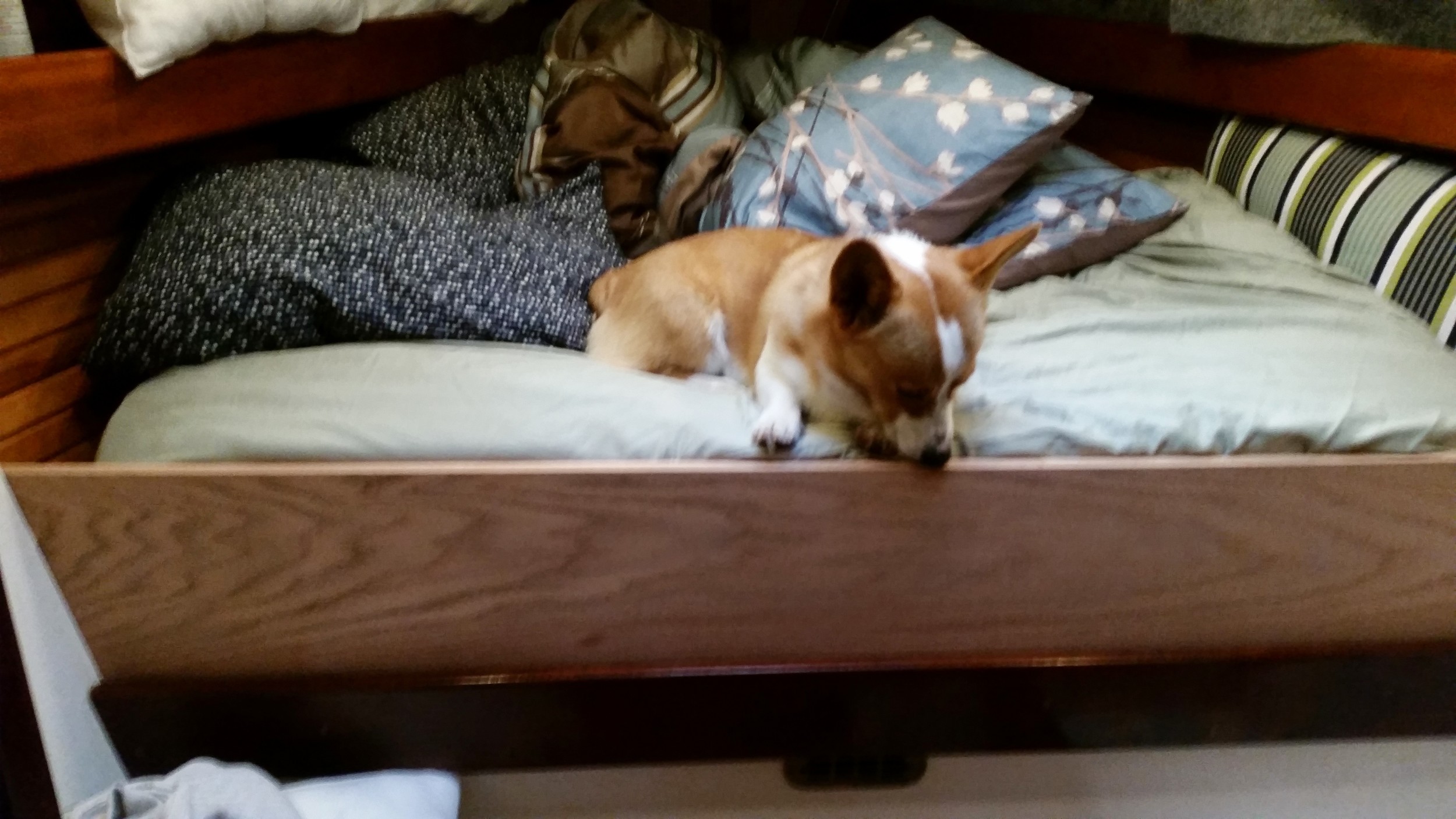
Life was good, we would go sailing on the weekends. Morty enjoyed his lazy days at anchor, sleeping in on the berth next to me! It was a simple life which we both enjoyed thoroughly.

This is around the time that Maddie came into the picture. There were some changes that happened right away, such as a more comfy bed, and long walks during the day while I was at work.

As a true boat dog, his leash is a sail tie.

As a true boat dog, his leash is a sail tie.

Even though we changed the mattress in the V-berth, Morty still sleeps in the same spot after all these years. His spot is up in the peak of the bow, right next to the chain locker. I guess he likes the cool air that comes in the hoss pipe in the deck for the anchor chain. He has grown a bit since he first slept up there.

After Maddie moved in, the boat was further along in its preparation for longer voyages and that means that Morty got to go on longer trips with us. As usual, he enjoys relaxing near us as we sail along.

It's been three fun years so far, and he is an awesome boat dog. He's explored new waters and slept most of the way there!

Mandatory Items to Carry in your Sailboat

Depending on the size of your vessel, there are certain legal requirements for equipment that you carry on board. As you may assume, as the length increases, so do the required items to be carried.

Yachts are separated into four categories depending on their length:

Class A: Boats less than 16 feet long
Class 1: Boats 16 feet long but less than 26 feet long
Class 2: Boats 26 feet long but less than 40 feet long
Class 3: Boats 40 feet long but less than 65 feet long

Each class builds upon the next in complexity of the items that must be carried on board.

Class A

Class A Boats are less than 16 feet long and must carry:

Certificate of Boating Safety Education (for the captain) (Unless you were born before July 1, 1972)

Certificate of Vessel Numbers

Registration Decal Displayed

PFD (Life jacket) for each person on board the vessel. (Children under 13 must wear their PFD at all times.)

One B-I Fire Extinguisher 

Backfire Flame Arrestor mounted on each gasoline motor

Ventilation system (1 blower per motor) (should be run for 4 min prior to starting motors)

Muffler

Horn, Whistle, or Bell

Visual Distress Signals (any of the below combinations)

3 Handheld red flares

1 Handheld red flare and 2 parachute red flares

1 Handheld orange smoke and 2 floating orange smoke for day, and 1 electric distress light for night

Navigation lights

Red and Green bow light, White stern light, White steaming light 1m higher than red and green bow lights

As always, there are exceptions to the rules:

Non-motorized vessels with no cabins or closed compartments that can store combustibles do not need to carry fire extinguishers and the captain does not need to have a Certificate of Boating Safety Education.

If you are under 7m (22.9ft) in length and are strictly oar or sail powered, a flashlight is all you need to carry to count as your navigation lights.

If you are operating your vessel in inland waters, such as rivers or bays, where the distance from shore to shore does not exceed 2 miles, you do not need to carry visual distress signals by day.

Class I

Class I boats are longer than 16 feet but less than 26 feet in length and must carry:

Certificate of Boating Safety Education (for the captain) (Unless you were born before July 1, 1972)

Certificate of Vessel Numbers

Registration Decal Displayed

PFD (Life jacket) for each person on board the vessel. (Children under 13 must wear their PFD at all times if the boat is under 21 feet in length)

Throwable Type IV PFD

One B-I Fire Extinguisher 

Backfire Flame Arrestor mounted on each gasoline motor

Ventilation system (1 blower per motor) (should be run for 4 min prior to starting motors)

Muffler

Horn, Whistle, or Bell

Visual Distress Signals (any of the below combinations)

3 Handheld red flares

1 Handheld red flare and 2 parachute red flares

1 Handheld orange smoke and 2 floating orange smoke for day, and 1 electric distress light for night

Navigation lights

Red and Green bow light, White stern light, White steaming light 1m higher than red and green bow lights

As always, there are exceptions to the rules:

Non-motorized vessels with no cabins or closed compartments that can store combustibles do not need to carry fire extinguishers and the captain does not need to have a Certificate of Boating Safety Education.

CLASS II

Class II boats are longer than 26 feet but less than 40 feet in length and must carry:

Certificate of Boating Safety Education (for the captain) (Unless you were born before July 1, 1972)

Certificate of Vessel Numbers

Registration Decal Displayed

PFD (Life jacket) for each person on board the vessel. 

Throwable Type IV PFD

Fire Extinguishers (any of the below combinations)

Two B-I Fire Extinguishers

One B-II Fire Extinguisher

One B-I Fire Extinguisher and one fixed mounted fire extinguisher system

Backfire Flame Arrestor mounted on each gasoline motor

Ventilation system (1 blower per motor) (should be run for 4 min prior to starting motors)

Muffler

Horn, Whistle, or Bell

Visual Distress Signals (any of the below combinations)

3 Handheld red flares

1 Handheld red flare and 2 parachute red flares

1 Handheld orange smoke and 2 floating orange smoke for day, and 1 electric distress light for night

Navigation lights

Red and Green bow light, White stern light, White steaming light 1m higher than red and green bow lights

As always, there are exceptions to the rules:

Non-motorized vessels with no cabins or closed compartments (open boats) that can store combustibles do not need to carry fire extinguishers and the captain does not need to have a Certificate of Boating Safety Education.

Diesel motors do not require a blower, but passive ventilation is needed.

CLASS III

Class III boats are longer than 40 feet but less than 65 feet in length and must carry:

Certificate of Boating Safety Education (for the captain) (Unless you were born before July 1, 1972)

Certificate of Vessel Numbers

Registration Decal Displayed

PFD (Life jacket) for each person on board the vessel. 

Throwable Type IV PFD

Fire Extinguishers (any of the below combinations)

Three B-I Fire Extinguishers

One B-II and one B-I Fire Extinguisher

Two B-I Fire Extinguishers and one fixed mounted fire extinguisher system

One B-II Fire Extinguisher and one fixed mounted fire extinguisher system

Backfire Flame Arrestor mounted on each gasoline motor

Ventilation system (1 blower per motor) (should be run for 4 min prior to starting motors)

Muffler

Horn, Whistle, or Bell

Visual Distress Signals (any of the below combinations)

3 Handheld red flares

1 Handheld red flare and 2 parachute red flares

1 Handheld orange smoke and 2 floating orange smoke for day, and 1 electric distress light for night

Navigation lights

Red and Green bow light, White stern light, White steaming light 1m higher than red and green bow lights

As always, there are exceptions to the rules:

On non-motorized vessels with no cabins, the captain does not need to have a Certificate of Boating Safety Education.

Diesel Motors do not require a blower, but passive ventilation is needed.


A handy checklist is available to make sure you have everything you need on board


http://dnr2.maryland.gov/boating/Documents/Required_Equipment_Checklist.pdf

I also recommend reading through the USCG documentation on vessel requirements 

http://www.uscgboating.org/images/420.PDF


A Good Lock

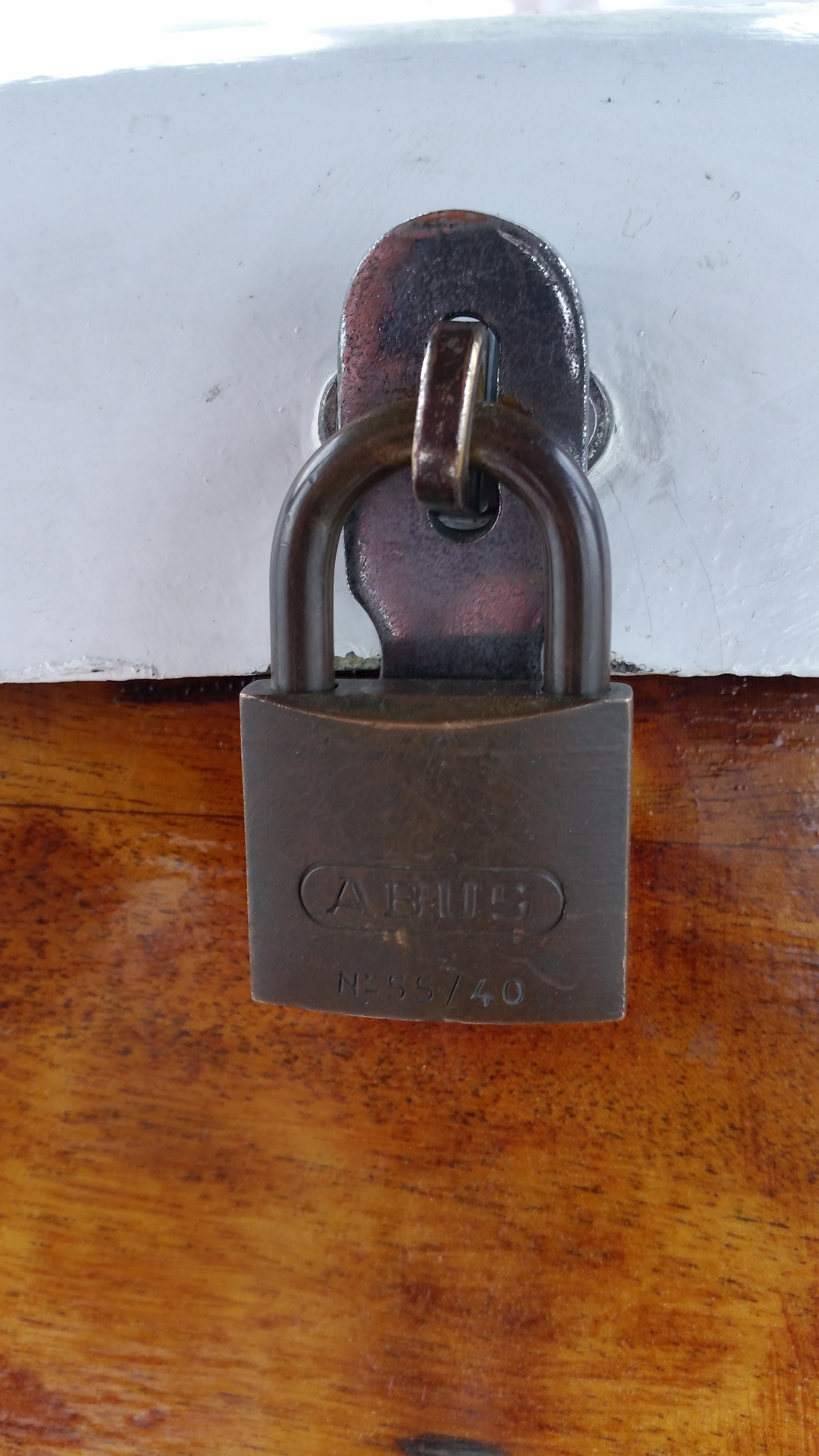
When security is important to you, locking everything up becomes a necessity. Most pad locks will not survive for long in the marine environment and will need to be replaced due to corrosion issues. 

I never gave the pad lock on my boat much thought, as it was there when I bought the boat and it is used everyday without issue. I saw an article a few days ago about "Searching for the perfect boat lock" and that's when it struck me how lucky I am to not worry about such things.

I don't know how old my lock is, but it was exposed to the elements for 3 years while the boat sat for sale, waiting for me to find her. There was no cover over the lock and it was exposed to rain, sun, winters, and summers. When I bought the boat, I turned the key and the lock opened up without a hitch; just as it has done everyday since.

I am not saying that this is the "best lock in the world", simply that this is a good lock that works day in and day out.

The lock is made by Abus, and is not readily available. When I had copies of its key made, the locksmith had to call around to see who had blanks for this key. I have seen these locks for sale from time to time at West Marine and small locksmith shops.

Abus does make "Marine Padlocks" that have all sorts of seals to keep moisture at bay, but this simple No 55/40 seems to work just fine. If you are having lock issues, consider an Abus lock. 

Sailing a Tom Colvin Gaff Rigged Schooner

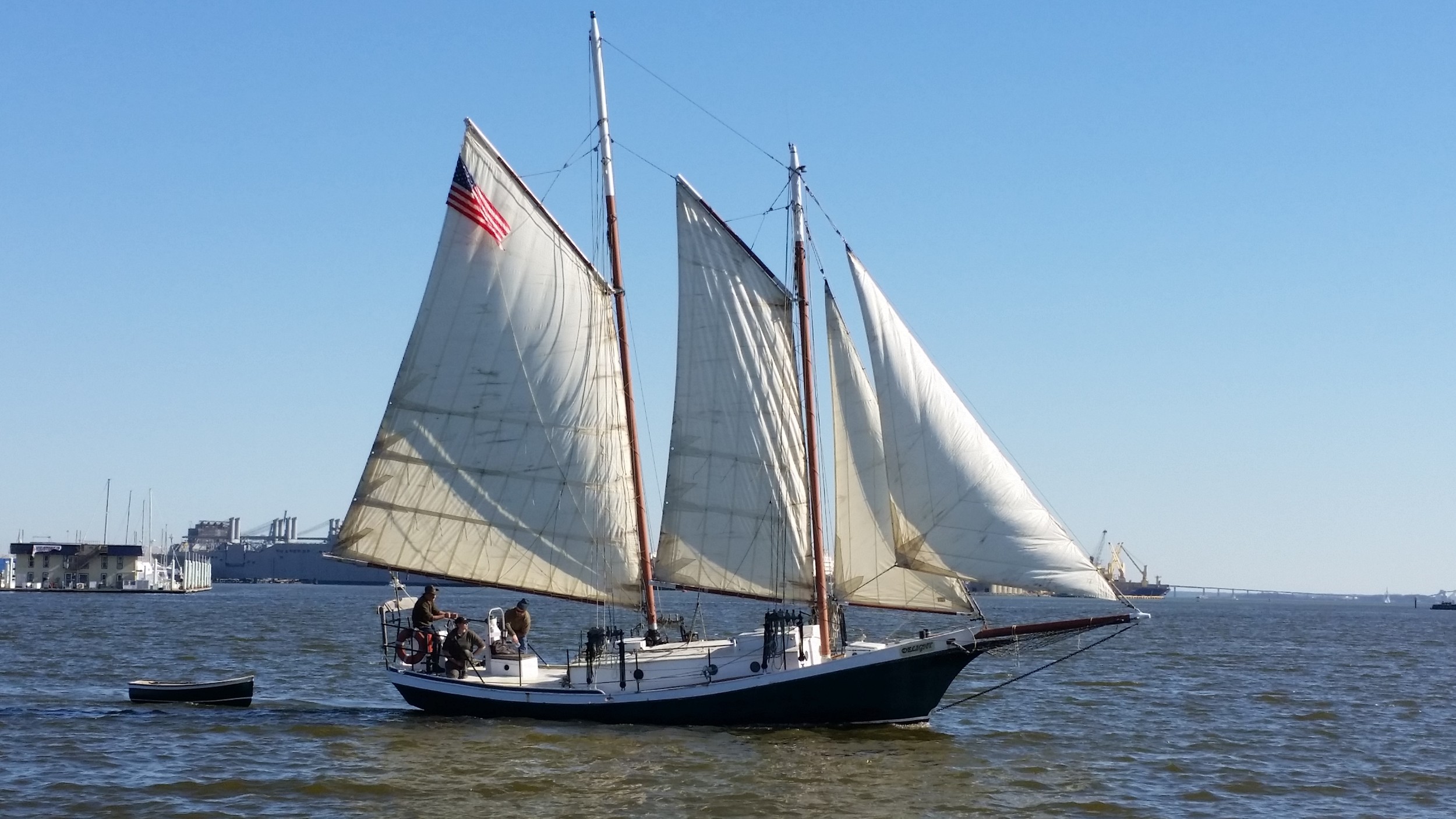
Tom Colvin was a naval architect who is revered for his extremely sea worthy steel sailboats. A friend of mine invited me along to take a look at one that has been sitting in the water for the past 6 years with no maintenance. The motor was dead and the rigging had been neglected, but at her heart, she is a sailboat who wants to explore!

With no motor, we sculled her out of her slip and almost made it out of the marina when the wind picked up. The headwind sent us right back into the marina and we changed course for a near by pier. After tying up, we ran a warp line from the schooner to the finger pier at the end of the marina (approximately 200 feet away) and secured the bitter end to a mooring cleat. Then we began pulling the boat by the warp line until we cleared the gap and came alongside the finger pier. The wind was directly on our nose, so we walked the boat all the way around the marina until we in a more favorable location. The wind was now on our beam and we would be simply push off the edge with plenty of seaway to get the sails up, kind of like jumping off a cliff with a glider.

We raised the staysail and foresail as we readied for launch. Once free of the pier, we raised the mainsail and jib and began our shakedown cruise under full sail! 

Gaff rigged schooners are an entirely different animal from any modern day rig. They carry immense amounts of sail area close to the water to avoid excessive heeling. The sails are spread out fore-aft instead of up-down. Since the sails are shorter, the masts are also shorter and rigging loads are lesser. This translates into much less tension on the stays allowing them to be easily rigged with wooden deadeyes and lashings. These large broad sails also require extra control lines which offer endless adjustability.

On a normal triangular sail, there are three corners (head, tack, clew) where on a gaff rig, there are four corners with their own names (head, throat, tack, clew). These extra control lines add extra complexity to sail trimming, but endless possibilities are available to you. Twist is entirely up to you as you can sheet in the end of the gaff to cup the sail or sheet it out to spill excess wind. 

We sailed around the inner harbor for a while, tacking and jibing our way up the river. Then the time came for me to return to shore, as I had an afternoon appointment that I needed to attend. The plan was to beam reach over to the pier and glide up alongside it, dropping sails and coming to a stop. What really happened is we lost our wind as we approached, lost our speed and started drifting to leeward putting us on a collision course with the fuel pier. 

We turned downwind to lessen the impact and to try to bring the boat broadside to the pier. The main concern was the 8 foot bowsprit taking out the fuel pumps! As we came in for the collision, two of us jumped ship with docklines to cleat them quickly and bring the boat to a halt. 

Thankfully, no damage occurred because The bobstay absorbed most of the impact and the steel hull was unphased by the collision! This was the conclusion of my journey aboard this wonderful steel schooner, but just the beginning for my friends who are looking to acquire her.

They are planning to circumnavigate the Northern Circle, sailing North of Canada, Alaska, and Russia. A steel hull will be a dream come true when dealing with icy waters, and a gaff rigged schooner will be wonderful during high latitude gales. 

I look forward to seeing their story progress through the years!