Modern conveniences require electricity to keep them running. GPS, AIS, Radios, Fridges, they all need a steady flow of energy to keep them going. Batteries do a wonderful job of storing all of this electricity, but after a while they will begin to run down and the conveniences will stop working. To keep the flow of energy up, many cruisers will run their engines a few hours each day to replenish the batteries charge. What if you don't want to run your engine that often, or if you don't have an engine to run at all?
This is where alternative energy sources come into play. Three major players in the alternative game are Solar, Wind, and Hydro (water). They all have their advantages and disadvantages, but today we will talk about solar.
Solar is a wonderful system that converts the suns radiation into electricity. This means that you can quietly charge up all of your electrical needs while the sun is shining. There are no moving parts to break, and no noise from the process of energy collection. They quietly collect energy while you are sailing, just as effectively as they can when you are anchored in a quiet and protected creek.
The thought of charging your batteries while anchored in a secluded area may sound like a dream come true, but there are some drawbacks to this technology. If you have dense cloud cover, you are not going to produce any electricity. At night there is also going to be no energy production. To overcome the pitfall of consecutive cloudy days providing no electricity, a properly sized house battery bank is necessary.
Deciding how many panels to install is entirely dependent on need and space available. You can calculate how many amps you need in a day to make sure that your solar array will provide sufficient power to run all of these systems, then you need to figure out where to put them all. Catamarans have plenty of available real estate, but monohulls may find space to be very limited. Ultimately, the final decision will come down to "how many panels can you fit" instead of "how many panels do you need".
Factors that affect your ability to mount solar panels come in two varieties: Shading and damaging. Shading from sails, sheets, and spars will reduce the power output from the solar panels. For this reason, it is best to place them in a location that will receive full sun at all times.
The second danger to solar panels is from damaging blows. If a sail begins to flog, the sheets will whip around violently. A constant barrage of whippings from a sheet will shatter a solar panel in no time! This means that anywhere between the sheet block and the sail should be avoided.
Another danger that falls into the damaging category is wave and wind action. If the solar panels are mounted to the bow rail, they could be swept off or shattered by the force of a breaking wave. Not to mention, they could act as a sail on the tip of the bow producing dangerous lee helm!
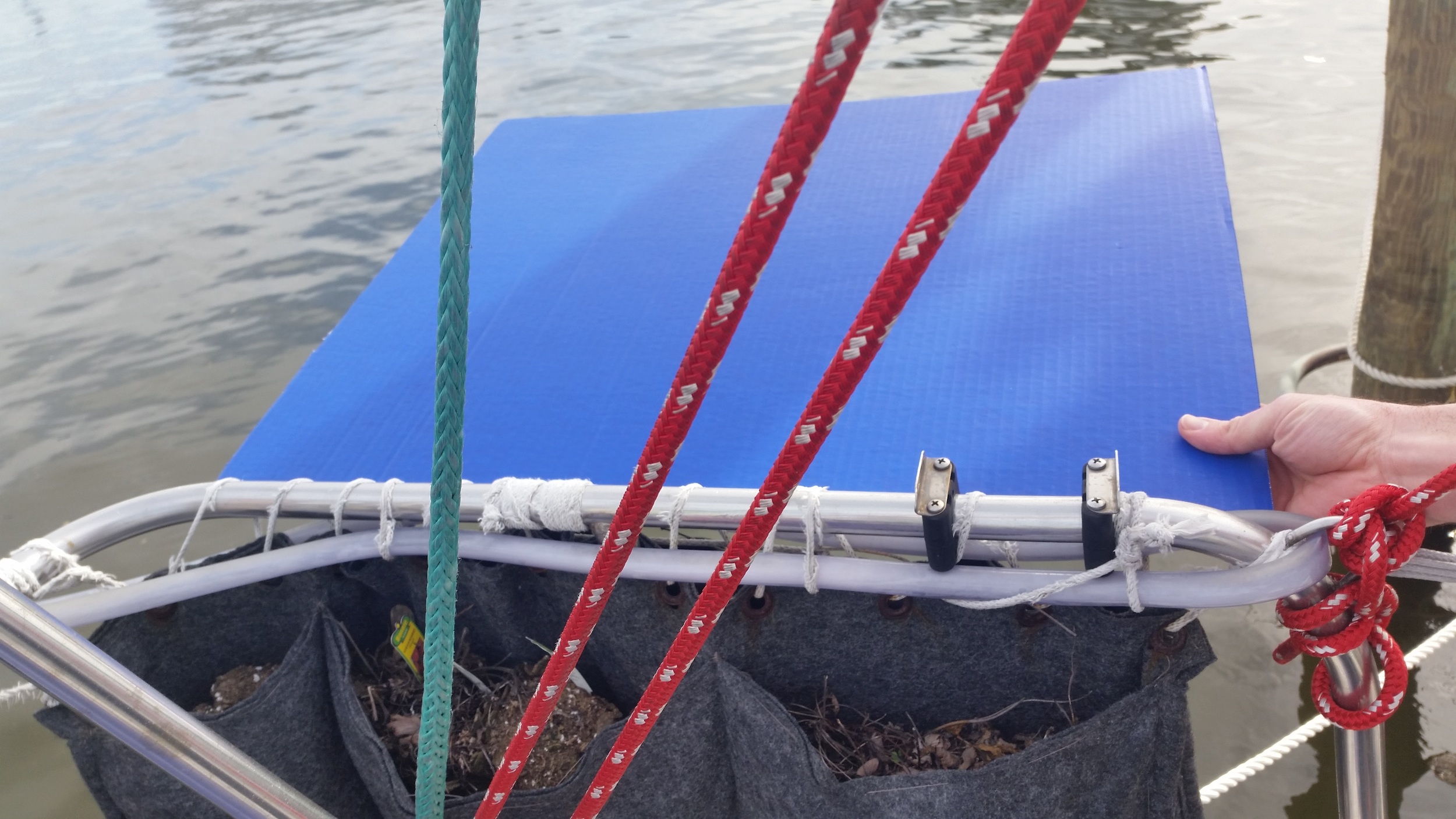
After careful consideration, the only place we could mount them on Wisdom was on the sides of the stern rail. The drifter sheets attach close to the stern, ruling out the lifelines running forward, a panel in the shrouds would snag and cut the sails, and the future wind steering device will take up the whole stern. The only place we had available is a small section of the stern rail!