Life Aboard

Cooking Aboard

When I tell people that I live on a boat, one of the questions that inevitably comes up is "Can you cook in your boat?"

I think they think I live in this


Cooking aboard is easy to accomplish, it just takes some downsizing and preparation. Space is limited and multipurpose, so you need to plan ahead. It sucks to need something from the fridge when you have all your ingredients chopped up on top of the fridge lid.

Most boats have a stove/oven, microwave, toaster oven, grill, and many other kitchen gadgets. On board Wisdom, I like to keep it simple with a two burner stove, toaster, and a grill.

Elaborate meals can be accomplished with this limited armamentarium. The trick is using your available resources wisely. Dishes that need only 1 pan are preferred, as you only need to hold one pan from sliding and only one pan to wash (which translates into using less water). You can also cook two foods in different parts of the pan. 

The grill is an excellent addition to the kitchen as it can replace the function of an oven. I have made entire meals on the grill, including meats and vegetables. Foods wrapped in foil and set in the grill on low fire will cook just like if they were in an oven. 

Toasters are another example of "Nice to have", and not "Need to have" on board. I spent two years without a toaster because I didn't make toast very often, and when I did, the old method of making toast works just fine. Maddie, on the other hand, makes toast almost every day for her sandwiches, so the old way was not quite as convenient for her. When we are in the marina, an electric toaster is very convenient, but when we are sailing, we resort to the old method of making toast.

To make toast without a toaster, simply place the dry bread in a pan with high heat. That's it.

You don't need to add oil or butter to the pan because it's toast! Allow one side to brown, then flip it over and allow the other side to brown. It takes a few minutes to make on a stove, without the complexity of powering an electric toaster.  

Some favorite meals we make on board are:

Rice and beans (2 pots)
Fish and onions (1 pan)
Lamb chops and sweet potato chips (grill)
Steak, Rice and salad (1 pot and grill)
Pasta dishes (1 pot)
Grilled chicken and vegetables (grill)
Poached eggs on toast (1 pan to toast bread, 1 pot for eggs)
Omelets (1 pan)
Sauteed chard with onions, peppers, mushrooms, and egg (1 pan) 

The list goes on and on, all it takes is some creativity in the kitchen!


Pet Hair

We all love having our companions on board with us, they offer us companionship since they are always by your side.

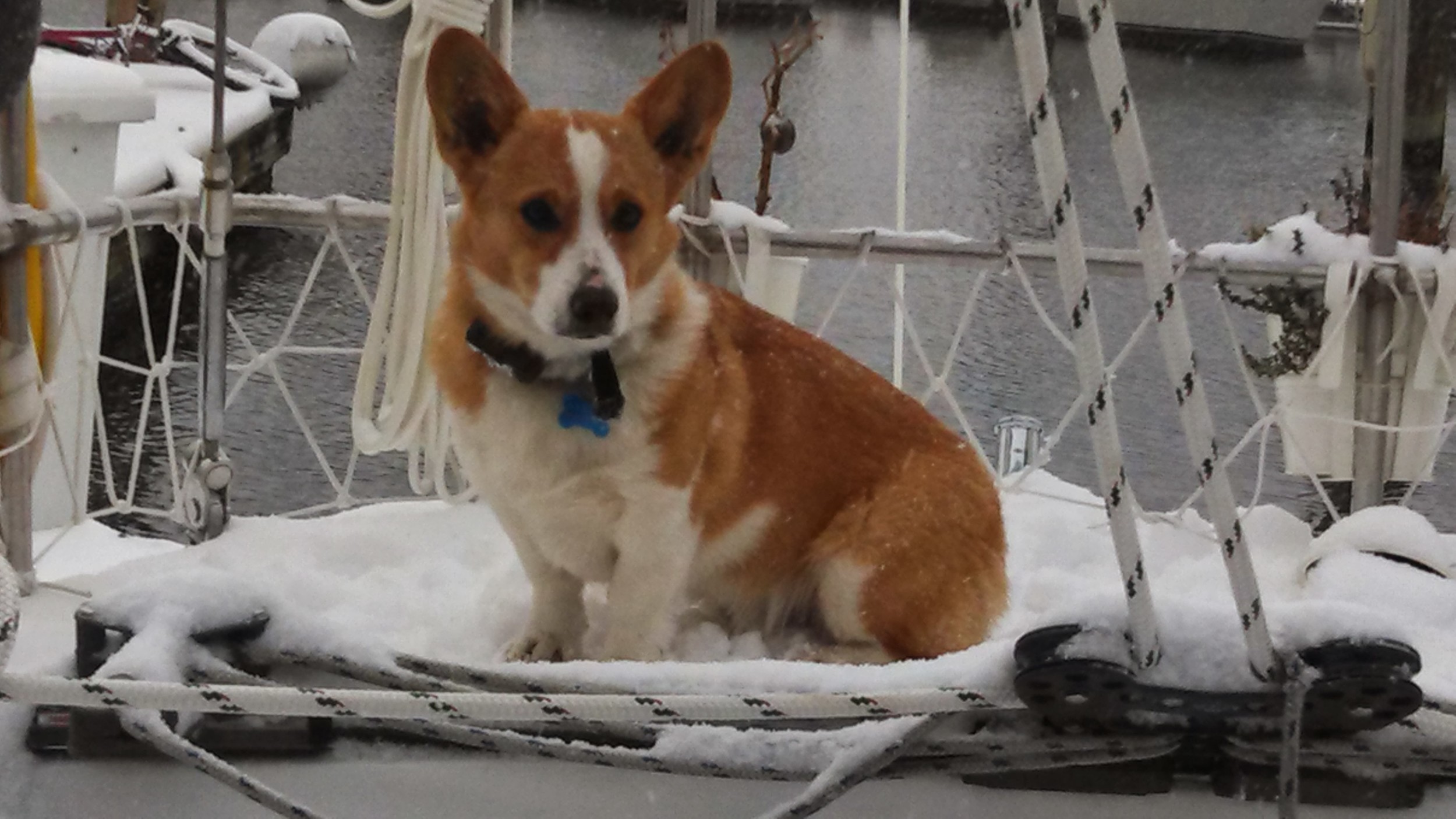
Morty is a Welsh Corgi, which means he has a double coat. This is great for him because it keeps him warm on the coldest of winter days, but that also means he has plenty of extra hair to shed.

Immediately after cleaning the boat, clumps of dog hair will appear. It is really discouraging when you spend all of 10 minutes vacuuming up his dog hair in the whole boat, to turn around and it look like nothing happened. This is because Morty sheds like it's his job! When you pet him, dog hair flies up and fills the air; when he lays on your pillow, he creates a carpet of dog hair. 

 His hair does tend to collect in corners, and whenever I see a clump (we call them Mini-Mortys) I simply pick it up and put it in the trash. Despite our best efforts to keep it under control, they tend to return in under a day.

We don't mind the hair that much, it's part of the deal when you have a dog on board. The problem comes when his hair begins to cause mechanical problems. The hair that lays on the floor can find its way between the edges of the floor boards and the sole. 

They build up into "Morty Gaskets", which are a sign of greater problems. The hair that makes it past the Morty Gaskets continues its journey down into the bilge where it can clog the bilge pump strainer.

I can proudly say that Wisdom has no leaks, so the bilge pump never runs. This dry bilge acted as a catch all for Morty hair. When I was cleaning the bilge recently, I noticed that the water level wasn't going down. It took me an entire day to find all the problem areas which shared a commonality: Morty Hair.

The bilge strainer was full of hair, the impeller was seized by hair, and a random filter housing installed inline was clogged with hair as well. 

Despite our best efforts to keep the hair under control, the hair can still creep into everything and cause serious equipment failures.  

Projects While Living Aboard

Maddie and I both love to do projects, so we need to manage our space efficiently to allow us to work in a small space.

The most important thing to keep in mind is that space is multipurpose. We do have spaces that are dedicated "junk piles" but for the most part, we keep everywhere available to use.

upload.jpeg

On a Wednesday night,  Maddie was creating a painting​ on the salon table and needed space to organize her paints, meanwhile I'm working on the rope fenders and need space to organize the lines and tie the knots. 

This is where space management pays dividends. The salon table has folding leaves, which allow the table to grow and shrink on demand. ​

upload.jpeg
upload.jpeg

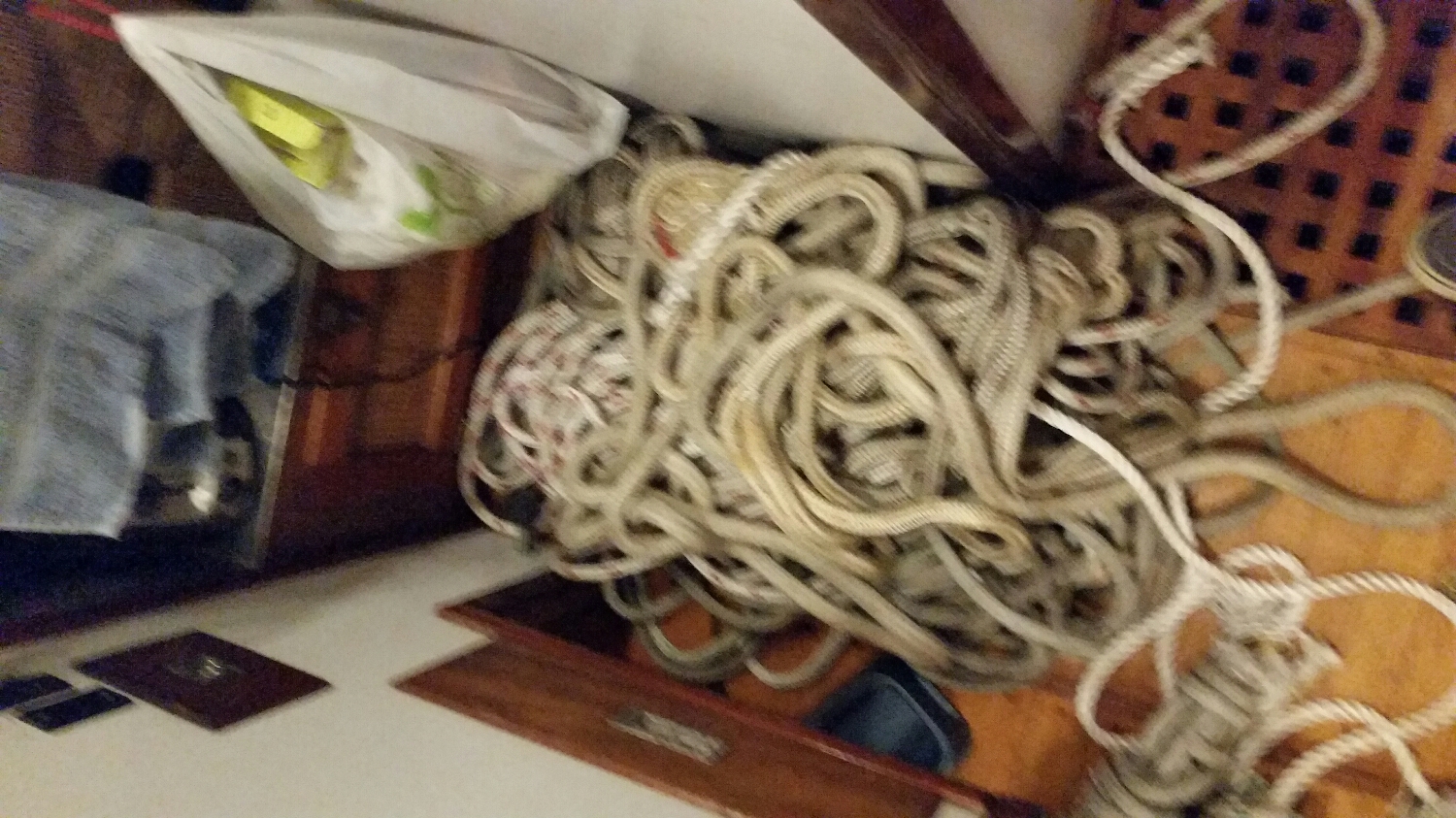
I was able to keep the fenders tucked under the galley sink, with the old lines coiled in the galley, and me working in the hallway and the other leaf of the table. 

The quarters are tight, and we have to work around each other, but we are able to complete our projects in the space available. It's just a mindset of being creative with what space is available.

In the past, I have made all of the dock lines, standing rigging, and running rigging inside the cabin in this limited space.  

Things that we have found to help organizing the space is good communication. When Maddie needs space for a project, she tells me and I get my stuff out of the way for her; the same when I need space as well.  We also try to complete the project as quickly as possible to clear the area again. I have been working on these rope fenders for about a week now. As soon as I'm done working, I clear the area for Maddie. The coiled lines go into the cockpit, the fenders slide under the galley sink, and the floors are once again clear for walking.  

Pollution

Baltimore Inner Harbor, Chesapeake Bay

We have been living in the waters of the Baltimore Inner Harbor for 3 years now. There is a plan in place to make the waters swimmable and fishable by 2020, but at the moment we are a long ways away from achieving that level of cleanliness, they currently have an F for water quality.

http://baltimorewaterfront.com/healthy-harbor/report-card/

The Maryland Department of the Environment blames the boaters for causing all of the pollution and will quickly come by to hand out fines to offending boaters. While it is very unsanitary to empty ones holding tank into the harbor, the boaters are not the big offender, it is actually the city!

The problem is the aging sewer system in the city. After the great fire in 1904, the city was rebuilt with separate storm drain and sewer drain systems. The separate systems are laid out in close proximity to each other and after more than 100 years, they are broken and leak into one another. When it rains, storm water runs out of its piping and into the sewer system. This overtaxes the sewer system and the excess pressure is released into the bay. At the same time, the sewer system perpetually leaks into the storm drain system which empties directly into the Inner Harbor. 

Back in the 1980s, this was deemed a concern as the Baltimore Harbor water contained unsafe levels of fecal bacteria. Chemical and metal plants built along the shoreline used to dump their waste directly into the water, adding heavy metal and petrochemical pollution to the mix. This problem has continued to grow unchecked for many years, only now we are aware of the problem. 

The city has done some initiative to help clean up the bay. One of the most productive methods to tame the trash pollution has been a solar powered trash collector called "Mr. Trashwheel". 

http://baltimorewaterfront.com/healthy-harbor/water-wheel/

While reducing the amount of actual trash that flows into the Chesapeake Bay is wonderful, it still doesn't help with the amount of fecal bacteria that is being dumped into the harbor everyday.

I think most people are oblivious to the problem, and therefore do not worry about the consequences of their actions. To them, spilling a little oil, throwing a plastic bottle out of their window as they drive, or tossing their cigarette butt onto the ground doesn't make much of a difference. They think oil will soak into the ground, and their trash will disappear. The truth is it all gets flushed out into the water with the next rainfall.

After every rain, the Baltimore Inner Harbor has a particular odor, something along the line of a good whiff of your holding tank vent. Gorgeous rainbows glimmer on the waters surface as oil slicks radiate away from the storm drain pipes. 

Usually, the prevailing winds will clear the air rather quickly and all is forgotten. Then the EPA can continue to blame boaters for polluting the harbor waters.

upload.jpeg

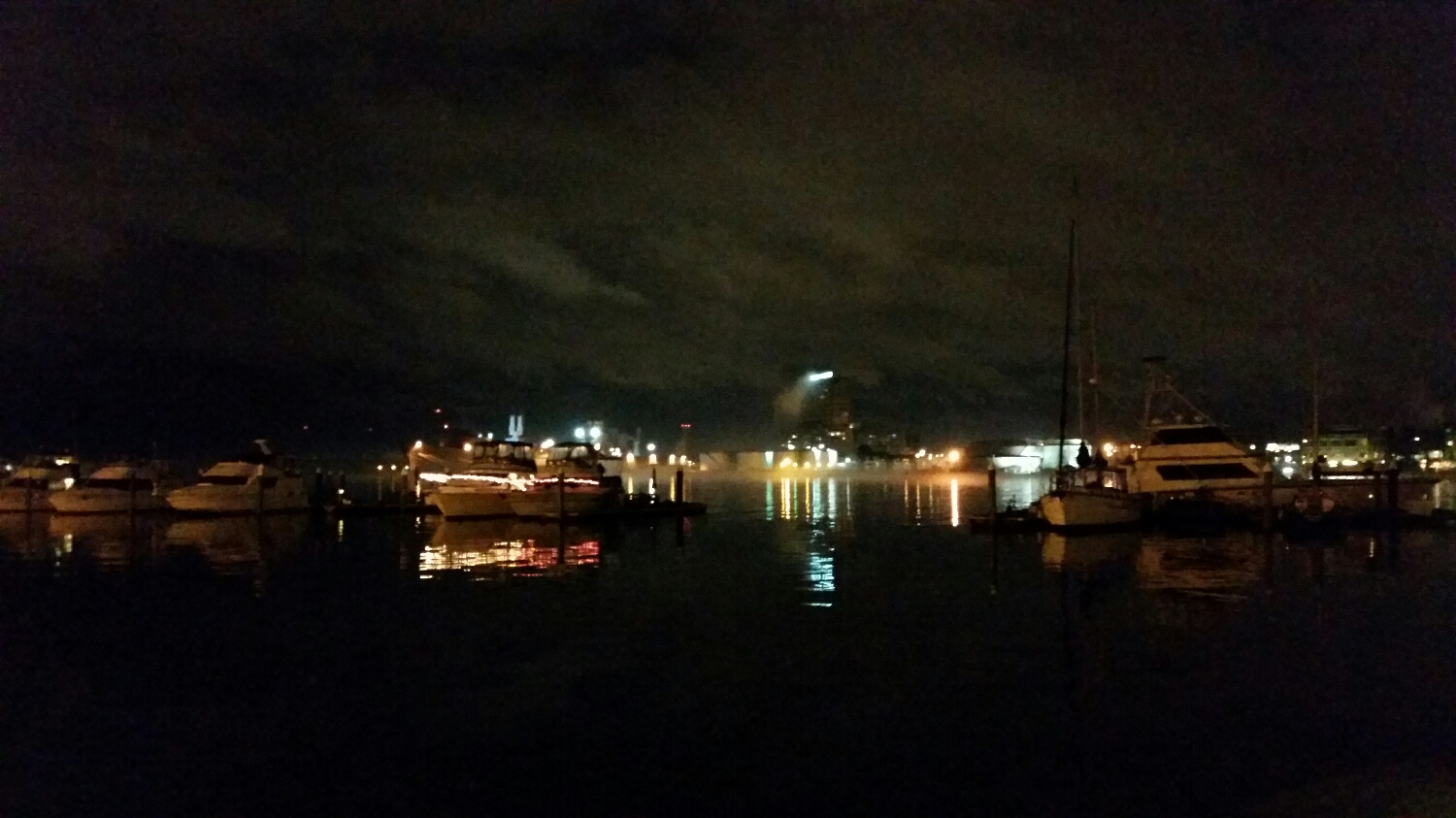
The weekend of December 12 and 13 made it particularly clear how bad the pollution is. A temperature inversion occurred and the whole area was completely calm. There was no wind for days, and the water only moved with the tide. Everything was completely still as unseasonably warm air loomed over the city and its waters. 

upload.jpeg

The entire area reeked of rotting cabbage and the water became especially "thick" as the locals call it. Water clarity was non-existent, everything disappeared from sight as soon as it entered the foul soup. We noticed that all the ducks had flown away and the entire area seemed devoid of life. Trash began to accumulate as there was no wind to carry it out into the bay and in a few short days the harbor became so ostentatious that we contemplated moving to cleaner waters. I can only imagine how the waterfront property owners felt since they do not have the luxury of easily moving to another waterfront area. 

I feel that land dwellers would be more sympathetic to the environmental impacts of their actions if they saw more immediate reactions. If you spill oil in your yard, it "disappears" into the grass, do the same on a boat and an enormous oil slick will extend from your hull off into the distance. Throw your trash out the window of your car, and it "disappears", on a boat it will continue to float alongside you, reminding you that nothing "disappears".

Living aboard also makes you measurably more aware of your consumption and wastes. If you take a long shower in a house, you pay a higher water bill; but when you have to fill those tanks more often, soon you will begin to take quicker showers. I also feel that trashcans and dumpsters make people underestimate their level of waste since it is out of sight. They simply haul it out to the curb once a week and away it goes. When I was a kid, we (a family of four) produced so much trash that we had three 55 gallon drums on a cart that we would wheel out to the curb weekly. As a kid, I would push the cart out to the street without ever thinking about how much trash we generated. 

Now I use grocery bags hanging from the galley as the trash bags. I have no trashcan to hide my trash and see the bag grow as I generate more waste. My fiancee and I are very aware of how much trash we generate as we carry it down the dock to the marina dumpster. We now produce 1 to 2 grocery bags of trash per week, simply because we are more careful about how much trash we make.

I am not alone in our limited waste production. Most other boaters I know also produce a very limited amount of waste by comparison to land dwellers. We are all more conscientious of our impact on the environment because we see the direct effect of our actions.

If the EPA and Maryland Department of the Environment would turn their attention away from the boaters floating in this polluted waterway and towards the actual problem, they may stand a better chance at cleaning up the harbor and making it swimmable and fishable by 2020.

upload.jpeg

Parrots On Board

When most people think of having a pet while living aboard, they usually think of cats and dogs, rarely anything else. We have a nine year old parrot name Sammy who has successfully made the transition from a house to an apartment to a sailboat.

The hardest part of making the boat parrot ready was finding a place to mount her cage. Since she spends very little time in it, I decided on a hamster cage mounted on the salon table. I tied it up in such a way that it would hold still when we heel over. 

This was well and fine, but Maddie is not fond of the mess Sammy makes when she eats. We are now in the process of finding a new place to mount Sammy's cage, but space on a sailboat is limited, so the search for the right spot is on!